Loading...
Francisco Morazan vs J. B. M. Hertzog
Francisco Morazan leads by 1.9 pts · 2 figures compared
…
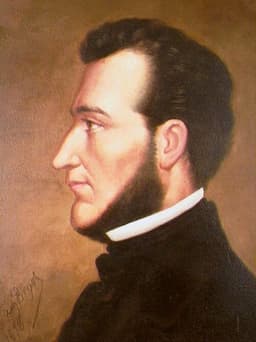
Francisco Morazan
General · Modern
58.0Total
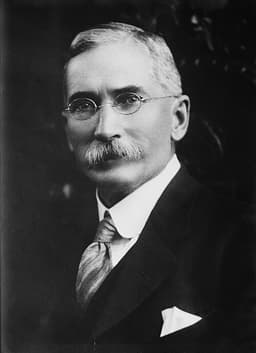
J. B. M. Hertzog
General · Modern
56.1Total
Basic Information
Born
1792
1866
Died
1842
1942
Era
Modern
Modern
Nationality
Honduras
South Africa
Occupation
General
General
Civilization
Western
Other
Score Comparison
Military (10%)
52.5
25.0
Political (20%)
60.0
60.0
Influence (20%)
62.0
56.7
Legacy (20%)
50.0
50.0
Leadership (15%)
68.0
79.8
Strategy (15%)
55.0
60.0
TOTAL
58.0
56.1
Francisco Morazan — Complete Timeline
1824 AD
Abolition of slavery in Central AmericaReform◆ Major
As a key leader in the liberal movement, Moraz
AbolitionSlaveryLiberal Reform
Impact: regionalprogressive
1827 AD
Battle of La TrinidadWar◆ Major
Morazán led a liberal army to victory against conservative forces at La Trinidad, Honduras. This battle was a key turning point in the Central American civil war, allowing Morazán to consolidate power and eventually become president of the federation.
BattleLiberal VictoryCivil War
Impact: regional
1830 AD
Presidency of the Federal Republic of Central AmericaPolitical Action
Morazán was elected president of the Federal Republic of Central America, a union of Guatemala, El Salvador, Honduras, Nicaragua, and Costa Rica. He pursued liberal reforms including separation of church and state, free trade, and land reform, facing opposition from conservatives.
Federal RepublicLiberal ReformsCentral America
Impact: regionalconstructive
1842 AD
Execution by firing squadPolitical Action
After a failed attempt to restore the Federal Republic, Moraz
ExecutionEnd of FederationLiberal Defeat
Impact: regionaltragic
J. B. M. Hertzog — Complete Timeline
1899 AD
Boer War GeneralWar◆ Major
Hertzog served as a Boer general in the Second Boer War, commanding forces in the Orange Free State. He participated in several battles and became a prominent Afrikaner military leader.
Second Boer WarGeneralMilitary
Impact: regional
1914 AD
Founded the National PartyPolitical Action
Hertzog broke away from the South African Party and founded the National Party, which championed Afrikaner nationalism and opposed British imperial influence. The party would later implement apartheid.
National PartyAfrikaner NationalismFounding
Impact: nationalconstructive
1924 AD
Prime Minister of South AfricaPolitical Action◆ Major
Hertzog became Prime Minister after his National Party won the general election in coalition with the Labour Party. His government implemented policies to protect white workers and promote Afrikaner interests, including the 'civilized labour' policy.
Prime MinisterAfrikaner RightsLabour Policy
Impact: national
1934 AD
Merged with Smuts to Form United PartyPolitical Action◆ Major
Hertzog merged his National Party with Jan Smuts' South African Party to form the United Party. The coalition aimed to address the economic crisis of the Great Depression and promote national unity, but it alienated hardline Afrikaner nationalists.
United PartyCoalitionNational Unity
Impact: nationalconstructive
1936 AD
Passed the Representation of Natives ActReform◆ Major
Hertzog's government passed the Representation of Natives Act, which removed Black voters from the common voters' roll in the Cape Province and allowed them to elect white representatives instead. This further entrenched racial segregation.
SegregationDisenfranchisementLegislation
Impact: nationaldestructive
1939 AD
Resigned Over Neutrality in WWIIPolitical Action◆ Major
Hertzog advocated for South African neutrality in World War II, but his cabinet voted to enter the war on the Allied side. He resigned as Prime Minister and was succeeded by Jan Smuts, splitting the United Party.
World War IINeutralityResignation
Impact: national
Expert Analysis
J. B. M. Hertzog vs Francisco Morazan
# The General Who Would Be Kingmaker, and the General Who Would Be King
On a dusty battlefield in Honduras in 1827, a 35-year-old liberal idealist rallied his outnumbered troops against a conservative army and won. Fifteen years later, he would die before a firing squad, his dream of a united Central America lying in ruins around him. Half a world away and seven decades later, an Afrikaner lawyer-turned-general led his men against the British Empire in the South African veld, then spent the next three decades in politics, shaping a nation that would eventually repudiate much of what he stood for. Francisco Morazán and J. B. M. Hertzog never met, never corresponded, and governed vastly different corners of the world. Yet both were generals who became political leaders, both fought for the rights of their people against foreign domination, and both left behind legacies far more complicated than they intended. Why did one die a martyr and the other die in relative peace, and why does history judge them so differently?
Origins
Francisco Morazán was born in 1792 in Tegucigalpa, then part of the Spanish Empire. His father was a Creole merchant of Corsican descent, his mother a local woman of Spanish blood. The world of his youth was one of colonial hierarchy, rigid class distinctions, and the slow collapse of Spanish authority. Morazán grew up breathing the air of Enlightenment liberalism—ideas about equality, republicanism, and the rights of man that were sweeping across the Atlantic world. He was self-taught in law and political philosophy, a man who absorbed the writings of Rousseau and Montesquieu alongside the practical realities of Central American life.
J. B. M. Hertzog was born in 1866 in the Cape Colony, six decades after Morazán’s execution. His parents were Boer farmers, descendants of Dutch settlers who had carved out a life on the African frontier. The world of his youth was one of British imperial pressure, the aftermath of the Great Trek, and the simmering resentment of Afrikaners who felt themselves a conquered people. Hertzog studied law in Amsterdam and returned to South Africa with a sharp legal mind and a burning conviction that the Afrikaner volk needed a champion. Where Morazán was a liberal universalist, Hertzog was an ethnic nationalist. One believed in the brotherhood of man; the other believed in the destiny of his tribe.
Rise to Power
Morazán’s path to power was forged in battle. In 1827, after conservative forces had seized control of the Federal Republic of Central America, he gathered a small liberal army in Honduras. The Battle of La Trinidad that year was his breakout moment—a stunning victory against a larger, better-equipped force. Within three years, he was president of the entire federation. His rise was meteoric, romantic, and deeply personal. He was the charismatic general who rode into the capital and declared a new order.
Hertzog’s rise was slower and more bureaucratic. He served as a Boer general in the Second Boer War of 1899, commanding forces in the Orange Free State with competence but without the legendary flair of figures like Christiaan de Wet. After the British victory, he turned to law and politics. In 1914, he broke away from the South African Party to found the National Party, a vehicle for Afrikaner nationalism. His ascent was not through battlefield glory but through committee rooms, party congresses, and the careful cultivation of ethnic grievance. Morazán seized power; Hertzog built a coalition.
Leadership & Governance
As president of the Federal Republic of Central America from 1830, Morazán governed like a revolutionary. He abolished slavery in 1824, even before taking office, and pushed through a sweeping liberal agenda: freedom of the press, secular education, land reform, and the separation of church and state. He was a reformer in a hurry, convinced that Enlightenment principles could transform a backward region into a modern republic. But his reforms alienated the Catholic Church, the landed elite, and the conservative peasantry. His military genius could win battles, but his political wisdom could not hold a fractured federation together.
Hertzog’s governance was more pragmatic and more durable. As Prime Minister from 1924, he pursued Afrikaner interests through legislation: protective tariffs for agriculture, language rights for Afrikaans, and the removal of Black voters from the common roll in 1936 through the Representation of Natives Act. He was not a revolutionary but a consolidator. He sought to elevate one ethnic group within a multiracial society, not to remake society itself. His merger with Jan Smuts in 1934 to form the United Party was a masterstroke of political calculation—it brought together English and Afrikaner moderates and gave South Africa a decade of stability. But that stability came at a terrible cost: the institutionalization of racial segregation that would later harden into apartheid.
Triumph & Tragedy
Morazán’s greatest triumph was the abolition of slavery and the establishment of liberal reforms that made Central America, for a brief moment, one of the most progressive regions in the Americas. His greatest tragedy was the collapse of the federation itself. By the late 1830s, the union had shattered into warring states, and Morazán spent his final years in desperate attempts to restore it. In 1842, he was captured in Costa Rica and executed by firing squad. His last words were reportedly: “I die with the conviction that I have served my country.”
Hertzog’s greatest triumph was becoming Prime Minister and securing Afrikaner political dominance. His greatest tragedy was the betrayal of his own principles. A man who had fought against British imperialism became the architect of racial oppression. And in 1939, when he argued for South African neutrality in World War II—hoping to keep his country out of a war he saw as Europe’s business—his own cabinet voted against him. He resigned and died three years later, a bitter and disappointed man.
Character & Destiny
Morazán was a man of grand visions and fatal impatience. He believed that ideas could conquer reality, that a federation could be imposed by force of will and liberal conviction. His personality was magnetic, his courage unquestioned, but his political judgment was flawed. He could not see that Central America’s entrenched elites and regional loyalties would never submit to a centralized liberal state. His destiny was to be a martyr for a cause that outlived him.
Hertzog was a man of calculation and resentment. He knew the limits of power and worked within them. His personality was stubborn, legalistic, and deeply suspicious of English-speaking South Africans. He could not see that his pursuit of Afrikaner rights would come at the expense of everyone else. His destiny was to be a founder of a system he might not have fully intended—a system that would later be condemned by the world.
Legacy
Morazán is remembered as a hero across Central America—a symbol of unity and liberalism, a martyr for the dream of a single Central American nation. His face appears on currency, his name adorns streets and schools. But his federation never returned, and the region remains divided and unstable. His legacy is one of aspiration rather than achievement.
Hertzog is remembered ambivalently in South Africa. Among Afrikaners, he is a founding father who secured their language and political power. Among Black South Africans, he is the man who removed their voting rights and laid the groundwork for apartheid. His legacy is one of achievement with a heavy moral cost. The National Party he founded would rule South Africa until 1994, but it would take the country down a path of racial division that he helped pave.
Conclusion
Two generals, two reformers, two nationalists. Morazán died young, a martyr for a dream that never came true. Hertzog died old, a founder of a system that would eventually be dismantled. Morazán’s tragedy was that he aimed too high and failed; Hertzog’s tragedy was that he aimed too low and succeeded. One believed in the universal rights of man but could not make them stick; the other believed in the particular rights of his people and made them stick all too well. In the end, both were prisoners of their times—Morazán of the impossible optimism of the Enlightenment, Hertzog of the narrow nationalism of the colonial frontier. History remembers them both, but for very different reasons, and with very different judgments.
Rankings
🥇
Francisco MorazanLeader
Mil: 52.5Pol: 60.0Inf: 62.0
58.0
🥈
J. B. M. Hertzog
Mil: 25.0Pol: 60.0Inf: 56.7
56.1
+1.9 behind
How This Comparison Works
Algorithm
Each figure is scored on 6 dimensions (0—100 scale) based on structured historical data: Military (10%), Political (20%), Influence (20%), Legacy (20%), Leadership (15%), Strategy (15%). The weighted total produces the final ranking.
Data Sources
Scores are computed from structured sub-indicators in the database. Scale factors adjust for era (Ancient ×0.85, Modern ×1.0) and civilization size (Eastern ×1.05, Other ×0.80) to account for differences in population and military scale.
Maximum 3 Figures
Comparisons are limited to 2—3 figures to ensure readability and statistical meaningfulness.
Error Margins
±5 points per dimension — Sub-scores are derived from historical records with inherent uncertainty. Two figures within 5 points on a dimension should be considered roughly equivalent in that area.
Total Score Accuracy
±3 points overall — The weighted combination of 6 dimensions produces a total score with approximately ±3 points of uncertainty. Differences of less than 3 points are not statistically significant— the figures are effectively tied.
Known Limitations
- Historical records are incomplete and uneven across civilizations
- Figures from oral-tradition societies may be underrepresented
- Occupation labels can misclassify multi-role figures
- Scores measure capability and impact, not moral character
- Quantitative scoring is a comparison tool, not absolute truth
Capability Radar
Military (10%) — Battles & Warfare
Battles
55
45
Win Rate
60
40
Expansion
40
20
Political (20%) — Governance & Reform
Reform
70
60
Diplomacy
45
55
Economy
50
50
Influence (20%) — Cultural & Global Reach
Cultural
45
50
Global
35
45
Legacy (20%) — Historical Impact
Historical
50
55
Longevity
40
40
Leadership (15%) — Power & Stability
Tenure
55
65
Stability
30
45
Strategy (15%) — Tactics & Innovation
Strategy
55
50
Tactics
50
45
Reform
45
30
Similar Comparisons
Comments & Discussion
Veldfighter's Ghost6/16/2026
Hertzog was a better nation-builder than Morazán, plain and simple. Morazán dreamed of a unified Central America, but he ruled like a military dictator, imposing liberal reforms through force and getting executed by his own people after 15 years of chaos. Hertzog, for all his flaws, built the Union of South Africa's constitutional framework and served as prime minister for 15 years. One died in power of natural causes, the other in front of a firing squad. That's not martyrdom—that's the verdict
铁血玫瑰6/16/2026
莫拉桑就是个理想主义的军阀,别跟我扯什么中美洲统一梦。他搞的那些反教会、取消什一税的改革,在农民眼里就是天书。1829年他下令关闭危地马拉的修道院时,当地老太太们跪在街上诅咒他下地狱——结果呢?15年后他真的被保守派枪毙了。赫佐格至少懂政治:他推动的1936年《土著代表法》虽然现在看是种族主义,但在当时确实系统化了南非的治理框架。一个活在现实中妥协,一个死在幻梦里坚持,谁更聪明?
ClassicsScourge6/16/2026
Morazán dies at 51, a martyr's bullet through his heart. Hertzog lives to 76, retiring to his farm after losing an election. Both led military campaigns, but Morazán's liberal ideals were ahead of their time—he abolished slavery in Central America in 1824, a full four decades before the U.S. did it. Hertzog defended white supremacy after the Boer War, passing the 1936 Representation of Natives Act that stripped black voters of their rights. One self-destructed fighting for equality in 1840; the
数据拆弹手6/16/2026
别被英雄叙事骗了。莫拉桑1830年的中美洲联邦只控制了危地马拉和萨尔瓦多,人口不过180万,GDP比同期瑞士还低。他那些统一演讲再动听,也改变不了联邦十年内就散架的事实——各省闹独立像放鞭炮一样。赫佐格的数据更硬:他当总理期间南非GDP年均增长4.2%,铁路里程从1.1万公里翻到2.3万公里。一个理想主义者留下废墟,一个现实主义者留下铁轨。历史不看眼泪,看公里数。
HistorysBarstool6/16/2026
You're all missing the real story: Hertzog was the better general. Morazán's big win was at La Trinidad in 1827—3,000 vs 2,000 with a lucky cavalry charge. Cute, but he never commanded more than 5,000 men. Hertzog fought in the Second Bo