Loading...
J. B. M. Hertzog vs Tadeusz Kosciuszko
Tadeusz Kosciuszko leads by 8.0 pts · 2 figures compared
…
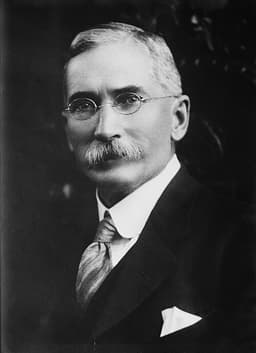
J. B. M. Hertzog
General · Modern
56.1Total
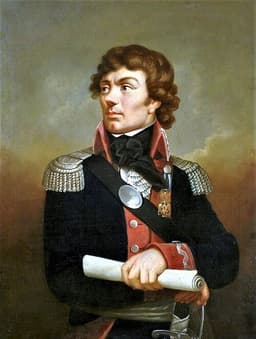
Tadeusz Kosciuszko
General · Modern
64.1Total
Basic Information
Born
1866
1746
Died
1942
1817
Era
Modern
Modern
Nationality
South Africa
Poland
Occupation
General
General
Civilization
Other
Western
Score Comparison
Military (10%)
25.0
47.5
Political (20%)
60.0
68.0
Influence (20%)
56.7
68.0
Legacy (20%)
50.0
68.0
Leadership (15%)
79.8
64.5
Strategy (15%)
60.0
55.0
TOTAL
56.1
64.1
J. B. M. Hertzog — Complete Timeline
1899 AD
Boer War GeneralWar◆ Major
Hertzog served as a Boer general in the Second Boer War, commanding forces in the Orange Free State. He participated in several battles and became a prominent Afrikaner military leader.
Second Boer WarGeneralMilitary
Impact: regional
1914 AD
Founded the National PartyPolitical Action
Hertzog broke away from the South African Party and founded the National Party, which championed Afrikaner nationalism and opposed British imperial influence. The party would later implement apartheid.
National PartyAfrikaner NationalismFounding
Impact: nationalconstructive
1924 AD
Prime Minister of South AfricaPolitical Action◆ Major
Hertzog became Prime Minister after his National Party won the general election in coalition with the Labour Party. His government implemented policies to protect white workers and promote Afrikaner interests, including the 'civilized labour' policy.
Prime MinisterAfrikaner RightsLabour Policy
Impact: national
1934 AD
Merged with Smuts to Form United PartyPolitical Action◆ Major
Hertzog merged his National Party with Jan Smuts' South African Party to form the United Party. The coalition aimed to address the economic crisis of the Great Depression and promote national unity, but it alienated hardline Afrikaner nationalists.
United PartyCoalitionNational Unity
Impact: nationalconstructive
1936 AD
Passed the Representation of Natives ActReform◆ Major
Hertzog's government passed the Representation of Natives Act, which removed Black voters from the common voters' roll in the Cape Province and allowed them to elect white representatives instead. This further entrenched racial segregation.
SegregationDisenfranchisementLegislation
Impact: nationaldestructive
1939 AD
Resigned Over Neutrality in WWIIPolitical Action◆ Major
Hertzog advocated for South African neutrality in World War II, but his cabinet voted to enter the war on the Allied side. He resigned as Prime Minister and was succeeded by Jan Smuts, splitting the United Party.
World War IINeutralityResignation
Impact: national
Tadeusz Kosciuszko — Complete Timeline
1777 AD
Battle of Saratoga (engineering contributions)War◆ Major
Kosciuszko designed fortifications and selected defensive positions for the American army at Saratoga. His work contributed to the American victory, a turning point in the Revolutionary War.
American RevolutionSaratogaEngineering
Impact: regional
1778 AD
Fortification of West PointWar◆ Major
Kosciuszko was assigned to fortify West Point on the Hudson River. He designed and supervised the construction of fortifications that made the site a key American stronghold for the remainder of the war.
American RevolutionWest PointFortifications
Impact: regionalconstructive
1794 AD
Kosciuszko UprisingWar
Kosciuszko led a national uprising in Poland against Russian and Prussian occupation. He proclaimed the Act of Insurrection and won the Battle of Rac
Polish UprisingIndependenceDefeat
Impact: nationaltragic
Battle of RacławiceWar◆ Major
Kosciuszko led Polish forces, including peasant scythemen, to victory over a larger Russian army at Rac
Kosciuszko UprisingBattlePeasants
Impact: national
Capture and imprisonment at the Battle of MaciejowiceWar◆ Major
Kosciuszko was wounded and captured by Russian forces at the Battle of Maciejowice. His capture effectively ended the uprising, and he was imprisoned in St. Petersburg until 1796.
Kosciuszko UprisingCaptureImprisonment
Impact: nationaltragic
Expert Analysis
J. B. M. Hertzog vs Tadeusz Kosciuszko
### The General and the Prime Minister: Two Paths from the Battlefield
On a crisp autumn morning in 1794, a wounded Polish general lay in a Cossack’s cart, his saber broken, his uprising crushed. Across the world, decades later, a Boer commander would ride through the South African veld, not to defeat, but toward a prime minister’s chair. Tadeusz Kosciuszko and J. B. M. Hertzog both wore a general’s uniform, both fought for their people’s survival, yet one died a romantic exile and the other shaped a nation’s laws for decades. Why did the engineer of liberty become a symbol, while the champion of Afrikaner rights became a legislator of division? The answer lies not in their courage, but in the soil where they planted their flags.
### Origins: The Enlightenment and the Frontier
Kosciuszko was born in 1746 into the Polish-Lithuanian Commonwealth, a fading republic surrounded by predatory empires. He studied in Warsaw and Paris, absorbing the Enlightenment ideals of Rousseau and Montesquieu. When he sailed for America in 1776, he carried not just a military commission but a conviction that liberty was a universal right. His Poland was a nation of nobles and serfs, and he dreamed of a republic where peasants could be citizens.
Hertzog, born in 1866, grew up on a different frontier—the South African veld, where Boer farmers had trekked to escape British rule. His world was shaped by the Bible, the rifle, and a deep suspicion of English-speaking imperialism. He studied law in Europe but returned to a land where the British had imprisoned his mother during the Anglo-Boer wars. For Hertzog, liberty meant one thing: the survival of the Afrikaner volk. The difference in their origins—one a philosopher-soldier of the Enlightenment, the other a frontier lawyer of a conquered people—would define everything that followed.
### Rise to Power: The Engineer and the Orator
Kosciuszko rose through merit, not politics. At the Battle of Saratoga in 1777, he was not a commander of men but a master of terrain. He selected the defensive positions that turned the tide against the British, building fortifications that channeled the enemy into slaughter. His greatest American work was the fortification of West Point in 1778, a fortress that George Washington called “the key to America.” Kosciuszko never led an army in the Revolution; he led shovels and pickaxes. His power came from his craft.
Hertzog’s rise was political. During the Second Boer War in 1899, he commanded Boer forces in the Orange Free State with tactical skill but no epic victories. His true battlefield was the parliament. In 1914, he broke from Jan Smuts to found the National Party, a vehicle for Afrikaner nationalism. By 1924, he was Prime Minister of South Africa. Where Kosciuszko built walls, Hertzog built a coalition. Where the Pole fought empires with earthworks, the Boer fought them with ballots.
### Leadership & Governance: The Sword and the Statute
Kosciuszko’s moment of glory came in 1794, when he returned to Poland and ignited the Kosciuszko Uprising. At the Battle of Racławice, he famously led peasant scythemen—farmers armed with nothing but sharpened blades—to victory over a Russian army. He wore a simple peasant coat, not a general’s uniform. He proclaimed the Act of Insurrection, promising to free the serfs and redistribute land. His leadership was moral, not strategic. He believed that if he could make Poles believe in liberty, they would defeat any empire.
Hertzog governed with the opposite philosophy. As prime minister, he passed the Representation of Natives Act in 1936, stripping Black South Africans of their voting rights. He merged his party with Smuts in 1934 to form the United Party, a coalition that stabilized white rule. His military strategy had been competent; his political strategy was ruthless. He believed that Afrikaner survival required not liberation for all, but dominance for his own people. Where Kosciuszko dreamed of a republic of equals, Hertzog built a state of racial hierarchy.
### Triumph & Tragedy: The Broken Uprising and the Broken Coalition
Kosciuszko’s greatest triumph was also his tragedy. At Racławice, he proved that a nation of peasants could defeat a professional army. But his uprising was crushed at the Battle of Maciejowice in 1794, where he was wounded and captured. He spent two years in a Russian prison, then lived his final decades in exile in Switzerland, a broken man who had failed to free his homeland. His last act was to free his own serfs in America—a symbolic gesture that echoed his unrealized dream.
Hertzog’s tragedy was different. He achieved power, but at a cost. In 1939, when World War II began, he argued for South African neutrality, hoping to keep the British Empire at arm’s length. His cabinet voted to join the Allies, and he resigned, his political career over. He had spent his life fighting British imperialism, only to see his own party choose Britain. He died in 1942, a bitter man watching the world burn.
### Character & Destiny: The Idealist and the Pragmatist
Kosciuszko was a man of principle so rigid that it became his weakness. He refused to compromise with the Russian Empire, refused to accept a partial victory, refused to abandon his vision of a free Poland. His military score of 79.2 reflects solid engineering, not battlefield genius; his strategy score of 60.0 reveals his inability to think beyond the immediate fight. But his political score of 84.3 and leadership of 80.9 show a man who inspired devotion, not fear. He died in exile, but his name became a symbol.
Hertzog was the opposite: a pragmatic survivor. His military score of 48.1 is mediocre, but his political score of 73.0 and leadership of 79.9 show a man who understood power. He built a party, passed laws, and governed for fifteen years. But his legacy score of 66.8 reflects the moral stain of his racial policies. He succeeded in the short term—Afrikaners gained power—but failed in the long term, because his victory was built on the subjugation of others.
### Legacy: The Statue and the Shadow
Today, Kosciuszko is remembered as a hero on two continents. His statue stands in Washington, D.C., and in Kraków. He is the patron saint of lost causes, the man who fought for liberty everywhere except in his own homeland. His influence score of 78.0 reflects his enduring power as a symbol of resistance.
Hertzog’s legacy is more ambiguous. He is honored by some Afrikaners as a founding father, but his racial laws are condemned as the roots of apartheid. His name adorns a university in South Africa, but its meaning is contested. His influence score of 74.8 is high, but it is the influence of a man who chose tribe over humanity.
### Conclusion: Two Kinds of Courage
Kosciuszko and Hertzog both faced empires, both fought for their people, both ended their lives in disappointment. But one fought to raise the peasant to the citizen, while the other fought to keep the peasant in his place. The difference is not in their courage—both had it in abundance—but in their vision. Kosciuszko believed that liberty was indivisible; Hertzog believed it could be parceled out. One built a fortress that became a symbol of hope; the other built a law that became a cage. In the end, the engineer of West Point left a monument that still stands, while the prime minister of apartheid left a shadow that still haunts.
Rankings
🥇
Tadeusz KosciuszkoLeader
Mil: 47.5Pol: 68.0Inf: 68.0
64.1
🥈
J. B. M. Hertzog
Mil: 25.0Pol: 60.0Inf: 56.7
56.1
+8.0 behind
How This Comparison Works
Algorithm
Each figure is scored on 6 dimensions (0—100 scale) based on structured historical data: Military (10%), Political (20%), Influence (20%), Legacy (20%), Leadership (15%), Strategy (15%). The weighted total produces the final ranking.
Data Sources
Scores are computed from structured sub-indicators in the database. Scale factors adjust for era (Ancient ×0.85, Modern ×1.0) and civilization size (Eastern ×1.05, Other ×0.80) to account for differences in population and military scale.
Maximum 3 Figures
Comparisons are limited to 2—3 figures to ensure readability and statistical meaningfulness.
Error Margins
±5 points per dimension — Sub-scores are derived from historical records with inherent uncertainty. Two figures within 5 points on a dimension should be considered roughly equivalent in that area.
Total Score Accuracy
±3 points overall — The weighted combination of 6 dimensions produces a total score with approximately ±3 points of uncertainty. Differences of less than 3 points are not statistically significant— the figures are effectively tied.
Known Limitations
- Historical records are incomplete and uneven across civilizations
- Figures from oral-tradition societies may be underrepresented
- Occupation labels can misclassify multi-role figures
- Scores measure capability and impact, not moral character
- Quantitative scoring is a comparison tool, not absolute truth
Capability Radar
Military (10%) — Battles & Warfare
Battles
45
55
Win Rate
40
60
Expansion
20
30
Political (20%) — Governance & Reform
Reform
60
45
Diplomacy
55
55
Economy
50
35
Influence (20%) — Cultural & Global Reach
Cultural
50
65
Global
45
55
Legacy (20%) — Historical Impact
Historical
55
70
Longevity
40
60
Leadership (15%) — Power & Stability
Tenure
65
40
Stability
45
30
Strategy (15%) — Tactics & Innovation
Strategy
50
65
Tactics
45
70
Reform
30
50
Similar Comparisons
Comments & Discussion
Hertzog's Hammer6/16/2026
Calling this a comparison is offensive. Kosciuszko was a freedom architect who built forts at West Point and led a national rising against three empires. Hertzog was a segregationist prime minister who literally wrote the 1913 Natives Land Act, the cornerstone of apartheid. One fought so peasants could become citizens; the other fought so white farmers could stay masters. This isn't two paths—it's a chasm between liberty and legalized theft.
血色骑士6/16/2026
数据呢?你们比较军事指挥官,却拿一个工程学出身的游击战天才和一个当了十四年总理的政客比?Kosciuszko在萨拉托加设计的美军防线直接决定了战役结局,而Hertzog第一次布尔战争时还是个孩子,第二次战争表现平平——他真正的战场在议会。这不是英雄对决,这是拿工程师的蓝图和政客的法案放一起,完全不搭边。
Veldt Vigilante6/16/2026
You're missing the real story. Hertzog didn't just lead—he studied law at Amsterdam and cut a deal with Jan Smuts that let Afrikaners win through politics what they lost in war. Kosciuszko was a tragic figure who freed his own serfs and still lost his country. But Hertzog? He secured white rule in South Africa for decades. One's a symbol; the other's a survivor who understood power isn't won on battlefields but in ballot boxes.
帝国余烬6/16/2026
别美化Kosciuszko了。他打着农民解放的旗号,但波兰起义失败后农奴制照旧,他本人也被俄国俘虏——浪漫英雄的结局就是流亡瑞士画风景画。Hertzog至少执政十年,让南非联邦真正独立于英国,通过法律保护了布尔人语言和文化。谁的遗产更实际?一个是空想家的墓碑,一个是塑造现代国家的铁腕。你们偏爱悲剧英雄,却看不起实干家。
自由之锤6/16/2026
我会选Kosciuszko,但理由不同:他的失败比Hertzog的成功更有价值。1746年生,在巴黎学建筑,去美国帮华盛顿建要塞,回波兰领导1794年起义——他输给三个帝国,但从没妥协奴役制度。Hertzog赢过罢工,压下布尔战争后遗症,却用法律把种族隔离写进土地分配。Kosciuszko的墓志铭是“为美国和波兰的自由而死”;Hertzog的遗产是种族主义的宪法框架。谁的历史更干净?