Loading...
J. B. M. Hertzog vs Samori Toure
Samori Toure leads by 14.4 pts · 2 figures compared
…
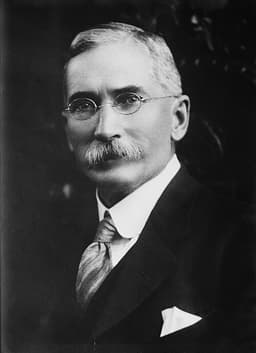
J. B. M. Hertzog
General · Modern
56.1Total
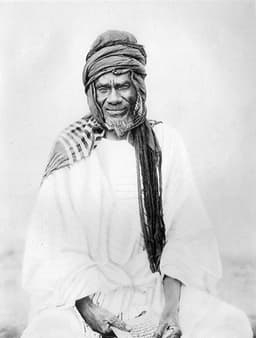
Samori Toure
General · Modern
70.5Total
Basic Information
Born
1866
1830
Died
1942
1900
Era
Modern
Modern
Nationality
South Africa
Wassoulou Empire
Occupation
General
General
Civilization
Other
Other
Score Comparison
Military (10%)
25.0
60.0
Political (20%)
60.0
78.0
Influence (20%)
56.7
68.0
Legacy (20%)
50.0
72.0
Leadership (15%)
79.8
72.0
Strategy (15%)
60.0
70.0
TOTAL
56.1
70.5
J. B. M. Hertzog — Complete Timeline
1899 AD
Boer War GeneralWar◆ Major
Hertzog served as a Boer general in the Second Boer War, commanding forces in the Orange Free State. He participated in several battles and became a prominent Afrikaner military leader.
Second Boer WarGeneralMilitary
Impact: regional
1914 AD
Founded the National PartyPolitical Action
Hertzog broke away from the South African Party and founded the National Party, which championed Afrikaner nationalism and opposed British imperial influence. The party would later implement apartheid.
National PartyAfrikaner NationalismFounding
Impact: nationalconstructive
1924 AD
Prime Minister of South AfricaPolitical Action◆ Major
Hertzog became Prime Minister after his National Party won the general election in coalition with the Labour Party. His government implemented policies to protect white workers and promote Afrikaner interests, including the 'civilized labour' policy.
Prime MinisterAfrikaner RightsLabour Policy
Impact: national
1934 AD
Merged with Smuts to Form United PartyPolitical Action◆ Major
Hertzog merged his National Party with Jan Smuts' South African Party to form the United Party. The coalition aimed to address the economic crisis of the Great Depression and promote national unity, but it alienated hardline Afrikaner nationalists.
United PartyCoalitionNational Unity
Impact: nationalconstructive
1936 AD
Passed the Representation of Natives ActReform◆ Major
Hertzog's government passed the Representation of Natives Act, which removed Black voters from the common voters' roll in the Cape Province and allowed them to elect white representatives instead. This further entrenched racial segregation.
SegregationDisenfranchisementLegislation
Impact: nationaldestructive
1939 AD
Resigned Over Neutrality in WWIIPolitical Action◆ Major
Hertzog advocated for South African neutrality in World War II, but his cabinet voted to enter the war on the Allied side. He resigned as Prime Minister and was succeeded by Jan Smuts, splitting the United Party.
World War IINeutralityResignation
Impact: national
Samori Toure — Complete Timeline
1878 AD
Establishment of the Wassoulou EmpirePolitical Action
Samori Toure founded the Wassoulou Empire in West Africa, uniting various Mandinka states under his rule. He established a centralized administration and a professional army, creating a powerful state that resisted French expansion.
EmpireWassoulouUnification
Impact: regionalconstructive
1880 AD
Military Reforms and ModernizationReform◆ Major
Samori Toure modernized his army by importing firearms from European traders and establishing a standing army of up to 35,000 men. He organized his forces into regular units and introduced new tactics, making them effective against French troops.
Military ReformFirearmsArmy
Impact: regionalconstructive
1882 AD
First Franco-Wassoulou WarWar◆ Major
Samori Toure's forces fought the French army in the first major conflict between the Wassoulou Empire and France. The war ended with a treaty in 1886, recognizing Samori's control over the Niger River region.
WarFranceTreaty
Impact: regional
1891 AD
Second Franco-Wassoulou WarWar◆ Major
The French resumed hostilities, forcing Samori to retreat eastward. He employed a scorched-earth strategy, destroying villages and crops to deny resources to the French, prolonging the conflict for years.
WarScorched EarthRetreat
Impact: regionaltragic
1898 AD
Capture and ExileWar
Samori Toure was captured by French forces after a long campaign. He was exiled to Gabon, where he died in 1900. His capture ended the Wassoulou Empire and marked the completion of French conquest in West Africa.
CaptureExileEnd of Empire
Impact: regionaltragic
Expert Analysis
J. B. M. Hertzog vs Samori Toure
# The Two Paths of African Resistance: Samori Touré and J. B. M. Hertzog
On a dusty battlefield in West Africa in 1898, Samori Touré watched his empire crumble. French artillery had finally cornered the man who had outrun them for nearly two decades. Three thousand miles south, in the halls of power in Cape Town, another man was rising. J. B. M. Hertzog had fought the British with rifles; now he would fight them with laws. Both men resisted European domination in Africa. One built a kingdom with gunpowder and blood. The other built a political dynasty with speeches and statutes. Their stories, separated by a continent and a generation, ask a haunting question: when facing an empire, which weapon is more effective—the sword or the ballot?
Origins
Samori Touré was born around 1830 in what is now Guinea, into a world of small Mandinka chiefdoms and slave-raiding chaos. He began as a trader, then a soldier, learning war in the brutal school of West African politics. By his thirties, he commanded a personal army. His era was one of upheaval: European explorers were mapping the interior, and the French were pushing inland from Senegal. Touré understood that the old ways of scattered tribes could not stand against rifles and railroads.
J. B. M. Hertzog was born in 1866 in the Cape Colony, the son of a Boer farmer. He studied law in Amsterdam and returned to South Africa just as tensions between the British Empire and the Boer republics boiled over. His world was defined by the Anglo-Boer conflict—a war of farmers against the world’s mightiest industrial power. While Touré faced the French, Hertzog faced the British. Both men were shaped by the humiliation of watching their people lose to a foreign power.
Rise to Power
Touré’s rise was military and swift. In 1878, he declared himself *faama* (emperor) of the Wassoulou Empire, uniting Mandinka states through conquest and diplomacy. He built a capital at Bissandugu and created a centralized state where none had existed. His legitimacy came from the sword and the charisma of a man who promised to defend Islam and independence.
Hertzog’s rise was political and slow. After fighting as a Boer general in the Second Boer War (1899–1902), he entered the defeated Transvaal’s politics. In 1914, he broke from the South African Party to found the National Party, a vehicle for Afrikaner nationalism. His appeal was to memory: the bitterness of British concentration camps, the loss of the republics, the fear of being swamped by English-speaking dominance. Where Touré united through conquest, Hertzog united through grievance.
Leadership and Governance
Touré was a military reformer of rare skill. In 1880, he modernized his army, importing breech-loading rifles from European traders and establishing a standing force of up to 30,000 men. He created a professional officer corps and built factories to repair weapons. His strategy was mobile and ruthless: when the French attacked in 1891, he retreated eastward, burning villages and crops to deny supplies to his pursuers. He could fight a conventional battle, then vanish into the savannah. His empire was a war machine, held together by his personal authority.
Hertzog governed through coalition and compromise. As Prime Minister from 1924, he pursued Afrikaner economic empowerment, protected white labor, and entrenched segregation. His signature achievement—the 1936 Representation of Natives Act—removed Black voters from the common roll, a legal maneuver that deepened apartheid decades before it had a name. He was a master of parliamentary tactics, merging his National Party with Jan Smuts’ South African Party in 1934 to form the United Party, a move that seemed to unite white South Africa but actually revealed his pragmatism. He could not win by force, so he won by law.
Triumph and Tragedy
Touré’s greatest moment came in 1885, when he signed a treaty with the French that recognized his empire’s boundaries. For a few years, he was a sovereign ruler, dealing with a European power as an equal. His tragedy was the Second Franco-Wassoulou War (1891–1898). The French, determined to conquer the interior, refused to tolerate an independent African state. Touré’s scorched-earth retreat delayed them but destroyed his own kingdom. In 1898, betrayed by a local ally, he was captured and exiled to Gabon, where he died in 1900, a prisoner in a land he had never seen.
Hertzog’s triumph was becoming Prime Minister in 1924, ending a decade of British-oriented rule. He secured South African sovereignty, including the right to fly its own flag. His tragedy came in 1939, when World War II split his cabinet. Hertzog wanted neutrality, remembering how Britain had crushed the Boers; his ministers voted to join the Allies. He resigned, broken, and died in 1942, a man out of step with the war that would reshape his country.
Character and Destiny
Touré was a man of iron will and strategic patience. He learned to read Arabic as an adult, studied European military tactics, and never gave up hope of victory. His personality was that of a builder: he created an empire from fragments, then held it together through sheer force of presence. But his destiny was shaped by geography and timing. The French were determined to have West Africa, and no amount of military skill could match their industrial resources. Touré’s tragedy was that he fought a war he could not win.
Hertzog was a man of stubborn principle and political cunning. He was cold, aloof, and deeply suspicious of British motives. His personality was that of a lawyer: he argued, negotiated, and legislated. His destiny was shaped by the peculiar position of white Afrikaners—a conquered people who became conquerors themselves. Hertzog could win elections, but he could not escape the contradictions of his position. He fought for Afrikaner freedom while denying freedom to Black South Africans.
Legacy
Touré is remembered as a hero of African resistance, a symbol of the continent’s struggle against colonialism. In Guinea, Mali, and Ivory Coast, his name is taught in schools, his image on stamps and currency. His legacy is that of a man who said no to empire, even when the cost was everything.
Hertzog is a more ambiguous figure. To Afrikaner nationalists, he was a founding father who lifted his people from defeat to power. To most South Africans, he is remembered as an architect of segregation, a man who used democracy to destroy democracy. His statue was removed from the University of the Free State in 2020. His legacy is that of a man who won for his own people, at the expense of others.
Conclusion
Standing at the end of their lives, both men faced the same truth: the empires they resisted were too strong for one man to defeat. Touré died in exile, his empire erased from the map. Hertzog died in retirement, his party split, his vision of an Afrikaner republic deferred. Yet their paths illuminate the choices forced upon the colonized. Touré chose the battlefield and was crushed. Hertzog chose the parliament and was co-opted. Neither path led to liberation. But both men, in their different ways, forced the empires to pay a price. Touré cost the French years of war and thousands of lives. Hertzog forced the British to negotiate with a former enemy. Their stories remind us that resistance takes many forms—and that the shape of the resistance is shaped by the shape of the empire.
Rankings
🥇
Samori ToureLeader
Mil: 60.0Pol: 78.0Inf: 68.0
70.5
🥈
J. B. M. Hertzog
Mil: 25.0Pol: 60.0Inf: 56.7
56.1
+14.4 behind
How This Comparison Works
Algorithm
Each figure is scored on 6 dimensions (0—100 scale) based on structured historical data: Military (10%), Political (20%), Influence (20%), Legacy (20%), Leadership (15%), Strategy (15%). The weighted total produces the final ranking.
Data Sources
Scores are computed from structured sub-indicators in the database. Scale factors adjust for era (Ancient ×0.85, Modern ×1.0) and civilization size (Eastern ×1.05, Other ×0.80) to account for differences in population and military scale.
Maximum 3 Figures
Comparisons are limited to 2—3 figures to ensure readability and statistical meaningfulness.
Error Margins
±5 points per dimension — Sub-scores are derived from historical records with inherent uncertainty. Two figures within 5 points on a dimension should be considered roughly equivalent in that area.
Total Score Accuracy
±3 points overall — The weighted combination of 6 dimensions produces a total score with approximately ±3 points of uncertainty. Differences of less than 3 points are not statistically significant— the figures are effectively tied.
Known Limitations
- Historical records are incomplete and uneven across civilizations
- Figures from oral-tradition societies may be underrepresented
- Occupation labels can misclassify multi-role figures
- Scores measure capability and impact, not moral character
- Quantitative scoring is a comparison tool, not absolute truth
Capability Radar
Military (10%) — Battles & Warfare
Battles
45
75
Win Rate
40
65
Expansion
20
60
Political (20%) — Governance & Reform
Reform
60
75
Diplomacy
55
80
Economy
50
60
Influence (20%) — Cultural & Global Reach
Cultural
50
65
Global
45
55
Legacy (20%) — Historical Impact
Historical
55
70
Longevity
40
60
Leadership (15%) — Power & Stability
Tenure
65
70
Stability
45
55
Strategy (15%) — Tactics & Innovation
Strategy
50
85
Tactics
45
80
Reform
30
70
Similar Comparisons
Comments & Discussion
Gatling Gun Gabriel6/16/2026
Yeah, Samori was impressive tactically, but let’s not romanticize this as some noble pan-African struggle. He ran a brutal slave economy to fund his wars, selling captives to the very French he was fighting. That’s a fundamental hypocrisy that the "resistance hero" label conveniently glosses over. Hertzog was a straight-up white supremacist writing racial segregation into law. Comparing them as parallel "anti-imperialists" ignores that Touré’s tactics were as ugly as his enemy’s in many ways.
步枪分析员6/16/2026
说数据?Samori手下军队最多也就三万五,对抗的可是法军两个殖民旅加上塞内加尔土著火枪兵,共计约一万八千人。他赢过几场伏击,但每次正面会战都输——北面被法军击溃,东面被盟友背叛。赫佐格呢?他通过《1927年劳资法》把黑人排除出技术工种,法律条文白纸黑字。谁造成的伤亡数字大?Samori,毫无疑问。但谁的手段更有效?数据告诉你,赫佐格的法律让几代南非人困在贫穷里,效率高多了。
Legio X6/16/2026
Missing the forest for the trees here. Both men understood a core strategic truth: adaptability under existential pressure. Touré’s feigned retreats and scorched-earth tactics delayed the French long enough to negotiate terms in 1886—a masterful military move that bought his empire time. Hertzog’s political maneuvering in the Union parliament, from language equality to segregated labor laws, was the same principle applied to civil power. The ballot is just another battlefield. One used *coup d'œ
甲骨文历史家6/16/2026
你们太机械了。赫佐格和萨摩利的根本区别是时间尺度。萨摩利抵抗的是即时占领,法国人三年内就把他的帝国肢解成法属苏丹的行政区块。赫佐格呢?他建立的种族隔离框架直到1948年才被正式制度化,但他1910年推动的《土著土地法》草案精神延续了八十多年。前者是帝国车轮下的尸体,后者是车轮本身的一部分。哪个更有历史影响力?问问今天的马里的图阿雷格人还记不记得萨摩利,再问开普敦的定居者还尊不尊敬赫佐格。
Velvet Glove Vigilante6/16/2026
Samori’s military resistance was pure romantic tragedy—impressive but ultimately futile, a classic "charge into machine guns" narrative. Hertzog’s path was morally repugnant but strategically cunning: by securing white minority rule through law, he outlasted British imperial oversight by decades. Touré died in exile, his kingdom erased. Hertz