Loading...
J. B. M. Hertzog vs Ramon Castilla
Ramon Castilla leads by 3.6 pts · 2 figures compared
…
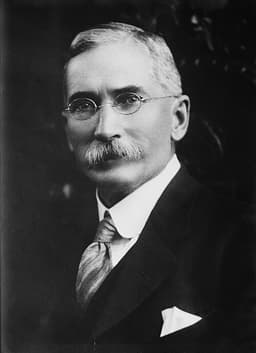
J. B. M. Hertzog
General · Modern
56.1Total
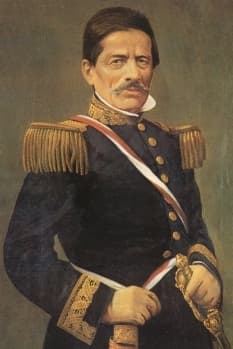
Ramon Castilla
General · Modern
59.7Total
Basic Information
Born
1866
1797
Died
1942
1867
Era
Modern
Modern
Nationality
South Africa
Peru
Occupation
General
General
Civilization
Other
Western
Score Comparison
Military (10%)
25.0
40.0
Political (20%)
60.0
72.0
Influence (20%)
56.7
56.7
Legacy (20%)
50.0
52.0
Leadership (15%)
79.8
78.0
Strategy (15%)
60.0
60.0
TOTAL
56.1
59.7
J. B. M. Hertzog — Complete Timeline
1899 AD
Boer War GeneralWar◆ Major
Hertzog served as a Boer general in the Second Boer War, commanding forces in the Orange Free State. He participated in several battles and became a prominent Afrikaner military leader.
Second Boer WarGeneralMilitary
Impact: regional
1914 AD
Founded the National PartyPolitical Action
Hertzog broke away from the South African Party and founded the National Party, which championed Afrikaner nationalism and opposed British imperial influence. The party would later implement apartheid.
National PartyAfrikaner NationalismFounding
Impact: nationalconstructive
1924 AD
Prime Minister of South AfricaPolitical Action◆ Major
Hertzog became Prime Minister after his National Party won the general election in coalition with the Labour Party. His government implemented policies to protect white workers and promote Afrikaner interests, including the 'civilized labour' policy.
Prime MinisterAfrikaner RightsLabour Policy
Impact: national
1934 AD
Merged with Smuts to Form United PartyPolitical Action◆ Major
Hertzog merged his National Party with Jan Smuts' South African Party to form the United Party. The coalition aimed to address the economic crisis of the Great Depression and promote national unity, but it alienated hardline Afrikaner nationalists.
United PartyCoalitionNational Unity
Impact: nationalconstructive
1936 AD
Passed the Representation of Natives ActReform◆ Major
Hertzog's government passed the Representation of Natives Act, which removed Black voters from the common voters' roll in the Cape Province and allowed them to elect white representatives instead. This further entrenched racial segregation.
SegregationDisenfranchisementLegislation
Impact: nationaldestructive
1939 AD
Resigned Over Neutrality in WWIIPolitical Action◆ Major
Hertzog advocated for South African neutrality in World War II, but his cabinet voted to enter the war on the Allied side. He resigned as Prime Minister and was succeeded by Jan Smuts, splitting the United Party.
World War IINeutralityResignation
Impact: national
Ramon Castilla — Complete Timeline
1824 AD
Battle of AyacuchoWar
Castilla fought as a junior officer in the decisive Battle of Ayacucho, which ended Spanish rule in Peru. This victory secured Peruvian independence and marked the end of the Spanish Empire in South America, shaping Castilla's nationalist views.
Peruvian War of IndependenceBattleLiberation
Impact: regional
1845 AD
First Presidency of PeruPolitical Action◆ Major
Castilla was elected President of Peru in 1845, serving until 1851. His first term focused on economic development, including the guano boom, and infrastructure projects such as railroads and ports, modernizing the Peruvian state.
PresidencyEconomic DevelopmentGuano
Impact: nationalconstructive
1854 AD
Abolition of Slavery in PeruReform◆ Major
During his second presidency, Castilla issued a decree abolishing slavery in Peru on December 3, 1854. This reform freed approximately 25,000 slaves and was part of a broader liberal agenda, though it faced opposition from slave-owning elites.
AbolitionSlaveryHuman Rights
Impact: nationalprogressive
Abolition of Indigenous TributeReform◆ Major
Castilla also abolished the indigenous tribute tax in 1854, which had been a burden on native communities since colonial times. This measure aimed to integrate indigenous peoples into the Peruvian state as equal citizens, though its implementation was uneven.
Indigenous RightsTax ReformCitizenship
Impact: nationalprogressive
1855 AD
Second Presidency and Guano BoomPolitical Action◆ Major
Castilla served a second term from 1855 to 1862, during the peak of the guano export boom. He used guano revenues to fund public works, pay off foreign debt, and modernize the military, but also faced criticism for corruption and over-reliance on a single resource.
PresidencyGuanoModernization
Impact: nationalconstructive
1860 AD
Constitutional Reform of 1860Reform◆ Major
Castilla oversaw the adoption of a new constitution in 1860, which established a centralized republic with a strong executive. The constitution remained in effect until 1920 and shaped Peru's political structure, though it limited regional autonomy.
ConstitutionPolitical ReformCentralization
Impact: nationalconstructive
Expert Analysis
J. B. M. Hertzog vs Ramon Castilla
# The Liberator and the Nationalist
On a December day in 1854, Ramon Castilla signed a decree that would forever change Peru—slavery was abolished. Eighty-two years later, in 1936, J. B. M. Hertzog signed a law that did the opposite for South Africa: the Representation of Natives Act removed Black voters from the common roll, entrenching racial segregation. Both men were generals who became presidents. Both rose from colonial peripheries to lead their nations. But one abolished an ancient injustice while the other codified a modern one. What drove them down such different paths?
Origins
Ramon Castilla was born in 1797 in Tarapacá, then part of the Viceroyalty of Peru, to a Spanish father and a mother of mixed ancestry. He grew up in a world where the Spanish Empire still seemed eternal, where slavery was ordinary, and where indigenous communities paid tribute to a distant king. His early career followed the colonial pattern: he joined the Spanish army, fought against independence movements, and only later switched sides. This late conversion gave him a pragmatic understanding of power—he had seen both empires and revolutions fail.
J. B. M. Hertzog was born in 1866 on a farm in the Orange Free State, a Boer republic carved out of southern Africa by Dutch-speaking settlers. His father was a farmer who had fought the British. Hertzog studied law in the Netherlands and returned to a world where the British Empire was tightening its grip. The Second Boer War of 1899 would scar him: he fought as a general, commanding forces in the Orange Free State, and witnessed the British scorched-earth tactics that burned farms and herded Boer families into concentration camps. This trauma became the furnace of his nationalism.
Rise to Power
Castilla’s path to leadership ran through the battlefield. At the Battle of Ayacucho in 1824, he fought as a junior officer in the decisive engagement that ended Spanish rule. The victory was total. For the next two decades, Peru descended into caudillo chaos—generals fighting generals, presidents toppling presidents. Castilla survived by being useful, competent, and patient. He served as minister of war, learned administration, and waited. In 1845, he was elected president. His rise was not built on a single dramatic break but on steady accumulation of trust and skill.
Hertzog’s rise was different. After the Boer War, he entered politics as a lawyer and orator. In 1914, he broke from the South African Party to found the National Party, which championed Afrikaner nationalism and the rights of the white Dutch-speaking minority. This was a break not from an empire but from fellow South Africans—specifically from Jan Smuts, the British-aligned statesman who had helped create the Union of South Africa. Hertzog’s National Party won the 1924 election in coalition with the Labour Party. He entered power not through military glory but through ethnic mobilization.
Leadership & Governance
Castilla governed during the guano boom, when Peru’s coastal islands yielded mountains of bird droppings that fertilized Europe’s fields. The money was staggering. Castilla used it to modernize: he built railways, expanded education, paid off foreign debt, and professionalized the army. But his most enduring acts were social. On December 3, 1854, he abolished slavery, freeing thousands of enslaved Africans and their descendants. Later that same year, he abolished the indigenous tribute tax, the colonial levy that had forced native communities into poverty for three centuries. In 1860, he oversaw a new constitution that centralized the republic and strengthened the executive. His leadership was reformist, pragmatic, and aimed at building a unified nation.
Hertzog’s governance was also reformist—but for a narrower constituency. He championed Afrikaner farmers, protected the Afrikaans language, and promoted white labor. His government passed tariffs to shield local industry and expanded social welfare for poor whites. But the shadow side was the 1936 Representation of Natives Act, which removed Black South Africans from the common voters’ roll in the Cape Province. This was not a sudden break: segregation had been building for decades. But Hertzog made it law, laying the legal foundation for what would become apartheid. In 1934, he merged his National Party with Smuts’ South African Party to form the United Party, a coalition that aimed to stabilize white rule while keeping the British connection.
Triumph & Tragedy
Castilla’s triumph was the abolition of slavery. It was a moral act that also served a strategic purpose: by freeing slaves, he weakened the old oligarchy and built loyalty among the freed population. His tragedy was that the guano boom was finite. After his presidency, Peru squandered the wealth, fell into debt, and lost a war with Chile. Castilla could not make the boom sustainable.
Hertzog’s triumph was the institutionalization of Afrikaner power. He gave his people dignity, language rights, and political control after the humiliation of the Boer War. His tragedy came in 1939, when World War II broke out. Hertzog argued for neutrality, but his cabinet voted to enter the war on the Allied side. He resigned, broken by the rejection. The man who had fought the British now saw his own party choose the British alliance over him.
Character & Destiny
Castilla was a pragmatist who saw that Peru could not modernize while half its population was enslaved and the other half was taxed into misery. He was not a radical—he owned slaves himself before abolishing the institution—but he was a statesman who understood that reform was the price of stability. His character was cautious, methodical, and ultimately humane.
Hertzog was a nationalist who saw the world through the lens of his people’s suffering. The Boer War had taught him that the British could not be trusted and that Afrikaners must protect themselves. His tragedy was that this defensive nationalism became exclusionary. He could not see that the Black majority had its own grievances, its own history of dispossession. Where Castilla expanded the circle of belonging, Hertzog drew it tighter.
Legacy
Castilla is remembered as Peru’s great reformer. His abolition decree is celebrated, his constitution endured for decades, and his image appears on banknotes. He is not without critics—some argue he did not go far enough, that the freed slaves remained poor, that the indigenous tribute was replaced by other burdens. But his direction was clear: toward inclusion.
Hertzog’s legacy is more contested. Among Afrikaner nationalists, he is a hero who defended their language and rights. But the 1936 Act made him a villain in the larger story of South Africa. He is a reminder that nationalism can be a force for liberation or for oppression, depending on whose rights are being advanced.
Conclusion
Castilla and Hertzog both faced the same fundamental question: who belongs to the nation? Castilla answered by freeing the enslaved and lifting the burden from the indigenous. Hertzog answered by fortifying the boundaries of his own people. Their different choices were shaped by different histories—one from a colony seeking unity after empire, the other from a conquered people seeking survival. But the lesson remains: leadership is judged not by the power one accumulates but by the circle one draws.
Rankings
🥇
Ramon CastillaLeader
Mil: 40.0Pol: 72.0Inf: 56.7
59.7
🥈
J. B. M. Hertzog
Mil: 25.0Pol: 60.0Inf: 56.7
56.1
+3.6 behind
How This Comparison Works
Algorithm
Each figure is scored on 6 dimensions (0—100 scale) based on structured historical data: Military (10%), Political (20%), Influence (20%), Legacy (20%), Leadership (15%), Strategy (15%). The weighted total produces the final ranking.
Data Sources
Scores are computed from structured sub-indicators in the database. Scale factors adjust for era (Ancient ×0.85, Modern ×1.0) and civilization size (Eastern ×1.05, Other ×0.80) to account for differences in population and military scale.
Maximum 3 Figures
Comparisons are limited to 2—3 figures to ensure readability and statistical meaningfulness.
Error Margins
±5 points per dimension — Sub-scores are derived from historical records with inherent uncertainty. Two figures within 5 points on a dimension should be considered roughly equivalent in that area.
Total Score Accuracy
±3 points overall — The weighted combination of 6 dimensions produces a total score with approximately ±3 points of uncertainty. Differences of less than 3 points are not statistically significant— the figures are effectively tied.
Known Limitations
- Historical records are incomplete and uneven across civilizations
- Figures from oral-tradition societies may be underrepresented
- Occupation labels can misclassify multi-role figures
- Scores measure capability and impact, not moral character
- Quantitative scoring is a comparison tool, not absolute truth
Capability Radar
Military (10%) — Battles & Warfare
Battles
45
45
Win Rate
40
50
Expansion
20
30
Political (20%) — Governance & Reform
Reform
60
85
Diplomacy
55
70
Economy
50
75
Influence (20%) — Cultural & Global Reach
Cultural
50
55
Global
45
50
Legacy (20%) — Historical Impact
Historical
55
65
Longevity
40
60
Leadership (15%) — Power & Stability
Tenure
65
65
Stability
45
60
Strategy (15%) — Tactics & Innovation
Strategy
50
45
Tactics
45
40
Reform
30
55
Similar Comparisons
Comments & Discussion
BourbonDecree6/16/2026
Castilla’s 1854 abolition wasn’t some moral epiphany—it was a desperate move to recruit Black soldiers during a civil war. Even then, he kept a form of indentured servitude alive. Hertzog’s 1936 Act was brutally honest about white supremacy. Stop romanticizing “liberators”; Castilla was a pragmatist, not a saint. Both men built their legacies on political convenience, not principle.
青铜逻辑6/16/2026
拿1954年的秘鲁和1936年的南非比,压根儿是跨时空耍流氓。Castilla废奴时,拉美经济还在靠大庄园和矿场撑,而Hertzog面对的是工业化后的种族隔离机器。拿“进步”尺子量不同时代,就像骂战国诸侯不够民主。历史不是直线,是泥潭里的脚印,各有各的坑。
AfrikanerReckoning6/16/2026
Every Hertzog take glides over the Land Act of 1913. By 1936, Black South Africans were already landless, voteless victims of segregation. The Natives Act just codified what was fact on the ground. Stop pretending Hertzog invented apartheid; he formalized a system his people spent decades building. Castilla at least ended chattel slavery. That’s the difference between creation and codification.
铜镜映史6/16/2026
你们都说Castilla是解放者,可他1854年给亚裔移民也搞人头税,还对智利挑衅连连。这人有光环,但也有阴影。Hertzog至少是个合格的立宪派,他搞的《原住民代表法》其实是给白人政权盖了层法治的遮羞布——问题是,遮羞布也是布。别总用今天的道德手电筒照昨天的棺材铺。
PikeAndShot6/16/2026
General vs general—but context is king. Castilla fought in a continent shaking off colonial chains; abolition was a tool for nation-building. Hertzog fought in a world hardening racial lines; disenfranchisement was a tool for ethnic survival. One abolished slavery to unify a fractured country. The other removed votes to preserve a threatened minority. Neither was pure evil or saintly. They were soldiers solving problems with the weapons their times gave them.