Loading...
J. B. M. Hertzog vs Plutarco Elias Calles
Plutarco Elias Calles leads by 2.4 pts · 2 figures compared
…
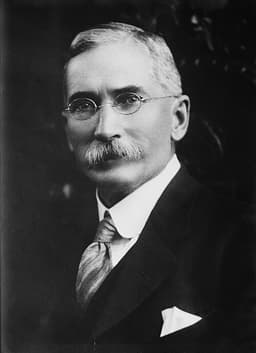
J. B. M. Hertzog
General · Modern
56.1Total
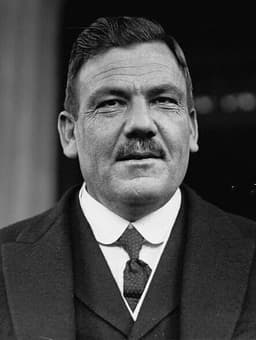
Plutarco Elias Calles
General · Modern
58.5Total
Basic Information
Born
1866
1877
Died
1942
1945
Era
Modern
Modern
Nationality
South Africa
Mexico
Occupation
General
General
Civilization
Other
Western
Score Comparison
Military (10%)
25.0
40.0
Political (20%)
60.0
70.3
Influence (20%)
56.7
68.0
Legacy (20%)
50.0
40.0
Leadership (15%)
79.8
78.0
Strategy (15%)
60.0
52.5
TOTAL
56.1
58.5
J. B. M. Hertzog — Complete Timeline
1899 AD
Boer War GeneralWar◆ Major
Hertzog served as a Boer general in the Second Boer War, commanding forces in the Orange Free State. He participated in several battles and became a prominent Afrikaner military leader.
Second Boer WarGeneralMilitary
Impact: regional
1914 AD
Founded the National PartyPolitical Action
Hertzog broke away from the South African Party and founded the National Party, which championed Afrikaner nationalism and opposed British imperial influence. The party would later implement apartheid.
National PartyAfrikaner NationalismFounding
Impact: nationalconstructive
1924 AD
Prime Minister of South AfricaPolitical Action◆ Major
Hertzog became Prime Minister after his National Party won the general election in coalition with the Labour Party. His government implemented policies to protect white workers and promote Afrikaner interests, including the 'civilized labour' policy.
Prime MinisterAfrikaner RightsLabour Policy
Impact: national
1934 AD
Merged with Smuts to Form United PartyPolitical Action◆ Major
Hertzog merged his National Party with Jan Smuts' South African Party to form the United Party. The coalition aimed to address the economic crisis of the Great Depression and promote national unity, but it alienated hardline Afrikaner nationalists.
United PartyCoalitionNational Unity
Impact: nationalconstructive
1936 AD
Passed the Representation of Natives ActReform◆ Major
Hertzog's government passed the Representation of Natives Act, which removed Black voters from the common voters' roll in the Cape Province and allowed them to elect white representatives instead. This further entrenched racial segregation.
SegregationDisenfranchisementLegislation
Impact: nationaldestructive
1939 AD
Resigned Over Neutrality in WWIIPolitical Action◆ Major
Hertzog advocated for South African neutrality in World War II, but his cabinet voted to enter the war on the Allied side. He resigned as Prime Minister and was succeeded by Jan Smuts, splitting the United Party.
World War IINeutralityResignation
Impact: national
Plutarco Elias Calles — Complete Timeline
1915 AD
Governorship of SonoraPolitical Action
Calles served as Governor of Sonora from 1915 to 1919, implementing radical reforms including land redistribution, anti-clerical laws, and labor rights. His governorship established him as a key figure in the Sonoran dynasty and a proponent of revolutionary change.
GovernorshipSonoraReforms
Impact: regionalconstructive
1924 AD
Presidency of MexicoPolitical Action◆ Major
Calles was elected President of Mexico in 1924, serving until 1928. His administration continued revolutionary reforms, including land reform, labor rights, and secularization, but also faced opposition from the Catholic Church and conservative groups.
PresidencyMexican RevolutionReforms
Impact: nationalconstructive
1926 AD
Cristero WarWar◆ Major
Calles enforced anti-clerical laws, including the Calles Law, which restricted the Catholic Church's role in society. This sparked the Cristero War (1926-1929), a violent rebellion by Catholic peasants against the state, resulting in tens of thousands of deaths.
Cristero WarAnti-clericalismReligious Conflict
Impact: nationaldestructive
1928 AD
MaximatoPolitical Action◆ Major
After his presidency, Calles remained the de facto ruler of Mexico during the Maximato (1928-1934), controlling puppet presidents. He continued to influence policy, but his power waned as President L
MaximatoPolitical ControlCárdenas
Impact: national
1929 AD
Founding of the National Revolutionary Party (PNR)Political Action
Calles founded the National Revolutionary Party (PNR) in 1929, which later became the Institutional Revolutionary Party (PRI). This party dominated Mexican politics for over 70 years, institutionalizing the revolution's legacy and centralizing power.
Political PartyPRIInstitutionalization
Impact: nationalconstructive
Expert Analysis
J. B. M. Hertzog vs Plutarco Elias Calles
### The Strongman and the Nationalist
On a dusty afternoon in 1926, Plutarco Elías Calles stood before the Mexican Congress and signed into law a decree that would ignite a civil war. Across the Atlantic, in the halls of power in Cape Town, J. B. M. Hertzog was crafting a different kind of weapon—not bullets, but ballots, designed to carve a permanent place for his people in a land they had conquered. Both men were generals turned politicians, both were architects of modern nations, yet their paths diverged into starkly different legacies. Why did one found a party that ruled for seven decades, while the other built a system that would eventually crumble under the weight of its own contradictions?
### Origins
Calles was born in 1877 in the northern state of Sonora, a hardscrabble frontier region where violence and ambition were the currencies of survival. His father was a schoolteacher, his mother a devout Catholic, but the young Calles grew up in a world shaped by the chaos of the Porfiriato—a dictatorship that modernized Mexico at the cost of crushing the poor. He became a teacher himself, then a revolutionary, his mind molded by the positivist philosophy of the era: progress through order, science over superstition.
Hertzog, born eleven years earlier in 1866, came from a different frontier—the veld of the Orange Free State. His family were Boers, descendants of Dutch settlers who had trekked into the interior to escape British rule. He studied law in Europe and returned to a land where the memory of the Anglo-Boer War was still raw. For Hertzog, the enemy was not a dictator but an empire. His nationalism was defensive, rooted in the fear that Afrikaner language and culture would be swallowed by English-speaking dominance.
### Rise to Power
Calles rose through the crucible of the Mexican Revolution. He served as governor of Sonora from 1915 to 1919, where he earned a reputation as a radical reformer. He redistributed land to peasants, attacked the power of the Catholic Church, and built a network of loyalists. In 1924, he was elected president—a victory that marked the triumph of the revolutionary faction he represented. But his true genius lay in what came next: when his term ended in 1928, he refused to simply vanish. Instead, he engineered the Maximato, a shadow rule that lasted until 1934, controlling puppet presidents from behind the scenes.
Hertzog’s path was more conventional but no less ruthless. After serving as a Boer general in the Second Boer War, where he fought in the guerrilla campaigns that frustrated the British, he entered politics. In 1914, he broke with the South African Party to found the National Party, a vehicle for Afrikaner grievances. The moment came in 1924, when his party won the general election in coalition with the Labour Party. He became prime minister, and for the next fifteen years, he would be the voice of Afrikaner nationalism.
### Leadership & Governance
Calles governed with the iron pragmatism of a revolutionary turned institutionalist. His signature achievement was the Calles Law of 1926, which restricted the Catholic Church’s role in education, property, and public life. The law triggered the Cristero War, a bloody three-year rebellion that killed tens of thousands. Calles did not flinch; he saw the Church as a rival to the state, and he crushed it with military force. In 1929, he founded the National Revolutionary Party (PNR), a political machine that would absorb all factions, from generals to labor unions, into a single, disciplined organization. This was his masterstroke: a party that could manage conflict without violence, ensuring stability through co-optation.
Hertzog’s governance was more subtle but equally transformative. He championed Afrikaner rights by promoting the Afrikaans language, protecting white farmers, and passing laws that entrenched racial segregation. In 1936, his government passed the Representation of Natives Act, which removed Black voters from the common voters’ roll in the Cape Province. This was not the full-blown apartheid of later decades, but it laid the legal foundation. Hertzog believed in a “South Africa for the white man,” yet he also sought to unite English and Afrikaner whites. In 1934, he merged his National Party with Jan Smuts’ South African Party to form the United Party, a grand coalition that aimed to bury old Boer-British hatreds.
### Triumph & Tragedy
Calles’ triumph was the creation of the PRI, a party that would rule Mexico uninterrupted until 2000. His tragedy was the Cristero War, a conflict that scarred the nation and revealed the limits of state power. He died in 1945, exiled in Los Angeles, a bitter end for a man who had once been the undisputed strongman of Mexico.
Hertzog’s triumph was the entrenchment of Afrikaner identity in the South African state. His tragedy came in 1939, when he advocated for neutrality in World War II. His cabinet voted to enter the war on the Allied side, and Hertzog resigned, a broken man. He died three years later, his vision of a neutral, Afrikaner-led South Africa shattered by the realities of global conflict.
### Character & Destiny
Calles was a builder of institutions, a man who understood that personal power is fleeting but a party can endure. He was cold, calculating, and utterly unsentimental. His destiny was to create a machine that would outlive him, but also to be consumed by it—the Maximato ended when his own protégé, Lázaro Cárdenas, turned against him and exiled him.
Hertzog was a man of principle, stubborn and proud. He believed in the righteousness of the Afrikaner cause, but his nationalism was narrow, unable to accommodate the majority of South Africans. His destiny was to lay the groundwork for a system that would eventually be condemned by the world, and to be remembered as a father of segregation rather than a champion of his people.
### Legacy
Calles is remembered as the founder of modern Mexico’s political system, a man who brought stability after a decade of revolution. But his legacy is deeply ambivalent: the PRI brought peace, but also authoritarianism and corruption. Today, Mexicans debate whether he was a necessary evil or a tyrant in a general’s uniform.
Hertzog is remembered as a hero to Afrikaner nationalists, but to most South Africans, he is a figure of division. His laws paved the way for apartheid, and his name is often invoked as a warning against ethnic nationalism. Yet he also fought for a distinct cultural identity, and his statue still stands in Bloemfontein, a reminder of a past that cannot be erased.
### Conclusion
Two generals, two nations, two visions of order. Calles built a party that absorbed all conflict, Hertzog built a nation that excluded most of its people. One sought to control the future by managing the present, the other by preserving the past. Their stories remind us that the greatest architects of modern states are often the ones who understand power better than justice, and that the institutions they leave behind can be both a gift and a curse. In the end, both men were prisoners of their own solutions—Calles of his machine, Hertzog of his dream.
Rankings
🥇
Plutarco Elias CallesLeader
Mil: 40.0Pol: 70.3Inf: 68.0
58.5
🥈
J. B. M. Hertzog
Mil: 25.0Pol: 60.0Inf: 56.7
56.1
+2.4 behind
How This Comparison Works
Algorithm
Each figure is scored on 6 dimensions (0—100 scale) based on structured historical data: Military (10%), Political (20%), Influence (20%), Legacy (20%), Leadership (15%), Strategy (15%). The weighted total produces the final ranking.
Data Sources
Scores are computed from structured sub-indicators in the database. Scale factors adjust for era (Ancient ×0.85, Modern ×1.0) and civilization size (Eastern ×1.05, Other ×0.80) to account for differences in population and military scale.
Maximum 3 Figures
Comparisons are limited to 2—3 figures to ensure readability and statistical meaningfulness.
Error Margins
±5 points per dimension — Sub-scores are derived from historical records with inherent uncertainty. Two figures within 5 points on a dimension should be considered roughly equivalent in that area.
Total Score Accuracy
±3 points overall — The weighted combination of 6 dimensions produces a total score with approximately ±3 points of uncertainty. Differences of less than 3 points are not statistically significant— the figures are effectively tied.
Known Limitations
- Historical records are incomplete and uneven across civilizations
- Figures from oral-tradition societies may be underrepresented
- Occupation labels can misclassify multi-role figures
- Scores measure capability and impact, not moral character
- Quantitative scoring is a comparison tool, not absolute truth
Capability Radar
Military (10%) — Battles & Warfare
Battles
45
45
Win Rate
40
50
Expansion
20
30
Political (20%) — Governance & Reform
Reform
60
85
Diplomacy
55
65
Economy
50
60
Influence (20%) — Cultural & Global Reach
Cultural
50
70
Global
45
60
Legacy (20%) — Historical Impact
Historical
55
75
Longevity
40
70
Leadership (15%) — Power & Stability
Tenure
65
70
Stability
45
55
Strategy (15%) — Tactics & Innovation
Strategy
50
55
Tactics
45
40
Reform
30
60
Similar Comparisons
Comments & Discussion
Weltevreden Warrior6/16/2026
The problem with this "strongman vs nationalist" framing? It's too tidy. Hertzog wasn't just crafting ballots—he was crafting a racial hierarchy through the 1913 Land Act's expansion, stripping black South Africans of 87% of the land. Calles, for all his anticlerical brutality (the Cristero War killed 90,000), at least built a corporatist state that co-opted workers and peasants, not just whites. Both were authoritarian, but Hertzog's legacy is apartheid's legal skeleton, while Calles' PNR evolv
古典学者紫6/16/2026
把克列斯和赫佐格并列,表面是在比强人,实际忽略了一个关键:克列斯是天生的世俗理性主义者,他推行的教育改革废除了神学院控制,彻底把墨西哥从教权社会扳向科学治国,哪怕手段狠得像拿刀砍绳子;而赫佐格,一个学了欧洲法律的布尔人,骨子里还是殖民地自尊心作祟,他搞的“南非白人优先”政策根本不是国家建设,只是把种族隔离合法化。两人都爱权力,但一个想重建国家,一个只想巩固特权。别混为一谈。
Data Skeptic Steve6/16/2026
Comparing their "legacies" without concrete metrics is lazy. Calles founded the PNR, which ruled Mexico for 71 years—that's institutional longevity. Hertzog's South African Party lasted barely a decade before merging into the United Party. Different trajectories: Calles used state violence and corporatism to stabilize (GDP growth 2.3% annually in the 1920s), while Hertzog's racial policies stunted economic inclusion (black wages stayed at 10% of white wages). The numbers don't lie—Calles built a
历史漫游者明6/16/2026
两人都是国家设计师,但我更关心他们的裂痕。克列斯1926年圣哲条款引发基督战,说白了是他在用法律当锤子砸天主教这颗钉子,结果逼出了几十万农民武装反抗,死后还被人骂“土匪总统”;而赫佐格1930年代小心翼翼地绕过英联邦,搞出“南非宪法解决”,看似优雅,实际是在种族政策上一步步滑向深渊。前者轰烈地炸了社会,后者悄无声息地埋了地雷——哪个更糟?我选后者,因为祸根埋得深。
Revisionist in the Attic6/16/2026
Let's not whitewash Calles as a "modernizer." He was a corrupt authoritarian who packed Congress with his cronies, looted state funds (the "Maximato" era saw embezzlement scandals), and suppressed any opposition—including labor unions he