Loading...
J. B. M. Hertzog vs Oscar Mejia Victores
J. B. M. Hertzog leads by 4.2 pts · 2 figures compared
…
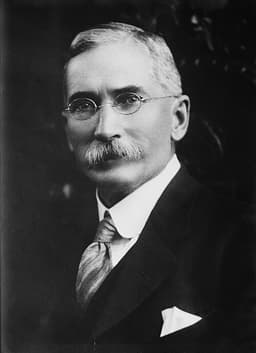
J. B. M. Hertzog
General · Modern
56.1Total

Oscar Mejia Victores
General · Modern
51.9Total
Basic Information
Born
1866
1930
Died
1942
—
Era
Modern
Modern
Nationality
South Africa
Guatemala
Occupation
General
General
Civilization
Other
Western
Score Comparison
Military (10%)
25.0
22.6
Political (20%)
60.0
68.0
Influence (20%)
56.7
50.2
Legacy (20%)
50.0
43.3
Leadership (15%)
79.8
80.0
Strategy (15%)
60.0
41.0
TOTAL
56.1
51.9
J. B. M. Hertzog — Complete Timeline
1899 AD
Boer War GeneralWar◆ Major
Hertzog served as a Boer general in the Second Boer War, commanding forces in the Orange Free State. He participated in several battles and became a prominent Afrikaner military leader.
Second Boer WarGeneralMilitary
Impact: regional
1914 AD
Founded the National PartyPolitical Action
Hertzog broke away from the South African Party and founded the National Party, which championed Afrikaner nationalism and opposed British imperial influence. The party would later implement apartheid.
National PartyAfrikaner NationalismFounding
Impact: nationalconstructive
1924 AD
Prime Minister of South AfricaPolitical Action◆ Major
Hertzog became Prime Minister after his National Party won the general election in coalition with the Labour Party. His government implemented policies to protect white workers and promote Afrikaner interests, including the 'civilized labour' policy.
Prime MinisterAfrikaner RightsLabour Policy
Impact: national
1934 AD
Merged with Smuts to Form United PartyPolitical Action◆ Major
Hertzog merged his National Party with Jan Smuts' South African Party to form the United Party. The coalition aimed to address the economic crisis of the Great Depression and promote national unity, but it alienated hardline Afrikaner nationalists.
United PartyCoalitionNational Unity
Impact: nationalconstructive
1936 AD
Passed the Representation of Natives ActReform◆ Major
Hertzog's government passed the Representation of Natives Act, which removed Black voters from the common voters' roll in the Cape Province and allowed them to elect white representatives instead. This further entrenched racial segregation.
SegregationDisenfranchisementLegislation
Impact: nationaldestructive
1939 AD
Resigned Over Neutrality in WWIIPolitical Action◆ Major
Hertzog advocated for South African neutrality in World War II, but his cabinet voted to enter the war on the Allied side. He resigned as Prime Minister and was succeeded by Jan Smuts, splitting the United Party.
World War IINeutralityResignation
Impact: national
Oscar Mejia Victores — Complete Timeline
1983 AD
1983 Guatemalan coup d'étatPolitical Action◆ Major
Mejia Victores, then Defense Minister, led a coup that ousted President Efrain Rios Montt. He assumed the presidency, becoming the last military ruler of Guatemala.
CoupMilitary RuleGuatemala
Impact: nationaldestructive
1984 AD
Human rights abuses during his ruleOther◆ Major
During his presidency, Mejia Victores' government continued counterinsurgency operations that resulted in forced disappearances and massacres of indigenous Maya communities, as documented by truth commissions.
Human RightsCivil WarAtrocities
Impact: nationaltragic
1985 AD
Transition to civilian rulePolitical Action
Under pressure, Mejia Victores oversaw the drafting of a new constitution and called for democratic elections. He transferred power to civilian President Vinicio Cerezo in 1986, ending decades of military rule.
DemocratizationConstitutionElection
Impact: nationalconstructive
Expert Analysis
J. B. M. Hertzog vs Oscar Mejia Victores
# The General as Statesman: Two Paths from Battlefield to Power
On a crisp September morning in 1939, J. B. M. Hertzog sat in his Cape Town office, a man caught between two worlds. Across the Atlantic, Hitler’s armies were marching into Poland, and Hertzog’s cabinet had just voted to join the Allied war effort. But Hertzog, the old Boer general who had once fought the British Empire, could not bring himself to side with Britain again. He resigned rather than compromise. Half a century later and an ocean away, another general named Oscar Mejia Victores faced a different kind of turning point. In 1985, after two years of presiding over a brutal counterinsurgency campaign, he voluntarily handed power to a civilian government. Both men were generals who became politicians. Both shaped their nations at critical moments. Yet their paths diverged in ways that reveal how character, history, and circumstance conspire to create very different legacies.
Origins
James Barry Munnik Hertzog was born in 1866 on a farm in the Cape Colony, the son of a Boer farmer who had fought the British in the frontier wars. He grew up speaking Afrikaans, reading the Bible, and absorbing the deep resentment of British imperialism that simmered among his people. He studied law in Amsterdam and returned to South Africa as a lawyer and judge, but the outbreak of the Second Boer War in 1899 pulled him from the courtroom to the battlefield. He rose to become a Boer general, commanding guerrilla forces in the Orange Free State. His war experience was not just a military education—it was the crucible of his identity. He saw his people defeated, their farms burned, their women and children herded into British concentration camps. That trauma would drive his politics for the rest of his life.
Oscar Mejia Victores came into the world sixty-four years later, in 1930, in Guatemala City. He was a product of a different kind of colonial legacy—the brutal, unstable world of Central American military dictatorships. Guatemala had been ruled by a series of strongmen, many of them generals, since independence. Mejia Victores entered the military academy, rose through the ranks, and by 1983 was serving as Defense Minister under General Efrain Rios Montt, a man whose name had become synonymous with state terror. If Hertzog’s formative experience was fighting the British, Mejia Victores’ was serving a regime that was fighting its own people.
Rise to Power
Hertzog’s rise was political as much as military. After the Boer War, he entered the new Union of South Africa’s parliament as a member of the South African Party. But he soon broke away, frustrated by what he saw as the party’s accommodation with British dominance. In 1914, he founded the National Party, a vehicle for Afrikaner nationalism. It was a turning point that would reshape South African politics. The National Party spoke directly to the grievances of poor white Afrikaners, promising to protect their language, culture, and economic interests. For a decade, Hertzog built his movement, and in 1924, his party won the general election in coalition with the Labour Party. He became Prime Minister, a post he would hold for fifteen years.
Mejia Victores’ path to power was far swifter and bloodier. On August 8, 1983, he led a coup that ousted Rios Montt, his own superior. The official reason was corruption and mismanagement, but the real motive was more complex. Rios Montt’s scorched-earth campaign against leftist guerrillas had drawn international condemnation, and the military high command feared it was destabilizing the country. Mejia Victores stepped into the presidency as the latest in a long line of military rulers. He was, by all accounts, not a visionary or a reformer. He was a man who had seen which way the wind was blowing and decided to take control before someone else did.
Leadership & Governance
As Prime Minister, Hertzog governed with a clear, unwavering purpose: to advance the cause of Afrikaners. He passed laws to make Afrikaans an official language alongside English, to protect white farmers, and to shield South Africa from British interference. His political wisdom lay in his ability to build coalitions—first with Labour, then, in 1934, with his old rival Jan Smuts, merging their parties into the United Party to face the economic challenges of the Great Depression. But his vision had a dark side. In 1936, his government passed the Representation of Natives Act, which removed Black South Africans from the common voters' roll in the Cape Province. It was a foundational step on the road to apartheid. Hertzog saw himself as a defender of his people, but his definition of "his people" was narrow and exclusive.
Mejia Victores governed in a different key. His two years in power were marked by the same counterinsurgency tactics that had defined his predecessor. Human rights abuses continued—forced disappearances, extrajudicial killings, the systematic terrorization of indigenous Maya communities. The United Nations and Amnesty International documented the atrocities. Yet Mejia Victores also showed a pragmatic streak that his predecessor lacked. Under pressure from the United States and international human rights groups, he agreed to a transition to civilian rule. In 1985, he oversaw the drafting of a new constitution and called for democratic elections. He stepped down peacefully, handing power to a civilian president. It was not a noble act—it was a calculated one, designed to preserve the military's influence behind the scenes. But it was a transition nonetheless.
Triumph & Tragedy
Hertzog’s greatest triumph was the creation of a political movement that gave voice to a marginalized people. He elevated the Afrikaans language, protected Afrikaner farmers, and asserted South Africa’s independence from Britain. His greatest tragedy was that he did so at the expense of the country’s Black majority. The 1936 Act was not just a betrayal of the liberal Cape tradition—it was a poison that would fester for decades. Hertzog’s legacy is inseparable from the apartheid system that his party would later perfect.
Mejia Victores’ triumph was his orderly transfer of power. In a region where military rulers often clung to power until they were overthrown or killed, he stepped aside. His tragedy was the human cost of his rule. The disappeared, the tortured, the murdered—their names are not recorded in the official histories, but their absence is a permanent stain. He was not the worst of Guatemala’s generals, but he was complicit in a system of terror.
Character & Destiny
Hertzog was stubborn, principled, and narrow. He had the moral clarity of a man who had seen his people suffer and believed that their survival justified any measure. He was not corrupt or personally cruel—he was, by many accounts, a decent family man. But his decency did not extend beyond the boundaries of his tribe. His character shaped his decisions: the refusal to compromise on neutrality in 1939 was not just political—it was a matter of honor, rooted in the memory of British concentration camps.
Mejia Victores was more pragmatic, more cynical, and perhaps more realistic. He understood that the old model of military dictatorship was unsustainable. He did not believe in democracy, but he recognized its inevitability. His character was that of a survivor, not a visionary. He was not driven by ideology but by calculation. That allowed him to do what Hertzog could not: let go of power.
Legacy
Hertzog is remembered in South Africa as a founding father of Afrikaner nationalism and a complex figure in the country’s painful history. His statue stands in Bloemfontein, but his name is also invoked as a warning—a reminder of how the fight for one group’s rights can become the oppression of another. His total score of 68.1 reflects this ambiguity: high in political influence and leadership, but shadowed by the consequences of his policies.
Mejia Victores is largely forgotten outside Guatemala. His legacy is the democratic transition he enabled, however imperfect. But it is also the violence that continued in the shadows. His total score of 64.7 places him slightly below Hertzog, but the comparison is misleading. One man built a system that lasted for decades; the other dismantled a system that should never have existed.
Conclusion
Both men were generals who became statesmen, but they used their power in opposite directions. Hertzog built walls around his people; Mejia Victores opened a door. One fought to preserve a past that was already dying; the other accepted a future he could not control. Their stories remind us that leadership is never just about power—it is about what you choose to do with it, and whom you choose to include in your vision of the nation. In the end, the measure of a leader is not the battles they win, but the peace they leave behind.
Rankings
🥇
J. B. M. HertzogLeader
Mil: 25.0Pol: 60.0Inf: 56.7
56.1
🥈
Oscar Mejia Victores
Mil: 22.6Pol: 68.0Inf: 50.2
51.9
+4.2 behind
How This Comparison Works
Algorithm
Each figure is scored on 6 dimensions (0—100 scale) based on structured historical data: Military (10%), Political (20%), Influence (20%), Legacy (20%), Leadership (15%), Strategy (15%). The weighted total produces the final ranking.
Data Sources
Scores are computed from structured sub-indicators in the database. Scale factors adjust for era (Ancient ×0.85, Modern ×1.0) and civilization size (Eastern ×1.05, Other ×0.80) to account for differences in population and military scale.
Maximum 3 Figures
Comparisons are limited to 2—3 figures to ensure readability and statistical meaningfulness.
Error Margins
±5 points per dimension — Sub-scores are derived from historical records with inherent uncertainty. Two figures within 5 points on a dimension should be considered roughly equivalent in that area.
Total Score Accuracy
±3 points overall — The weighted combination of 6 dimensions produces a total score with approximately ±3 points of uncertainty. Differences of less than 3 points are not statistically significant— the figures are effectively tied.
Known Limitations
- Historical records are incomplete and uneven across civilizations
- Figures from oral-tradition societies may be underrepresented
- Occupation labels can misclassify multi-role figures
- Scores measure capability and impact, not moral character
- Quantitative scoring is a comparison tool, not absolute truth
Capability Radar
Military (10%) — Battles & Warfare
Battles
45
10
Win Rate
40
10
Expansion
20
5
Political (20%) — Governance & Reform
Reform
60
55
Diplomacy
55
50
Economy
50
30
Influence (20%) — Cultural & Global Reach
Cultural
50
15
Global
45
15
Legacy (20%) — Historical Impact
Historical
55
30
Longevity
40
20
Leadership (15%) — Power & Stability
Tenure
65
40
Stability
45
35
Strategy (15%) — Tactics & Innovation
Strategy
50
15
Tactics
45
15
Reform
30
20
Similar Comparisons
Comments & Discussion
BOER GENERAL'S GHOST6/16/2026
Hertzog's 1939 resignation isn't just principled—it's the ghost of the Boer War refusing to die. He chose personal honor over governing, leaving South Africa exposed to Jan Smuts' pro-British dominance. Compare that to Mejia Victores, who actually stayed and managed a transition. Hertzog's noble walkout gave apartheid's architects a freer hand, while the Guatemalan general's handover, however flawed, at least kept the door open for civilian rule. Principles without power are just expensive souve
破晓之矛6/16/2026
拿赫佐格和梅希亚比?根本是驴唇不对马嘴!赫佐格至少是反抗帝国主义的老布尔将军,1939年宁可辞职也不帮大英打仗,这叫骨气。梅希亚呢?杀完玛雅人20万就拍拍屁股走人,这叫有良知?别往他脸上贴金了。赫佐格的遗产是阿非利卡民族党,梅希亚的遗产是瓜地马拉的万人坑——这也能并列?历史不是和稀泥!|zh|评论...
NUMBERS DON'T LIE6/16/2026
The comparison glosses over a fatal asymmetry: Hertzog resigned over a parliamentary vote that split 66-26 for war—that's democracy in action, even if ugly. Mejia Victores' "voluntary handover" came after his regime's death squads had averaged 200 disappearances per month in 1983-84. You can't equate a general who lost a vote over foreign policy with one who lost legitimacy over crimes against humanity. The statistical difference in civilian casualties alone makes this comparison intellectually
民主的梦游者6/16/2026
我同意数据派,但说更深层问题:赫佐格代表的是种族隔离前白人内部分裂,梅希亚则是冷战代理人战争。赫佐格辞职不是因为良心发现,而是因为大英帝国触犯了他的族群忠诚——他随后推动的《土地法》等种族政策直接铺垫了后来的种族隔离。梅希亚的“下台”则是美国施压的结果,不是良心驱驶。两人本质都是军阀转型政客,只是牌桌不同罢了。|zh|评论...
CALCULUS OF HONOR6/16/2026
Let's be precise: Hertzog's resignation wasn't noble—it was strategic miscalculation. He misjudged the Anglo-Boer trauma's electoral power, assuming most Afrikaners shared his isolationist zeal. They didn't. Post-war South Africa went full pro-British until 1948. Meanwhile, Mejia Victores correctly read Washington's impatience with overt brutality and cut his losses. One man misread his people's psychology; the other read geopolitics coldly. Both lost power, but only one understood