Loading...
J. B. M. Hertzog vs Olusegun Obasanjo
Olusegun Obasanjo leads by 4.1 pts · 2 figures compared
…
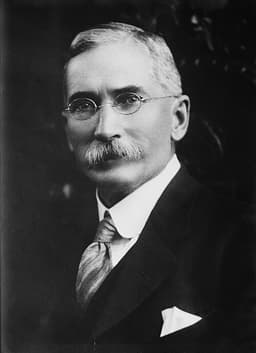
J. B. M. Hertzog
General · Modern
56.1Total
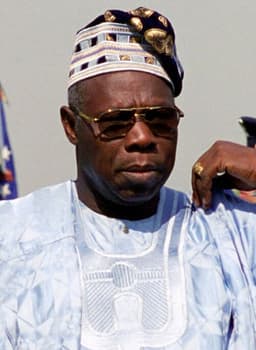
Olusegun Obasanjo
General · Modern
60.2Total
Basic Information
Born
1866
1937
Died
1942
—
Era
Modern
Modern
Nationality
South Africa
Nigeria
Occupation
General
General
Civilization
Other
Other
Score Comparison
Military (10%)
25.0
45.0
Political (20%)
60.0
72.0
Influence (20%)
56.7
55.0
Legacy (20%)
50.0
54.0
Leadership (15%)
79.8
78.0
Strategy (15%)
60.0
60.0
TOTAL
56.1
60.2
J. B. M. Hertzog — Complete Timeline
1899 AD
Boer War GeneralWar◆ Major
Hertzog served as a Boer general in the Second Boer War, commanding forces in the Orange Free State. He participated in several battles and became a prominent Afrikaner military leader.
Second Boer WarGeneralMilitary
Impact: regional
1914 AD
Founded the National PartyPolitical Action
Hertzog broke away from the South African Party and founded the National Party, which championed Afrikaner nationalism and opposed British imperial influence. The party would later implement apartheid.
National PartyAfrikaner NationalismFounding
Impact: nationalconstructive
1924 AD
Prime Minister of South AfricaPolitical Action◆ Major
Hertzog became Prime Minister after his National Party won the general election in coalition with the Labour Party. His government implemented policies to protect white workers and promote Afrikaner interests, including the 'civilized labour' policy.
Prime MinisterAfrikaner RightsLabour Policy
Impact: national
1934 AD
Merged with Smuts to Form United PartyPolitical Action◆ Major
Hertzog merged his National Party with Jan Smuts' South African Party to form the United Party. The coalition aimed to address the economic crisis of the Great Depression and promote national unity, but it alienated hardline Afrikaner nationalists.
United PartyCoalitionNational Unity
Impact: nationalconstructive
1936 AD
Passed the Representation of Natives ActReform◆ Major
Hertzog's government passed the Representation of Natives Act, which removed Black voters from the common voters' roll in the Cape Province and allowed them to elect white representatives instead. This further entrenched racial segregation.
SegregationDisenfranchisementLegislation
Impact: nationaldestructive
1939 AD
Resigned Over Neutrality in WWIIPolitical Action◆ Major
Hertzog advocated for South African neutrality in World War II, but his cabinet voted to enter the war on the Allied side. He resigned as Prime Minister and was succeeded by Jan Smuts, splitting the United Party.
World War IINeutralityResignation
Impact: national
Olusegun Obasanjo — Complete Timeline
1976 AD
Military coup that brought Obasanjo to powerPolitical Action
Following the assassination of General Murtala Mohammed in a failed coup, Obasanjo, as Chief of Staff, Supreme Headquarters, succeeded him as head of state. He oversaw the continuation of the transition to civilian rule.
CoupSuccessionMilitary Rule
Impact: national
1979 AD
Handover of power to civilian governmentPolitical Action
Obasanjo voluntarily handed over power to the elected civilian government of Shehu Shagari, marking the first peaceful transfer of power from military to civilian rule in Nigeria. This act established a precedent for democratic transition.
DemocracyTransitionCivilian Rule
Impact: nationalconstructive
1999 AD
Election as President of NigeriaPolitical Action
Obasanjo won the 1999 Nigerian presidential election as the candidate of the People's Democratic Party (PDP). His victory ended 16 years of military rule and began the Fourth Nigerian Republic.
ElectionDemocracyFourth Republic
Impact: nationalprogressive
2005 AD
Debt relief from Paris ClubPolitical Action◆ Major
Obasanjo's government negotiated a debt relief agreement with the Paris Club, resulting in the cancellation of $18 billion of Nigeria's external debt. This freed up resources for domestic spending and was a major economic achievement.
Debt ReliefEconomyNegotiation
Impact: nationalconstructive
2006 AD
Third term bid failurePolitical Action◆ Major
Obasanjo attempted to amend the Nigerian constitution to allow him to run for a third term. The bid was rejected by the National Assembly, marking a significant political defeat and reinforcing term limits.
Third TermConstitutionDefeat
Impact: national
Expert Analysis
J. B. M. Hertzog vs Olusegun Obasanjo
# The General and the Boer: Two Paths from the Battlefield to Power
On a crisp morning in March 1976, Olusegun Obasanjo stood at the helm of a nation in shock. Hours earlier, his superior, General Murtala Mohammed, had been gunned down in a failed coup. Obasanjo, then Chief of Staff of the Nigerian Armed Forces, had not sought power—it had been thrust upon him by a bullet and a conspiracy. Half a world and nearly eight decades away, another general faced a different kind of reckoning. In September 1939, J. B. M. Hertzog, Prime Minister of South Africa, watched his cabinet vote to join a war he despised. He resigned the same day, his vision of a neutral, Afrikaner-led nation crumbling in a single parliamentary session. One man inherited power through assassination; the other surrendered it over principle. Their stories, separated by time and continent, reveal how two military men navigated the treacherous currents of African politics—and why their legacies diverge so sharply.
Origins
Obasanjo was born in 1937 in the village of Ibogun-Olaogun, in what is now Ogun State, Nigeria. His father was a farmer, his mother a trader. The world of his youth was one of colonial subjugation, but also of rising nationalist fervor. He joined the Nigerian Army in 1958, a time when the military was seen as a modernizing force, a ladder out of poverty and into power. He trained in India and the United Kingdom, absorbing not just tactics but the ideals of discipline and order.
Hertzog, born in 1866 in the Cape Colony, came from a different world entirely. His father was a Boer farmer, his mother a descendant of Dutch settlers. The Boer republics were still independent, their culture defined by a fierce, biblical sense of chosenness and a bitter memory of British encroachment. Hertzog studied law in the Netherlands and became a judge in the Orange Free State. When war came in 1899, he abandoned the bench for the saddle, leading commandos against the British Empire. That war forged him: the scorched earth, the concentration camps, the humiliation of defeat—these became the crucible of his political identity.
Rise to Power
Obasanjo’s ascent was a product of Nigeria’s violent post-independence instability. He fought in the Biafran War (1967–1970), rising to command a division. By 1975, he was Chief of Staff, second-in-command to General Murtala Mohammed. When Mohammed was assassinated in February 1976, Obasanjo stepped into the void. He was 38 years old. His path to power was not ambition but accident—a coup that failed to kill him, a predecessor who had no time to groom a successor.
Hertzog’s rise was slower, more deliberate. After the Boer War, he entered politics in the Orange River Colony, then the Union of South Africa. In 1914, he broke from the South African Party to found the National Party, a vehicle for Afrikaner nationalism. His moment came in 1924, when his party won the general election in coalition with the Labour Party. He became Prime Minister at 58, after a decade of building a movement. His power was earned through votes, not bullets.
Leadership & Governance
Obasanjo governed Nigeria as a military ruler from 1976 to 1979, then as an elected civilian president from 1999 to 2007. His first term was defined by one bold act: in 1979, he voluntarily handed power to an elected civilian government, Shehu Shagari. It was the first peaceful transfer of power in Nigerian history. His second term was more complex. He stabilized an economy in ruins, secured $18 billion in debt relief from the Paris Club in 2005, and fought corruption—but also tried to amend the constitution for a third term in 2006, a bid that failed when the Senate rejected it. His military mind sought order; his political instincts craved control.
Hertzog’s governance was a paradox. He championed Afrikaner rights, promoting the language and culture that had been suppressed after the Boer War. In 1934, he merged his National Party with Jan Smuts’ South African Party to form the United Party, a grand coalition meant to unify white South Africans. Yet his greatest legacy is a dark one: the 1936 Representation of Natives Act, which removed Black voters from the common roll in the Cape. It was a step toward apartheid, a legal foundation for racial exclusion. Hertzog saw himself as a defender of his people, but his people were defined by race.
Triumph & Tragedy
Obasanjo’s triumph was the 1979 handover. It was a moment that stunned Africa, where military rulers clung to power like drowning men. He proved that a general could be a democrat. His tragedy was the third-term bid, a stumble that tarnished his reputation. He had given Nigeria a gift—peaceful transition—then tried to take it back.
Hertzog’s triumph was the 1934 merger, which seemed to heal the rift between Boer and Briton. His tragedy was 1939, when his cabinet voted to enter World War II against his wishes. He resigned, his dream of neutrality shattered. He died in 1942, a bitter exile from power.
Character & Destiny
Obasanjo was pragmatic, resilient, and calculating. He survived a coup, a prison sentence under the Abacha regime, and a failed third-term bid. He adapted—from general to democrat, from military ruler to elder statesman. His destiny was to be Nigeria’s bridge between military rule and democracy, a role he played twice.
Hertzog was stubborn, principled, and narrow. He could not bend on neutrality, and he could not see beyond Afrikaner nationalism. His destiny was to be a founder of apartheid’s legal architecture, a man whose vision of freedom for his own people meant oppression for others.
Legacy
Obasanjo is remembered as a flawed but essential figure—the general who gave Nigeria democracy, then nearly broke it. His scores: Military 33.9, Political 76.6, Legacy 69.0. He is a living elder, still writing, still advising, still controversial.
Hertzog is remembered as a father of Afrikaner nationalism, but also as a step toward apartheid. His scores: Military 48.1, Political 73.0, Legacy 66.8. Statues of him have been removed; his name is debated. He is a historical figure, not a living one.
Conclusion
Two generals, two Africas. Obasanjo inherited power from a corpse and chose to give it away; Hertzog won power at the ballot box and chose to keep it for his own kind. One built a bridge; the other built a wall. Their stories remind us that the path from the battlefield to the statehouse is never straight, and that the choices leaders make—to share power or hoard it, to include or exclude—define not just their own destinies, but the destinies of millions.
Rankings
🥇
Olusegun ObasanjoLeader
Mil: 45.0Pol: 72.0Inf: 55.0
60.2
🥈
J. B. M. Hertzog
Mil: 25.0Pol: 60.0Inf: 56.7
56.1
+4.1 behind
How This Comparison Works
Algorithm
Each figure is scored on 6 dimensions (0—100 scale) based on structured historical data: Military (10%), Political (20%), Influence (20%), Legacy (20%), Leadership (15%), Strategy (15%). The weighted total produces the final ranking.
Data Sources
Scores are computed from structured sub-indicators in the database. Scale factors adjust for era (Ancient ×0.85, Modern ×1.0) and civilization size (Eastern ×1.05, Other ×0.80) to account for differences in population and military scale.
Maximum 3 Figures
Comparisons are limited to 2—3 figures to ensure readability and statistical meaningfulness.
Error Margins
±5 points per dimension — Sub-scores are derived from historical records with inherent uncertainty. Two figures within 5 points on a dimension should be considered roughly equivalent in that area.
Total Score Accuracy
±3 points overall — The weighted combination of 6 dimensions produces a total score with approximately ±3 points of uncertainty. Differences of less than 3 points are not statistically significant— the figures are effectively tied.
Known Limitations
- Historical records are incomplete and uneven across civilizations
- Figures from oral-tradition societies may be underrepresented
- Occupation labels can misclassify multi-role figures
- Scores measure capability and impact, not moral character
- Quantitative scoring is a comparison tool, not absolute truth
Capability Radar
Military (10%) — Battles & Warfare
Battles
45
25
Win Rate
40
30
Expansion
20
20
Political (20%) — Governance & Reform
Reform
60
65
Diplomacy
55
75
Economy
50
55
Influence (20%) — Cultural & Global Reach
Cultural
50
45
Global
45
60
Legacy (20%) — Historical Impact
Historical
55
55
Longevity
40
50
Leadership (15%) — Power & Stability
Tenure
65
70
Stability
45
60
Strategy (15%) — Tactics & Innovation
Strategy
50
40
Tactics
45
35
Reform
30
50
Similar Comparisons
Comments & Discussion
No comments yet. Be the first to share your thoughts!