Loading...
J. B. M. Hertzog vs Nicolas Soult
Nicolas Soult leads by 6.6 pts · 2 figures compared
…
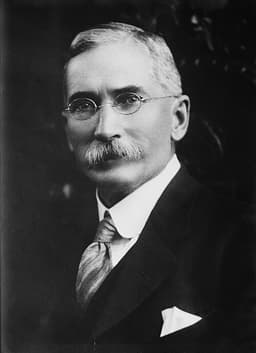
J. B. M. Hertzog
General · Modern
56.1Total
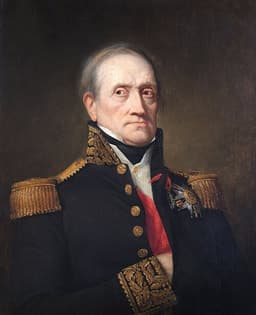
Nicolas Soult
General · Modern
62.7Total
Basic Information
Born
1866
1769
Died
1942
1851
Era
Modern
Modern
Nationality
South Africa
France
Occupation
General
General
Civilization
Other
Western
Score Comparison
Military (10%)
25.0
74.7
Political (20%)
60.0
55.0
Influence (20%)
56.7
61.0
Legacy (20%)
50.0
54.0
Leadership (15%)
79.8
78.0
Strategy (15%)
60.0
65.4
TOTAL
56.1
62.7
J. B. M. Hertzog — Complete Timeline
1899 AD
Boer War GeneralWar◆ Major
Hertzog served as a Boer general in the Second Boer War, commanding forces in the Orange Free State. He participated in several battles and became a prominent Afrikaner military leader.
Second Boer WarGeneralMilitary
Impact: regional
1914 AD
Founded the National PartyPolitical Action
Hertzog broke away from the South African Party and founded the National Party, which championed Afrikaner nationalism and opposed British imperial influence. The party would later implement apartheid.
National PartyAfrikaner NationalismFounding
Impact: nationalconstructive
1924 AD
Prime Minister of South AfricaPolitical Action◆ Major
Hertzog became Prime Minister after his National Party won the general election in coalition with the Labour Party. His government implemented policies to protect white workers and promote Afrikaner interests, including the 'civilized labour' policy.
Prime MinisterAfrikaner RightsLabour Policy
Impact: national
1934 AD
Merged with Smuts to Form United PartyPolitical Action◆ Major
Hertzog merged his National Party with Jan Smuts' South African Party to form the United Party. The coalition aimed to address the economic crisis of the Great Depression and promote national unity, but it alienated hardline Afrikaner nationalists.
United PartyCoalitionNational Unity
Impact: nationalconstructive
1936 AD
Passed the Representation of Natives ActReform◆ Major
Hertzog's government passed the Representation of Natives Act, which removed Black voters from the common voters' roll in the Cape Province and allowed them to elect white representatives instead. This further entrenched racial segregation.
SegregationDisenfranchisementLegislation
Impact: nationaldestructive
1939 AD
Resigned Over Neutrality in WWIIPolitical Action◆ Major
Hertzog advocated for South African neutrality in World War II, but his cabinet voted to enter the war on the Allied side. He resigned as Prime Minister and was succeeded by Jan Smuts, splitting the United Party.
World War IINeutralityResignation
Impact: national
Nicolas Soult — Complete Timeline
1805 AD
Battle of AusterlitzWar◆ Major
Soult commanded the IV Corps at Austerlitz. He led the assault on the Pratzen Heights, breaking the Allied center and securing the decisive French victory.
Napoleonic WarsBattleCorps Command
Impact: global
1806 AD
Battle of Jena-AuerstedtWar◆ Major
Soult commanded the IV Corps at Jena. His forces pursued the retreating Prussian army, capturing thousands of prisoners and contributing to the collapse of the Prussian state.
Napoleonic WarsBattlePursuit
Impact: regional
1811 AD
Battle of AlbueraWar◆ Major
Soult commanded the French army at Albuera in Spain. His forces fought a bloody battle against the Anglo-Spanish army, resulting in a tactical stalemate but strategic French withdrawal.
Peninsular WarBattleStalemate
Impact: regional
1814 AD
Battle of ToulouseWar◆ Major
Soult commanded the French army at Toulouse against Wellington. The battle occurred after Napoleon's abdication, and Soult surrendered the city, ending the Peninsular War.
Peninsular WarBattleDefeat
Impact: regional
1830 AD
Minister of WarPolitical Action◆ Major
Soult served as Minister of War under King Louis-Philippe. He reorganized the French army, introduced conscription reforms, and prepared for colonial campaigns in Algeria.
MinistryReformsJuly Monarchy
Impact: nationalconstructive
1832 AD
Prime Minister of FrancePolitical Action◆ Major
Soult served as Prime Minister of France under Louis-Philippe. His government focused on maintaining order, suppressing republican uprisings, and consolidating the July Monarchy.
Prime MinisterJuly MonarchyGovernment
Impact: national
Expert Analysis
J. B. M. Hertzog vs Nicolas Soult
# The Marshal and the General: Two Soldiers Who Shaped Nations
On a spring morning in 1814, Nicolas Soult stood before the walls of Toulouse, his army battered but unbroken, unaware that the emperor he served had already abdicated. Twenty-five years later, in the autumn of 1939, J. B. M. Hertzog walked out of his own cabinet room in Pretoria, a prime minister who had lost his government over a war he refused to join. One was a marshal of France who became a king’s minister; the other was a Boer general who became his nation’s voice. Both were soldiers who traded the battlefield for the political arena—yet their paths could not have diverged more sharply. What drove a man from the glory of Austerlitz to the quiet corridors of the July Monarchy, and another from the veld of the Orange Free State to the bitter compromises of racial legislation?
Origins
Nicolas Soult was born in 1769 in Saint-Amans-la-Bastide, a small town in southern France, into a family of minor legal officials. The French Revolution erupted when he was twenty, and like so many young men of ambition, he found his opportunity in the chaos. The old order crumbled, and the army became a ladder for talent. Soult climbed it with remarkable speed. By 1805, he commanded the IV Corps of the Grande Armée, a man of thirty-six already hardened by a decade of warfare across Europe.
J. B. M. Hertzog came into the world nearly a century later, in 1866, on a farm in the Cape Colony. His people were Afrikaners, descendants of Dutch settlers who had carved a life from the African soil, and his childhood was shaped by the memory of the Great Trek and the bitterness of British colonialism. He studied law in the Netherlands, earned a doctorate, and returned to South Africa as a judge—a man of the law who would soon be forced to take up arms. Where Soult’s France was rising, Hertzog’s world was being conquered.
Rise to Power
Soult’s rise was meteoric because Napoleon’s wars demanded it. At Austerlitz in 1805, he led the decisive assault on the Pratzen Heights, breaking the Allied center and sealing one of history’s greatest victories. At Jena in 1806, his corps pursued the shattered Prussian army, capturing thousands. He was a master of the set-piece battle, methodical and relentless. But war in Spain from 1808 to 1814 tested him differently. At Albuera in 1811, he fought a bloody, grinding engagement against the Anglo-Spanish army—a battle that revealed both his tenacity and the limits of Napoleonic warfare in a guerrilla-torn land.
Hertzog’s rise came through defeat. In the Second Boer War of 1899, he served as a general in the Orange Free State, leading commandos against the British Empire. He was not a brilliant tactician—his military score of 48.1 reflects the harsh reality of a guerrilla war against overwhelming force—but he was a leader of men, stubborn and principled. When the Boers lost, he turned to politics. In 1914, he broke from the South African Party to found the National Party, a vehicle for Afrikaner nationalism that promised to protect his people’s language, culture, and rights from British dominance.
Leadership & Governance
As a ruler, Soult was a creature of the system he had served. When he became Minister of War in 1830 under King Louis-Philippe, he reorganized the French army and introduced conscription reforms, applying the lessons of Napoleon to a peacetime state. As Prime Minister from 1832, he focused on order—suppressing unrest, stabilizing the July Monarchy, and governing with the same methodical precision he had shown on the battlefield. His political score of 69.3 suggests competence rather than vision; he was a manager, not a revolutionary.
Hertzog governed with a different fire. As Prime Minister from 1924, he championed Afrikaner rights with a passion that bordered on obsession. He passed laws to protect Afrikaans language and culture, promoted South African industry, and sought to loosen the British grip on the Union. But his greatest—and most tragic—act was the Representation of Natives Act of 1936, which removed Black voters from the common roll in the Cape Province. This was not merely a political calculation; it was the logical endpoint of a worldview that saw South Africa as a white man’s country, a belief forged in the fires of the Boer War and the bitterness of colonial subjugation.
Triumph & Tragedy
Soult’s greatest triumph was Austerlitz, where his assault on the Pratzen Heights changed the course of European history. His greatest tragedy came at Toulouse in 1814, when he fought a battle after Napoleon had already fallen—a pointless sacrifice of lives to a lost cause. Yet he survived, adapted, and served another king, a testament to his political flexibility. He died in 1851 at eighty-two, a marshal of France and a pillar of the establishment.
Hertzog’s triumph was the fusion of Afrikaner nationalism into a political force that reshaped South Africa. His tragedy was the 1939 neutrality crisis. When World War II broke out, he argued for South Africa to stay out, fearing another war that would bleed his people for British interests. But his cabinet voted to join the Allies, and he resigned, a man out of step with the times. He died in 1942, watching from the sidelines as the world burned.
Character & Destiny
Soult was a survivor. He served Napoleon, then Louis XVIII, then Louis-Philippe, each time bending without breaking. His leadership score of 84.0 reflects a man who could command armies and manage ministries, but his legacy score of 67.6 suggests a certain shallowness—he was never a visionary, only a craftsman of power. Hertzog was the opposite: rigid, principled, and ultimately self-defeating. His leadership score of 79.9 shows a different kind of strength—the ability to inspire loyalty and build a movement—but his political choices, especially on race, would cast a long shadow over his nation.
Legacy
Soult is remembered today as a capable marshal of Napoleon, a footnote in the epic of the Grande Armée. His name appears on the Arc de Triomphe, but few outside France recall his political career. Hertzog’s legacy is more complex and more painful. He is honored by Afrikaners as a father of their nation, but his racial policies laid the groundwork for apartheid. His statue in Bloemfontein stands as a monument to a divided memory.
Conclusion
Both men were soldiers who became statesmen, but their worlds were as different as the battles they fought. Soult rode the wave of French imperial ambition, then settled into the comfortable role of a king’s servant. Hertzog fought against empire, then built a nation on the exclusion of others. One adapted and was forgotten; the other stood firm and left a wound. In the end, the question is not which was greater, but which we would choose to be—and what we would be willing to sacrifice for that choice.
Rankings
🥇
Nicolas SoultLeader
Mil: 74.7Pol: 55.0Inf: 61.0
62.7
🥈
J. B. M. Hertzog
Mil: 25.0Pol: 60.0Inf: 56.7
56.1
+6.6 behind
How This Comparison Works
Algorithm
Each figure is scored on 6 dimensions (0—100 scale) based on structured historical data: Military (10%), Political (20%), Influence (20%), Legacy (20%), Leadership (15%), Strategy (15%). The weighted total produces the final ranking.
Data Sources
Scores are computed from structured sub-indicators in the database. Scale factors adjust for era (Ancient ×0.85, Modern ×1.0) and civilization size (Eastern ×1.05, Other ×0.80) to account for differences in population and military scale.
Maximum 3 Figures
Comparisons are limited to 2—3 figures to ensure readability and statistical meaningfulness.
Error Margins
±5 points per dimension — Sub-scores are derived from historical records with inherent uncertainty. Two figures within 5 points on a dimension should be considered roughly equivalent in that area.
Total Score Accuracy
±3 points overall — The weighted combination of 6 dimensions produces a total score with approximately ±3 points of uncertainty. Differences of less than 3 points are not statistically significant— the figures are effectively tied.
Known Limitations
- Historical records are incomplete and uneven across civilizations
- Figures from oral-tradition societies may be underrepresented
- Occupation labels can misclassify multi-role figures
- Scores measure capability and impact, not moral character
- Quantitative scoring is a comparison tool, not absolute truth
Capability Radar
Military (10%) — Battles & Warfare
Battles
45
75
Win Rate
40
70
Expansion
20
65
Political (20%) — Governance & Reform
Reform
60
55
Diplomacy
55
65
Economy
50
50
Influence (20%) — Cultural & Global Reach
Cultural
50
45
Global
45
50
Legacy (20%) — Historical Impact
Historical
55
55
Longevity
40
50
Leadership (15%) — Power & Stability
Tenure
65
70
Stability
45
55
Strategy (15%) — Tactics & Innovation
Strategy
50
72
Tactics
45
78
Reform
30
60
Similar Comparisons
Comments & Discussion
SoultSlayer6/16/2026
Soult’s defensive genius at Toulouse is overrated. He lost the city with 3,000 casualties to Wellington’s 1,400—then surrendered two days later. A marshal of France shouldn’t be out-bluffed by a mere British lord a week after Napoleon abdicated. Hertzog at least knew when to walk away; Soult fought a ghost war. Props for surviving every regime change, but win one when it counts, Nicky.|
老匠炮手6/16/2026
赫佐格是布尔战争里野路子的产物,苏尔特则是法兰西军校的嫡系工艺。但你看苏尔特在滑铁卢前天的里尼战役——他把第一军拖得像头铅驴,根本没按时支援。赫佐格至少在南非联邦里靠实战经验搞出了法律霸权。两把老枪,一把爱卡壳,一把爱走火。说到底,军人搞政治,要么成谜,要么成烂账。|
DataDrain6/16/2026
Love the romantic framing, but compare apples to cannonballs. Soult commanded 200,000 men at his peak, oversaw a division at Austerlitz that smashed the Russian center. Hertzog’s biggest fight was Magersfontein—5,000 Boers pinned down 15,000 Brits for a week, but he wasn’t even the general in charge there. One’s a Napoleon-scale cog, the other a local chieftain. Scale matters.|
经典偏见师6/16/2026
你们老吹苏尔特当战争部长搞改革,可1848年革命一来他就废了好吧。赫佐格是把布尔旧情拧成南非语政策,彻底压过了英裔话语权。这不是高下问题,是两套游戏:苏尔特是帝国车轮上的润滑油,赫佐格是重构整个车牌的电焊枪。拿拿破仑的勋章比根汁啤酒条款?方向都没对。|
BronzeTactician6/16/2026
What’s missing in your summary: Soult died rich and honored, Hertzog died in exile, a bitter footnote. Soult switched sides more than a turncoat—served Napoleon, then Louis XVIII, then Louis-Philippe—yet ended up a marshal general. Hertzog stuck to his Afrikaans supremacy vision even when it cost him everything. Morality aside, Soult understood survival; Hertzog understood ruin. Depends what you admire.