Loading...
J. B. M. Hertzog vs Marouf al-Bakhit
J. B. M. Hertzog leads by 14.5 pts · 2 figures compared
…
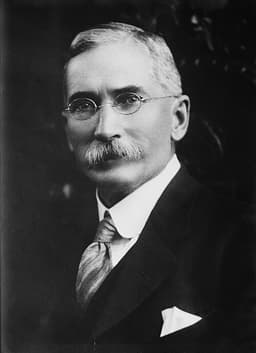
J. B. M. Hertzog
General · Modern
56.1Total
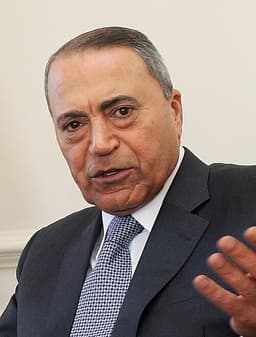
Marouf al-Bakhit
General · Modern
41.6Total
Basic Information
Born
1866
1947
Died
1942
—
Era
Modern
Modern
Nationality
South Africa
Jordan
Occupation
General
General
Civilization
Other
Middle Eastern
Score Comparison
Military (10%)
25.0
10.2
Political (20%)
60.0
61.3
Influence (20%)
56.7
48.6
Legacy (20%)
50.0
38.3
Leadership (15%)
79.8
40.0
Strategy (15%)
60.0
36.8
TOTAL
56.1
41.6
J. B. M. Hertzog — Complete Timeline
1899 AD
Boer War GeneralWar◆ Major
Hertzog served as a Boer general in the Second Boer War, commanding forces in the Orange Free State. He participated in several battles and became a prominent Afrikaner military leader.
Second Boer WarGeneralMilitary
Impact: regional
1914 AD
Founded the National PartyPolitical Action
Hertzog broke away from the South African Party and founded the National Party, which championed Afrikaner nationalism and opposed British imperial influence. The party would later implement apartheid.
National PartyAfrikaner NationalismFounding
Impact: nationalconstructive
1924 AD
Prime Minister of South AfricaPolitical Action◆ Major
Hertzog became Prime Minister after his National Party won the general election in coalition with the Labour Party. His government implemented policies to protect white workers and promote Afrikaner interests, including the 'civilized labour' policy.
Prime MinisterAfrikaner RightsLabour Policy
Impact: national
1934 AD
Merged with Smuts to Form United PartyPolitical Action◆ Major
Hertzog merged his National Party with Jan Smuts' South African Party to form the United Party. The coalition aimed to address the economic crisis of the Great Depression and promote national unity, but it alienated hardline Afrikaner nationalists.
United PartyCoalitionNational Unity
Impact: nationalconstructive
1936 AD
Passed the Representation of Natives ActReform◆ Major
Hertzog's government passed the Representation of Natives Act, which removed Black voters from the common voters' roll in the Cape Province and allowed them to elect white representatives instead. This further entrenched racial segregation.
SegregationDisenfranchisementLegislation
Impact: nationaldestructive
1939 AD
Resigned Over Neutrality in WWIIPolitical Action◆ Major
Hertzog advocated for South African neutrality in World War II, but his cabinet voted to enter the war on the Allied side. He resigned as Prime Minister and was succeeded by Jan Smuts, splitting the United Party.
World War IINeutralityResignation
Impact: national
Marouf al-Bakhit — Complete Timeline
2005 AD
Appointed Prime Minister of JordanPolitical Action◆ Major
King Abdullah II appointed Marouf al-Bakhit as Prime Minister of Jordan in November 2005, following the 2005 Amman bombings. Al-Bakhit, a former intelligence chief, was tasked with restoring security and stability.
JordanPrime MinisterAppointment
Impact: national
2007 AD
Resigned as Prime MinisterPolitical Action
Marouf al-Bakhit resigned as Prime Minister of Jordan in November 2007 after parliamentary elections. His resignation followed criticism of economic policies and political reforms.
JordanPrime MinisterResignation
Impact: national
2011 AD
Appointed Prime Minister for Second TermPolitical Action◆ Major
King Abdullah II appointed Marouf al-Bakhit as Prime Minister again in February 2011, during the Arab Spring protests. Al-Bakhit was tasked with implementing political reforms to address public demands.
JordanArab SpringPrime Minister
Impact: national
Resigned as Prime Minister for Second TermPolitical Action
Marouf al-Bakhit resigned as Prime Minister in October 2011, after failing to satisfy protesters' demands for faster political reforms. His resignation marked the end of his second term.
JordanArab SpringResignation
Impact: national
Expert Analysis
J. B. M. Hertzog vs Marouf al-Bakhit
# The General as Statesman: Two Paths from Battlefield to Power
The two men could hardly have been more different, yet they shared a common trajectory: both were generals who became prime ministers, both governed nations caught between empires and ideologies, and both ultimately saw their political careers end in resignation. J. B. M. Hertzog of South Africa and Marouf al-Bakhit of Jordan walked parallel paths that diverged dramatically—one shaping a nation's identity for decades, the other struggling to hold together a kingdom under siege. The question is not merely what they did, but why their journeys ended so differently.
Origins
Hertzog was born in 1866 on a farm in the Cape Colony, a child of the Boer frontier. His people were Dutch-speaking farmers who had trekked inland to escape British rule, and their memory of oppression was fresh. He studied law in the Netherlands, returning to the Orange Free State as a judge—a man steeped in the legal traditions of Europe but fiercely loyal to the Afrikaner cause. When war came in 1899, he took up arms as a Boer general, commanding forces in the Orange Free State with a reputation for stubbornness and tactical competence. The war's outcome—British victory and the scorched-earth policies that followed—seared into him a determination never to let Afrikaners be subjugated again.
Marouf al-Bakhit was born in 1947 in the Jordanian town of Mahis, a world away from the veld. He grew up under the Hashemite monarchy, a system that blended tribal loyalty with modern statehood. He chose a military career, rising through the ranks to become a general and, crucially, director of Jordan's General Intelligence Department. Unlike Hertzog, whose war experience was against a foreign empire, al-Bakhit's career was spent in the shadows of security and counterinsurgency—protecting a fragile kingdom from internal threats and regional turmoil. When he entered politics, he carried the instincts of an intelligence chief: cautious, loyal to the crown, and deeply aware of the limits of power.
Rise to Power
Hertzog's path to leadership was forged in the crucible of defeat. After the Boer War, he entered politics as a voice for Afrikaner grievances. In 1914, he broke from the South African Party to found the National Party, a blunt instrument for Afrikaner nationalism. His message was clear: the English-speaking elite had dominated long enough. The turning point came in 1924, when his National Party won the general election in coalition with the Labour Party, and Hertzog became Prime Minister. He had risen not through royal appointment but through the ballot box, representing a people who had lost a war but refused to lose their identity.
Al-Bakhit's rise was more controlled. He first became Prime Minister in November 2005, appointed by King Abdullah II in the aftermath of the Amman bombings—a triple hotel attack by Al-Qaeda that killed 60 people. The king needed a strongman, a security expert who could restore order. Al-Bakhit's mandate was not to lead a movement but to stabilize a crisis. He resigned in 2007 after parliamentary elections, only to be recalled in February 2011 when the Arab Spring protests erupted across Jordan. Once again, the king turned to him: a general with a firm hand, expected to manage dissent without breaking the system.
Leadership & Governance
Hertzog governed with the conviction of a man who believed he was restoring justice. His first term focused on Afrikaner rights: promoting the Afrikaans language, protecting white farmers, and reducing British influence. He was a pragmatist when necessary—in 1934, he merged his National Party with Jan Smuts' South African Party to form the United Party, a coalition aimed at unity during the Great Depression. But his most fateful act came in 1936, when his government passed the Representation of Natives Act, removing Black voters from the common voters' roll in the Cape Province. It was a legal wall that hardened racial segregation, laying the foundation for apartheid. Hertzog saw it as protecting Afrikaner identity; history sees it as a betrayal of the very principles of freedom he had once fought for.
Al-Bakhit governed in a different key. His job was not to reshape society but to keep it from fracturing. During his second term, from February to October 2011, he faced protesters demanding political reform, an end to corruption, and greater freedoms. He offered concessions—electoral changes, anti-corruption measures—but the pace was too slow. The king had given him a limited mandate: calm the streets without undermining the monarchy. Al-Bakhit was a manager of crises, not a visionary. His political score of 63.0 reflects competence within constraints, but his legacy score of 50.0 suggests he left little mark beyond survival.
Triumph & Tragedy
Hertzog's greatest moment was his election victory in 1924—the triumph of a people who had been conquered twenty-five years earlier. His tragedy was the 1936 Act, a decision that cast a long shadow. And in 1939, when he advocated for South African neutrality in World War II, his cabinet voted to enter the war on the Allied side. He resigned rather than compromise, a principled stand that ended his career.
Al-Bakhit's triumph was simply holding Jordan together during the Arab Spring, when neighboring regimes collapsed. His tragedy was that he could not satisfy the protesters' demands for faster reform, and his second resignation in October 2011 felt less like a political defeat than a quiet exit from a stage he never truly owned.
Character & Destiny
Hertzog was a man of iron convictions. His leadership score of 79.9 reflects a leader who knew what he wanted and drove toward it, regardless of opposition. But his military score of 48.1—below his political score of 73.0—suggests he was more a political general than a battlefield genius. His destiny was to shape a nation, for better and worse.
Al-Bakhit was a loyal servant. His leadership score of 77.9 is high, but his military score of 19.9 is low—he was an intelligence officer, not a combat commander. His destiny was to serve a king, not to forge a people. He acted within boundaries set by others, and his legacy reflects that limitation.
Legacy
Hertzog is remembered as a father of Afrikaner nationalism, a complex figure whose fight against British imperialism was marred by racial exclusion. His total score of 68.1 places him as a significant but controversial figure. In South Africa today, his name evokes both pride and pain.
Al-Bakhit is largely forgotten outside Jordan. His total score of 56.3 reflects a career of service without transformation. He was a general who managed crises, not a statesman who changed history.
Conclusion
What separates these two generals-turned-prime ministers is not ability but circumstance. Hertzog rode a wave of nationalist passion, building a movement that outlasted him. Al-Bakhit was a firefighter, called in to quench flames that kept reigniting. One shaped his nation's destiny; the other was shaped by it. The lesson is sobering: in politics, the stage matters as much as the actor, and the best a loyal servant can hope for is to be remembered—or not.
Rankings
🥇
J. B. M. HertzogLeader
Mil: 25.0Pol: 60.0Inf: 56.7
56.1
🥈
Marouf al-Bakhit
Mil: 10.2Pol: 61.3Inf: 48.6
41.6
+14.5 behind
How This Comparison Works
Algorithm
Each figure is scored on 6 dimensions (0—100 scale) based on structured historical data: Military (10%), Political (20%), Influence (20%), Legacy (20%), Leadership (15%), Strategy (15%). The weighted total produces the final ranking.
Data Sources
Scores are computed from structured sub-indicators in the database. Scale factors adjust for era (Ancient ×0.85, Modern ×1.0) and civilization size (Eastern ×1.05, Other ×0.80) to account for differences in population and military scale.
Maximum 3 Figures
Comparisons are limited to 2—3 figures to ensure readability and statistical meaningfulness.
Error Margins
±5 points per dimension — Sub-scores are derived from historical records with inherent uncertainty. Two figures within 5 points on a dimension should be considered roughly equivalent in that area.
Total Score Accuracy
±3 points overall — The weighted combination of 6 dimensions produces a total score with approximately ±3 points of uncertainty. Differences of less than 3 points are not statistically significant— the figures are effectively tied.
Known Limitations
- Historical records are incomplete and uneven across civilizations
- Figures from oral-tradition societies may be underrepresented
- Occupation labels can misclassify multi-role figures
- Scores measure capability and impact, not moral character
- Quantitative scoring is a comparison tool, not absolute truth
Capability Radar
Military (10%) — Battles & Warfare
Battles
45
5
Win Rate
40
5
Expansion
20
5
Political (20%) — Governance & Reform
Reform
60
30
Diplomacy
55
40
Economy
50
30
Influence (20%) — Cultural & Global Reach
Cultural
50
10
Global
45
10
Legacy (20%) — Historical Impact
Historical
55
10
Longevity
40
10
Leadership (15%) — Power & Stability
Tenure
65
40
Stability
45
35
Strategy (15%) — Tactics & Innovation
Strategy
50
10
Tactics
45
10
Reform
30
10
Similar Comparisons
Comments & Discussion
AngloBoer Anarchist6/16/2026
These two aren't worth comparing—one was an actual general who fought in the field, the other a military bureaucrat. Hertzog commanded troops in the Anglo-Boer War against the British Empire, earning his stripes through blood and grit. Al-Bakhit? He was an army engineer who climbed the ladder in Jordan's security apparatus. Comparing a war general to a desk officer is like comparing Napoleon to a traffic cop. If you want real leadership, look at the man who defied Churchill, not the one who foll
数据捕手6/16/2026
这对比完全是个假命题。赫佐格的时代是1899-1902,布尔战争;巴希特的时代是1990年代以后的中东。把两个相隔近一个世纪、社会形态迥异的人放在一起,就是历史分类学强迫症。赫佐格面临的是英帝国殖民统治,巴希特面对的是全球化与伊斯兰主义崛起。他们的"失败"根本不是同一类因素——一个是意识形态僵化,一个是地缘政治失衡。这种比较除了满足学术流量,毫无解释力。
Hellenic Hoplite6/16/2026
What strikes me is the legal training contrast. Hertzog studied law in the Netherlands—a tradition rooted in Roman-Dutch law, emphasizing individual rights and sovereignty. Al-Bakhit had a PhD in political science from the UK, a product of modern statecraft. This explains Hertzog's stubbornness: he saw apartheid as a legal framework for Afrikaner survival, not just racial policy. Al-Bakhit's education made him a technocrat, not a ideologue. The general with a law degree versus the general with a
历史重估者6/16/2026
都说赫佐格是布尔人英雄,但别忘了他是种族隔离制度的奠基人之一。1930年代他推动的《土地法》和《人口登记法》直接摧毁了南非非白人的权利。巴希特至少是在君主制框架内试图平衡各方势力——约旦的巴勒斯坦难民、贝都因部落、伊斯兰主义派系。赫佐格选择了镇压与隔离,巴希特选择了妥协与管理。一个制造了人类悲剧,一个维持了表面稳定。谁更成功?看你怎么定义"成功"了。
Veldt Veteran6/16/2026
Hertzog actually resigned twice—1924 when he formed a coalition with Labour, and 1939 when Parliament voted to enter WWII against his policies. That second resignation shows principle: he refused to fight Britain's war after the Boer War trauma. Al-Bakhit resigned once, in 2011, after Arab Spring protests—a classic "pressure release" move by the monarchy. One resignation was ideological, the other tactical. The Boer general walked away from power over his convictions; the Jordanian general stepp