Loading...
J. B. M. Hertzog vs Louis XI of France
Louis XI of France leads by 10.1 pts · 2 figures compared
…
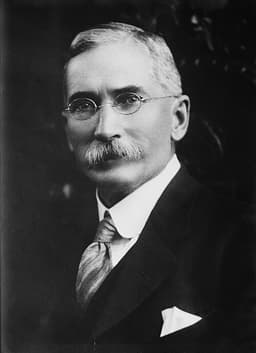
J. B. M. Hertzog
General · Modern
56.1Total
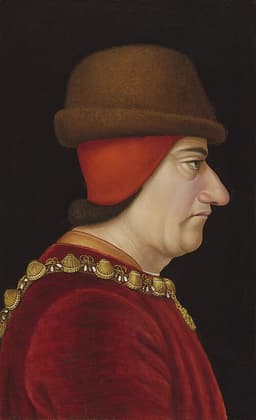
Louis XI of France
Emperor · Medieval
66.2Total
Basic Information
Born
1866
1423
Died
1942
1483
Era
Modern
Medieval
Nationality
South Africa
France
Occupation
General
Emperor
Civilization
Other
Western
Score Comparison
Military (10%)
25.0
47.5
Political (20%)
60.0
78.0
Influence (20%)
56.7
65.0
Legacy (20%)
50.0
65.0
Leadership (15%)
79.8
78.0
Strategy (15%)
60.0
55.0
TOTAL
56.1
66.2
J. B. M. Hertzog — Complete Timeline
1899 AD
Boer War GeneralWar◆ Major
Hertzog served as a Boer general in the Second Boer War, commanding forces in the Orange Free State. He participated in several battles and became a prominent Afrikaner military leader.
Second Boer WarGeneralMilitary
Impact: regional
1914 AD
Founded the National PartyPolitical Action
Hertzog broke away from the South African Party and founded the National Party, which championed Afrikaner nationalism and opposed British imperial influence. The party would later implement apartheid.
National PartyAfrikaner NationalismFounding
Impact: nationalconstructive
1924 AD
Prime Minister of South AfricaPolitical Action◆ Major
Hertzog became Prime Minister after his National Party won the general election in coalition with the Labour Party. His government implemented policies to protect white workers and promote Afrikaner interests, including the 'civilized labour' policy.
Prime MinisterAfrikaner RightsLabour Policy
Impact: national
1934 AD
Merged with Smuts to Form United PartyPolitical Action◆ Major
Hertzog merged his National Party with Jan Smuts' South African Party to form the United Party. The coalition aimed to address the economic crisis of the Great Depression and promote national unity, but it alienated hardline Afrikaner nationalists.
United PartyCoalitionNational Unity
Impact: nationalconstructive
1936 AD
Passed the Representation of Natives ActReform◆ Major
Hertzog's government passed the Representation of Natives Act, which removed Black voters from the common voters' roll in the Cape Province and allowed them to elect white representatives instead. This further entrenched racial segregation.
SegregationDisenfranchisementLegislation
Impact: nationaldestructive
1939 AD
Resigned Over Neutrality in WWIIPolitical Action◆ Major
Hertzog advocated for South African neutrality in World War II, but his cabinet voted to enter the war on the Allied side. He resigned as Prime Minister and was succeeded by Jan Smuts, splitting the United Party.
World War IINeutralityResignation
Impact: national
Louis XI of France — Complete Timeline
1464 AD
Established the Postal ServiceReform
Louis XI established a royal postal service, creating a network of relay stations for rapid communication across France. This system improved administrative efficiency and royal control over the realm.
Postal ServiceAdministrationCommunication
Impact: nationalconstructive
1465 AD
Defeated the League of the Public WealWar◆ Major
Louis XI defeated the League of the Public Weal, a coalition of rebellious nobles led by the Duke of Burgundy and the Duke of Berry. The victory at the Battle of Montlh
Civil WarNobilityRoyal Authority
Impact: national
1469 AD
Imprisoned Cardinal BaluePolitical Action
Louis XI imprisoned his own minister, Cardinal Jean Balue, for treason after discovering his secret correspondence with Charles the Bold. Balue was held in an iron cage for over a decade, demonstrating Louis's ruthless treatment of disloyal officials.
ImprisonmentTreasonIron Cage
Impact: nationaldestructive
1474 AD
Supported the Swiss Confederacy against BurgundyWar
Louis XI provided financial and diplomatic support to the Swiss Confederacy in their war against Charles the Bold of Burgundy. This alliance contributed to Burgundy's defeat and the eventual collapse of the Burgundian state.
AllianceSwissBurgundian Wars
Impact: regionalconstructive
1475 AD
Signed the Treaty of PicquignyPolitical Action◆ Major
Louis XI signed the Treaty of Picquigny with King Edward IV of England, ending the Hundred Years' War. The treaty included a payment to Edward IV to withdraw his invading army, securing peace and saving France from invasion.
TreatyHundred Years' WarDiplomacy
Impact: regionalconstructive
1477 AD
Acquired the Duchy of BurgundyWar◆ Major
After the death of Charles the Bold at the Battle of Nancy, Louis XI seized the Duchy of Burgundy and other Burgundian territories. This acquisition significantly expanded the French crown's lands and reduced Burgundian power.
Territorial ExpansionBurgundyRoyal Domain
Impact: regionalconstructive
Expert Analysis
Louis XI of France vs J. B. M. Hertzog
# The Spider and the General
In the autumn of 1939, as Europe lurched toward its second great war in a generation, a seventy-three-year-old South African prime minister stood before his cabinet and argued for neutrality. J. B. M. Hertzog believed his country had bled enough for the British Empire. When his cabinet voted against him, he resigned, and the nation he had helped shape for fifteen years turned its back on his vision. Four and a half centuries earlier, another leader faced a similar moment of reckoning. Louis XI of France, known to his enemies as the "Universal Spider," sat in his castle at Plessis-lès-Tours, spinning a web of diplomacy that would end the Hundred Years' War and crush the power of his greatest rival. Both men were champions of their people, both wielded power with cunning, yet one died in relative obscurity, the other as the architect of a modern nation. The difference lay not in their ambition, but in the soil from which they grew.
Origins
J. B. M. Hertzog was born in 1866 on a farm in the Cape Colony, the son of a Boer frontiersman. His world was one of vast, empty horizons, of ox-wagons and biblical literalism, of a people who had trekked into the interior to escape British rule. The Boers were fiercely independent, suspicious of central authority, and deeply attached to their language and faith. Hertzog studied law in the Netherlands and returned to practice in the Orange Free State, a small republic that embodied everything his people valued—self-rule, simplicity, and racial hierarchy. The Second Boer War of 1899, in which he served as a general, seared into him the memory of British concentration camps and scorched-earth tactics. For Hertzog, the struggle was not merely political; it was existential.
Louis XI was born in 1423 into a very different kind of frontier. France was a patchwork of feudal domains, its king often weaker than his own dukes. His father, Charles VII, had been a hesitant, pious ruler who relied on Joan of Arc to reclaim his throne. Young Louis grew up in a world of shifting loyalties, secret alliances, and knife-edge betrayals. He rebelled against his father, fled to the court of Burgundy, and learned statecraft from his enemies. Where Hertzog’s character was forged in the open veld, Louis’s was tempered in the shadows of castles and councils. One became a general who led men into battle; the other became a spider who wove webs.
Rise to Power
Hertzog entered politics through the law. After the Boer War, he helped draft the constitution of the new Union of South Africa in 1910, insisting on provisions that protected Afrikaner language and culture. But he found the ruling South African Party too conciliatory toward the British. In 1914, he broke away to found the National Party, a movement that spoke directly to the wounded pride of his people. His moment came in 1924, when his party won the general election in coalition with the Labour Party. He became prime minister not by conquest, but by the ballot box—a path that reflected the democratic traditions of the Boer republics.
Louis XI ascended the throne in 1461 at the age of thirty-eight, having spent years in exile and rebellion. His coronation was not a triumph but a challenge. The great nobles of France—the Duke of Burgundy, the Duke of Brittany, the Duke of Berry—immediately formed the League of the Public Weal, a coalition that aimed to reduce the king to a figurehead. Louis met them in battle at Montlhéry in 1465, a chaotic, indecisive fight. But where Hertzog would have accepted the result, Louis saw it as a prelude. He negotiated, bribed, and divided his enemies, turning the League’s victory into a hollow one. His rise was not a single election but a decade of patient manipulation.
Leadership & Governance
As prime minister, Hertzog governed with a clear, uncompromising vision. He passed laws to protect Afrikaans as an official language, to shield white workers from competition, and to entrench racial segregation. His greatest achievement was the 1934 merger with Jan Smuts to form the United Party, a grand coalition that seemed to heal the bitter divide between Boer and Briton. But his governance was ultimately defensive—a fortress built to protect a minority. When he passed the Representation of Natives Act in 1936, removing Black voters from the common roll, he believed he was securing Afrikaner survival. In truth, he was laying the foundations for apartheid.
Louis XI governed with a spider’s patience. He established a royal postal service in 1464, creating a network of relay stations that allowed him to communicate faster than any rival. He promoted trade, built roads, and encouraged industry, transforming France from a feudal patchwork into a centralized state. His greatest victory came in 1477, when Charles the Bold of Burgundy died at the Battle of Nancy, and Louis swiftly seized the Duchy of Burgundy—the richest territory in Europe. He did not win by military genius; his military score of 36.1 reflects a king who rarely led armies. Instead, he won by funding the Swiss Confederacy to fight his battles, by signing the Treaty of Picquigny in 1475 to buy off the English, and by imprisoning his own treacherous minister, Cardinal Balue, in an iron cage. His leadership was cold, calculating, and utterly effective.
Triumph & Tragedy
Hertzog’s triumph was the 1934 merger, which seemed to unite South Africa’s white population. His tragedy was the 1939 neutrality crisis. He had spent his entire career fighting for Afrikaner independence from Britain, and he could not bring himself to send South African soldiers to die for the Empire again. When his cabinet voted 8-7 to enter World War II, he resigned, and his party split. Within a decade, the National Party he had founded would win power on a platform of apartheid, a system far more brutal than anything he had imagined. His tragedy was that his greatest creation outlived him and became a monster.
Louis XI’s triumph was the consolidation of France. By the time of his death in 1483, he had broken the power of the great nobles, doubled the royal domain, and built a bureaucracy that would serve his successors for centuries. His tragedy was the cost. He died in paranoid isolation, surrounded by astrologers and guards, terrified of poison. His own daughter, Anne of France, had to rule as regent because he had so thoroughly cowed the nobility that no one else could govern. The spider had spun his web so tightly that he trapped himself.
Character & Destiny
Hertzog was a man of principle in an age that demanded pragmatism. He believed in the rights of small nations, yet denied those same rights to the majority of his own countrymen. He was honest, stubborn, and ultimately inflexible. When the world changed in 1939, he could not change with it. His leadership score of 79.9 reflects his skill in guiding a divided people, but his political score of 73.0 shows the limits of his vision.
Louis XI was a man of pragmatism in an age that demanded ruthlessness. He believed in nothing but the throne. He lied, bribed, and betrayed without remorse, yet he never lost sight of his goal. His leadership score of 82.3 and strategy score of 72.0 reflect a king who understood that power is not won on battlefields but in the minds of men. His legacy score of 80.0 is the highest of any French king before Louis XIV, and for good reason: he built the state that would dominate Europe.
Legacy
Hertzog is remembered today as a founding father of Afrikaner nationalism, but also as an architect of segregation. His name adorns streets and towns in South Africa, yet his legacy is contested, even within his own community. The total score of 68.1 reflects a leader who was significant but not transformative—a man who shaped his era but was ultimately swept aside by forces he helped unleash.
Louis XI is remembered as the "Universal Spider," a title he earned with both pride and shame. He is the king who ended the Hundred Years' War, who broke the Duchy of Burgundy, who built the French state. His total score of 69.7 is only slightly higher than Hertzog’s, but the difference is qualitative. Hertzog built a fortress for a minority; Louis built a kingdom for a nation.
Conclusion
The spider and the general: one wove webs, the other planted flags. Both fought for their people, both achieved great things, and both left behind legacies that were darker than they intended. But the deepest difference lies in what they sought to create. Hertzog wanted to preserve a world that was passing away—a world of Boer farms and biblical certainties. Louis wanted to build a world that had never existed—a unified France, strong and centralized. One looked backward, the other forward. And in the end, that is what separates a leader who is merely remembered from one who is truly great.
Rankings
🥇
Louis XI of FranceLeader
Mil: 47.5Pol: 78.0Inf: 65.0
66.2
🥈
J. B. M. Hertzog
Mil: 25.0Pol: 60.0Inf: 56.7
56.1
+10.1 behind
How This Comparison Works
Algorithm
Each figure is scored on 6 dimensions (0—100 scale) based on structured historical data: Military (10%), Political (20%), Influence (20%), Legacy (20%), Leadership (15%), Strategy (15%). The weighted total produces the final ranking.
Data Sources
Scores are computed from structured sub-indicators in the database. Scale factors adjust for era (Ancient ×0.85, Modern ×1.0) and civilization size (Eastern ×1.05, Other ×0.80) to account for differences in population and military scale.
Maximum 3 Figures
Comparisons are limited to 2—3 figures to ensure readability and statistical meaningfulness.
Error Margins
±5 points per dimension — Sub-scores are derived from historical records with inherent uncertainty. Two figures within 5 points on a dimension should be considered roughly equivalent in that area.
Total Score Accuracy
±3 points overall — The weighted combination of 6 dimensions produces a total score with approximately ±3 points of uncertainty. Differences of less than 3 points are not statistically significant— the figures are effectively tied.
Known Limitations
- Historical records are incomplete and uneven across civilizations
- Figures from oral-tradition societies may be underrepresented
- Occupation labels can misclassify multi-role figures
- Scores measure capability and impact, not moral character
- Quantitative scoring is a comparison tool, not absolute truth
Capability Radar
Military (10%) — Battles & Warfare
Battles
45
45
Win Rate
40
50
Expansion
20
60
Political (20%) — Governance & Reform
Reform
60
80
Diplomacy
55
90
Economy
50
75
Influence (20%) — Cultural & Global Reach
Cultural
50
60
Global
45
65
Legacy (20%) — Historical Impact
Historical
55
80
Longevity
40
75
Leadership (15%) — Power & Stability
Tenure
65
85
Stability
45
70
Strategy (15%) — Tactics & Innovation
Strategy
50
70
Tactics
45
55
Reform
30
65
Similar Comparisons
Comments & Discussion
SpiderWeaver6/16/2026
Louis XI wasn't just a spider—he was a master weaver of medieval statecraft. While Hertzog fought for neutrality in a world war, Louis understood that diplomacy is war by other means. He broke the Burgundian giant Charles the Bold not on the battlefield, but through strategic marriages and alliances. Modern France exists because Louis preferred silk threads to steel blades. Hertzog's moral clarity was admirable, but Louis built something that lasted. History remembers builders.
沉默的史料6/16/2026
数据不会撒谎:路易十一在位22年,法国王权收入翻了3倍,而赫佐格1914年支持南非参战的代价是12000布尔人战死沙场。所谓"民族英雄"总喜欢选择性记忆——赫佐格1924年上台后立马废除了一战远征军的抚恤金。虚伪的实用主义罢了,南非的独立从来不是他的首要目标,阿非利卡人至上才是。
ClassicoMilitare6/16/2026
Stop romanticizing the spider king. Louis XI was a paranoid tyrant who imprisoned his own brother for 16 years and executed anyone who looked at him wrong. Hertzog at least had principle—he tried to keep South Africa out of Britain's suicidal European wars. Louis' "diplomatic genius" was just bribery and blackmail dressed in velvet. The real lesson? Both men were ruthlessly effective. One built a nation, the other preserved one. Neither was a saint.
帝国挽歌6/16/2026
赫佐格错就错在相信大英帝国会感恩。他1914年镇压布尔人起义时流下的血,1939年就被当成了擦鞋布。路易十一至少知道,别指望蜘蛛网能挡住饿狼。你看,路易把勃艮第公爵的领地吞并了,赫佐格却眼睁睁看着英国把南非拖进二战。弱国讲道德就是自杀,实用主义才是真相,布尔人最终被曼德拉的民族和解盖过了风头。
IronCrownHistorian6/16/2026
Hertzog's tragedy was being born too late and too early—too late for the Boer republics he loved, too early for apartheid he helped codify. Louis XI faced no such identity crisis. He knew exactly what he wanted: absolute monarchy, fully centralized. When Burgundy fell, the Duke died alone on the battlefield, abandoned by his mercenaries. Louis had no allies, only instruments of his will. Hertzog had principles. Louis had results. Pick your preference.