Loading...
J. B. M. Hertzog vs Louis XI
Louis XI leads by 11.6 pts · 2 figures compared
…
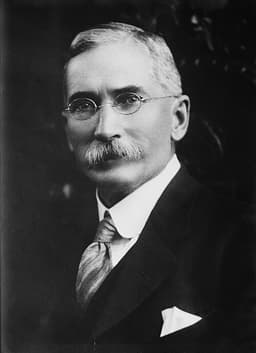
J. B. M. Hertzog
General · Modern
56.1Total
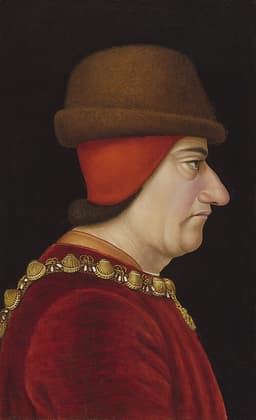
Louis XI
Emperor · Medieval
67.7Total
Basic Information
Born
1866
1423
Died
1942
1483
Era
Modern
Medieval
Nationality
South Africa
France
Occupation
General
Emperor
Civilization
Other
Western
Score Comparison
Military (10%)
25.0
45.0
Political (20%)
60.0
78.0
Influence (20%)
56.7
68.0
Legacy (20%)
50.0
65.0
Leadership (15%)
79.8
85.0
Strategy (15%)
60.0
55.0
TOTAL
56.1
67.7
J. B. M. Hertzog — Complete Timeline
1899 AD
Boer War GeneralWar◆ Major
Hertzog served as a Boer general in the Second Boer War, commanding forces in the Orange Free State. He participated in several battles and became a prominent Afrikaner military leader.
Second Boer WarGeneralMilitary
Impact: regional
1914 AD
Founded the National PartyPolitical Action
Hertzog broke away from the South African Party and founded the National Party, which championed Afrikaner nationalism and opposed British imperial influence. The party would later implement apartheid.
National PartyAfrikaner NationalismFounding
Impact: nationalconstructive
1924 AD
Prime Minister of South AfricaPolitical Action◆ Major
Hertzog became Prime Minister after his National Party won the general election in coalition with the Labour Party. His government implemented policies to protect white workers and promote Afrikaner interests, including the 'civilized labour' policy.
Prime MinisterAfrikaner RightsLabour Policy
Impact: national
1934 AD
Merged with Smuts to Form United PartyPolitical Action◆ Major
Hertzog merged his National Party with Jan Smuts' South African Party to form the United Party. The coalition aimed to address the economic crisis of the Great Depression and promote national unity, but it alienated hardline Afrikaner nationalists.
United PartyCoalitionNational Unity
Impact: nationalconstructive
1936 AD
Passed the Representation of Natives ActReform◆ Major
Hertzog's government passed the Representation of Natives Act, which removed Black voters from the common voters' roll in the Cape Province and allowed them to elect white representatives instead. This further entrenched racial segregation.
SegregationDisenfranchisementLegislation
Impact: nationaldestructive
1939 AD
Resigned Over Neutrality in WWIIPolitical Action◆ Major
Hertzog advocated for South African neutrality in World War II, but his cabinet voted to enter the war on the Allied side. He resigned as Prime Minister and was succeeded by Jan Smuts, splitting the United Party.
World War IINeutralityResignation
Impact: national
Louis XI — Complete Timeline
1464 AD
Established the Postal SystemReform
Louis XI created a royal postal system with relay stations across France, enabling faster communication between the crown and provincial officials. This administrative reform improved governance and intelligence gathering.
AdministrationCommunicationReform
Impact: nationalconstructive
1465 AD
Defeated the League of the Public WealWar◆ Major
Louis XI faced a coalition of powerful nobles, the League of the Public Weal, led by Charles the Bold of Burgundy. Although the Battle of Montlh
Civil WarNoble RebellionBurgundy
Impact: national
1475 AD
Treaty of PicquignyPolitical Action◆ Major
Louis XI negotiated the Treaty of Picquigny with Edward IV of England, ending English military intervention in France. Louis paid a large pension to Edward in exchange for English withdrawal, avoiding a costly war and securing his northern border.
TreatyDiplomacyEngland
Impact: regionalconstructive
1477 AD
Acquired BurgundyPolitical Action
After Charles the Bold's death at the Battle of Nancy, Louis XI seized the Duchy of Burgundy and other Burgundian territories, including Picardy and the Somme towns. This expansion significantly increased royal domain and weakened the Burgundian state.
Territorial ExpansionBurgundyRoyal Domain
Impact: regionalconstructive
1481 AD
Annexed Anjou and MainePolitical Action
Louis XI annexed the counties of Anjou and Maine after the death of Charles of Anjou, incorporating them into the royal domain. This further consolidated French territory and reduced the power of the Angevin nobility.
Territorial ExpansionAnjouMaine
Impact: nationalconstructive
Expert Analysis
Louis XI vs J. B. M. Hertzog
# The Spider and the General: Two Paths to Nationhood
On a winter morning in 1477, a king who rarely showed emotion wept openly in his chamber. Louis XI of France had just received word that his greatest enemy, Charles the Bold of Burgundy, lay dead on a frozen battlefield. Across the centuries and half a world away, another leader would face a very different sort of defeat. In September 1939, J. B. M. Hertzog, Prime Minister of South Africa, walked out of his own cabinet room, his vision of neutrality shattered by a vote to enter a war he had spent his life trying to avoid. One man unified a kingdom through patient cunning; the other tore his nation apart in the name of preserving it. What drove these two leaders to such different ends?
Origins
Louis XI was born into a world of fragmentation. The Hundred Years' War had left France a patchwork of semi-independent duchies, each more loyal to its local lord than to the crown in Paris. His father, Charles VII, had been a weak king, and young Louis learned early that power flowed not from divine right but from the careful manipulation of men. He was bookish, suspicious, and utterly devoid of the chivalric ideals that still dominated noble society. The court called him "the Universal Spider" not merely for his web-spinning diplomacy but for his unsettling preference for shadows over sunlight.
James Barry Munnik Hertzog came from a different kind of frontier. Born in 1866 on a farm in the Cape Colony, he grew up in the aftermath of the Great Trek, when Boer farmers had fled British rule to carve out republics in the African interior. His people spoke Dutch, read the Bible, and believed God had given them this land. But by the time Hertzog reached adulthood, the discovery of gold and diamonds had drawn the British Empire into their world, and the old certainties were crumbling.
Rise to Power
Louis XI's path to power was anything but smooth. As a young prince, he had rebelled against his own father, leading a failed uprising that forced him into exile at the court of—of all places—Burgundy. When he finally inherited the throne in 1461, he arrived in Paris wearing rough wool instead of silk, a deliberate message that the old ways were over. His coronation was a study in controlled humility, but those who watched closely saw the calculation behind every gesture.
Hertzog's rise followed the trajectory of a soldier turned politician. He distinguished himself as a Boer general in the Second Boer War of 1899, leading guerrilla campaigns against British forces with a tenacity that earned him respect even among his enemies. But war was only the prelude. In 1914, disillusioned with the compromises of the South African Party, he broke away to found the National Party, a vehicle for Afrikaner nationalism that would reshape the country's politics.
Leadership & Governance
Here the contrast becomes stark. Louis XI governed through what we might call administrative warfare. He established a royal postal system in 1464, with relay stations across France that allowed him to communicate with his agents faster than any noble could muster his knights. He appointed commoners to key positions, men who owed everything to the crown and nothing to the old aristocracy. His military campaigns were rarely pitched battles; instead, he bribed, schemed, and waited. When the League of the Public Weal rose against him in 1465, he fought just enough to negotiate a settlement, then spent the next decade dismantling his enemies one by one.
Hertzog governed through legislation. His National Party won the 1924 election on a platform of protecting Afrikaner workers and farmers, and he moved quickly to implement policies that favored his base. He passed laws restricting Black land ownership, promoting Afrikaans language rights, and insulating white workers from competition. In 1934, in a move that shocked many, he merged his party with Jan Smuts' South African Party to form the United Party, arguing that unity was necessary to face the economic challenges of the Great Depression. It was a gamble that revealed his core tension: he wanted to unite white South Africans, but only on his terms.
Triumph & Tragedy
Louis XI's greatest triumph came in 1477, when he seized the Duchy of Burgundy after Charles the Bold's death. The acquisition doubled the size of the royal domain and broke the most powerful noble house in Europe. He followed this by annexing Anjou and Maine in 1481, systematically absorbing territories that had been independent for centuries. By the time he died in 1483, France was recognizably modern—centralized, administered, and under royal control.
Hertzog's tragedy was the Representation of Natives Act of 1936. The law removed Black voters from the common roll in the Cape Province, the last region where they had any meaningful political voice. For Hertzog, this was a necessary compromise to maintain white unity. For history, it was a foundational stone of apartheid. His final act was the resignation of 1939, when he insisted South Africa remain neutral in World War II, only to be overruled by his own cabinet. He died in 1942, a figure increasingly out of step with the world he had helped create.
Character & Destiny
Louis XI was paranoid, secretive, and often cruel. He kept his closest advisors in cages, literally, when he suspected betrayal. But his paranoia served a purpose: he understood that the French monarchy could only survive by becoming an institution rather than a person. He built systems, not just power.
Hertzog was proud, stubborn, and morally certain. He believed in the righteousness of Afrikaner nationalism with an intensity that blinded him to its consequences. Where Louis XI saw the world as a chessboard, Hertzog saw it as a battlefield of ethnic destiny. Both men were products of their times, but Louis XI's time demanded flexibility, while Hertzog's demanded a reckoning he was unwilling to face.
Legacy
Louis XI is remembered as the architect of modern France. The postal system he created, the territories he annexed, the bureaucracy he built—all became the foundation of the absolute monarchy that would reach its peak under Louis XIV. His legacy is one of state-building, for better and worse.
Hertzog's legacy is more complicated. He is honored by some as a champion of Afrikaner rights, but his policies laid the groundwork for the apartheid system that would bring South Africa to the brink of civil war. The National Party he founded would rule until 1994, implementing the very segregation he had begun.
Conclusion
One king unified a kingdom through the careful spinning of webs; one general divided a nation through the rigid defense of a single people. Louis XI understood that power required patience, compromise, and the willingness to change. Hertzog believed that power meant holding fast to principles, even as the world moved on. In the end, the Spider built a nation that would endure for centuries, while the General built a system that collapsed within decades. Perhaps the lesson is that true leadership lies not in the strength of one's convictions, but in the wisdom to know when those convictions must yield to a larger vision.
Rankings
🥇
Louis XILeader
Mil: 45.0Pol: 78.0Inf: 68.0
67.7
🥈
J. B. M. Hertzog
Mil: 25.0Pol: 60.0Inf: 56.7
56.1
+11.6 behind
How This Comparison Works
Algorithm
Each figure is scored on 6 dimensions (0—100 scale) based on structured historical data: Military (10%), Political (20%), Influence (20%), Legacy (20%), Leadership (15%), Strategy (15%). The weighted total produces the final ranking.
Data Sources
Scores are computed from structured sub-indicators in the database. Scale factors adjust for era (Ancient ×0.85, Modern ×1.0) and civilization size (Eastern ×1.05, Other ×0.80) to account for differences in population and military scale.
Maximum 3 Figures
Comparisons are limited to 2—3 figures to ensure readability and statistical meaningfulness.
Error Margins
±5 points per dimension — Sub-scores are derived from historical records with inherent uncertainty. Two figures within 5 points on a dimension should be considered roughly equivalent in that area.
Total Score Accuracy
±3 points overall — The weighted combination of 6 dimensions produces a total score with approximately ±3 points of uncertainty. Differences of less than 3 points are not statistically significant— the figures are effectively tied.
Known Limitations
- Historical records are incomplete and uneven across civilizations
- Figures from oral-tradition societies may be underrepresented
- Occupation labels can misclassify multi-role figures
- Scores measure capability and impact, not moral character
- Quantitative scoring is a comparison tool, not absolute truth
Capability Radar
Military (10%) — Battles & Warfare
Battles
45
45
Win Rate
40
40
Expansion
20
65
Political (20%) — Governance & Reform
Reform
60
80
Diplomacy
55
95
Economy
50
70
Influence (20%) — Cultural & Global Reach
Cultural
50
55
Global
45
60
Legacy (20%) — Historical Impact
Historical
55
75
Longevity
40
70
Leadership (15%) — Power & Stability
Tenure
65
75
Stability
45
65
Strategy (15%) — Tactics & Innovation
Strategy
50
70
Tactics
45
55
Reform
30
60
Similar Comparisons
Comments & Discussion
The Weaver King6/16/2026
Sure, Louis XI was a master of statecraft, but let's not romanticize him as some noble unifier. He was a paranoid tyrant who broke every knightly code to crush the feudal lords. His "web"? More like a snare of spies and bribes. The guy literally imprisoned his own brother for decades and let people starve in cages. France didn't emerge stronger—it emerged cowed, traumatized, and ripe for the absolutist horrors to come.
清算者·赫佐格6/16/2026
赫佐格不是投降派,他是布尔的最后一口气。1939年他退出内阁,不是因为软弱,而是拒绝为英帝国当炮灰。南非白人的身份不是在德兰士瓦草原上泡出来的吗?结果呢,马兰直接剪断他的根,把他扔进历史垃圾桶。他输了,但输得比别人清醒。要我说,这才是真爱国者,不是后来那帮摇摆不定的政客。
Medievalist Mike6/16/2026
Historians love calling Louis the Spider, but they miss the irony: he was the last medieval king and the first modern one. Abolished the Pragmatic Sanction of Bourges? That was a power grab against the Church. Created a postal system and encouraged printing? Sure, but only to control information better. The man didn't believe in anything—not God, not honor, not even his own crown. Just cold, empty efficiency. Compare him to Hertzog? Apples and oranges.
血统怀疑者6/16/2026
别跟我扯什么“民族国家之父”。路易十一的法兰西是用联姻和暗杀焊起来的,赫佐格的南非是用种族法案和英语恐惧症砌成的。两者骨子里一模一样:用恐惧代替共识。拿赫佐格跟路易比?侮辱人了。至少路易知道怎么把棋盘摆稳,赫佐格连个语言政策都摆不平,最后只能灰溜溜滚出权力中心。
History Hacker 2.06/16/2026
People keep framing this as "cunning unifier vs. tragic idealist," but look at the data. Hertzog's 1936 Representation of Natives Act? That stripped Black South Africans of voting rights while pretending to preserve them—pure political calculation, just like Louis's alliance with the Swiss mercenaries. Both men made pragmatic deals that traded long-term justice for short-term stability. The only difference: Louis's victims didn't live to vote him out. Herzog's did—and they did.