Loading...
J. B. M. Hertzog vs Li Zongren
Li Zongren leads by 2.4 pts · 2 figures compared
…
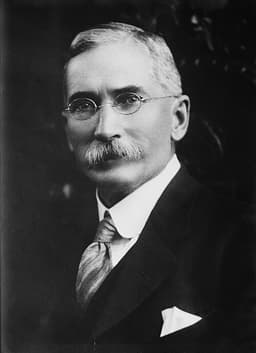
J. B. M. Hertzog
General · Modern
56.1Total
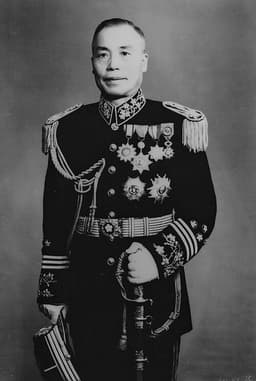
Li Zongren
General · Modern
58.5Total
Basic Information
Born
1866
1890
Died
1942
1969
Era
Modern
Modern
Nationality
South Africa
China
Occupation
General
General
Civilization
Other
Eastern
Score Comparison
Military (10%)
25.0
65.0
Political (20%)
60.0
53.8
Influence (20%)
56.7
58.0
Legacy (20%)
50.0
52.0
Leadership (15%)
79.8
72.0
Strategy (15%)
60.0
56.8
TOTAL
56.1
58.5
J. B. M. Hertzog — Complete Timeline
1899 AD
Boer War GeneralWar◆ Major
Hertzog served as a Boer general in the Second Boer War, commanding forces in the Orange Free State. He participated in several battles and became a prominent Afrikaner military leader.
Second Boer WarGeneralMilitary
Impact: regional
1914 AD
Founded the National PartyPolitical Action
Hertzog broke away from the South African Party and founded the National Party, which championed Afrikaner nationalism and opposed British imperial influence. The party would later implement apartheid.
National PartyAfrikaner NationalismFounding
Impact: nationalconstructive
1924 AD
Prime Minister of South AfricaPolitical Action◆ Major
Hertzog became Prime Minister after his National Party won the general election in coalition with the Labour Party. His government implemented policies to protect white workers and promote Afrikaner interests, including the 'civilized labour' policy.
Prime MinisterAfrikaner RightsLabour Policy
Impact: national
1934 AD
Merged with Smuts to Form United PartyPolitical Action◆ Major
Hertzog merged his National Party with Jan Smuts' South African Party to form the United Party. The coalition aimed to address the economic crisis of the Great Depression and promote national unity, but it alienated hardline Afrikaner nationalists.
United PartyCoalitionNational Unity
Impact: nationalconstructive
1936 AD
Passed the Representation of Natives ActReform◆ Major
Hertzog's government passed the Representation of Natives Act, which removed Black voters from the common voters' roll in the Cape Province and allowed them to elect white representatives instead. This further entrenched racial segregation.
SegregationDisenfranchisementLegislation
Impact: nationaldestructive
1939 AD
Resigned Over Neutrality in WWIIPolitical Action◆ Major
Hertzog advocated for South African neutrality in World War II, but his cabinet voted to enter the war on the Allied side. He resigned as Prime Minister and was succeeded by Jan Smuts, splitting the United Party.
World War IINeutralityResignation
Impact: national
Li Zongren — Complete Timeline
1921 AD
Command of the Guangxi ArmyPolitical Action◆ Major
Li Zongren became a commander in the Guangxi Army and helped unify Guangxi province under the New Guangxi Clique. He established a powerful regional base that rivaled other warlords.
Guangxi CliqueMilitary CommandWarlord Era
Impact: regional
1926 AD
Alliance with the Nationalist GovernmentPolitical Action◆ Major
Li Zongren allied the Guangxi Clique with Chiang Kai-shek's Nationalist government during the Northern Expedition. His forces played a key role in defeating warlords and unifying China under KMT rule.
Northern ExpeditionAllianceKMT
Impact: nationalconstructive
1938 AD
Battle of TaierzhuangWar
Li Zongren commanded Chinese forces to a major victory over the Japanese at the Battle of Taierzhuang during the Second Sino-Japanese War. This was the first significant Chinese victory of the war and boosted national morale.
Second Sino-Japanese WarBattleVictory
Impact: nationalconstructive
1949 AD
Acting Presidency of the Republic of ChinaPolitical Action◆ Major
Li Zongren served as Acting President of the Republic of China after Chiang Kai-shek's resignation during the Chinese Civil War. He attempted to negotiate peace with the Communists but failed, leading to the KMT's retreat to Taiwan.
Chinese Civil WarPresidencyKMT
Impact: nationaltragic
Exile to the United StatesPolitical Action
After the Communist victory, Li Zongren fled to the United States, where he lived in exile. He criticized Chiang Kai-shek's leadership and advocated for a reformed KMT, but remained politically marginalized.
ExileChinese Civil WarPolitics
Impact: nationaltragic
Expert Analysis
J. B. M. Hertzog vs Li Zongren
# The General Who Sought a Throne, and the General Who Built One
On a spring morning in 1938, Li Zongren stood on the rubble-strewn streets of Taierzhuang, a small town in northern China, and watched the Japanese retreat. He had just delivered the first major Chinese victory of the Second Sino-Japanese War, a triumph that would echo across the world. Half a world away and four decades earlier, another general, J. B. M. Hertzog, had ridden across the dusty veld of the Orange Free State, commanding Boer commandos against the might of the British Empire. Both men were generals who became politicians; both fought for their people's survival. But one ended his life in exile, his nation divided, while the other shaped a nation that would endure. What drove these two men down such different paths?
Origins
Li Zongren was born in 1890 into a modest farming family in Guangxi, a mountainous province in southern China. The Qing Empire was crumbling, and China was a landscape of warlords, foreign concessions, and simmering revolution. Li grew up in a world where loyalty was local, power was personal, and the only law was the gun. He was a product of chaos—a man who learned to fight before he learned to read, who rose through the ranks of the Guangxi Army not through birth but through sheer competence.
Hertzog, by contrast, was born in 1866 on a farm in the Cape Colony, into a world of Boer republics and British colonial rule. His father was a farmer, but also a man of education and faith. Hertzog studied law in the Netherlands, absorbing European ideas of nationalism and constitutional government. He came of age in a society where Afrikaners were a minority in their own land, squeezed between British imperialism and the vast African majority. His struggle was not against chaos, but against subjugation.
Rise to Power
Li Zongren’s path to power was forged in the crucible of warlord warfare. In 1921, he took command of the Guangxi Army and, through a series of brutal campaigns, unified Guangxi under the New Guangxi Clique. He was a master of strategy—his score of 83.4 in this domain reflects a mind that could read terrain, timing, and enemy psychology. In 1926, he made a crucial decision: he allied his forces with Chiang Kai-shek’s Nationalist government during the Northern Expedition. This was not idealism; it was pragmatism. Li understood that China could not be saved by warlords alone.
Hertzog’s rise was political, not military. After fighting as a Boer general in the Second Boer War (1899–1902), he emerged with a deep bitterness toward British rule. In 1914, he broke away from the South African Party to found the National Party, a vehicle for Afrikaner nationalism. His military score of 48.1 is modest, but his political score of 73.0 tells a different story. He was a builder of coalitions, a man who understood that power in a democracy came not from guns but from votes.
Leadership & Governance
Li Zongren’s greatest moment came in 1938 at the Battle of Taierzhuang. He commanded Chinese forces—a mix of Nationalist and warlord troops—to a decisive victory over the Japanese Imperial Army. It was a masterpiece of operational art: he used the terrain to funnel Japanese forces into a killing zone, then struck from all sides. But his leadership score of 79.9 reflects more than tactical brilliance. He was a unifier, a man who could hold together a coalition of rivals.
Hertzog’s leadership was of a different kind. As Prime Minister from 1924, he championed Afrikaner rights, passing laws that elevated the Afrikaans language and protected white farmers. But his legacy is stained by the 1936 Representation of Natives Act, which removed Black voters from the common roll. He was a man of his time and place, but his choices set South Africa on a path toward apartheid. His political wisdom was real, but it was a wisdom that served only one part of his nation.
Triumph & Tragedy
Li Zongren’s triumph was Taierzhuang. His tragedy came in 1949, when he served as Acting President of the Republic of China after Chiang Kai-shek’s resignation. The position was a poisoned chalice: the Communist forces were victorious, the Nationalist government was collapsing, and Li had no real power. He fled to the United States, where he lived in exile, criticizing Chiang but unable to change history. His total score of 71.8 reflects a man who was great but never great enough to shape his nation’s destiny.
Hertzog’s triumph was the formation of the United Party in 1934, merging his Nationalists with Jan Smuts’ South African Party. It was a moment of national unity, a promise that white South Africans could stand together. His tragedy came in 1939, when he advocated for neutrality in World War II. His cabinet voted against him, and he resigned. He died in 1942, a defeated man, watching his nation march to war under his rival.
Character & Destiny
Li Zongren was a pragmatist. He fought for China, but he also fought for himself. His decisions were shaped by a cold calculation of power. He allied with Chiang, then broke with him; he fought the Japanese, then fled them. His personality was that of a survivor, not a martyr. This is why he ended his life in exile: he could not commit to a cause beyond his own.
Hertzog was an ideologue. He believed in Afrikaner nationalism with a religious fervor. He was willing to sacrifice his career for principle, as he did in 1939. But his principles were narrow, and his legacy is complicated. He built a nation for Afrikaners, but at the cost of justice for millions.
Legacy
Li Zongren is remembered in China as a patriotic general, a hero of Taierzhuang. But his legacy is overshadowed by the Communist victory. He is a footnote in the story of the Republic of China, a man who almost was but never quite became.
Hertzog’s legacy is more visible. His statue stands in Pretoria; his name adorns streets and universities. But it is a contested legacy. He is celebrated by Afrikaners as a founding father, but condemned by others as an architect of racial oppression. His legacy score of 66.8 reflects this ambiguity.
Conclusion
Li Zongren and J. B. M. Hertzog were both generals who sought to shape their nations. One fought with strategy, the other with politics. One ended in exile, the other in defeat. But their stories remind us that history is not a game of scores and rankings. It is a story of choices, of the paths not taken, and of the nations that live with the consequences. In the end, both men were prisoners of their times—and of themselves.
Rankings
🥇
Li ZongrenLeader
Mil: 65.0Pol: 53.8Inf: 58.0
58.5
🥈
J. B. M. Hertzog
Mil: 25.0Pol: 60.0Inf: 56.7
56.1
+2.4 behind
How This Comparison Works
Algorithm
Each figure is scored on 6 dimensions (0—100 scale) based on structured historical data: Military (10%), Political (20%), Influence (20%), Legacy (20%), Leadership (15%), Strategy (15%). The weighted total produces the final ranking.
Data Sources
Scores are computed from structured sub-indicators in the database. Scale factors adjust for era (Ancient ×0.85, Modern ×1.0) and civilization size (Eastern ×1.05, Other ×0.80) to account for differences in population and military scale.
Maximum 3 Figures
Comparisons are limited to 2—3 figures to ensure readability and statistical meaningfulness.
Error Margins
±5 points per dimension — Sub-scores are derived from historical records with inherent uncertainty. Two figures within 5 points on a dimension should be considered roughly equivalent in that area.
Total Score Accuracy
±3 points overall — The weighted combination of 6 dimensions produces a total score with approximately ±3 points of uncertainty. Differences of less than 3 points are not statistically significant— the figures are effectively tied.
Known Limitations
- Historical records are incomplete and uneven across civilizations
- Figures from oral-tradition societies may be underrepresented
- Occupation labels can misclassify multi-role figures
- Scores measure capability and impact, not moral character
- Quantitative scoring is a comparison tool, not absolute truth
Capability Radar
Military (10%) — Battles & Warfare
Battles
45
65
Win Rate
40
60
Expansion
20
60
Political (20%) — Governance & Reform
Reform
60
45
Diplomacy
55
60
Economy
50
40
Influence (20%) — Cultural & Global Reach
Cultural
50
40
Global
45
40
Legacy (20%) — Historical Impact
Historical
55
55
Longevity
40
45
Leadership (15%) — Power & Stability
Tenure
65
55
Stability
45
35
Strategy (15%) — Tactics & Innovation
Strategy
50
68
Tactics
45
70
Reform
30
55
Similar Comparisons
Comments & Discussion
THRONE-SEEKER SAGE6/16/2026
The throne metaphor is overblown. Hertzog wasn't aiming for a crown; he was a stubborn burgher general who saw Afrikaner nationalism as a grassroots cause, not personal power. Li Zongren, however, genuinely built a regional fief in Guangxi, ruling with a warlord's iron fist before uniting against Japan. Context matters: Hertzog fought for recognition within a system; Li built a system from scratch. The comparison ignores that Hertzog's "failure" was compromise, while Li's "success" was survival
战场上的布衣6/16/2026
对比太简单了——赫佐格是法律机器里的一颗螺丝,他推动官方双语就是要在南非的骨架上凿出裂缝。李宗仁呢,他在台儿庄赢了仗,却在国共内战中输得精光,成了政治弃子。一个追求合法性的变革,一个在军阀乱世里本能地拼杀。搞什么“王座”比喻,他俩压根不是同一类人。历史不是非黑即白的童话。
NUMBERS DON'T LIE6/16/2026
Statistical perspective: Hertzog's 1924 to 1939 tenure saw South Africa's GDP growth average 3.5% annually, with Afrikaner poverty dropping from 60% to 40%. Li Zongren's Guangxi economic indices are vague at best—warlord-era records are a mess. One left measurable economic footprints; the other left battlefield legends. The "nation-builder" tag belongs to Hertzog for stabilizing a fractured economy, while Li's legacy is more about military morale than sustainable statecraft.
历史深处的枪声6/16/2026
说到打仗,赫佐格在第二次布尔战争里带着游击队拖垮英军补给线,李宗仁在台儿庄用劣势装备硬扛日军师团——两场都是以弱敌强的经典。但赫佐格最后靠谈判保住自治权,李宗仁则被蒋介石耍得团团转,连大陆都守不住。一个精明地退一步换个民族未来,一个被内战绞碎。差别不在胆识,而在政治智商。
REVISIONIST RODENT6/16/2026
The "people's survival" framing is Eurocentric drivel. Hertzog's "people" were white Afrikaners, actively oppressing Black South Africans—his policies laid groundwork for apartheid's legal scaffolding. Li Zongren's "people" included Han Chinese resisting an imperial invader, but his Guangxi clique also exploited minority tribes. Both were elite power-brokers, not saviors. The real tragedy? Neither tore down the racial or class hierarchies they inherited. Glorifying either as a unifying hero eras