Loading...
J. B. M. Hertzog vs John Lambert
John Lambert leads by 0.6 pts · 2 figures compared
…
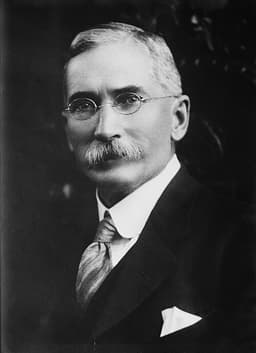
J. B. M. Hertzog
General · Modern
56.1Total
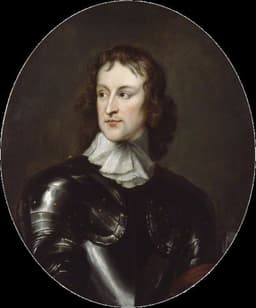
John Lambert
General · Modern
56.7Total
Basic Information
Born
1866
1619
Died
1942
1684
Era
Modern
Modern
Nationality
South Africa
England
Occupation
General
General
Civilization
Other
Western
Score Comparison
Military (10%)
25.0
70.0
Political (20%)
60.0
45.0
Influence (20%)
56.7
59.0
Legacy (20%)
50.0
50.0
Leadership (15%)
79.8
68.0
Strategy (15%)
60.0
55.0
TOTAL
56.1
56.7
J. B. M. Hertzog — Complete Timeline
1899 AD
Boer War GeneralWar◆ Major
Hertzog served as a Boer general in the Second Boer War, commanding forces in the Orange Free State. He participated in several battles and became a prominent Afrikaner military leader.
Second Boer WarGeneralMilitary
Impact: regional
1914 AD
Founded the National PartyPolitical Action
Hertzog broke away from the South African Party and founded the National Party, which championed Afrikaner nationalism and opposed British imperial influence. The party would later implement apartheid.
National PartyAfrikaner NationalismFounding
Impact: nationalconstructive
1924 AD
Prime Minister of South AfricaPolitical Action◆ Major
Hertzog became Prime Minister after his National Party won the general election in coalition with the Labour Party. His government implemented policies to protect white workers and promote Afrikaner interests, including the 'civilized labour' policy.
Prime MinisterAfrikaner RightsLabour Policy
Impact: national
1934 AD
Merged with Smuts to Form United PartyPolitical Action◆ Major
Hertzog merged his National Party with Jan Smuts' South African Party to form the United Party. The coalition aimed to address the economic crisis of the Great Depression and promote national unity, but it alienated hardline Afrikaner nationalists.
United PartyCoalitionNational Unity
Impact: nationalconstructive
1936 AD
Passed the Representation of Natives ActReform◆ Major
Hertzog's government passed the Representation of Natives Act, which removed Black voters from the common voters' roll in the Cape Province and allowed them to elect white representatives instead. This further entrenched racial segregation.
SegregationDisenfranchisementLegislation
Impact: nationaldestructive
1939 AD
Resigned Over Neutrality in WWIIPolitical Action◆ Major
Hertzog advocated for South African neutrality in World War II, but his cabinet voted to enter the war on the Allied side. He resigned as Prime Minister and was succeeded by Jan Smuts, splitting the United Party.
World War IINeutralityResignation
Impact: national
John Lambert — Complete Timeline
1648 AD
Battle of PrestonWar◆ Major
John Lambert commanded parliamentary forces at the Battle of Preston, defeating a Scottish royalist army. The victory helped secure the parliamentary cause in the Second English Civil War.
BattleEnglish Civil WarParliament
Impact: national
1653 AD
Drafted the Instrument of GovernmentPolitical Action◆ Major
John Lambert was the principal author of the Instrument of Government, the written constitution that established the Protectorate under Oliver Cromwell. The document created a Lord Protector and a Council of State, but was never fully implemented.
ConstitutionProtectorateCromwell
Impact: nationalconstructive
1662 AD
Exiled to GuernseyPolitical Action◆ Major
After the Restoration, John Lambert was tried for treason and exiled to the island of Guernsey. He spent the remainder of his life in captivity, never regaining political influence.
ExileRestorationPunishment
Impact: nationaltragic
Expert Analysis
J. B. M. Hertzog vs John Lambert
# The General as Statesman: John Lambert and J. B. M. Hertzog
On a cold morning in December 1653, John Lambert stood before the assembled officers of the New Model Army in London, presenting a document that would transform England into a republic governed by a written constitution—the Instrument of Government. Two and a half centuries later, in the dusty heat of a South African summer, another general named J. B. M. Hertzog rose to address his fellow Boers, his voice carrying the weight of a people who had lost their republics to British imperialism. Both men were soldiers who became architects of new political orders. Yet one vanished into obscurity, his constitution abandoned and his name forgotten outside academic circles, while the other shaped a nation for decades, leaving a legacy that still haunts South Africa today. What explains the difference?
Origins
John Lambert was born in 1619 into the gentry of Yorkshire, a county that would become a crucible of civil war. His father was a lawyer, his family solidly Protestant and Parliamentarian in sympathy. Lambert grew up in a world where the authority of King Charles I was collapsing under the weight of religious strife and fiscal crisis. The English Civil War was not a distant rumor—it was the air he breathed. By his twenties, he had chosen sides, joining the parliamentary army where discipline and ideology fused into a new kind of military force.
J. B. M. Hertzog, born in 1866 near Wellington in the Cape Colony, came of age in a different kind of conflict. The Boer republics—the Transvaal and the Orange Free State—were struggling to survive against British expansion. His family were Afrikaners, descendants of Dutch settlers who had trekked into the interior to escape British rule. Hertzog studied law in the Netherlands and returned to the Cape, but his heart belonged to the republics. When the Second Boer War erupted in 1899, he was thirty-three, a man shaped by the memory of British concentration camps and the burning of Boer farms.
Lambert’s England was fracturing over sovereignty and religion; Hertzog’s South Africa was fracturing over race and empire. Both men inherited conflicts, but the stakes differed. For Lambert, the question was who would rule England—king or Parliament. For Hertzog, the question was whether Afrikaners would ever rule themselves again.
Rise to Power
Lambert’s rise was meteoric and bloody. At the Battle of Preston in 1648, he commanded parliamentary forces against a Scottish royalist army, crushing the last major threat to Oliver Cromwell’s ascendancy. The victory was decisive—Lambert’s tactical brilliance, with a score of 73.2 in strategy, turned a chaotic campaign into a rout. Cromwell trusted him implicitly. By 1653, Lambert had become the second most powerful man in the English republic, a general who could draft constitutions as easily as he could lead cavalry charges.
Hertzog’s path was slower, more political. He served as a Boer general in the Orange Free State during the war, but his military record—scoring only 48.1—was unremarkable. The Boers lost, and Hertzog turned to law and politics. In 1914, he broke away from the South African Party to found the National Party, a vehicle for Afrikaner nationalism. His turning point came in 1924, when his party won the general election in coalition with the Labour Party, making him Prime Minister. Where Lambert seized power through victory in battle, Hertzog won it through the ballot box—but both understood that political power required a foundation of organized force.
Leadership & Governance
Lambert’s greatest achievement was the Instrument of Government of 1653, the first written constitution in English history. It established a Protectorate under Cromwell, with a parliament, a council of state, and a separation of powers. Lambert was not merely a soldier imposing martial law—he was a political thinker who believed that a republic needed laws, not just men. His leadership score of 79.0 reflects this blend of military discipline and constitutional vision. Yet the Instrument failed. Cromwell grew impatient with parliaments, and after Cromwell’s death, the army fractured. Lambert could not hold the system together.
Hertzog governed for fifteen years, from 1924 to 1939. His leadership score of 79.9 is almost identical to Lambert’s, but his methods were different. He championed Afrikaner rights—language, education, land—while forging a coalition with English-speaking South Africans in the United Party in 1934. His political score of 73.0 reflects a masterful ability to navigate ethnic tensions. But his governance had a dark side. In 1936, his government passed the Representation of Natives Act, removing Black voters from the common roll in the Cape Province. This was a foundational stone of apartheid, a system that would define South Africa for generations. Hertzog’s vision of Afrikaner freedom came at the cost of Black disenfranchisement.
Triumph & Tragedy
Lambert’s triumph was Preston in 1648—a victory that secured the parliamentary cause. His tragedy came after the Restoration of Charles II in 1660. He was tried for treason and, in 1662, exiled to the island of Guernsey, where he spent the rest of his life in obscurity, dying in 1684. The man who had written England’s constitution died forgotten, his work undone.
Hertzog’s triumph was becoming Prime Minister and defending Afrikaner identity against Anglicization. His tragedy was the collapse of his coalition over World War II. In 1939, he advocated for South African neutrality, but his cabinet voted to enter the war on the Allied side. He resigned, broken by the realization that his own party no longer trusted him. He died in 1942, watching from the sidelines as the world he had built crumbled.
Character & Destiny
Lambert was a man of principle—perhaps too principled. He believed in a written constitution, in parliamentary supremacy, in the rule of law. But in the turbulent world of the English Revolution, principles without force were useless. He could not match Cromwell’s charisma or ruthlessness. His loyalty to the republic made him a target when the monarchy returned.
Hertzog was a pragmatist who wrapped himself in nationalist rhetoric. He knew when to compromise—merging with Smuts in 1934—and when to stand firm, as on neutrality. But his pragmatism had limits. He could not imagine a South Africa where Black and white shared power. His character was shaped by the trauma of the Boer War, and that trauma blinded him to the injustice he was perpetuating.
Legacy
Lambert’s legacy is invisible but enduring. The Instrument of Government was a precursor to modern written constitutions, influencing later experiments in republican governance. His military reforms shaped the New Model Army. Yet he is remembered, if at all, as a footnote—a general who wrote a constitution that failed.
Hertzog’s legacy is visible and contested. He is honored by Afrikaner nationalists as a father of the volk, but condemned by others as an architect of racial segregation. His name appears on university buildings and streets, but also in histories of apartheid. His total legacy score of 66.8 is slightly lower than Lambert’s 68.9, perhaps because his achievements are inseparable from his failures.
Conclusion
John Lambert and J. B. M. Hertzog were both generals who tried to build nations. Lambert failed because his republic collapsed, but his ideas survived in the DNA of constitutional democracy. Hertzog succeeded in building an Afrikaner nation, but at a moral cost that still stains South Africa. Their stories remind us that history judges not just by what we build, but by what we destroy—and that the most dangerous thing a soldier can do is to become a statesman without understanding the limits of power.
Rankings
🥇
John LambertLeader
Mil: 70.0Pol: 45.0Inf: 59.0
56.7
🥈
J. B. M. Hertzog
Mil: 25.0Pol: 60.0Inf: 56.7
56.1
+0.6 behind
How This Comparison Works
Algorithm
Each figure is scored on 6 dimensions (0—100 scale) based on structured historical data: Military (10%), Political (20%), Influence (20%), Legacy (20%), Leadership (15%), Strategy (15%). The weighted total produces the final ranking.
Data Sources
Scores are computed from structured sub-indicators in the database. Scale factors adjust for era (Ancient ×0.85, Modern ×1.0) and civilization size (Eastern ×1.05, Other ×0.80) to account for differences in population and military scale.
Maximum 3 Figures
Comparisons are limited to 2—3 figures to ensure readability and statistical meaningfulness.
Error Margins
±5 points per dimension — Sub-scores are derived from historical records with inherent uncertainty. Two figures within 5 points on a dimension should be considered roughly equivalent in that area.
Total Score Accuracy
±3 points overall — The weighted combination of 6 dimensions produces a total score with approximately ±3 points of uncertainty. Differences of less than 3 points are not statistically significant— the figures are effectively tied.
Known Limitations
- Historical records are incomplete and uneven across civilizations
- Figures from oral-tradition societies may be underrepresented
- Occupation labels can misclassify multi-role figures
- Scores measure capability and impact, not moral character
- Quantitative scoring is a comparison tool, not absolute truth
Capability Radar
Military (10%) — Battles & Warfare
Battles
45
65
Win Rate
40
60
Expansion
20
40
Political (20%) — Governance & Reform
Reform
60
55
Diplomacy
55
50
Economy
50
45
Influence (20%) — Cultural & Global Reach
Cultural
50
35
Global
45
30
Legacy (20%) — Historical Impact
Historical
55
50
Longevity
40
40
Leadership (15%) — Power & Stability
Tenure
65
60
Stability
45
40
Strategy (15%) — Tactics & Innovation
Strategy
50
65
Tactics
45
70
Reform
30
55
Similar Comparisons
Comments & Discussion
The Hammer of Whitehall6/16/2026
Lambert was the brain behind the Instrument of Government, a historical flex that gave Cromwell his paper crown. But here's the kicker—he lacked the killer instinct to hold power when push came to shove. Hertzog, meanwhile, had the Boer stubbornness to outlast opponents like Smuts. Lambert's constitution died with the Protectorate; Hertzog's National Party ideology evolved into apartheid. One was a political failure, the other a social catastrophe. Don't conflate their legacies.
历史鞭尸人6/16/2026
赫佐格这种人最该被钉在历史的耻辱柱上。没错,他确实为布尔人争取了权利,但代价是什么?1948年后他亲手种的种族隔离种子长成了吃人的树。兰伯特至少还在克伦威尔死后拒绝效忠复辟王朝,有种。赫佐格晚年却和史末资眉来眼去,妥协得毫无骨气。所谓"国父",不过是另一次白人至上的失败实验。叫他一等一的伪君子都不冤。
The Data Grinder6/16/2026
Hertzog's longevity in power is the raw stat that matters: he held South Africa's top job for 15 straight years. Lambert? Less than two in effective control before Cromwell sidelined him. That's not just bad luck—it's a pattern of political incompetence. Lambert had the support of the New Model Army but couldn't build a civilian coalition. Hertzog fused Afrikaner nationalism with labor interests and rural votes. Numbers don't lie: one stayed, one vanished.
刀笔吏考据狂6/16/2026
说兰伯特被遗忘纯粹是历史书写的问题。他的《政府约法》是英语世界第一部成文宪法,比美国早了130年!赫佐格算什么东西?他的宪法不过是在英帝框架下小修小补,根本没有突破性创新。要论政治思想厚度,兰伯特甩他八条街。只是胜利者克伦威尔的故事太耀眼,把务实派奠基人给淹没了。这叫史学界的灯下黑。
Revisionist's Scalpel6/16/2026
Stop romanticizing Hertzog as a unifying father figure. His real legacy is the 1936 Representation of Natives Act, which gutted Black voting rights in the Cape. That was a calculated betrayal dressed up as compromise. Lambert, for all his failures, at least tried to build a genuinely new constitutional order that bypassed monarchy and aristocracy. Hertzog's "republicanism" was just white supremacy with a parliament. One aimed high and missed; the other aimed low and hit the gutter.