Loading...
Hyder Ali vs Mohammad Fahim
Hyder Ali leads by 19.7 pts · 2 figures compared
…
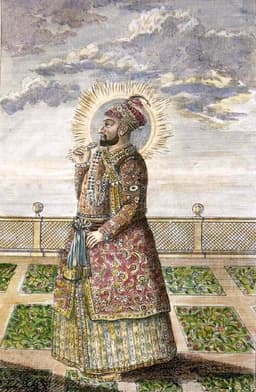
Hyder Ali
General · Modern
69.4Total

Mohammad Fahim
General · Modern
49.7Total
Basic Information
Born
1720
1957
Died
1782
—
Era
Modern
Modern
Nationality
India
Afghanistan
Occupation
General
General
Civilization
Indian
Middle Eastern
Score Comparison
Military (10%)
80.0
40.0
Political (20%)
65.7
43.7
Influence (20%)
82.0
51.0
Legacy (20%)
56.0
43.3
Leadership (15%)
68.0
74.0
Strategy (15%)
68.0
45.0
TOTAL
69.4
49.7
Hyder Ali — Complete Timeline
1757 AD
Battle of PlasseyWar◆ Major
Hyder Ali, as a commander under the Wodeyar dynasty, participated in the Battle of Plassey indirectly by supporting the French against the British. However, his major role came later. This battle marked the beginning of British dominance in Bengal, which Hyder Ali would later challenge in the Carnatic Wars.
Carnatic WarsBritish East India CompanyMysore
Impact: regional
1761 AD
Capture of the throne of MysorePolitical Action◆ Major
Hyder Ali, a military commander, overthrew the Wodeyar ruler Krishnaraja Wodeyar II and established himself as the de facto ruler of Mysore. He imprisoned the maharaja and assumed full control, transforming Mysore into a powerful state through military reforms and expansion.
CoupMysore KingdomWodeyar Dynasty
Impact: regionaldestructive
1767 AD
First Anglo-Mysore WarWar◆ Major
Hyder Ali led Mysore against the British East India Company in the First Anglo-Mysore War. He formed alliances with the Nizam of Hyderabad and the Marathas. The war ended with the Treaty of Madras in 1769, which restored conquered territories and established a defensive alliance between Mysore and the British.
Anglo-Mysore WarsTreaty of MadrasBritish India
Impact: regional
1780 AD
Second Anglo-Mysore WarWar◆ Major
Hyder Ali launched the Second Anglo-Mysore War, attacking British territories in the Carnatic. He captured Arcot and defeated British forces at Pollilur. The war continued after his death in 1782, with his son Tipu Sultan taking command. The conflict ended with the Treaty of Mangalore in 1784.
Anglo-Mysore WarsBattle of PollilurTipu Sultan
Impact: regional
Mohammad Fahim — Complete Timeline
2001 AD
Led Northern Alliance Forces in Fall of KabulWar
Mohammad Fahim, as a senior Northern Alliance commander, led forces that captured Kabul from the Taliban in November 2001. This victory followed the US invasion and was a turning point in the war, leading to the collapse of Taliban rule.
AfghanistanWarTaliban
Impact: national
Appointed Vice President of AfghanistanPolitical Action◆ Major
Mohammad Fahim was appointed Vice President of Afghanistan under Hamid Karzai in 2001, serving until 2004. He was a key Northern Alliance commander and his appointment was part of the post-Taliban power-sharing arrangement.
AfghanistanVice PresidencyNorthern Alliance
Impact: nationalconstructive
Served as Minister of DefensePolitical Action◆ Major
Mohammad Fahim served as Afghanistan's Minister of Defense from 2001 to 2004. He oversaw the formation of the new Afghan National Army and security forces, integrating former mujahideen and Northern Alliance fighters.
AfghanistanDefenseMilitary
Impact: nationalconstructive
2009 AD
Appointed First Vice President in 2009Political Action◆ Major
Mohammad Fahim was appointed First Vice President of Afghanistan under President Hamid Karzai in 2009. He served until his death in 2014, playing a key role in security and political affairs.
AfghanistanVice PresidencyGovernment
Impact: nationalconstructive
Expert Analysis
Mohammad Fahim vs Hyder Ali
# The Lion and the Warlord: Two Paths from Chaos to Power
On a July morning in 1782, Hyder Ali lay dying in his camp near Chittoor, his body ravaged by a carbuncle that had spread poison through his veins. The Sultan of Mysore had spent his final hours dictating orders for the defense of his kingdom, his mind still sharp even as his strength ebbed. Nearly 220 years later, in November 2001, Mohammad Fahim rode into Kabul atop a pickup truck, his beard dusted with the grit of a war that had just ended. The Northern Alliance commander had broken the Taliban's grip on the capital, and the world hailed him as a liberator. Both men seized power from the chaos of collapsing orders. Both fought foreign empires. But where one built a state that would challenge the British East India Company for two decades, the other would see his nation spiral into renewed conflict. What makes the difference between a founder and a placeholder?
Origins
Hyder Ali was born in 1720 into a world of shifting loyalties and mercenary ambition. His father was a *faujdar*—a military commander—in the service of the Wodeyar dynasty of Mysore, but the family had no royal blood. Young Hyder learned war from the ground up, serving as a soldier in the Mysorean army, watching how the Marathas, the Nizam of Hyderabad, and the European trading companies played their deadly games. The Indian subcontinent in the mid-18th century was a chessboard of decaying Mughal authority and rising European power. Hyder understood that survival meant mastering the new military technologies—rocket artillery, disciplined infantry, and the logistics of European-style warfare—while never losing touch with the guerrilla traditions of the Deccan.
Mohammad Fahim was born in 1957 in the Panjshir Valley of Afghanistan, a region that had produced generations of warriors. His family were ethnic Tajiks, part of a minority that had long resented Pashtun dominance. He grew up in the shadow of the Soviet invasion, watching his country become a battlefield for superpowers. Where Hyder Ali learned war in the service of a kingdom, Fahim learned it in the resistance. He joined the Mujahideen in the 1980s, fighting Soviet tanks with Kalashnikovs and stingers. His mentor was Ahmad Shah Massoud, the "Lion of Panjshir," a commander of extraordinary strategic vision. Fahim was a loyal lieutenant, not a creator of strategy.
Rise to Power
Hyder Ali's ascent was methodical and ruthless. By 1757, he had distinguished himself enough to participate in the Battle of Plassey—though indirectly, supporting the French-allied forces against Robert Clive. The battle was a disaster for his side, but Hyder learned a crucial lesson: the British East India Company was not invincible, but it was patient and well-resourced. In 1761, he saw his moment. The Wodeyar ruler Krishnaraja Wodeyar II was weak, and Hyder simply overthrew him, declaring himself the de facto ruler of Mysore. He did not take the throne himself; he placed a puppet on it and ruled from behind the curtain. It was a classic playbook of military strongmen, but Hyder added something more: he began to transform Mysore into a modern state.
Fahim's rise was faster, more chaotic. In 2001, he was a senior commander in the Northern Alliance, the last organized resistance against the Taliban. After the September 11 attacks, the United States intervened, and Fahim found himself at the head of forces that captured Kabul in November 2001. The Taliban collapsed within weeks. Fahim was appointed Vice President and Minister of Defense under Hamid Karzai. He had not built a state; he had ridden a wave. His power came from his control of armed men, not from institutions or popular support.
Leadership & Governance
Hyder Ali governed with the mind of a military engineer. He reformed Mysore's tax system, centralized revenue collection, and invested in a standing army of 60,000 men trained in European tactics. He built arsenals that produced muskets, cannon, and the famous Mysorean rockets—iron-cased projectiles that could travel over a mile. He formed alliances with the French and the Marathas, playing one power against another. In the First Anglo-Mysore War of 1767, he forced the British to sign a humiliating treaty, the Treaty of Madras. His political score of 66.2 reflects a man who understood power but never fully mastered diplomacy: he could win battles but could not secure peace.
Fahim's governance was far weaker. As Minister of Defense, he oversaw the creation of a new Afghan National Army, but his primary loyalty remained to his own power base. He was accused of corruption, of running the ministry like a personal fiefdom. His political score of 56.5 and strategy score of 48.9 tell the story: he was a battlefield commander, not a builder. The Northern Alliance had been held together by Massoud's vision; after Massoud's assassination on September 9, 2001, Fahim inherited a coalition of warlords, not a unified force.
Triumph & Tragedy
Hyder Ali's greatest moment came in 1780, when he launched the Second Anglo-Mysore War. He swept into the Carnatic, capturing Arcot and defeating British columns. For a moment, it seemed he might drive the British out of southern India entirely. But his coalition of allies—the French, the Marathas, the Nizam—was fragile. The British held on. Hyder died in 1782, his war unfinished. His tragedy was that he built a state strong enough to fight but not strong enough to win.
Fahim's triumph was the fall of Kabul in 2001. He stood at the peak of his power, celebrated by the West as a liberator. But he could not consolidate that victory. By 2009, when he was appointed First Vice President, the Taliban were already regrouping. He died in 2014, leaving behind a country sliding back into civil war. His tragedy was that he won a battle but lost the peace.
Character & Destiny
Hyder Ali was a man of iron will and strategic patience. He could be cruel—he executed rivals without hesitation—but he was also a reformer. He believed in the state as a machine of war and prosperity. His leadership score of 71.2 reflects a commander who inspired loyalty and fear in equal measure. His military score of 87.4 places him among the great captains of the 18th century.
Fahim was a survivor, not a visionary. His leadership score of 75.8 is high, but it was the charisma of a warlord, not a statesman. He kept his men loyal through patronage, not purpose. When the Americans left, his network of alliances dissolved. Destiny gave him a moment, but he could not seize it.
Legacy
Hyder Ali is remembered as the father of the Kingdom of Mysore, the man who taught the British that India would not be conquered easily. His son Tipu Sultan would carry on his war, becoming a legend of resistance. Hyder's legacy is a mixed one: he was a Muslim ruler who fought Hindu and Christian powers alike, a reformer who also enslaved prisoners of war. But he left a state that mattered.
Fahim is remembered, if at all, as a footnote. The Northern Alliance's victory was real, but it was a coalition of convenience, not a nation-building project. His legacy of 56.7 reflects a man who was a necessary instrument in a larger story—the American war in Afghanistan—but who could not shape that story.
Conclusion
The difference between Hyder Ali and Mohammad Fahim is not one of intelligence or courage. Both were brave, both were ruthless. The difference lies in what they built. Hyder Ali constructed institutions—a treasury, an army, a bureaucracy—that could outlast him. Fahim built only a network of personal loyalties, which dissolved when the money stopped flowing and the Americans withdrew. In the end, the measure of a leader is not how he seizes power, but what he leaves behind. Hyder Ali left a kingdom. Fahim left a vacuum. History remembers the builders, not the warlords.
Rankings
🥇
Hyder AliLeader
Mil: 80.0Pol: 65.7Inf: 82.0
69.4
🥈
Mohammad Fahim
Mil: 40.0Pol: 43.7Inf: 51.0
49.7
+19.7 behind
How This Comparison Works
Algorithm
Each figure is scored on 6 dimensions (0—100 scale) based on structured historical data: Military (10%), Political (20%), Influence (20%), Legacy (20%), Leadership (15%), Strategy (15%). The weighted total produces the final ranking.
Data Sources
Scores are computed from structured sub-indicators in the database. Scale factors adjust for era (Ancient ×0.85, Modern ×1.0) and civilization size (Eastern ×1.05, Other ×0.80) to account for differences in population and military scale.
Maximum 3 Figures
Comparisons are limited to 2—3 figures to ensure readability and statistical meaningfulness.
Error Margins
±5 points per dimension — Sub-scores are derived from historical records with inherent uncertainty. Two figures within 5 points on a dimension should be considered roughly equivalent in that area.
Total Score Accuracy
±3 points overall — The weighted combination of 6 dimensions produces a total score with approximately ±3 points of uncertainty. Differences of less than 3 points are not statistically significant— the figures are effectively tied.
Known Limitations
- Historical records are incomplete and uneven across civilizations
- Figures from oral-tradition societies may be underrepresented
- Occupation labels can misclassify multi-role figures
- Scores measure capability and impact, not moral character
- Quantitative scoring is a comparison tool, not absolute truth
Capability Radar
Military (10%) — Battles & Warfare
Battles
78
35
Win Rate
72
40
Expansion
70
25
Political (20%) — Governance & Reform
Reform
70
20
Diplomacy
68
40
Economy
60
15
Influence (20%) — Cultural & Global Reach
Cultural
50
15
Global
50
20
Legacy (20%) — Historical Impact
Historical
55
30
Longevity
45
20
Leadership (15%) — Power & Stability
Tenure
65
45
Stability
55
20
Strategy (15%) — Tactics & Innovation
Strategy
80
35
Tactics
85
30
Reform
75
20
Similar Comparisons
Comments & Discussion
MOUNDBUSTER6/16/2026
Hyder Ali was a state-builder who understood that military might means nothing without a revenue system and logistical backbone. Fahim, by contrast, was a warlord with a pickup truck. Hyder modernized Mysore's rocket artillery and created the first iron-cased rockets in history — Tipu just inherited it. Fahim inherited nothing but a broken country and left it more broken. One forged an actual challenge to the British Empire; the other couldn't even challenge a poppy farmer's militia. There's lev
火箭之父6/16/2026
拿火箭军当标签,你倒是说说哪家火箭?海德·阿里在1780年就搞出了铁壳火箭,射程超过两公里,把英国人吓得屁滚尿流。法希姆呢?2001年进喀布尔开个皮卡就当英雄了。一个是军事革命家,一个是时代幸运儿。别跟我扯什么相似——一个是发明战争技术的人,一个是搭便车的人,根本不在一个档次。
DECAYSPOTTER6/16/2026
The key difference is institutional legacy. Hyder Ali took a fractured Mysore and turned it into a centralized, tax-collecting war machine that outlasted his own death. Fahim took a fractured Northern Alliance and kept it fractured — because that's how he made his money. Hyder could read a balance sheet as well as a battlefield. Fahim couldn't keep his warlords from fighting each other long enough to hold a cabinet meeting. One built something. The other just got lucky for a few years.
叛乱操盘手6/16/2026
别被帝国叙事骗了。海德·阿里是个标准的军事投机者,和法希姆本质上没区别。前者从纳瓦布的混乱里扒出权力,后者从塔利班的废墟里抢到位置。海德不过是运气好,赶上英国东印度公司还没完全发力;法希姆更倒霉,赶上了美国要收拾阿富汗。你们非得分个高下——其实都是乱世的流氓,手段不同而已。一个搞了火箭炮,一个搞了情报局,都是在玩命赌。格局?那是后来人编的故事。
SULTAN'S ACCOUNTANT6/16/2026
Let's talk about the real metric: how long your system functions after you're dead. Hyder Ali died in 1782, and his son Tipu Sultan kept Mysore independent and innovating for another 17 years. Fahim died in 2014, and within four years his power base was wiped out by rival warlords. Hyder built institutions. Fahim built a personal network. There's a reason one is studied in military academies and the other is a footnote. Legacy isn't about who gets more press at the funeral. It's about who leaves