Loading...
This comparison has not been analyzed yet.
One-time AI generation (~1 minute). Scores and timeline are already available below.
Huseyin Avni Pasha vs Suharto
Suharto leads by 8.5 pts · 2 figures compared
…

Huseyin Avni Pasha
General · Modern
48.7Total
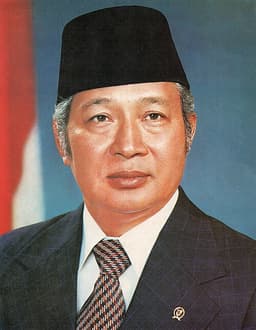
Suharto
General · Modern
57.2Total
Basic Information
Born
1820
1921
Died
1876
—
Era
Modern
Modern
Nationality
Ottoman Empire
Indonesia
Occupation
General
General
Civilization
Middle Eastern
Eastern
Score Comparison
Military (10%)
50.0
20.0
Political (20%)
39.4
59.3
Influence (20%)
52.5
60.0
Legacy (20%)
43.3
52.0
Leadership (15%)
58.8
82.0
Strategy (15%)
50.0
60.0
TOTAL
48.7
57.2
Huseyin Avni Pasha — Complete Timeline
1876 AD
Deposition of Sultan AbdulazizPolitical Action◆ Major
As Ottoman War Minister, Huseyin Avni Pasha led the coup that deposed Sultan Abdulaziz on May 30, 1876. The deposition was carried out by military forces loyal to the reformist faction, resulting in Abdulaziz's replacement by Murad V.
Ottoman CoupSultan DeposedReformist Faction
Impact: nationaldestructive
Death of Sultan AbdulazizOther◆ Major
Sultan Abdulaziz died under suspicious circumstances on June 4, 1876, four days after his deposition. Huseyin Avni Pasha was implicated in the death, which was officially ruled a suicide but widely believed to be murder.
Sultan DeathSuspicious CircumstancesPolitical Murder
Impact: nationaltragic
Assassination of Huseyin Avni PashaOther◆ Major
Huseyin Avni Pasha was assassinated on June 15, 1876, during a cabinet meeting at the house of Midhat Pasha. The assassin was a Circassian officer named
AssassinationOttoman PoliticsRevenge
Impact: nationaltragic
Suharto — Complete Timeline
1966 AD
Supersemar and Transfer of PowerPolitical Action
President Sukarno signed the Supersemar order, delegating authority to General Suharto to restore order after the 30 September Movement. Suharto used this to ban the Communist Party, purge leftists, and gradually assume executive power, effectively beginning his New Order regime.
SupersemarNew OrderIndonesia
Impact: nationaldestructive
1967 AD
New Order Economic DevelopmentReform◆ Major
Suharto implemented the New Order's economic policies, focusing on foreign investment, agricultural self-sufficiency, and industrialization. The government achieved high growth rates, reduced poverty, and stabilized the economy, but also fostered crony capitalism and corruption.
Economic GrowthDevelopmentIndonesia
Impact: nationalconstructive
1975 AD
Invasion of East TimorWar◆ Major
Suharto ordered the invasion of East Timor after Portugal withdrew. Indonesian forces occupied the territory, leading to a 24-year occupation marked by widespread human rights abuses, including massacres and forced displacement, resulting in an estimated 100,000-200,000 deaths.
East TimorOccupationHuman Rights
Impact: regionaldestructive
1998 AD
Asian Financial Crisis and Fall from PowerPolitical Action
The Asian Financial Crisis devastated Indonesia's economy, leading to massive unemployment and food shortages. Widespread protests and riots forced Suharto to resign in May 1998 after 31 years in power, ending his authoritarian rule and ushering in the Reformasi era.
Financial CrisisResignationReformasi
Impact: nationaltragic
This comparison has not been analyzed yet.
One-time AI generation (~1 minute). Scores and timeline are already available below.
Rankings
🥇
SuhartoLeader
Mil: 20.0Pol: 59.3Inf: 60.0
57.2
🥈
Huseyin Avni Pasha
Mil: 50.0Pol: 39.4Inf: 52.5
48.7
+8.5 behind
How This Comparison Works
Algorithm
Each figure is scored on 6 dimensions (0—100 scale) based on structured historical data: Military (10%), Political (20%), Influence (20%), Legacy (20%), Leadership (15%), Strategy (15%). The weighted total produces the final ranking.
Data Sources
Scores are computed from structured sub-indicators in the database. Scale factors adjust for era (Ancient ×0.85, Modern ×1.0) and civilization size (Eastern ×1.05, Other ×0.80) to account for differences in population and military scale.
Maximum 3 Figures
Comparisons are limited to 2—3 figures to ensure readability and statistical meaningfulness.
Error Margins
±5 points per dimension — Sub-scores are derived from historical records with inherent uncertainty. Two figures within 5 points on a dimension should be considered roughly equivalent in that area.
Total Score Accuracy
±3 points overall — The weighted combination of 6 dimensions produces a total score with approximately ±3 points of uncertainty. Differences of less than 3 points are not statistically significant— the figures are effectively tied.
Known Limitations
- Historical records are incomplete and uneven across civilizations
- Figures from oral-tradition societies may be underrepresented
- Occupation labels can misclassify multi-role figures
- Scores measure capability and impact, not moral character
- Quantitative scoring is a comparison tool, not absolute truth
Capability Radar
Military (10%) — Battles & Warfare
Battles
20
40
Win Rate
15
45
Expansion
10
30
Political (20%) — Governance & Reform
Reform
30
55
Diplomacy
25
60
Economy
20
65
Influence (20%) — Cultural & Global Reach
Cultural
15
40
Global
10
50
Legacy (20%) — Historical Impact
Historical
30
55
Longevity
20
45
Leadership (15%) — Power & Stability
Tenure
40
85
Stability
15
50
Strategy (15%) — Tactics & Innovation
Strategy
20
40
Tactics
20
35
Reform
30
50
Similar Comparisons
Comments & Discussion
No comments yet. Be the first to share your thoughts!