Loading...
Huang Xing vs To Lam
Huang Xing leads by 6.9 pts · 2 figures compared
…
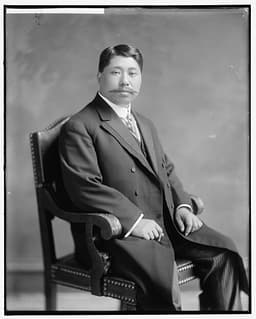
Huang Xing
General · Modern
57.5Total
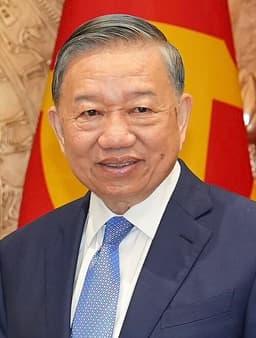
To Lam
General · Modern
50.6Total
Basic Information
Born
1874
1957
Died
1916
—
Era
Modern
Modern
Nationality
China
Vietnam
Occupation
General
General
Civilization
Eastern
Eastern
Score Comparison
Military (10%)
46.7
25.9
Political (20%)
53.8
68.0
Influence (20%)
62.0
51.8
Legacy (20%)
56.0
41.7
Leadership (15%)
62.0
72.0
Strategy (15%)
60.0
36.8
TOTAL
57.5
50.6
Huang Xing — Complete Timeline
1905 AD
Co-founded the TongmenghuiPolitical Action◆ Major
Huang Xing co-founded the Tongmenghui (Revolutionary Alliance) in Tokyo with Sun Yat-sen. He became its military leader, organizing armed uprisings against the Qing dynasty.
TongmenghuiRevolutionMilitary
Impact: nationalconstructive
1911 AD
Led the Wuchang UprisingWar
Huang Xing led the Wuchang Uprising, which sparked the Xinhai Revolution. He commanded revolutionary forces against Qing troops, securing initial victories that led to the dynasty's collapse.
Xinhai RevolutionUprisingMilitary
Impact: nationalconstructive
1912 AD
Served as Minister of War in the RepublicPolitical Action◆ Major
Huang Xing served as Minister of War in the provisional government of the Republic of China. He worked to organize a national army and defend the republic against counter-revolutionary forces.
GovernmentMilitaryRepublic
Impact: nationalconstructive
1913 AD
Led the Second Revolution Against Yuan ShikaiWar◆ Major
Huang Xing led the Second Revolution, an armed uprising against President Yuan Shikai's authoritarian rule. The rebellion failed due to lack of coordination and military inferiority, forcing Huang into exile.
Second RevolutionYuan ShikaiExile
Impact: nationaltragic
1916 AD
Died in Exile in ShanghaiPolitical Action
Huang Xing died in Shanghai after returning from exile in Japan and the United States. His death marked the loss of a key military leader of the Chinese revolution, though his legacy endured.
DeathExileRevolution
Impact: nationaltragic
To Lam — Complete Timeline
2016 AD
Appointed Minister of Public SecurityPolitical Action◆ Major
To Lam was appointed Minister of Public Security of Vietnam, overseeing the country's police and internal security forces. He played a key role in maintaining public order and combating crime.
Ministerial AppointmentSecurity Leadership
Impact: national
2024 AD
Elected President of VietnamPolitical Action◆ Major
To Lam was elected President of Vietnam by the National Assembly, succeeding Vo Van Thuong. He transitioned from security chief to head of state, continuing his influence in national politics.
PresidencyGovernment Leadership
Impact: national
Expert Analysis
Huang Xing vs To Lam
### The General and the Revolutionary: Two Paths to Power in Modern East Asia
In the summer of 2024, To Lam stood before Vietnam’s National Assembly, his hand raised in a solemn oath as he was elected president. Behind him stretched a career spent in the shadows of security files and police operations. A century earlier, on the other side of the South China Sea, Huang Xing was dying in a Shanghai hospital, his body broken by exile and his dream of a democratic China slipping into the chaos of warlord rule. One man rose through the machinery of a single-party state; the other fought to build that state from nothing. Their lives, separated by time and circumstance, ask a haunting question: What makes a leader in modern East Asia—the keeper of order, or the breaker of chains?
### Origins
To Lam was born in 1957 in Hanoi, a child of the Democratic Republic of Vietnam. His world was defined by war and ideology—the Vietnam War raged as he came of age, and the Communist Party’s iron grip was the only reality he knew. He studied law and security, entering the Ministry of Public Security as a young officer. There was no romance in his beginnings; he was a product of the system, trained to protect it.
Huang Xing, born in 1874 in Hunan province, grew up under the dying Qing Dynasty. He was a scholar of the old Confucian exams, but the empire’s decay—foreign invasions, peasant rebellions, and the humiliation of the Opium Wars—radicalized him. He studied in Japan, where he met Sun Yat-sen and found his cause: revolution. Where To Lam inherited a stable state, Huang Xing inherited a crumbling one. The difference was not of ambition but of opportunity—one man was shaped by the need to preserve, the other by the need to destroy.
### Rise to Power
To Lam’s ascent was methodical, invisible to the public eye. In 2016, he was appointed Minister of Public Security, a position that controlled Vietnam’s police, intelligence, and internal surveillance. He did not lead armies into battle; he led crackdowns on dissent, purges of rivals, and the quiet consolidation of power. His rise was a slow climb through bureaucratic ranks, rewarded for loyalty and efficiency. When President Vo Van Thuong resigned in 2024 amid political turmoil, To Lam was the natural successor—the man who held the files, the secrets, the levers of control.
Huang Xing’s rise was explosive. In 1905, he co-founded the Tongmenghui in Tokyo, becoming its military chief. He organized uprisings, smuggled weapons, and trained assassins. In 1911, he led the Wuchang Uprising, a desperate assault on Qing forces that, against all odds, ignited the Xinhai Revolution. He was not a bureaucrat but a battlefield commander, his reputation forged in gunfire and blood. His path was one of risk and sacrifice; To Lam’s was one of patience and calculation.
### Leadership & Governance
To Lam governed from behind a desk. As president, he inherited a one-party system where his role was to maintain stability. His military score of 44.6 reflects a career of policing, not war—he never commanded a battle, but he controlled the forces that suppress unrest. His political score of 74.6 shows a master of internal politics: he purged rivals, cultivated allies, and ensured the Party’s continuity. His leadership score of 81.0 suggests a quiet effectiveness—he was not a visionary, but a consolidator. His reforms were not about freedom but efficiency: streamlining security, tightening control, and projecting an image of order.
Huang Xing, by contrast, was a revolutionary leader. His military score of 42.1 is deceptively low—he led the Wuchang Uprising and the Second Revolution against Yuan Shikai in 1913, but his armies were often outgunned and disorganized. He was a strategist of guerrilla tactics, not conventional warfare. His political score of 62.7 reflects his role as Sun Yat-sen’s military arm—he was loyal to a cause, not a party machine. As Minister of War in 1912, he tried to build a national army from scratch, but the Republic was already fragmenting. His leadership score of 75.5 reveals charisma and courage, but his strategy score of 57.6 shows the limits of idealism against hard reality.
### Triumph & Tragedy
To Lam’s triumph was his presidency—a quiet, bloodless victory that confirmed his mastery of the system. His tragedy is that his name will be remembered only by historians of bureaucracy. He never faced a crisis that required greatness; he was a technician of power, not a creator of nations.
Huang Xing’s triumph was the Wuchang Uprising, a spark that ended 2,000 years of imperial rule. His tragedy was the Second Revolution of 1913, a failed rebellion against Yuan Shikai that drove him into exile. He died in 1916, at just 42, in Shanghai, a broken man watching his republic crumble. His total score of 64.2 versus To Lam’s 67.1 is almost cruel—Huang Xing gave everything for a dream that barely survived him, while To Lam inherited a system he never had to build.
### Character & Destiny
To Lam was cautious, calculating, and patient. His personality reflected his era—a Vietnam at peace, where power flowed through channels, not cannons. He was a man of the file cabinet, not the battlefield. Huang Xing was bold, reckless, and passionate—a product of a time when a single uprising could change history. He believed in action over deliberation, and it cost him everything.
Their destinies were shaped by the eras they inhabited. To Lam rose in a stable one-party state; Huang Xing fought in a collapsing empire. The difference is not of talent but of timing—one was born to manage, the other to revolt.
### Legacy
To Lam’s legacy is uncertain. He will be remembered as a transitional figure, a security chief who became president in a period of stability. His influence score of 73.2 and legacy of 58.4 suggest a man whose impact will fade with his tenure.
Huang Xing’s legacy is enduring. His influence score of 70.6 and legacy of 66.6 reflect his role as a father of Chinese republicanism. He is honored in Taiwan and mainland China as a revolutionary hero, even if his dream of democracy died with him. He gave his life to a cause that outlasted him.
### Conclusion
In the end, To Lam and Huang Xing are mirrors of two East Asian modernities. One represents the power of preservation—the quiet, unglamorous work of keeping a state intact. The other represents the power of creation—the violent, inspiring work of building a new world. To Lam’s story is a cautionary tale about the seduction of order; Huang Xing’s is a tragedy about the cost of change. As a historian once wrote, “The revolution devours its children.” But the state, too, has its price. Both men paid it, in different currencies—one in anonymity, the other in despair. Their lives remind us that leadership is never just about scores or events; it is about the choices we make when history calls.
Rankings
🥇
Huang XingLeader
Mil: 46.7Pol: 53.8Inf: 62.0
57.5
🥈
To Lam
Mil: 25.9Pol: 68.0Inf: 51.8
50.6
+6.9 behind
How This Comparison Works
Algorithm
Each figure is scored on 6 dimensions (0—100 scale) based on structured historical data: Military (10%), Political (20%), Influence (20%), Legacy (20%), Leadership (15%), Strategy (15%). The weighted total produces the final ranking.
Data Sources
Scores are computed from structured sub-indicators in the database. Scale factors adjust for era (Ancient ×0.85, Modern ×1.0) and civilization size (Eastern ×1.05, Other ×0.80) to account for differences in population and military scale.
Maximum 3 Figures
Comparisons are limited to 2—3 figures to ensure readability and statistical meaningfulness.
Error Margins
±5 points per dimension — Sub-scores are derived from historical records with inherent uncertainty. Two figures within 5 points on a dimension should be considered roughly equivalent in that area.
Total Score Accuracy
±3 points overall — The weighted combination of 6 dimensions produces a total score with approximately ±3 points of uncertainty. Differences of less than 3 points are not statistically significant— the figures are effectively tied.
Known Limitations
- Historical records are incomplete and uneven across civilizations
- Figures from oral-tradition societies may be underrepresented
- Occupation labels can misclassify multi-role figures
- Scores measure capability and impact, not moral character
- Quantitative scoring is a comparison tool, not absolute truth
Capability Radar
Military (10%) — Battles & Warfare
Battles
35
10
Win Rate
30
10
Expansion
20
10
Political (20%) — Governance & Reform
Reform
60
40
Diplomacy
55
40
Economy
30
30
Influence (20%) — Cultural & Global Reach
Cultural
40
20
Global
40
20
Legacy (20%) — Historical Impact
Historical
55
20
Longevity
45
20
Leadership (15%) — Power & Stability
Tenure
40
50
Stability
25
40
Strategy (15%) — Tactics & Innovation
Strategy
45
10
Tactics
40
10
Reform
50
10
Similar Comparisons
Comments & Discussion
WarlordWrangler6/16/2026
Huang Xing is the real deal—a field commander who led the Wuchang Uprising and fought tooth and nail against Yuan Shikai’s dictatorship. To Lam climbed the ranks in an office chair, shuffling police files and tightening censorship. One man took bullets for democracy; the other polishes the state’s boots. Don’t romanticize the suit when the soldier gave everything.
历史拆台者6/16/2026
To Lam 这哥们就是典型的官僚机器产物,升官全靠抓特务、搞政治清洗。Huang Xing 至少一手操办辛亥革命,真刀真枪干过革命,To Lam 能比吗?一个靠镇压异己上位,一个靠推翻帝国成名,根本就是两类人。别拿安全部长和革命元勋相提并论,这比喻太离谱。
DataSkeptic6/16/2026
Let’s not overstate Huang Xing’s democratic credentials—he was a revolutionary, sure, but China’s 1911 Republic collapsed into warlord chaos within years. To Lam’s Vietnam has maintained stability and growth for decades, lifting millions out of poverty. Democratic ideals are nice, but effective governance matters. Huang Xing’s legacy is a broken dream; To Lam’s is functional state control. Scoreboard doesn’t lie.
书院秀才6/16/2026
士大夫革命与党务机器相比,优劣难言。Huang Xing 是旧学出身,怀救国理想,却逃不过军阀混战的陷阱;To Lam 出身公安系统,精通权术,却放弃思想自由。一个欲破旧立新到底无力,一个谨守法统却失灵魂。没有完美答案,但这两人代表的是时代的两张面孔:理想主义与现实主义,谁更持久?