Loading...
Huang Xing vs Yitzhak Rabin
Yitzhak Rabin leads by 8.9 pts · 2 figures compared
…
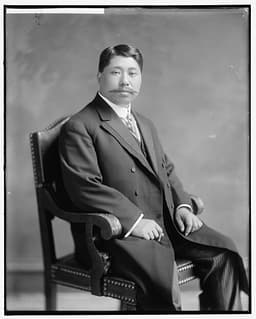
Huang Xing
General · Modern
57.5Total
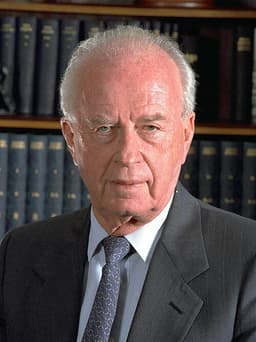
Yitzhak Rabin
General · Modern
66.4Total
Basic Information
Born
1874
1922
Died
1916
—
Era
Modern
Modern
Nationality
China
Israel
Occupation
General
General
Civilization
Eastern
Middle Eastern
Score Comparison
Military (10%)
46.7
61.7
Political (20%)
53.8
82.0
Influence (20%)
62.0
68.0
Legacy (20%)
56.0
55.0
Leadership (15%)
62.0
78.0
Strategy (15%)
60.0
55.0
TOTAL
57.5
66.4
Huang Xing — Complete Timeline
1905 AD
Co-founded the TongmenghuiPolitical Action◆ Major
Huang Xing co-founded the Tongmenghui (Revolutionary Alliance) in Tokyo with Sun Yat-sen. He became its military leader, organizing armed uprisings against the Qing dynasty.
TongmenghuiRevolutionMilitary
Impact: nationalconstructive
1911 AD
Led the Wuchang UprisingWar
Huang Xing led the Wuchang Uprising, which sparked the Xinhai Revolution. He commanded revolutionary forces against Qing troops, securing initial victories that led to the dynasty's collapse.
Xinhai RevolutionUprisingMilitary
Impact: nationalconstructive
1912 AD
Served as Minister of War in the RepublicPolitical Action◆ Major
Huang Xing served as Minister of War in the provisional government of the Republic of China. He worked to organize a national army and defend the republic against counter-revolutionary forces.
GovernmentMilitaryRepublic
Impact: nationalconstructive
1913 AD
Led the Second Revolution Against Yuan ShikaiWar◆ Major
Huang Xing led the Second Revolution, an armed uprising against President Yuan Shikai's authoritarian rule. The rebellion failed due to lack of coordination and military inferiority, forcing Huang into exile.
Second RevolutionYuan ShikaiExile
Impact: nationaltragic
1916 AD
Died in Exile in ShanghaiPolitical Action
Huang Xing died in Shanghai after returning from exile in Japan and the United States. His death marked the loss of a key military leader of the Chinese revolution, though his legacy endured.
DeathExileRevolution
Impact: nationaltragic
Yitzhak Rabin — Complete Timeline
1967 AD
Chief of Staff during the Six-Day WarWar
As Chief of Staff of the Israel Defense Forces, Rabin commanded the Israeli military during the Six-Day War against Egypt, Jordan, and Syria. Israel captured the Sinai Peninsula, Gaza Strip, West Bank, East Jerusalem, and Golan Heights, reshaping the region.
Six-Day WarTerritorial ExpansionMilitary Victory
Impact: global
1993 AD
Signing of the Oslo AccordsPolitical Action
As prime minister, Rabin signed the Oslo Accords with PLO Chairman Yasser Arafat on the White House lawn. The agreement established the Palestinian Authority and set a framework for Palestinian self-governance in the West Bank and Gaza Strip.
Peace ProcessPalestiniansOslo
Impact: globalconstructive
1995 AD
Assassination at Peace RallyPolitical Action
Rabin was assassinated by Israeli extremist Yigal Amir after a peace rally in Tel Aviv. The assassination shocked Israel and the world, derailing the Oslo peace process and leading to a period of political instability.
AssassinationPeace ProcessPolitical Violence
Impact: globaltragic
Expert Analysis
Yitzhak Rabin vs Huang Xing
# The General Who Made Peace, and the General Who Made a Republic
On a balmy November evening in 1995, Yitzhak Rabin stood on a stage in Tel Aviv, singing a peace song with a crowd of 100,000 Israelis. Moments later, three bullets from a pistol fired by a fellow Jew ended his life. Half a world away and eighty years earlier, Huang Xing lay dying in a Shanghai hospital, his lungs ravaged by illness and his spirit broken by exile. Both men were generals who had fought to found nations—Rabin for Israel, Huang for China. Both then sought to steer those nations toward a different future. But one was murdered at the peak of his power, the other faded into obscurity after a failed rebellion. Why did their paths diverge so dramatically?
Origins
Yitzhak Rabin was born in 1922 in Jerusalem, the son of socialist Zionist immigrants from Eastern Europe. He grew up in a land still under British mandate, where the dream of a Jewish state was both a political cause and a daily struggle. His generation was forged in the crucible of survival—the Holocaust had just annihilated European Jewry, and the nascent state of Israel faced annihilation from its Arab neighbors. Rabin’s identity was shaped by the necessity of military strength.
Huang Xing, born in 1874 in Hunan province, came of age under the decaying Qing Dynasty. China was being carved up by foreign powers, its ancient civilization humiliated. Huang was educated in the Confucian classics but also studied in Japan, where he absorbed revolutionary ideas. His generation faced a different dilemma: not how to defend a new state, but how to overthrow a corrupt empire and build a modern nation from the rubble.
Rise to Power
Rabin’s ascent was methodical. He joined the Palmach, the elite strike force of the Jewish underground, and fought in the 1948 Arab-Israeli War. By 1964, he was Chief of Staff of the Israel Defense Forces. His defining moment came in June 1967, when he commanded the Six-Day War—a lightning campaign that captured the Sinai, Gaza, the West Bank, and the Golan Heights in just six days. At 45, Rabin was a national hero, the architect of Israel’s greatest military triumph.
Huang Xing’s rise was more chaotic. In 1905, he co-founded the Tongmenghui (Revolutionary Alliance) in Tokyo with Sun Yat-sen, becoming its military chief. While Sun was the ideological visionary, Huang was the man of action—organizing uprisings, smuggling weapons, and leading failed rebellions. His breakthrough came in October 1911, when he rushed to Wuchang to lead an uprising that had already begun spontaneously. The Wuchang Uprising ignited the Xinhai Revolution, and within months, the Qing Dynasty fell. Huang was hailed as the “father of the Chinese revolution” alongside Sun.
Leadership & Governance
As prime minister from 1974 to 1977 and again from 1992, Rabin governed with a general’s pragmatism. He was not a charismatic speaker but a methodical problem-solver. His military background gave him credibility to make painful compromises: he understood that security could not be achieved through endless war. The Oslo Accords, signed on the White House lawn in September 1993, were his masterstroke. By shaking hands with Yasser Arafat, Rabin acknowledged the PLO as a partner—a move that horrified many Israelis but opened the door to Palestinian self-rule.
Huang Xing’s governance was fleeting. After the revolution, he served as Minister of War in the provisional government of the Republic of China in 1912. But the republic was stillborn: Yuan Shikai, a former Qing general, seized power and dissolved parliament. Huang’s response was the Second Revolution of 1913—an armed uprising against Yuan’s authoritarianism. It failed. Huang fled into exile, first to Japan, then to the United States. He returned to Shanghai in 1916, only to die weeks later at age 42.
Triumph & Tragedy
Rabin’s greatest triumph was also the seed of his tragedy. The Oslo Accords won him the Nobel Peace Prize in 1994, but they ignited a firestorm of opposition from Israeli settlers, religious nationalists, and right-wing politicians. At a peace rally on November 4, 1995, Rabin sang “Shir LaShalom” (Song for Peace). As he left the stage, Yigal Amir, a law student who believed Rabin was a traitor, shot him dead. The assassin’s bullet did what no Arab army had achieved: it killed the Israeli leader who had made peace possible.
Huang Xing’s tragedy was less dramatic but more complete. His triumph—the fall of the Qing Dynasty—was real, but the republic he helped build disintegrated into warlordism. His greatest failure, the Second Revolution, was a desperate gamble that cost him everything. He died in exile, a hero to some but a broken man.
Character & Destiny
Rabin was a sabra—tough, blunt, and unsentimental. He once said, “You don’t make peace with friends. You make peace with very nasty enemies.” His personality was forged in the military: he saw war as a tool, not a purpose. That pragmatism allowed him to take risks for peace, but it also made him a target. His destiny was to be martyred for his convictions.
Huang Xing was a romantic revolutionary—brave, impulsive, and loyal. He believed in action over ideology. While Sun Yat-sen wrote books, Huang led charges. But his impulsiveness doomed him. The Second Revolution was poorly planned and executed against a superior enemy. His character was suited for overthrowing a dynasty, not for the patient work of building a state.
Legacy
Rabin’s legacy is frozen in time. His assassination transformed him into a symbol of peace and a cautionary tale about the cost of extremism. In Israel, his memory is invoked by both the left and the right—the left for his peace efforts, the right for his security credentials. The Oslo Accords remain unfinished, but Rabin’s handshake with Arafat changed the Middle East forever.
Huang Xing’s legacy is more diffuse. He is remembered in China as a founding father of the republic, but Sun Yat-sen overshadows him. In Taiwan, his name adorns streets and schools; in mainland China, he is a minor figure in the revolutionary pantheon. His greatest contribution—the military overthrow of the Qing—was essential but not sufficient. China needed decades more of struggle before it found stability.
Conclusion
Rabin and Huang Xing both died before their work was complete. One was killed by an enemy from within, the other by exhaustion and failure. Their stories remind us that the path from war to peace, or from revolution to stability, is never straight. Rabin’s tragedy was that he succeeded in making peace but could not protect himself from his own people. Huang’s tragedy was that he succeeded in making a revolution but could not make it last. Both gave their lives for nations that were still being born. And both, in their different ways, proved that the hardest battles are the ones fought after the war is won.
Rankings
🥇
Yitzhak RabinLeader
Mil: 61.7Pol: 82.0Inf: 68.0
66.4
🥈
Huang Xing
Mil: 46.7Pol: 53.8Inf: 62.0
57.5
+8.9 behind
How This Comparison Works
Algorithm
Each figure is scored on 6 dimensions (0—100 scale) based on structured historical data: Military (10%), Political (20%), Influence (20%), Legacy (20%), Leadership (15%), Strategy (15%). The weighted total produces the final ranking.
Data Sources
Scores are computed from structured sub-indicators in the database. Scale factors adjust for era (Ancient ×0.85, Modern ×1.0) and civilization size (Eastern ×1.05, Other ×0.80) to account for differences in population and military scale.
Maximum 3 Figures
Comparisons are limited to 2—3 figures to ensure readability and statistical meaningfulness.
Error Margins
±5 points per dimension — Sub-scores are derived from historical records with inherent uncertainty. Two figures within 5 points on a dimension should be considered roughly equivalent in that area.
Total Score Accuracy
±3 points overall — The weighted combination of 6 dimensions produces a total score with approximately ±3 points of uncertainty. Differences of less than 3 points are not statistically significant— the figures are effectively tied.
Known Limitations
- Historical records are incomplete and uneven across civilizations
- Figures from oral-tradition societies may be underrepresented
- Occupation labels can misclassify multi-role figures
- Scores measure capability and impact, not moral character
- Quantitative scoring is a comparison tool, not absolute truth
Capability Radar
Military (10%) — Battles & Warfare
Battles
35
65
Win Rate
30
70
Expansion
20
50
Political (20%) — Governance & Reform
Reform
60
65
Diplomacy
55
85
Economy
30
60
Influence (20%) — Cultural & Global Reach
Cultural
40
55
Global
40
70
Legacy (20%) — Historical Impact
Historical
55
75
Longevity
45
60
Leadership (15%) — Power & Stability
Tenure
40
70
Stability
25
40
Strategy (15%) — Tactics & Innovation
Strategy
45
75
Tactics
40
60
Reform
50
55
Similar Comparisons
Comments & Discussion
SabreRattler19146/16/2026
Here’s a military perspective: Rabin and Huang both led from the front—Rabin at Latrun in ’48, Huang at Wuchang in ’11—but their aftermaths couldn’t differ more. Huang’s failure wasn’t military weakness, it was losing the political chess game to Yuan Shikai’s warlord patronage and Sun Yat-sen’s cult of personality. Rabin, by contrast, rammed Oslo through the Knesset despite a right-wing minority. One man crafted peace from strength; the other saw his republic crumble like Hunan clay. Generals wi
史海浮沉客6/16/2026
说实话,把黄兴和拉宾放在一起比,有种时代的错位感。黄兴从日本带回来的军事思想虽然新,但在1913年二次革命里根本玩不转袁世凯的北洋军阀体系。而拉宾呢?六日战争那套闪电战,后来直接转化成了政治筹码。黄兴更像是一个时代的牺牲品,生太早又死太早,他的革命理想被缠在军阀混战的烂泥里了。要我说,他最大的败笔就是太信任政客了,而拉宾至少懂得把枪换成选票。
DataOpsProf6/16/2026
Let’s crunch the numbers. In Israel’s 1992 election, Rabin’s Labour Party won 44 seats—barely a third of the Knesset. Yet he leveraged a 61-seat block to push Oslo Accords. Compare that to Huang: after Wuchang Uprising, Huang commanded no more than 15,000 ill-equipped troops vs. Yuan’s 500,000 Beiyang Army. Rabin had a state apparatus, intelligence, and a hawk-turned-dove narrative. Huang had six years of sporadic rebellions and a TB cough. The quantitative asymmetry explains their fates more th
龙城旧梦6/16/2026
我始终觉得,历史喜欢给失败者脸上抹灰。黄兴被叫“辛亥功臣”没错,但后来呢?他搞了个’革命方略’,结果南京临时政府连军饷都发不出。拉宾呢?他和平进程中猛砍西岸定居点,结果自己人先不干了。要是黄兴有拉宾那种法治国家的底子,或许局面完全不同。可惜了,黄兴的共和理想,最后成了袁世凯坐收渔翁之利的垫脚石。一将功成万骨枯,黄兴是枯骨多,拉宾是功成后被反噬。
HopliteScholar6/16/2026
Focus on the assassin’s bullet: Rabin’s murder by Yigal Amir in 1995 was ideological, a religious-nationalist strike against Oslo. Huang Xing’s death in 1916 from tuberculosis was tragic