Loading...
Huang Xing vs Muhammadu Buhari
Huang Xing leads by 6.0 pts · 2 figures compared
…
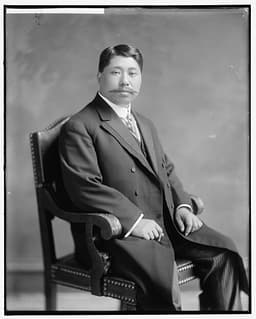
Huang Xing
General · Modern
57.5Total
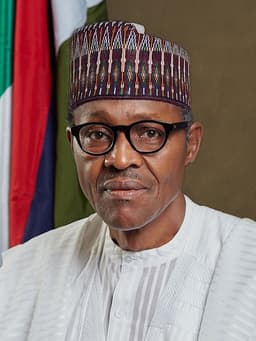
Muhammadu Buhari
General · Modern
51.5Total
Basic Information
Born
1874
1942
Died
1916
—
Era
Modern
Modern
Nationality
China
Nigeria
Occupation
General
General
Civilization
Eastern
Other
Score Comparison
Military (10%)
46.7
22.6
Political (20%)
53.8
68.0
Influence (20%)
62.0
53.3
Legacy (20%)
56.0
43.3
Leadership (15%)
62.0
72.0
Strategy (15%)
60.0
41.0
TOTAL
57.5
51.5
Huang Xing — Complete Timeline
1905 AD
Co-founded the TongmenghuiPolitical Action◆ Major
Huang Xing co-founded the Tongmenghui (Revolutionary Alliance) in Tokyo with Sun Yat-sen. He became its military leader, organizing armed uprisings against the Qing dynasty.
TongmenghuiRevolutionMilitary
Impact: nationalconstructive
1911 AD
Led the Wuchang UprisingWar
Huang Xing led the Wuchang Uprising, which sparked the Xinhai Revolution. He commanded revolutionary forces against Qing troops, securing initial victories that led to the dynasty's collapse.
Xinhai RevolutionUprisingMilitary
Impact: nationalconstructive
1912 AD
Served as Minister of War in the RepublicPolitical Action◆ Major
Huang Xing served as Minister of War in the provisional government of the Republic of China. He worked to organize a national army and defend the republic against counter-revolutionary forces.
GovernmentMilitaryRepublic
Impact: nationalconstructive
1913 AD
Led the Second Revolution Against Yuan ShikaiWar◆ Major
Huang Xing led the Second Revolution, an armed uprising against President Yuan Shikai's authoritarian rule. The rebellion failed due to lack of coordination and military inferiority, forcing Huang into exile.
Second RevolutionYuan ShikaiExile
Impact: nationaltragic
1916 AD
Died in Exile in ShanghaiPolitical Action
Huang Xing died in Shanghai after returning from exile in Japan and the United States. His death marked the loss of a key military leader of the Chinese revolution, though his legacy endured.
DeathExileRevolution
Impact: nationaltragic
Muhammadu Buhari — Complete Timeline
1983 AD
1983 Nigerian coup d'étatPolitical Action
Major General Muhammadu Buhari led a military coup that overthrew the civilian government of President Shehu Shagari. Buhari cited corruption and economic mismanagement as justifications, and he became the head of state.
CoupMilitary RuleCorruption
Impact: nationaldestructive
1984 AD
War Against Indiscipline (WAI)Reform◆ Major
Buhari launched the War Against Indiscipline, a campaign to enforce discipline and order in Nigerian society. It included harsh penalties for minor offenses, such as queue-jumping, and was criticized for human rights abuses.
DisciplineSocial PolicyHuman Rights
Impact: nationaldestructive
1985 AD
Overthrow by Ibrahim BabangidaPolitical Action◆ Major
Buhari was overthrown in a palace coup led by his Chief of Army Staff, Ibrahim Babangida. Babangida cited Buhari's authoritarian style and failure to address the economy as reasons for the coup.
CoupOverthrowBabangida
Impact: national
2015 AD
Anti-corruption campaignReform◆ Major
Buhari launched a high-profile anti-corruption campaign, targeting government officials and recovering stolen assets. The campaign was praised internationally but criticized for being selective and politically motivated.
Anti-CorruptionReformGovernance
Impact: nationalconstructive
Election as President of NigeriaPolitical Action
Buhari won the 2015 Nigerian presidential election, defeating incumbent Goodluck Jonathan. This was the first time an opposition candidate had defeated a sitting president in Nigeria's history, marking a democratic milestone.
ElectionDemocracyOpposition Victory
Impact: nationalprogressive
Expert Analysis
Muhammadu Buhari vs Huang Xing
# The General and the Revolutionary: Two Paths to Power, Two Different Fates
On a humid December morning in 1983, Muhammadu Buhari stepped before the cameras in Lagos to announce that Nigeria’s experiment with civilian democracy had ended. He wore the starched uniform of a major general, and his voice carried the clipped authority of a man who believed order came before liberty. Half a world away and seven decades earlier, Huang Xing stood on the ramparts of Wuchang, his sword still warm from battle, watching the flags of the Qing dynasty fall. Both men were soldiers who became founders of nations. But where Buhari saw discipline as the root of governance, Huang Xing saw revolution as the engine of history. Their divergent fates—one a two-time ruler who died in power, the other a co-founder who died in exile—reveal how the same raw materials of ambition, military skill, and political circumstance can produce radically different outcomes.
Origins
Muhammadu Buhari was born in 1942 in Daura, a dusty town in northern Nigeria, into a family of Fulani cattle herders. His world was one of hierarchy, tradition, and the quiet authority of elders. He joined the Nigerian Army at nineteen, a time when the country was still a British colony, and rose through the ranks during the chaos of the Biafran War. His military training, first in Nigeria and later in the United Kingdom, instilled in him a belief that problems were solved by command, not consensus. The coup that brought him to power in 1983 was not a revolution but a restoration—a military intervention to “save” a corrupt civilian government.
Huang Xing was born in 1874 in Changsha, Hunan, into a scholarly family that had fallen on hard times. His China was a dying empire, humiliated by foreign powers and torn by internal rebellion. Unlike Buhari, Huang Xing was educated in the classical Confucian tradition before being sent to Japan, where he encountered the ideas of Rousseau, Montesquieu, and the Meiji Restoration. He joined the army not to preserve order but to destroy it. When he co-founded the Tongmenghui in 1905 with Sun Yat-sen, he was already a wanted man, a professional revolutionary who believed that only violence could cleanse a corrupt civilization.
Rise to Power
Buhari’s path to power was swift and surgical. On December 31, 1983, he led a coup that overthrew President Shehu Shagari, whose government was widely seen as incompetent and corrupt. The coup was bloodless, and Buhari presented himself not as a conqueror but as a surgeon—cutting out the cancer of indiscipline. His rise was a military takeover, not a popular uprising. He had no political party, no grassroots movement, no ideology beyond the barracks.
Huang Xing’s rise was the opposite: messy, protracted, and forged in fire. He led the Wuchang Uprising in 1911, a desperate gamble that unexpectedly ignited the Xinhai Revolution. He commanded revolutionary forces against the Qing army, losing battles but winning the war of attrition. When the Republic of China was proclaimed in 1912, he was named Minister of War—a position he used to try to build a national army from scratch. But his power was always contingent, dependent on fragile alliances with warlords and intellectuals. Unlike Buhari, who seized power in a night, Huang Xing earned it over years of exile, fundraising, and failed uprisings.
Leadership & Governance
As Nigeria’s military ruler from 1983 to 1985, Buhari governed through what he called the War Against Indiscipline—a campaign of forced order that included public floggings, mandatory queues, and the firing of civil servants who arrived late. He banned strikes, jailed journalists, and arrested former politicians. His governance was efficient but oppressive: inflation fell, but so did civil liberties. His military score of 20.7 reflects a general who was more administrator than strategist, more disciplinarian than commander. His political score of 61.0 shows a leader who understood power but not persuasion.
Huang Xing’s governance was defined by its fragility. As Minister of War, he tried to create a professional military loyal to the republic, not to regional strongmen. He led the Second Revolution in 1913 against Yuan Shikai’s authoritarian drift—a doomed rebellion that revealed his courage but also his lack of political ruthlessness. Unlike Buhari, who could rely on the institutional power of the army, Huang Xing had to negotiate, persuade, and compromise. His military score of 42.1 reflects a commander who was inspirational but not invincible; his political score of 62.7 shows a revolutionary who understood democracy but could not make it stick.
Triumph & Tragedy
Buhari’s greatest triumph came in 2015, when he returned from political exile to win the Nigerian presidency in a democratic election—the first time an opposition candidate had defeated an incumbent in Nigerian history. It was a stunning reversal for a man once overthrown for authoritarianism. His anti-corruption campaign recovered billions of dollars in stolen assets and earned him international praise. But his tragedy was that his second rule repeated the patterns of his first: economic stagnation, increasing debt, and a brutal crackdown on the Shiite Islamic Movement of Nigeria. He died in power, but his legacy was mixed.
Huang Xing’s triumph was the Wuchang Uprising, which toppled an empire and created Asia’s first republic. But his tragedy was watching that republic collapse into warlordism and dictatorship. He died in 1916 in Shanghai, aged forty-two, a broken man who had spent his last years in exile in Japan and the United States. His death marked the loss of a key figure in China’s democratic experiment—a man who, as his biographer wrote, “fought for a republic but died in a world of warlords.”
Character & Destiny
Buhari was a man of iron discipline and limited imagination. He once said, “I belong to everyone and I belong to no one,” a phrase that captured his aloofness. He was not corrupt, but he was not flexible. His personality—rigid, austere, suspicious—shaped his decisions. He believed that Nigeria’s problems were moral failures, not structural ones. That worldview made him a effective coup-maker but a flawed democrat.
Huang Xing was a man of fire and fragility. He was known for his generosity, his willingness to share credit with Sun Yat-sen, and his refusal to seize power for himself. “I would rather be a common citizen of the republic than a prince of the empire,” he once said. But his nobility was also his weakness: he trusted too easily, compromised too readily, and died too young. His personality—idealistic, self-sacrificing, passionate—made him a great revolutionary but a poor politician.
Legacy
Buhari is remembered today as a complex figure: a reformer who fought corruption but governed without vision, a democrat who returned to power but never fully embraced democratic norms. His legacy score of 56.7 reflects a leader who is still being judged, his reputation shifting with Nigeria’s turbulent politics.
Huang Xing is remembered as a founding father of the Chinese republic, a man who helped bring down an empire but could not build a lasting democracy. His legacy score of 66.6 is higher than Buhari’s, perhaps because his failures were noble ones. In China, he is honored as a revolutionary martyr; in Taiwan, as a democrat; in the West, as a forgotten hero. His name is carved on monuments, but his dream remains unfulfilled.
Conclusion
The men could not have been more different: Buhari, the stern soldier who believed in order above all; Huang Xing, the fiery revolutionary who believed in freedom above all. One seized power in a night; the other earned it over a lifetime. One died in office; the other died in exile. Yet both were men of their time—products of the empires they fought to preserve or destroy. Their stories remind us that leadership is never just about will or skill, but about the strange alchemy of character and circumstance. In the end, Buhari left behind a nation still searching for its path; Huang Xing left behind a dream that still haunts his homeland. History, it seems, is not kind to either the rigid or the romantic—but it is always grateful for those who try.
Rankings
🥇
Huang XingLeader
Mil: 46.7Pol: 53.8Inf: 62.0
57.5
🥈
Muhammadu Buhari
Mil: 22.6Pol: 68.0Inf: 53.3
51.5
+6.0 behind
How This Comparison Works
Algorithm
Each figure is scored on 6 dimensions (0—100 scale) based on structured historical data: Military (10%), Political (20%), Influence (20%), Legacy (20%), Leadership (15%), Strategy (15%). The weighted total produces the final ranking.
Data Sources
Scores are computed from structured sub-indicators in the database. Scale factors adjust for era (Ancient ×0.85, Modern ×1.0) and civilization size (Eastern ×1.05, Other ×0.80) to account for differences in population and military scale.
Maximum 3 Figures
Comparisons are limited to 2—3 figures to ensure readability and statistical meaningfulness.
Error Margins
±5 points per dimension — Sub-scores are derived from historical records with inherent uncertainty. Two figures within 5 points on a dimension should be considered roughly equivalent in that area.
Total Score Accuracy
±3 points overall — The weighted combination of 6 dimensions produces a total score with approximately ±3 points of uncertainty. Differences of less than 3 points are not statistically significant— the figures are effectively tied.
Known Limitations
- Historical records are incomplete and uneven across civilizations
- Figures from oral-tradition societies may be underrepresented
- Occupation labels can misclassify multi-role figures
- Scores measure capability and impact, not moral character
- Quantitative scoring is a comparison tool, not absolute truth
Capability Radar
Military (10%) — Battles & Warfare
Battles
35
10
Win Rate
30
10
Expansion
20
5
Political (20%) — Governance & Reform
Reform
60
30
Diplomacy
55
25
Economy
30
20
Influence (20%) — Cultural & Global Reach
Cultural
40
25
Global
40
25
Legacy (20%) — Historical Impact
Historical
55
30
Longevity
45
20
Leadership (15%) — Power & Stability
Tenure
40
45
Stability
25
15
Strategy (15%) — Tactics & Innovation
Strategy
45
15
Tactics
40
15
Reform
50
20
Similar Comparisons
Comments & Discussion
General's Iron Will6/16/2026
Buhari and Huang both rose from military roots, but their trajectories reveal a crucial difference: Buhari's British-trained discipline led him to prioritize order over liberty, seizing power in 1983 to "save Nigeria." Meanwhile, Huang's revolutionary fervor drove him to dismantle empires. Buhari's rigidity ultimately failed to address corruption, while Huang's flexibility forged a republic. One clung to control; the other let go to build anew.
铁马冰河6/16/2026
从军事角度看,布哈里和黄兴都是军人出身,但道路截然不同。布哈里1983年政变夺权,强调纪律优先,结果治理腐败失败;黄兴1911年领导武昌起义,推翻清朝建立共和。前者死守权力,后者功成身退。布哈里的英国式严谨,或许正是尼日利亚问题的根源——命令式治理无法解决民生的根本矛盾。