Loading...
Huang Xing vs Tadeusz Kosciuszko
Tadeusz Kosciuszko leads by 6.6 pts · 2 figures compared
…
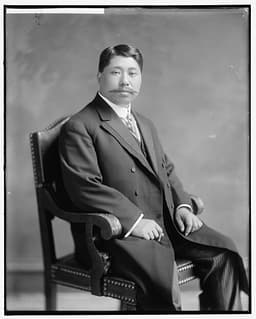
Huang Xing
General · Modern
57.5Total
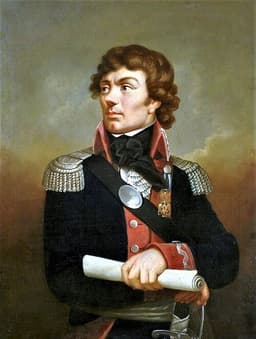
Tadeusz Kosciuszko
General · Modern
64.1Total
Basic Information
Born
1874
1746
Died
1916
1817
Era
Modern
Modern
Nationality
China
Poland
Occupation
General
General
Civilization
Eastern
Western
Score Comparison
Military (10%)
46.7
47.5
Political (20%)
53.8
68.0
Influence (20%)
62.0
68.0
Legacy (20%)
56.0
68.0
Leadership (15%)
62.0
64.5
Strategy (15%)
60.0
55.0
TOTAL
57.5
64.1
Huang Xing — Complete Timeline
1905 AD
Co-founded the TongmenghuiPolitical Action◆ Major
Huang Xing co-founded the Tongmenghui (Revolutionary Alliance) in Tokyo with Sun Yat-sen. He became its military leader, organizing armed uprisings against the Qing dynasty.
TongmenghuiRevolutionMilitary
Impact: nationalconstructive
1911 AD
Led the Wuchang UprisingWar
Huang Xing led the Wuchang Uprising, which sparked the Xinhai Revolution. He commanded revolutionary forces against Qing troops, securing initial victories that led to the dynasty's collapse.
Xinhai RevolutionUprisingMilitary
Impact: nationalconstructive
1912 AD
Served as Minister of War in the RepublicPolitical Action◆ Major
Huang Xing served as Minister of War in the provisional government of the Republic of China. He worked to organize a national army and defend the republic against counter-revolutionary forces.
GovernmentMilitaryRepublic
Impact: nationalconstructive
1913 AD
Led the Second Revolution Against Yuan ShikaiWar◆ Major
Huang Xing led the Second Revolution, an armed uprising against President Yuan Shikai's authoritarian rule. The rebellion failed due to lack of coordination and military inferiority, forcing Huang into exile.
Second RevolutionYuan ShikaiExile
Impact: nationaltragic
1916 AD
Died in Exile in ShanghaiPolitical Action
Huang Xing died in Shanghai after returning from exile in Japan and the United States. His death marked the loss of a key military leader of the Chinese revolution, though his legacy endured.
DeathExileRevolution
Impact: nationaltragic
Tadeusz Kosciuszko — Complete Timeline
1777 AD
Battle of Saratoga (engineering contributions)War◆ Major
Kosciuszko designed fortifications and selected defensive positions for the American army at Saratoga. His work contributed to the American victory, a turning point in the Revolutionary War.
American RevolutionSaratogaEngineering
Impact: regional
1778 AD
Fortification of West PointWar◆ Major
Kosciuszko was assigned to fortify West Point on the Hudson River. He designed and supervised the construction of fortifications that made the site a key American stronghold for the remainder of the war.
American RevolutionWest PointFortifications
Impact: regionalconstructive
1794 AD
Kosciuszko UprisingWar
Kosciuszko led a national uprising in Poland against Russian and Prussian occupation. He proclaimed the Act of Insurrection and won the Battle of Rac
Polish UprisingIndependenceDefeat
Impact: nationaltragic
Battle of RacławiceWar◆ Major
Kosciuszko led Polish forces, including peasant scythemen, to victory over a larger Russian army at Rac
Kosciuszko UprisingBattlePeasants
Impact: national
Capture and imprisonment at the Battle of MaciejowiceWar◆ Major
Kosciuszko was wounded and captured by Russian forces at the Battle of Maciejowice. His capture effectively ended the uprising, and he was imprisoned in St. Petersburg until 1796.
Kosciuszko UprisingCaptureImprisonment
Impact: nationaltragic
Expert Analysis
Huang Xing vs Tadeusz Kosciuszko
# The Revolutionary's Two Paths: Kosciuszko and Huang Xing
In the autumn of 1794, a wounded Polish general lay in a Russian prison, his uprising crushed, his nation erased from the map. In the autumn of 1911, a Chinese general stood before the gates of Wuchang, watching the Qing dynasty crumble before his eyes. Two men, two revolutions, two radically different outcomes. Tadeusz Kosciuszko and Huang Xing never met, never knew each other's names, yet their lives traced eerily parallel arcs—and diverged in ways that reveal something profound about the relationship between the revolutionary and the state.
Origins
Kosciuszko was born in 1746 into the minor Polish nobility, a class caught between the magnificence of the Commonwealth's golden age and the reality of its slow decay. He studied military engineering in France and Warsaw, absorbing Enlightenment ideals. When he sailed for America in 1776, he carried not just technical knowledge but a conviction that liberty was universal.
Huang Xing came of age in 1874, when China's humiliation was already a generation old. Born to a scholarly family in Hunan, he passed the imperial examinations but found himself drawn to the revolutionary underground. Where Kosciuszko's Poland was a fading star, Huang's China was a collapsing empire—vast, ancient, and hemorrhaging sovereignty. The difference in scale and desperation shaped everything that followed.
Rise to Power
Kosciuszko entered history through engineering. At Saratoga in 1777, he chose the ground where the American army would stand, building fortifications that turned the tide of the revolution. George Washington personally thanked him. At West Point in 1778, he designed the fortress that would guard the Hudson for generations. His rise was quiet, technical, earned through competence rather than charisma.
Huang Xing's path was explosive from the start. In 1905, he co-founded the Tongmenghui in Tokyo alongside Sun Yat-sen, becoming its military leader. Where Kosciuszko built walls, Huang organized bombings. Where Kosciuszko served established commanders, Huang recruited assassins. The difference was not merely temperament but circumstance: Kosciuszko fought for an existing nation; Huang fought to create one from nothing.
Leadership & Governance
When Kosciuszko returned to Poland in 1794 to lead the uprising, he made a decision that defined his leadership. At Racławice, he armed peasants with scythes, turning farmers into soldiers, and won a stunning victory. But more importantly, he issued the Act of Insurrection, promising land reform and the abolition of serfdom. He understood that national liberation required social revolution, that the peasantry must have a stake in the nation they were asked to die for.
Huang Xing, as Minister of War in the provisional government of 1912, faced a different calculus. The Republic of China had been declared, but the country remained fractured. He worked to organize a national army, but the task was overwhelming. Where Kosciuszko commanded loyalty through shared sacrifice, Huang commanded through political alliance. When Yuan Shikai seized power in 1913, Huang led the Second Revolution—a desperate, doomed rebellion that ended in exile.
Triumph & Tragedy
Kosciuszko's greatest moment was also his greatest defeat. At Maciejowice in 1794, wounded and captured, he watched his uprising collapse. The partition of Poland was complete; the nation would not reappear for 123 years. Yet his tragedy was ennobling. He had fought for a cause that was lost from the start, and he knew it. His last words before capture, according to legend, were "Finis Poloniae"—the end of Poland.
Huang Xing's tragedy was different. He lived to see his revolution partially succeed, then partially fail. The Qing fell, but Yuan Shikai rose. The Republic was born, but it was stillborn. Huang died in Shanghai in 1916, returning from exile, his body weakened by illness and disappointment. Where Kosciuszko's failure was clean and dramatic, Huang's was messy and ambiguous—the failure of a movement that achieved its goal but could not hold it.
Character & Destiny
Kosciuszko was a man of principle who never compromised. He freed his own serfs, refused to serve Napoleon when the French emperor betrayed Polish hopes, and spent his final years in Switzerland writing about the emancipation of slaves and peasants. His character was his destiny: he could not bend, and so he broke.
Huang Xing was a man of action who compromised constantly. He allied with warlords, accepted Yuan Shikai's presidency, and watched his ideals erode in the face of political reality. His character was also his destiny: he could bend, but he could not break the forces arrayed against him.
Legacy
Kosciuszko is remembered as a saint of two nations. Poland honors him as a national hero; the United States remembers him as a founding father of its independence. His name adorns bridges, monuments, and a mountain in Australia. He represents the romantic ideal of the revolutionary: pure, selfless, doomed.
Huang Xing is remembered as a co-founder of the Chinese republic, but his legacy is overshadowed by Sun Yat-sen and later by Mao Zedong. He is honored in textbooks, but his name lacks the mythic resonance of Kosciuszko's. He represents the practical reality of revolution: necessary, imperfect, and often forgotten.
Conclusion
Why did Kosciuszko's memory burn so brightly while Huang Xing's flickers? Partly because Kosciuszko's failure was complete and therefore noble, while Huang Xing's partial success left him trapped in the gray zone of historical ambiguity. Partly because Poland needed a martyr, while China needed a founder. And partly because the romantic revolutionary, fighting for a lost cause, speaks to something deeper in the human imagination than the pragmatic organizer, fighting for a compromised victory.
But perhaps the truest answer lies in the nature of their revolutions. Kosciuszko fought to restore a nation that had existed. Huang Xing fought to create a nation that had never existed. Restoration can be tragic and beautiful. Creation is always ugly, incomplete, and ongoing. Huang Xing did not fail; he simply did not finish. And that, in the end, is the harder legacy to carry.
Rankings
🥇
Tadeusz KosciuszkoLeader
Mil: 47.5Pol: 68.0Inf: 68.0
64.1
🥈
Huang Xing
Mil: 46.7Pol: 53.8Inf: 62.0
57.5
+6.6 behind
How This Comparison Works
Algorithm
Each figure is scored on 6 dimensions (0—100 scale) based on structured historical data: Military (10%), Political (20%), Influence (20%), Legacy (20%), Leadership (15%), Strategy (15%). The weighted total produces the final ranking.
Data Sources
Scores are computed from structured sub-indicators in the database. Scale factors adjust for era (Ancient ×0.85, Modern ×1.0) and civilization size (Eastern ×1.05, Other ×0.80) to account for differences in population and military scale.
Maximum 3 Figures
Comparisons are limited to 2—3 figures to ensure readability and statistical meaningfulness.
Error Margins
±5 points per dimension — Sub-scores are derived from historical records with inherent uncertainty. Two figures within 5 points on a dimension should be considered roughly equivalent in that area.
Total Score Accuracy
±3 points overall — The weighted combination of 6 dimensions produces a total score with approximately ±3 points of uncertainty. Differences of less than 3 points are not statistically significant— the figures are effectively tied.
Known Limitations
- Historical records are incomplete and uneven across civilizations
- Figures from oral-tradition societies may be underrepresented
- Occupation labels can misclassify multi-role figures
- Scores measure capability and impact, not moral character
- Quantitative scoring is a comparison tool, not absolute truth
Capability Radar
Military (10%) — Battles & Warfare
Battles
35
55
Win Rate
30
60
Expansion
20
30
Political (20%) — Governance & Reform
Reform
60
45
Diplomacy
55
55
Economy
30
35
Influence (20%) — Cultural & Global Reach
Cultural
40
65
Global
40
55
Legacy (20%) — Historical Impact
Historical
55
70
Longevity
45
60
Leadership (15%) — Power & Stability
Tenure
40
40
Stability
25
30
Strategy (15%) — Tactics & Innovation
Strategy
45
65
Tactics
40
70
Reform
50
50
Similar Comparisons
Comments & Discussion
PolishHammer6/16/2026
You revisionists love to romanticize losers, but let's cut the crap. Kosciuszko got his ass handed to him at Maciejowice in 1794 and spent years in a Russian cell. Huang Xing actually won—the Wuchang Uprising in 1911 triggered a revolution that toppled a 268-year dynasty. One failed and became a tragic poster boy for noble failure; the other succeeded and got sidelined by Yuan Shikai's coup. Success isn't always pretty, but it beats the hell out of dying in exile. Huang's pragmatism trumps Kosci
战神看客6/16/2026
说工程天才就过分了啊。黄兴在汉阳打得那叫一个惨,冯国璋放火烧城,他带两千残兵退守武昌,全靠黎元洪当挡箭牌才没崩盘。Kosciuszko在萨拉托加用浮桥和要塞逼退英军,那是实打实的战术胜利。黄兴四十七天就丢了汉阳,数据不说谎——他的"成功"九成靠清廷自己垮台,论硬仗他差远了。悲剧英雄至少真刀真枪干过,投机分子别来沾边。
EnlightenmentGhost6/16/2026
Here's the overlooked link: both men were essentially liberals in an age of rising nationalism, and both failed for the same reason—they trusted elites too much. Kosciuszko freed serfs in his 1794 proclamation but Polish szlachta refused to arm them; Huang Xing compromised with Yuan Shikai, handing over revolutionary gains for "unity." Networks of privilege swallowed their ideals whole. The real tragedy isn't defeat in battle—it's that they couldn't see how their own class loyalties betrayed the
数据判官6/16/2026
咱们算笔账:Kosciuszko一辈子打残了两次全国起义,1846年才搞成解放农民,他活着的时候零胜利。黄兴领导了十次起义,黄花岗七十二烈士那次就是他带队的,武昌首义直接逼退清军。论爆发力,黄兴的同盟会三年推翻帝国;Kosciuszko的起义四个月就散伙了。效率差一百倍,别拿"贵族情怀"洗地。失败了就是失败了,胜利者才有资格谈理想。
TsingtaoBeerHistorian6/16/2026
Look, you're all missing the elephant in the room—scale. Kosciuszko fought for a country of 10 million being carved up by three empires. Huang Xing fought for a nation of 400 million against one dying dynasty. When Kosciuszko