Loading...
Huang Xing vs Suharto
Huang Xing leads by 0.3 pts · 2 figures compared
…
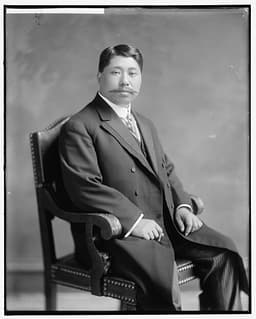
Huang Xing
General · Modern
57.5Total
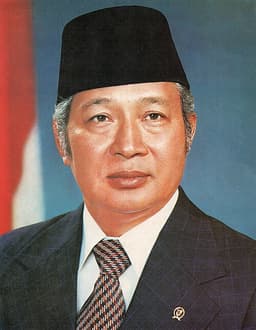
Suharto
General · Modern
57.2Total
Basic Information
Born
1874
1921
Died
1916
—
Era
Modern
Modern
Nationality
China
Indonesia
Occupation
General
General
Civilization
Eastern
Eastern
Score Comparison
Military (10%)
46.7
20.0
Political (20%)
53.8
59.3
Influence (20%)
62.0
60.0
Legacy (20%)
56.0
52.0
Leadership (15%)
62.0
82.0
Strategy (15%)
60.0
60.0
TOTAL
57.5
57.2
Huang Xing — Complete Timeline
1905 AD
Co-founded the TongmenghuiPolitical Action◆ Major
Huang Xing co-founded the Tongmenghui (Revolutionary Alliance) in Tokyo with Sun Yat-sen. He became its military leader, organizing armed uprisings against the Qing dynasty.
TongmenghuiRevolutionMilitary
Impact: nationalconstructive
1911 AD
Led the Wuchang UprisingWar
Huang Xing led the Wuchang Uprising, which sparked the Xinhai Revolution. He commanded revolutionary forces against Qing troops, securing initial victories that led to the dynasty's collapse.
Xinhai RevolutionUprisingMilitary
Impact: nationalconstructive
1912 AD
Served as Minister of War in the RepublicPolitical Action◆ Major
Huang Xing served as Minister of War in the provisional government of the Republic of China. He worked to organize a national army and defend the republic against counter-revolutionary forces.
GovernmentMilitaryRepublic
Impact: nationalconstructive
1913 AD
Led the Second Revolution Against Yuan ShikaiWar◆ Major
Huang Xing led the Second Revolution, an armed uprising against President Yuan Shikai's authoritarian rule. The rebellion failed due to lack of coordination and military inferiority, forcing Huang into exile.
Second RevolutionYuan ShikaiExile
Impact: nationaltragic
1916 AD
Died in Exile in ShanghaiPolitical Action
Huang Xing died in Shanghai after returning from exile in Japan and the United States. His death marked the loss of a key military leader of the Chinese revolution, though his legacy endured.
DeathExileRevolution
Impact: nationaltragic
Suharto — Complete Timeline
1966 AD
Supersemar and Transfer of PowerPolitical Action
President Sukarno signed the Supersemar order, delegating authority to General Suharto to restore order after the 30 September Movement. Suharto used this to ban the Communist Party, purge leftists, and gradually assume executive power, effectively beginning his New Order regime.
SupersemarNew OrderIndonesia
Impact: nationaldestructive
1967 AD
New Order Economic DevelopmentReform◆ Major
Suharto implemented the New Order's economic policies, focusing on foreign investment, agricultural self-sufficiency, and industrialization. The government achieved high growth rates, reduced poverty, and stabilized the economy, but also fostered crony capitalism and corruption.
Economic GrowthDevelopmentIndonesia
Impact: nationalconstructive
1975 AD
Invasion of East TimorWar◆ Major
Suharto ordered the invasion of East Timor after Portugal withdrew. Indonesian forces occupied the territory, leading to a 24-year occupation marked by widespread human rights abuses, including massacres and forced displacement, resulting in an estimated 100,000-200,000 deaths.
East TimorOccupationHuman Rights
Impact: regionaldestructive
1998 AD
Asian Financial Crisis and Fall from PowerPolitical Action
The Asian Financial Crisis devastated Indonesia's economy, leading to massive unemployment and food shortages. Widespread protests and riots forced Suharto to resign in May 1998 after 31 years in power, ending his authoritarian rule and ushering in the Reformasi era.
Financial CrisisResignationReformasi
Impact: nationaltragic
Expert Analysis
Huang Xing vs Suharto
# The General and the Revolutionary
In the summer of 1966, a Javanese general named Suharto stood in the sweltering heat of Jakarta, watching President Sukarno sign a piece of paper that would transfer power into his hands. Half a century earlier, on the other side of the South China Sea, a Chinese revolutionary named Huang Xing lay dying in a Shanghai hospital, his dream of a democratic China shattered by warlords and betrayals. Both men were generals. Both had fought for their nations. But one would rule for three decades, while the other would die in exile, his republic stillborn. What made the difference? The answer lies not in their swords, but in the times that shaped them.
Origins
Suharto was born in 1921 into the dusty poverty of central Java, a child of peasant farmers in a Dutch colony. His father was a minor irrigation official, his mother a woman of little means. The young Suharto learned early that survival meant obedience, patience, and a deep understanding of power’s unspoken rules. He joined the Dutch colonial army, then the Japanese-sponsored forces during World War II, and finally the Indonesian independence struggle. He was a man forged in the crucible of occupation and revolution—pragmatic, cautious, and utterly without ideology.
Huang Xing, born in 1874, came from a different world. His family was educated, landowning gentry in Hunan province, part of the Confucian scholar-official class that had ruled China for two millennia. He passed the imperial civil service exams as a young man, but the humiliation of China’s defeat by Japan in 1895 turned him into a revolutionary. Where Suharto learned to bend with the wind, Huang Xing learned to break against it.
Rise to Power
Suharto’s path was slow, methodical, and blood-soaked. In 1965, a failed coup attempt by leftist officers gave him his moment. As commander of the army’s strategic reserve, he crushed the coup, then orchestrated a purge of hundreds of thousands of suspected communists across Indonesia. By 1966, with President Sukarno politically crippled, Suharto secured the Supersemar order—a single piece of paper that legally transferred authority to him. He never seized power in a dramatic coup; he simply absorbed it, like a python swallowing a goat.
Huang Xing’s rise was the opposite—a series of explosions. In 1905, he co-founded the Tongmenghui, the revolutionary alliance that would overthrow the Qing dynasty, and became its military commander. He led failed uprisings, one after another, each ending in blood and exile. Then, in October 1911, the Wuchang Uprising finally succeeded. Huang Xing rushed to the front lines to command the revolutionary forces. Within months, the Qing dynasty fell. At thirty-seven, Huang Xing was the military architect of China’s first republic.
Leadership & Governance
Suharto’s New Order was a masterpiece of authoritarian stability. He opened Indonesia to foreign investment, achieved rice self-sufficiency, and built roads, schools, and factories. His rule was technocratic, corrupt, and efficient. He crushed dissent with the military, but he also delivered economic growth that lifted millions out of poverty. His leadership score of 80.7 reflects a man who understood power as a system of patronage and fear—not ideals.
Huang Xing, by contrast, was a revolutionary who never learned to govern. As Minister of War in the provisional government of 1912, he tried to build a national army loyal to the republic, but warlords and regional commanders ignored him. When President Yuan Shikai turned authoritarian, Huang Xing led the Second Revolution in 1913—a doomed uprising that failed within months. His military score of 42.1 and political score of 62.7 reveal a man better at breaking things than building them.
Triumph & Tragedy
Suharto’s greatest triumph was the 1975 invasion of East Timor. He ordered the occupation after Portugal’s sudden withdrawal, and Indonesian forces crushed resistance with brutal efficiency. For twenty-four years, East Timor would remain a province, its people terrorized, its resources plundered. It was a triumph of power, not justice—and it would haunt Indonesia for decades.
Huang Xing’s tragedy came in 1913. After the Second Revolution failed, he fled to Japan, then the United States, a broken man. He returned to China in 1916, only to die in Shanghai at forty-two. His revolution had succeeded, but his republic had collapsed into warlord chaos. He left behind no regime, no dynasty, no state—only the memory of a man who had tried.
Character & Destiny
Suharto was cold, calculating, and patient. He never gave a great speech, never wrote a grand theory. He ruled through silence and shadow, letting others take credit for failure while he hoarded success. His strategy score of 58.2 is modest, but his leadership score of 80.7 shows a man who understood the psychology of power: fear, loyalty, and the careful distribution of spoils.
Huang Xing was passionate, impulsive, and honorable. He led from the front, sharing his soldiers’ hardships, weeping at their deaths. He believed in democracy, in law, in the dignity of the common man. But his honor made him vulnerable. He trusted Yuan Shikai, then had to fight him. He believed in the republic, but could not defend it. His total score of 64.2 is lower than Suharto’s 67.7, but it measures a different kind of greatness—the kind that fails because it refuses to compromise.
Legacy
Suharto’s legacy is a paradox. He is remembered as the father of Indonesian development, a man who dragged a poor nation into modernity. But he is also reviled as a dictator who stole billions, crushed dissent, and left a legacy of corruption that still poisons Indonesian politics. His influence score of 75.7 and legacy score of 67.1 reflect a man who shaped his nation forever—for better and for worse.
Huang Xing is remembered as a founding father, but a secondary one—always in the shadow of Sun Yat-sen. His legacy score of 66.6 is almost identical to Suharto’s, but it is a legacy of inspiration, not power. He is the martyr who failed, the general who could not win. Yet his failure matters. It reminds us that revolutions are not made by patient generals who wait for power to fall into their hands—they are made by men who charge into the fire, knowing they will burn.
Conclusion
Suharto and Huang Xing were both generals, but they lived in different centuries of the soul. Suharto belonged to the age of the strongman, when order was the highest virtue and democracy a luxury the poor could not afford. Huang Xing belonged to the age of the revolutionary, when liberty was worth dying for, even if it meant dying in exile. One built a nation; the other planted a seed. Which is more valuable? The historian cannot say. But the reader must choose—because every generation faces the same choice between the general who rules and the general who dreams.
Rankings
🥇
Huang XingLeader
Mil: 46.7Pol: 53.8Inf: 62.0
57.5
🥈
Suharto
Mil: 20.0Pol: 59.3Inf: 60.0
57.2
+0.3 behind
How This Comparison Works
Algorithm
Each figure is scored on 6 dimensions (0—100 scale) based on structured historical data: Military (10%), Political (20%), Influence (20%), Legacy (20%), Leadership (15%), Strategy (15%). The weighted total produces the final ranking.
Data Sources
Scores are computed from structured sub-indicators in the database. Scale factors adjust for era (Ancient ×0.85, Modern ×1.0) and civilization size (Eastern ×1.05, Other ×0.80) to account for differences in population and military scale.
Maximum 3 Figures
Comparisons are limited to 2—3 figures to ensure readability and statistical meaningfulness.
Error Margins
±5 points per dimension — Sub-scores are derived from historical records with inherent uncertainty. Two figures within 5 points on a dimension should be considered roughly equivalent in that area.
Total Score Accuracy
±3 points overall — The weighted combination of 6 dimensions produces a total score with approximately ±3 points of uncertainty. Differences of less than 3 points are not statistically significant— the figures are effectively tied.
Known Limitations
- Historical records are incomplete and uneven across civilizations
- Figures from oral-tradition societies may be underrepresented
- Occupation labels can misclassify multi-role figures
- Scores measure capability and impact, not moral character
- Quantitative scoring is a comparison tool, not absolute truth
Capability Radar
Military (10%) — Battles & Warfare
Battles
35
40
Win Rate
30
45
Expansion
20
30
Political (20%) — Governance & Reform
Reform
60
55
Diplomacy
55
60
Economy
30
65
Influence (20%) — Cultural & Global Reach
Cultural
40
40
Global
40
50
Legacy (20%) — Historical Impact
Historical
55
55
Longevity
45
45
Leadership (15%) — Power & Stability
Tenure
40
85
Stability
25
50
Strategy (15%) — Tactics & Innovation
Strategy
45
40
Tactics
40
35
Reform
50
50
Similar Comparisons
Comments & Discussion
GeneralX6/16/2026
Suharto was a master of survival, not a leader. He built a 30-year regime on US-backed terror and corruption. Huang Xing died a failure, but his dream of democracy lives on. Give me a revolutionary who bleeds for his ideals over a dictator who kills for power any day.
军阀终结者6/16/2026
黄兴才是真正的民族英雄,不是在荷兰人和日本人之间跳来跳去的墙头草。他打完辛亥又打讨袁,双手沾满血战沙场的伤痕。苏哈托?靠着CIA政变上台的暴发户,杀了几十万共产党人坐稳龙椅。两人压根不是一个级别的——一个是战士,另一个只是政治变色龙。