Loading...
Huang Xing vs Sengge Rinchen
Huang Xing leads by 0.6 pts · 2 figures compared
…
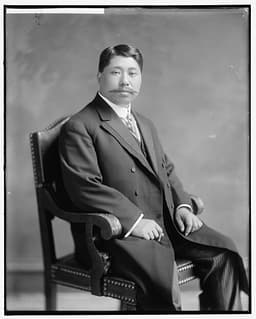
Huang Xing
General · Modern
57.5Total
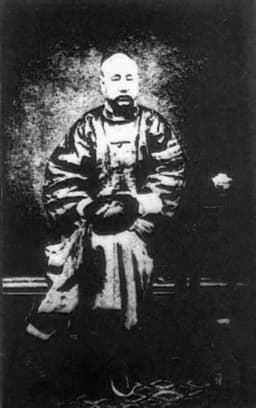
Sengge Rinchen
General · Modern
56.9Total
Basic Information
Born
1874
1811
Died
1916
1865
Era
Modern
Modern
Nationality
China
China
Occupation
General
General
Civilization
Eastern
Eastern
Score Comparison
Military (10%)
46.7
70.0
Political (20%)
53.8
43.7
Influence (20%)
62.0
55.0
Legacy (20%)
56.0
54.0
Leadership (15%)
62.0
67.0
Strategy (15%)
60.0
60.7
TOTAL
57.5
56.9
Huang Xing — Complete Timeline
1905 AD
Co-founded the TongmenghuiPolitical Action◆ Major
Huang Xing co-founded the Tongmenghui (Revolutionary Alliance) in Tokyo with Sun Yat-sen. He became its military leader, organizing armed uprisings against the Qing dynasty.
TongmenghuiRevolutionMilitary
Impact: nationalconstructive
1911 AD
Led the Wuchang UprisingWar
Huang Xing led the Wuchang Uprising, which sparked the Xinhai Revolution. He commanded revolutionary forces against Qing troops, securing initial victories that led to the dynasty's collapse.
Xinhai RevolutionUprisingMilitary
Impact: nationalconstructive
1912 AD
Served as Minister of War in the RepublicPolitical Action◆ Major
Huang Xing served as Minister of War in the provisional government of the Republic of China. He worked to organize a national army and defend the republic against counter-revolutionary forces.
GovernmentMilitaryRepublic
Impact: nationalconstructive
1913 AD
Led the Second Revolution Against Yuan ShikaiWar◆ Major
Huang Xing led the Second Revolution, an armed uprising against President Yuan Shikai's authoritarian rule. The rebellion failed due to lack of coordination and military inferiority, forcing Huang into exile.
Second RevolutionYuan ShikaiExile
Impact: nationaltragic
1916 AD
Died in Exile in ShanghaiPolitical Action
Huang Xing died in Shanghai after returning from exile in Japan and the United States. His death marked the loss of a key military leader of the Chinese revolution, though his legacy endured.
DeathExileRevolution
Impact: nationaltragic
Sengge Rinchen — Complete Timeline
1859 AD
Battle of Dagu FortsWar◆ Major
Sengge Rinchen commanded Qing forces defending the Dagu Forts against a British and French naval attack. His forces repelled the assault, sinking several enemy ships and inflicting heavy casualties, a rare Qing victory in the Second Opium War.
Second Opium WarBattleVictory
Impact: regional
1860 AD
Battle of PalikaoWar◆ Major
Sengge Rinchen commanded Qing cavalry at the Battle of Palikao against Anglo-French forces. His forces were decisively defeated by superior firepower, leading to the fall of Beijing and the burning of the Old Summer Palace.
Second Opium WarBattleDefeat
Impact: regionaltragic
1863 AD
Suppression of the Nian RebellionWar◆ Major
Sengge Rinchen led Qing forces against the Nian rebels in northern China. He achieved several victories but was ultimately killed in battle against the Nian in 1865, marking a turning point in the rebellion.
Nian RebellionCampaignDeath
Impact: regionaltragic
Expert Analysis
Huang Xing vs Sengge Rinchen
# The Mongol Prince and the Revolutionary General
In the summer of 1860, a Mongol prince named Sengge Rinchen watched his cavalry charge into history at the Battle of Palikao. The Qing Empire’s finest horsemen, lances glinting under a Beijing sun, thundered toward Anglo-French riflemen who stood in disciplined ranks. Minutes later, the plain was littered with horses and men, cut down by firepower they could not comprehend. Half a century later, on an October night in 1911, another Chinese general, Huang Xing, led a different kind of charge—through the streets of Wuchang, rallying students and soldiers to overthrow the very dynasty Sengge Rinchen had died defending. One man fought to preserve an empire; the other, to bury it. What drove these two Chinese generals down such divergent paths, and why did their fates diverge so dramatically?
Origins
Sengge Rinchen was born in 1811 into the Mongol aristocracy of the Horqin Banner, a warrior caste that had served the Qing emperors for centuries. His world was one of horsemanship, loyalty, and the strict hierarchies of steppe tradition. The Qing Empire, though creaking under internal pressures, still projected an aura of celestial mandate. Sengge Rinchen learned to fight as his ancestors had—with bow and saber, on horseback, for a khan who sat in the Forbidden City.
Huang Xing, born in 1874 in Hunan Province, grew up in a China that had already been humiliated by foreign guns. The Opium Wars had shattered the myth of Qing invincibility. As a young scholar, Huang Xing studied the classics, but he also read translated works on Western revolutions, military tactics, and political philosophy. Where Sengge Rinchen saw a natural order of emperor and subject, Huang Xing saw a rotting system that needed to be torn down. The difference was not merely generational; it was the difference between a man who inherited a world and one who inherited its wreckage.
Rise to Power
Sengge Rinchen’s rise followed the old pattern: distinguished service in campaigns against rebels, promotions through the banner system, and the patronage of the imperial court. By the 1850s, he had proven himself against the Taiping Rebellion, the massive uprising that threatened to topple the dynasty. The court trusted him precisely because he was a Mongol prince—loyal, untainted by Han Chinese regionalism, and steeped in martial tradition.
Huang Xing’s path was far more modern and precarious. He studied in Japan, where exiled Chinese intellectuals plotted revolution. In 1905, he co-founded the Tongmenghui (Revolutionary Alliance) with Sun Yat-sen, becoming the military strategist to Sun’s political visionary. Unlike Sengge Rinchen, who inherited command, Huang Xing had to build a revolutionary army from scratch—recruiting students, smuggling weapons, and planning uprisings that often failed before they began. His power came not from birth but from organizing men who believed in a republic.
Leadership & Governance
As a commander, Sengge Rinchen embodied the strengths and weaknesses of traditional Chinese warfare. At the Battle of Dagu Forts in 1859, he achieved a stunning victory, repelling a British and French naval assault with artillery and fortifications. His forces killed hundreds of invaders and captured vessels, a rare triumph against Western arms. But the victory bred overconfidence. When the Anglo-French forces returned in 1860, Sengge Rinchen deployed his Mongol cavalry in open battle against rifled muskets and artillery. The result was massacre. He was a brave and capable general within the limits of his era, but he could not adapt to a world where speed and courage no longer outweighed firepower.
Huang Xing’s military record was more mixed. He led the Wuchang Uprising in 1911, the spark that ignited the Xinhai Revolution. Though his forces were outnumbered and poorly equipped, his leadership held the revolutionary coalition together long enough for provinces to declare independence. As Minister of War in the provisional republic, he tried to organize a national army, but the task was impossible—regional warlords, foreign powers, and the machinations of Yuan Shikai undermined every effort. His Second Revolution in 1913, an armed uprising against Yuan’s dictatorship, collapsed in months. Huang Xing was a better organizer than tactician, a man who understood that revolution required political infrastructure as much as bullets.
Triumph & Tragedy
Sengge Rinchen’s greatest moment was Dagu, 1859. His greatest failure was Palikao, 1860. But his final tragedy came in 1865, fighting the Nian Rebellion. He had suppressed many Nian bands, but the rebels adapted, using guerrilla tactics that his cavalry could not counter. Surrounded and overwhelmed, he was killed in battle. He died as he had lived: a loyal servant of a dying order, fighting rebels who were, in truth, symptoms of the same decay that foreign guns had exposed.
Huang Xing’s triumph was the Wuchang Uprising, which ended two thousand years of imperial rule. But his tragedy was that he never saw the republic he helped create. Yuan Shikai betrayed the revolution, declaring himself emperor. The country splintered into warlordism. Huang Xing died in exile in Shanghai in 1916, at only forty-two, his health broken by years of struggle and disappointment. He had given everything to build a nation, only to watch it crumble.
Character & Destiny
Sengge Rinchen was shaped by fatalism and duty. He believed in the Mandate of Heaven, in the inevitability of imperial order. When his cavalry was slaughtered at Palikao, he did not question the strategy; he simply tried again, the same way, until he died. His character was his destiny: a man who could not imagine a different world, and so was consumed by the one he tried to preserve.
Huang Xing was driven by optimism and pragmatism. He believed that men could remake their society through will and organization. But his destiny was shaped by the very chaos he helped unleash. The revolution he led created a vacuum that stronger, more ruthless men filled. He was a builder in an age of wreckers, and the buildings he raised were too fragile to stand.
Legacy
Sengge Rinchen is remembered, if at all, as a symbol of Qing loyalty and a cautionary tale about the futility of tradition against modernity. Chinese textbooks note his bravery but also his backwardness. He represents the end of an era—the last Mongol prince to die for a Chinese emperor.
Huang Xing is honored as a founding father of the Chinese Republic, though his name is less known than Sun Yat-sen’s. In mainland China, he is celebrated as a revolutionary pioneer; in Taiwan, as a republican hero. But his true legacy is the lesson that military victory alone cannot build a state. He understood that revolution required politics, but he never mastered the politics of power.
Conclusion
Standing at the Dagu Forts today, one can still see the cannon embrasures where Sengge Rinchen’s gunners repelled the British fleet. A few hundred miles south, in Wuchang, a statue of Huang Xing stands in a park where students once gathered to plot revolution. These two men never met, but their lives trace the arc of modern China: from the defense of an old world to the painful birth of a new one. Sengge Rinchen died fighting change; Huang Xing died exhausted by it. Both were defeated—one by foreign guns, the other by the weight of his own dreams. Yet in their defeats, they defined the struggle that still shapes China today: the fight between what was and what could be, between loyalty to the past and hope for the future.
Rankings
🥇
Huang XingLeader
Mil: 46.7Pol: 53.8Inf: 62.0
57.5
🥈
Sengge Rinchen
Mil: 70.0Pol: 43.7Inf: 55.0
56.9
+0.6 behind
How This Comparison Works
Algorithm
Each figure is scored on 6 dimensions (0—100 scale) based on structured historical data: Military (10%), Political (20%), Influence (20%), Legacy (20%), Leadership (15%), Strategy (15%). The weighted total produces the final ranking.
Data Sources
Scores are computed from structured sub-indicators in the database. Scale factors adjust for era (Ancient ×0.85, Modern ×1.0) and civilization size (Eastern ×1.05, Other ×0.80) to account for differences in population and military scale.
Maximum 3 Figures
Comparisons are limited to 2—3 figures to ensure readability and statistical meaningfulness.
Error Margins
±5 points per dimension — Sub-scores are derived from historical records with inherent uncertainty. Two figures within 5 points on a dimension should be considered roughly equivalent in that area.
Total Score Accuracy
±3 points overall — The weighted combination of 6 dimensions produces a total score with approximately ±3 points of uncertainty. Differences of less than 3 points are not statistically significant— the figures are effectively tied.
Known Limitations
- Historical records are incomplete and uneven across civilizations
- Figures from oral-tradition societies may be underrepresented
- Occupation labels can misclassify multi-role figures
- Scores measure capability and impact, not moral character
- Quantitative scoring is a comparison tool, not absolute truth
Capability Radar
Military (10%) — Battles & Warfare
Battles
35
75
Win Rate
30
60
Expansion
20
20
Political (20%) — Governance & Reform
Reform
60
20
Diplomacy
55
50
Economy
30
20
Influence (20%) — Cultural & Global Reach
Cultural
40
40
Global
40
35
Legacy (20%) — Historical Impact
Historical
55
55
Longevity
45
30
Leadership (15%) — Power & Stability
Tenure
40
40
Stability
25
30
Strategy (15%) — Tactics & Innovation
Strategy
45
70
Tactics
40
80
Reform
50
30
Similar Comparisons
Comments & Discussion
MongolWarlordRebuttal6/16/2026
Revisionists claiming Sengge Rinchen was a tragic hero ignore his catastrophic tactical failure at Palikao. His vaunted cavalry charged directly into the fire zone of Chassepot rifles and Gatling guns—basic tactics demanded flanking maneuvers or night attacks. Instead, he fed his horsemen into a meat grinder. Meanwhile, Huang Xing at Wuchang actually adapted: he used urban terrain, coordinated with revolutionaries, and leveraged modern logistics. One learned nothing; the other studied the West.
骑兵批判者6/16/2026
说什么Sengge Rinchen是忠勇典范?他1860年Palikao那仗纯粹是自杀式冲锋!蒙古骑兵侧面迂回都不会,硬扛现代化火器,这不叫英勇叫愚蠢。反观黄兴,汉阳保卫战虽然败了,但人家知道掩护撤退保存实力。一个抱着冷兵器思维等死,一个用革命战术补短板——眼界决定结局。