Loading...
Huang Xing vs Samori Toure
Samori Toure leads by 13.0 pts · 2 figures compared
…
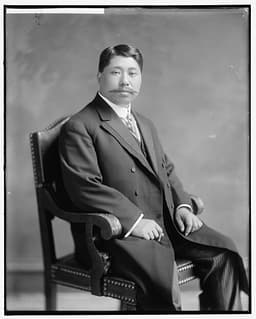
Huang Xing
General · Modern
57.5Total
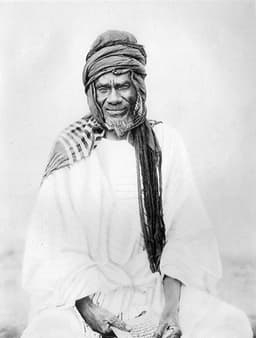
Samori Toure
General · Modern
70.5Total
Basic Information
Born
1874
1830
Died
1916
1900
Era
Modern
Modern
Nationality
China
Wassoulou Empire
Occupation
General
General
Civilization
Eastern
Other
Score Comparison
Military (10%)
46.7
60.0
Political (20%)
53.8
78.0
Influence (20%)
62.0
68.0
Legacy (20%)
56.0
72.0
Leadership (15%)
62.0
72.0
Strategy (15%)
60.0
70.0
TOTAL
57.5
70.5
Huang Xing — Complete Timeline
1905 AD
Co-founded the TongmenghuiPolitical Action◆ Major
Huang Xing co-founded the Tongmenghui (Revolutionary Alliance) in Tokyo with Sun Yat-sen. He became its military leader, organizing armed uprisings against the Qing dynasty.
TongmenghuiRevolutionMilitary
Impact: nationalconstructive
1911 AD
Led the Wuchang UprisingWar
Huang Xing led the Wuchang Uprising, which sparked the Xinhai Revolution. He commanded revolutionary forces against Qing troops, securing initial victories that led to the dynasty's collapse.
Xinhai RevolutionUprisingMilitary
Impact: nationalconstructive
1912 AD
Served as Minister of War in the RepublicPolitical Action◆ Major
Huang Xing served as Minister of War in the provisional government of the Republic of China. He worked to organize a national army and defend the republic against counter-revolutionary forces.
GovernmentMilitaryRepublic
Impact: nationalconstructive
1913 AD
Led the Second Revolution Against Yuan ShikaiWar◆ Major
Huang Xing led the Second Revolution, an armed uprising against President Yuan Shikai's authoritarian rule. The rebellion failed due to lack of coordination and military inferiority, forcing Huang into exile.
Second RevolutionYuan ShikaiExile
Impact: nationaltragic
1916 AD
Died in Exile in ShanghaiPolitical Action
Huang Xing died in Shanghai after returning from exile in Japan and the United States. His death marked the loss of a key military leader of the Chinese revolution, though his legacy endured.
DeathExileRevolution
Impact: nationaltragic
Samori Toure — Complete Timeline
1878 AD
Establishment of the Wassoulou EmpirePolitical Action
Samori Toure founded the Wassoulou Empire in West Africa, uniting various Mandinka states under his rule. He established a centralized administration and a professional army, creating a powerful state that resisted French expansion.
EmpireWassoulouUnification
Impact: regionalconstructive
1880 AD
Military Reforms and ModernizationReform◆ Major
Samori Toure modernized his army by importing firearms from European traders and establishing a standing army of up to 35,000 men. He organized his forces into regular units and introduced new tactics, making them effective against French troops.
Military ReformFirearmsArmy
Impact: regionalconstructive
1882 AD
First Franco-Wassoulou WarWar◆ Major
Samori Toure's forces fought the French army in the first major conflict between the Wassoulou Empire and France. The war ended with a treaty in 1886, recognizing Samori's control over the Niger River region.
WarFranceTreaty
Impact: regional
1891 AD
Second Franco-Wassoulou WarWar◆ Major
The French resumed hostilities, forcing Samori to retreat eastward. He employed a scorched-earth strategy, destroying villages and crops to deny resources to the French, prolonging the conflict for years.
WarScorched EarthRetreat
Impact: regionaltragic
1898 AD
Capture and ExileWar
Samori Toure was captured by French forces after a long campaign. He was exiled to Gabon, where he died in 1900. His capture ended the Wassoulou Empire and marked the completion of French conquest in West Africa.
CaptureExileEnd of Empire
Impact: regionaltragic
Expert Analysis
Huang Xing vs Samori Toure
### The Lion and the Scholar: Samori Toure and Huang Xing
In the year 1898, an old man in a white robe was led in chains onto a French ship off the coast of West Africa. Samori Toure, the Lion of the Wassoulou, had fought the French for nearly two decades. Half a world away and eighteen years later, a frail revolutionary named Huang Xing died in a Shanghai hospital, his dream of a unified Chinese republic shattered by warlords and betrayal. One was captured; the other was exhausted. Both had spent their lives trying to forge a nation from chaos. Why did one become a legend of resistance, the other a footnote to a greater star?
### Origins
Samori Toure was born around 1830 in what is now Guinea, into a family of Dyula traders. His youth was not one of privilege but of survival. He learned the Quran, the art of commerce, and the brutal reality of a continent being reshaped by the slave trade and expanding European empires. When his mother was captured in a raid, Samori traded his freedom for hers, a story that would define his fierce sense of loyalty and independence. He was a self-made man in a world where the old order was crumbling.
Huang Xing was born in 1874 in Hunan, China, into a scholarly gentry family. The old order was crumbling here too, but differently. The Qing Dynasty, weakened by the Opium Wars and internal rebellions, was a hollow shell. Huang Xing passed the imperial examinations, the gateway to bureaucratic power, but instead of serving the emperor, he became obsessed with overthrowing him. He studied in Japan, the natural destination for young Chinese radicals, where he learned modern military tactics and revolutionary politics. His world was one of ideas, not of tribal warfare.
The key difference lay in their enemies. Samori faced the French, a colonial power that wanted to rule his land. Huang Xing faced the Qing, a dynasty that already ruled his land, and then Yuan Shikai, a general who wanted to rule it again. One fought for the right to be free from an external conqueror; the other fought for the right to define his own government.
### Rise to Power
Samori Toure rose through military cunning. He started as a minor chief, then built a professional army by importing modern rifles from British traders through Sierra Leone. By 1878, he had unified the fragmented Mandinka states into the Wassoulou Empire, a centralized state with a capital at Bissandugu. His rise was a testament to his ability to adapt: he used European weapons and Islamic law to build a hybrid power.
Huang Xing rose through organization. In 1905, in Tokyo, he co-founded the Tongmenghui, the Revolutionary Alliance, with Sun Yat-sen. While Sun was the philosophical face, Huang was the muscle. He recruited Chinese students in Japan, smuggled weapons, and planned uprisings. His rise was not from the battlefield but from the secret society, the lecture hall, and the bomb factory. He was a revolutionary by committee.
The contrast is stark: Samori’s power came from the land and the sword; Huang’s came from the printed word and the network of exiles.
### Leadership & Governance
Samori Toure was a master of military adaptation. In 1880, he reformed his army into a standing force of up to 30,000 men, organized into infantry, cavalry, and artillery units. He built factories to repair rifles and even attempted to manufacture gunpowder. His political genius was in his ability to rule a multi-ethnic empire through a mix of Islamic law and local customs. He was a king who could also be a general, leading from the front.
Huang Xing served as Minister of War in the provisional government of 1912, but his governance was a disaster. He tried to build a national army from scratch, but the new republic had no money, no unified command, and no time. His attempt to lead the Second Revolution in 1913 against Yuan Shikai was a military failure—hastily planned, poorly coordinated, and crushed in weeks.
The difference is clear: Samori had decades to build a state. Huang Xing had months.
### Triumph & Tragedy
Samori’s greatest moment was the First Franco-Wassoulou War of 1882, where he forced the French to a stalemate and a peace treaty. His tragedy was the Second Franco-Wassoulou War, beginning in 1891. The French were relentless, and Samori was forced to retreat eastward, burning villages and crops behind him in a scorched-earth strategy that devastated his own people. His capture in 1898 was not a defeat of his army but a defeat of his land—he had run out of space to run.
Huang Xing’s triumph was the Wuchang Uprising of 1911, which he led personally, storming a city and sparking the revolution that ended 2,000 years of imperial rule. His tragedy was that he could not hold the peace. The republic he helped found was immediately hijacked by Yuan Shikai, who declared himself emperor. Huang Xing spent his final years in exile, writing letters and dying of illness at 42.
### Character & Destiny
Samori Toure was patient, pragmatic, and ruthless. He knew when to fight and when to negotiate. He was a survivor who outlasted his enemies until he couldn’t. Huang Xing was passionate, idealistic, and impulsive. He believed in the cause so completely that he often underestimated the enemy’s will to crush it. His famous quote, "Revolution is not a dinner party," reveals a man who knew the cost but could not pay the price.
Their destinies were shaped by the scale of their tasks. Samori fought a limited war for a defined territory. Huang Xing fought an infinite war for an idea—a modern republic in a land of ancient empires.
### Legacy
Samori Toure is remembered as a hero of African resistance, a symbol of anti-colonial defiance. His name is on streets in Guinea and Mali. His legacy is a question: what if the French had not been so determined?
Huang Xing is remembered as the "Father of the Chinese Republic" alongside Sun Yat-sen, but he is the lesser known. His legacy is the Republic of China itself, which survived in Taiwan and whose ideals still shape the mainland. He is the engine that Sun Yat-sen forgot to fuel.
### Conclusion
One was a lion who fought until the cage closed. The other was a scholar who lit a fire he could not control. Samori Toure and Huang Xing both tried to build a nation in an age of empires. One failed with his sword in his hand; the other failed with a pen in his pocket. Their stories remind us that history does not judge by success alone. It remembers the fight, the cost, and the dream that outlives the dreamer.
Rankings
🥇
Samori ToureLeader
Mil: 60.0Pol: 78.0Inf: 68.0
70.5
🥈
Huang Xing
Mil: 46.7Pol: 53.8Inf: 62.0
57.5
+13.0 behind
How This Comparison Works
Algorithm
Each figure is scored on 6 dimensions (0—100 scale) based on structured historical data: Military (10%), Political (20%), Influence (20%), Legacy (20%), Leadership (15%), Strategy (15%). The weighted total produces the final ranking.
Data Sources
Scores are computed from structured sub-indicators in the database. Scale factors adjust for era (Ancient ×0.85, Modern ×1.0) and civilization size (Eastern ×1.05, Other ×0.80) to account for differences in population and military scale.
Maximum 3 Figures
Comparisons are limited to 2—3 figures to ensure readability and statistical meaningfulness.
Error Margins
±5 points per dimension — Sub-scores are derived from historical records with inherent uncertainty. Two figures within 5 points on a dimension should be considered roughly equivalent in that area.
Total Score Accuracy
±3 points overall — The weighted combination of 6 dimensions produces a total score with approximately ±3 points of uncertainty. Differences of less than 3 points are not statistically significant— the figures are effectively tied.
Known Limitations
- Historical records are incomplete and uneven across civilizations
- Figures from oral-tradition societies may be underrepresented
- Occupation labels can misclassify multi-role figures
- Scores measure capability and impact, not moral character
- Quantitative scoring is a comparison tool, not absolute truth
Capability Radar
Military (10%) — Battles & Warfare
Battles
35
75
Win Rate
30
65
Expansion
20
60
Political (20%) — Governance & Reform
Reform
60
75
Diplomacy
55
80
Economy
30
60
Influence (20%) — Cultural & Global Reach
Cultural
40
65
Global
40
55
Legacy (20%) — Historical Impact
Historical
55
70
Longevity
45
60
Leadership (15%) — Power & Stability
Tenure
40
70
Stability
25
55
Strategy (15%) — Tactics & Innovation
Strategy
45
85
Tactics
40
80
Reform
50
70
Similar Comparisons
Comments & Discussion
TrailOfDefeat6/16/2026
Samori Toure died a prisoner; Huang Xing died in his own bed. That alone tells you which strategy was smarter. Samori's scorched-earth guerrilla tactics are romanticized, but they didn't save his empire—just delayed the inevitable by a few years. Huang Xing at least lived to see the Qing fall, even if his republic crumbled. Samori's 18-year resistance is impressive theater, but Huang Xing's political pragmatism actually achieved regime change.
野史猎人6/16/2026
吹黄兴的八成只看过《辛亥革命》那部主旋律电影。他搞的十次起义次次仓促收场,广州黄花岗死了72烈士,他自己化妆跑路。反观萨摩利·杜尔,从1864年就建了个像模像样的西非帝国,有自己的常备军、地方行政系统,甚至造枪修炮。黄兴一辈子没真正带过国,萨摩利可是实打实统治过三十万平方公里的。
DataSkeptic936/16/2026
Let's compare apples to oranges because history buffs love false equivalences. Huang Xing's political environment was a decaying bureaucratic empire with telegraphs and foreign concessions in Shanghai; Samori fought a pre-colonial African kingdom against machine guns and quinine. Huang Xing's total forces never exceeded 5,000 at one time; Samori mobilized 30,000-40,000 men across decades. By any objective metric of military organization and sustained resistance, Samori is the more impressive com
铁血遗老6/16/2026
说萨摩利是"非洲拿破仑"?行吧,他就适合当个殖民反抗的符号。黄兴才是真懂兵法的——他在日本学的是现代军事教育,辛亥革命时指挥汉口战役差点把袁世凯的北洋军打穿。萨摩利那套游击撤退休兵,说白了就是拖时间,最终连首都都丢了。黄兴打的是对国家命运的正面赌注,虽败犹荣。
ClassicsCorner6/16/2026
I find it telling that Samori Toure is primarily remembered through oral tradition and European colonial accounts, while Huang Xing left mountains of written correspondence and a published doctrine. The Dyula trader who taught himself military strategy is a romantic hero; the scholarly revolutionary who studied in Tokyo is a political organizer. Both sacrificed everything, but Samori's story is mythologized because he fought white colonizers. Huang Xing's tragedy is more complex: he fought his o