Loading...
Huang Xing vs Ranoji Scindia
Huang Xing leads by 0.5 pts · 2 figures compared
…
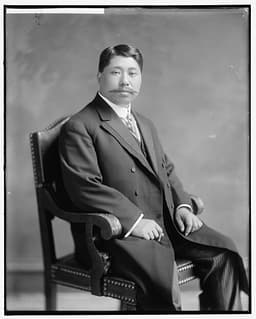
Huang Xing
General · Modern
57.5Total
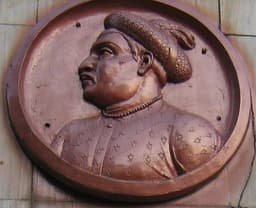
Ranoji Scindia
General · Modern
57.0Total
Basic Information
Born
1874
1700
Died
1916
1745
Era
Modern
Modern
Nationality
China
India
Occupation
General
General
Civilization
Eastern
Indian
Score Comparison
Military (10%)
46.7
50.0
Political (20%)
53.8
54.7
Influence (20%)
62.0
58.0
Legacy (20%)
56.0
54.0
Leadership (15%)
62.0
65.0
Strategy (15%)
60.0
60.0
TOTAL
57.5
57.0
Huang Xing — Complete Timeline
1905 AD
Co-founded the TongmenghuiPolitical Action◆ Major
Huang Xing co-founded the Tongmenghui (Revolutionary Alliance) in Tokyo with Sun Yat-sen. He became its military leader, organizing armed uprisings against the Qing dynasty.
TongmenghuiRevolutionMilitary
Impact: nationalconstructive
1911 AD
Led the Wuchang UprisingWar
Huang Xing led the Wuchang Uprising, which sparked the Xinhai Revolution. He commanded revolutionary forces against Qing troops, securing initial victories that led to the dynasty's collapse.
Xinhai RevolutionUprisingMilitary
Impact: nationalconstructive
1912 AD
Served as Minister of War in the RepublicPolitical Action◆ Major
Huang Xing served as Minister of War in the provisional government of the Republic of China. He worked to organize a national army and defend the republic against counter-revolutionary forces.
GovernmentMilitaryRepublic
Impact: nationalconstructive
1913 AD
Led the Second Revolution Against Yuan ShikaiWar◆ Major
Huang Xing led the Second Revolution, an armed uprising against President Yuan Shikai's authoritarian rule. The rebellion failed due to lack of coordination and military inferiority, forcing Huang into exile.
Second RevolutionYuan ShikaiExile
Impact: nationaltragic
1916 AD
Died in Exile in ShanghaiPolitical Action
Huang Xing died in Shanghai after returning from exile in Japan and the United States. His death marked the loss of a key military leader of the Chinese revolution, though his legacy endured.
DeathExileRevolution
Impact: nationaltragic
Ranoji Scindia — Complete Timeline
1726 AD
Appointed Subedar of MalwaPolitical Action◆ Major
Ranoji Scindia was appointed as the Maratha subedar of Malwa by Peshwa Baji Rao I. This gave him control over a large territory and laid the foundation for the Scindia dynasty of Gwalior.
Maratha EmpireMalwaScindia Dynasty
Impact: regionalconstructive
1737 AD
Battle of DelhiWar◆ Major
Ranoji Scindia participated in the Maratha raid on Delhi under Baji Rao I. The attack on the Mughal capital demonstrated Maratha power and led to the extraction of tribute.
Maratha-Mughal WarsDelhiRaid
Impact: national
1739 AD
Battle of VasaiWar
Ranoji Scindia fought alongside Malhar Rao Holkar in the siege of Vasai against the Portuguese. The victory ended Portuguese control in the Konkan region.
Maratha-Portuguese WarsSiegeKonkan
Impact: regional
1740 AD
Founded Gwalior as CapitalPolitical Action◆ Major
Ranoji Scindia established his capital at Gwalior, fortifying the Gwalior Fort and building a palace. This city became the center of Scindia power for over a century.
FoundingGwaliorScindia Dynasty
Impact: regionalconstructive
1745 AD
Death in BattleWar
Ranoji Scindia was killed in a battle against the Nizam of Hyderabad's forces near the Narmada River. His death occurred during a Maratha campaign to expand into the Deccan.
DeathBattleMaratha-Nizam Wars
Impact: regionaltragic
Expert Analysis
Huang Xing vs Ranoji Scindia
### The General and the Founder: Two Paths to Power in an Age of Empires
In the year 1745, a Maratha commander fell near the Narmada River, his blood soaking the soil of a land he had helped subdue. Seventy-one years later, in 1916, a Chinese revolutionary died in a Shanghai hospital bed, a world away from the battlefields where he had once led armies. Ranoji Scindia and Huang Xing never met, yet both were generals who shaped the destiny of their nations. One founded a dynasty; the other co-founded a republic. One died fighting for an empire; the other died fighting against one. Their stories, separated by centuries and continents, ask a single question: What makes a general a founder of something lasting?
### Origins
Ranoji Scindia was born in 1700 into the Maratha Confederacy, a rising power in the chaos of a declining Mughal Empire. He was a man of his time—a soldier in a world where loyalty to a warlord was the only currency. His world was one of cavalry charges, fort sieges, and the constant negotiation of tribute and territory. There was no philosophy of statecraft, only the practical art of war and tax collection. Huang Xing, born in 1874, came of age in a China reeling from the Opium Wars and internal rebellions. He was a scholar turned revolutionary, educated in the classics but radicalized by the weakness of the Qing dynasty. His world was one of secret societies, foreign ideologies, and the desperate hope of a modern nation. One man learned to fight for a king; the other learned to fight for an idea.
### Rise to Power
Ranoji Scindia’s rise was a matter of service and opportunity. In 1726, Peshwa Baji Rao I, the brilliant Maratha prime minister, appointed him Subedar of Malwa. This was not a democratic election; it was a feudal grant, a reward for loyalty and skill in battle. Scindia was a cog in a larger machine, but a well-placed one. His participation in the 1737 Battle of Delhi, a daring raid on the Mughal capital, proved his worth. He was not the architect of the strategy—that was Baji Rao—but he was the sword that executed it. Huang Xing’s rise was entirely different. He co-founded the Tongmenghui in 1905 in Tokyo, not as a subject of an emperor, but as a conspirator against one. His power came not from a patron, but from an organization of like-minded exiles. He was the military leader of a revolutionary party, his authority derived from shared ideology, not birthright. The Wuchang Uprising of 1911, which he led, was not a campaign for territory but a spark for a national revolution. His power was fragile, dependent on coalitions and the mood of a restless populace.
### Leadership & Governance
As a ruler, Ranoji Scindia was a builder. In 1740, he founded Gwalior as his capital, fortifying its iconic fort and constructing a palace. This was the act of a man creating a legacy—a physical seat of power that would outlast him. He governed Malwa as a Maratha subedar, collecting revenue and maintaining order, but his vision was local. He was a chieftain, not a reformer. His military style was that of the Maratha light cavalry: swift, predatory, and focused on plunder as much as conquest. Huang Xing, as Minister of War in the provisional Republic of China in 1912, faced a different challenge. He had to build a national army from scratch, a modern force loyal to a fledgling state, not to regional warlords. His leadership was ideological and organizational, not feudal. He failed. The Second Revolution in 1913, an armed uprising against Yuan Shikai, collapsed. Huang Xing’s military strategy was sound on paper, but his political support was brittle. He was a general without a stable state.
### Triumph & Tragedy
Ranoji Scindia’s greatest moment was the founding of Gwalior, a city that remains the heart of his dynasty. His tragedy was his death in 1745, killed in a battle against the Nizam of Hyderabad’s forces. He died as he lived: a soldier in the field, his dynasty secured but his own life cut short at 45. Huang Xing’s triumph was the Wuchang Uprising, which toppled a dynasty and created a republic. His tragedy was watching that republic crumble into warlordism and dictatorship. He died in exile in Shanghai in 1916, a broken man at 42, his revolutionary dream unfulfilled. One founder died with his sword in his hand; the other with his ideals in tatters.
### Character & Destiny
Ranoji Scindia was a pragmatist. He did not question the Maratha social order; he thrived within it. His personality was suited to his era—a time when power was personal and local. He was a founder because he was a survivor, a man who built a dynasty by being useful to a greater power. Huang Xing was an idealist. He believed in a republic, in democracy, in a China that could stand equal to the West. His personality was at odds with his era—a time of chaos and cynicism. He was a founder because he was a dreamer, but his dreams were too large for the world he lived in. His destiny was to be a martyr to an idea, not a builder of a state.
### Legacy
Ranoji Scindia’s legacy is tangible. The Scindia dynasty ruled Gwalior until Indian independence, a princely state that bore his name. Today, his descendants are politicians and industrialists. He is remembered as a founder, a name on a palace wall. Huang Xing’s legacy is more abstract. He is honored as a “Father of the Republic” in Chinese textbooks, but his name is less known than Sun Yat-sen’s. His failure to stabilize the republic meant that others—Mao, Chiang—would write the next chapter. He is remembered as a symbol, not a ruler.
### Conclusion
Ranoji Scindia built a house that stood for centuries. Huang Xing laid a foundation that others would have to finish. One man’s success was the product of a stable system; the other’s failure was the product of a collapsing one. Their lives remind us that a general’s legacy is not just a matter of skill, but of timing. Scindia’s world allowed him to be a founder. Huang Xing’s world demanded he be a sacrifice. Both were necessary. Both were tragic. And both, in their own ways, changed history.
Rankings
🥇
Huang XingLeader
Mil: 46.7Pol: 53.8Inf: 62.0
57.5
🥈
Ranoji Scindia
Mil: 50.0Pol: 54.7Inf: 58.0
57.0
+0.5 behind
How This Comparison Works
Algorithm
Each figure is scored on 6 dimensions (0—100 scale) based on structured historical data: Military (10%), Political (20%), Influence (20%), Legacy (20%), Leadership (15%), Strategy (15%). The weighted total produces the final ranking.
Data Sources
Scores are computed from structured sub-indicators in the database. Scale factors adjust for era (Ancient ×0.85, Modern ×1.0) and civilization size (Eastern ×1.05, Other ×0.80) to account for differences in population and military scale.
Maximum 3 Figures
Comparisons are limited to 2—3 figures to ensure readability and statistical meaningfulness.
Error Margins
±5 points per dimension — Sub-scores are derived from historical records with inherent uncertainty. Two figures within 5 points on a dimension should be considered roughly equivalent in that area.
Total Score Accuracy
±3 points overall — The weighted combination of 6 dimensions produces a total score with approximately ±3 points of uncertainty. Differences of less than 3 points are not statistically significant— the figures are effectively tied.
Known Limitations
- Historical records are incomplete and uneven across civilizations
- Figures from oral-tradition societies may be underrepresented
- Occupation labels can misclassify multi-role figures
- Scores measure capability and impact, not moral character
- Quantitative scoring is a comparison tool, not absolute truth
Capability Radar
Military (10%) — Battles & Warfare
Battles
35
45
Win Rate
30
50
Expansion
20
55
Political (20%) — Governance & Reform
Reform
60
30
Diplomacy
55
45
Economy
30
35
Influence (20%) — Cultural & Global Reach
Cultural
40
30
Global
40
30
Legacy (20%) — Historical Impact
Historical
55
50
Longevity
45
55
Leadership (15%) — Power & Stability
Tenure
40
40
Stability
25
40
Strategy (15%) — Tactics & Innovation
Strategy
45
45
Tactics
40
40
Reform
50
35
Similar Comparisons
Comments & Discussion
No comments yet. Be the first to share your thoughts!