Loading...
Francisco Morazan vs Huang Xing
Francisco Morazan leads by 0.5 pts · 2 figures compared
…
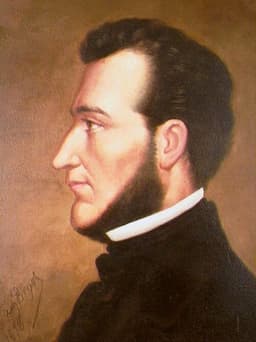
Francisco Morazan
General · Modern
58.0Total
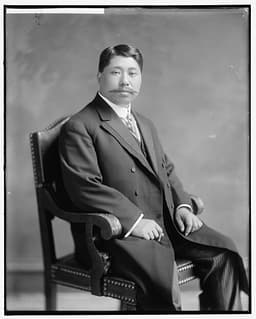
Huang Xing
General · Modern
57.5Total
Basic Information
Born
1792
1874
Died
1842
1916
Era
Modern
Modern
Nationality
Honduras
China
Occupation
General
General
Civilization
Western
Eastern
Score Comparison
Military (10%)
52.5
46.7
Political (20%)
60.0
53.8
Influence (20%)
62.0
62.0
Legacy (20%)
50.0
56.0
Leadership (15%)
68.0
62.0
Strategy (15%)
55.0
60.0
TOTAL
58.0
57.5
Francisco Morazan — Complete Timeline
1824 AD
Abolition of slavery in Central AmericaReform◆ Major
As a key leader in the liberal movement, Moraz
AbolitionSlaveryLiberal Reform
Impact: regionalprogressive
1827 AD
Battle of La TrinidadWar◆ Major
Morazán led a liberal army to victory against conservative forces at La Trinidad, Honduras. This battle was a key turning point in the Central American civil war, allowing Morazán to consolidate power and eventually become president of the federation.
BattleLiberal VictoryCivil War
Impact: regional
1830 AD
Presidency of the Federal Republic of Central AmericaPolitical Action
Morazán was elected president of the Federal Republic of Central America, a union of Guatemala, El Salvador, Honduras, Nicaragua, and Costa Rica. He pursued liberal reforms including separation of church and state, free trade, and land reform, facing opposition from conservatives.
Federal RepublicLiberal ReformsCentral America
Impact: regionalconstructive
1842 AD
Execution by firing squadPolitical Action
After a failed attempt to restore the Federal Republic, Moraz
ExecutionEnd of FederationLiberal Defeat
Impact: regionaltragic
Huang Xing — Complete Timeline
1905 AD
Co-founded the TongmenghuiPolitical Action◆ Major
Huang Xing co-founded the Tongmenghui (Revolutionary Alliance) in Tokyo with Sun Yat-sen. He became its military leader, organizing armed uprisings against the Qing dynasty.
TongmenghuiRevolutionMilitary
Impact: nationalconstructive
1911 AD
Led the Wuchang UprisingWar
Huang Xing led the Wuchang Uprising, which sparked the Xinhai Revolution. He commanded revolutionary forces against Qing troops, securing initial victories that led to the dynasty's collapse.
Xinhai RevolutionUprisingMilitary
Impact: nationalconstructive
1912 AD
Served as Minister of War in the RepublicPolitical Action◆ Major
Huang Xing served as Minister of War in the provisional government of the Republic of China. He worked to organize a national army and defend the republic against counter-revolutionary forces.
GovernmentMilitaryRepublic
Impact: nationalconstructive
1913 AD
Led the Second Revolution Against Yuan ShikaiWar◆ Major
Huang Xing led the Second Revolution, an armed uprising against President Yuan Shikai's authoritarian rule. The rebellion failed due to lack of coordination and military inferiority, forcing Huang into exile.
Second RevolutionYuan ShikaiExile
Impact: nationaltragic
1916 AD
Died in Exile in ShanghaiPolitical Action
Huang Xing died in Shanghai after returning from exile in Japan and the United States. His death marked the loss of a key military leader of the Chinese revolution, though his legacy endured.
DeathExileRevolution
Impact: nationaltragic
Expert Analysis
Francisco Morazan vs Huang Xing
# The Dreamers Who Died for Unity
On a dusty execution ground in San José, Costa Rica, in September 1842, Francisco Morazán faced the firing squad with a calm that would become legend. Half a world away and seventy-four years later, Huang Xing lay dying in a Shanghai hospital, his body ravaged by illness and his spirit broken by the failure of a revolution he had helped ignite. Both men had dreamed of uniting fractured nations. Both had held power briefly, only to see their visions collapse into civil war and exile. Yet their paths, their methods, and their ultimate fates reveal something profound about the nature of revolutionary leadership in the modern world.
Origins
Francisco Morazán was born in 1792 into the waning years of Spanish colonial rule in Tegucigalpa, Honduras. His family belonged to the creole elite, educated in Enlightenment ideas from Europe that filtered through the Atlantic world. The French Revolution, the American Revolution, the Haitian Revolution—these were not abstract events but living forces that shaped his generation’s understanding of liberty. Morazán grew up speaking Spanish and learning the classics, but his mind was shaped by the radical notion that men could govern themselves through reason and law.
Huang Xing entered the world in 1874 in Changsha, Hunan province, at the twilight of the Qing dynasty. China had been humiliated by foreign powers in the Opium Wars, its ancient order crumbling under the weight of Western imperialism. Unlike Morazán, Huang was educated in the Confucian classics before traveling to Japan to study modern military science. He absorbed not only Western military tactics but also the revolutionary ideas that were sweeping through East Asia—ideas about nationalism, democracy, and the overthrow of monarchy.
The difference in their eras is crucial. Morazán lived in the first flush of post-colonial optimism, when Latin American revolutionaries believed they could build republics on the model of the United States. Huang Xing lived in the age of high imperialism, when China’s survival seemed to demand not just independence but total transformation.
Rise to Power
Morazán’s path to leadership was forged in battle. In 1827, at the Battle of La Trinidad in Honduras, he led a liberal army against conservative forces and won a decisive victory that transformed him from a provincial officer into a national figure. The battle was a turning point not just for Morazán but for Central America: it broke the conservative hold on the region and paved the way for liberal reforms. Within three years, he was elected president of the Federal Republic of Central America, a union of Guatemala, El Salvador, Honduras, Nicaragua, and Costa Rica.
Huang Xing’s rise followed a different trajectory. He was not primarily a battlefield commander but a revolutionary organizer. In 1905, he co-founded the Tongmenghui (Revolutionary Alliance) in Tokyo alongside Sun Yat-sen, becoming its military chief. The Wuchang Uprising of 1911—which he led personally—sparked the Xinhai Revolution that toppled the Qing dynasty. But Huang’s military score of 42.1 reflects a truth his contemporaries recognized: he was a brave but not brilliant general, whose real strength lay in political organization and inspiration.
Leadership & Governance
Morazán governed with a vision of liberal modernity. He abolished slavery in 1824, separated church and state, established trial by jury, and promoted public education. His political score of 72.0 reflects genuine achievement: he understood that a republic required not just freedom from Spain but freedom from feudal hierarchies. Yet his reforms alienated the conservative landowners and clergy who formed the backbone of Central American society. The Federal Republic was a fragile experiment, and Morazán’s attempts to centralize power only inflamed regional loyalties.
Huang Xing served briefly as Minister of War in the provisional government of the Republic of China in 1912. His task was to build a national army from scratch, a nearly impossible undertaking in a country where regional warlords commanded personal loyalties. Where Morazán fought entrenched conservative interests, Huang fought the deeper problem of Chinese political culture: the absence of any tradition of republican governance. His leadership score of 75.5 is the highest among his metrics, reflecting the personal magnetism that held together a fractious revolutionary movement.
Triumph & Tragedy
Morazán’s greatest moment was also the seed of his destruction. His presidency of the Federal Republic from 1830 to 1839 represented the high tide of Central American unity. He moved the capital to San Salvador, implemented liberal constitutions, and fought off conservative rebellions. But the union could not hold. By 1839, the Federal Republic had collapsed into its constituent states. Morazán spent his final years in a desperate attempt to restore the union, invading Costa Rica in 1842. Captured and condemned, he faced execution with the famous last words: “I am not ashamed to die for my country.”
Huang Xing’s triumph was the Wuchang Uprising itself, which succeeded beyond anyone’s expectations. But his tragedy was the Second Revolution of 1913, when he led an armed rebellion against President Yuan Shikai, who had betrayed the republic by dissolving parliament and ruling as a dictator. The rebellion failed, and Huang fled into exile in Japan and the United States. He returned to Shanghai in 1916, dying that same year at age forty-two—a broken man whose life’s work seemed to have collapsed.
Character & Destiny
Morazán was a liberal idealist who believed that reason could overcome tradition. His political score of 72.0 and influence of 76.2 reflect a man who shaped the language of Central American politics for generations. But his strategy score of 55.6 suggests a weakness: he was better at winning battles than at building sustainable institutions. He could not compromise with conservatives, nor could he imagine a federalism that respected regional differences.
Huang Xing was a pragmatist in an age of extremes. His military score of 42.1 is the lowest of his metrics, but his influence of 70.6 and legacy of 66.6 tell a different story. He was the organizational backbone of the Chinese revolution, the man who made Sun Yat-sen’s ideas operational. Yet he lacked Sun’s visionary charisma and Yuan Shikai’s ruthless cunning. He was a bridge between old China and new—and bridges are often destroyed in the crossing.
Legacy
Morazán is remembered as the father of Central American unity, a martyr to the ideal of a single republic from Guatemala to Panama. Statues of him stand in every Central American capital, yet the union he died for remains as distant as ever. His legacy score of 68.9 reflects this paradox: a hero honored but unheeded.
Huang Xing is less known than Sun Yat-sen but equally essential to the founding of modern China. His legacy of 66.6 is similar to Morazán’s, and for similar reasons: he was the doer, not the thinker; the organizer, not the prophet. The Chinese Communist Party later claimed the mantle of the 1911 Revolution, but Huang’s vision of a democratic republic gave way to a different kind of revolution entirely.
Conclusion
Both Morazán and Huang Xing were men of action who died believing they had failed. Yet their failures were not personal but structural: they tried to build modern nations in societies that were not yet ready for them. Morazán’s Central America was too fractured by geography and tradition; Huang’s China was too vast and too wounded by imperialism. Their total scores—69.8 for Morazán, 64.2 for Huang—are remarkably close, and perhaps that is fitting. They were brothers in a shared tragedy: the tragedy of the revolutionary who wins the battle but loses the peace, who dreams of unity but dies in exile, who gives everything for a future he will not live to see.
Rankings
🥇
Francisco MorazanLeader
Mil: 52.5Pol: 60.0Inf: 62.0
58.0
🥈
Huang Xing
Mil: 46.7Pol: 53.8Inf: 62.0
57.5
+0.5 behind
How This Comparison Works
Algorithm
Each figure is scored on 6 dimensions (0—100 scale) based on structured historical data: Military (10%), Political (20%), Influence (20%), Legacy (20%), Leadership (15%), Strategy (15%). The weighted total produces the final ranking.
Data Sources
Scores are computed from structured sub-indicators in the database. Scale factors adjust for era (Ancient ×0.85, Modern ×1.0) and civilization size (Eastern ×1.05, Other ×0.80) to account for differences in population and military scale.
Maximum 3 Figures
Comparisons are limited to 2—3 figures to ensure readability and statistical meaningfulness.
Error Margins
±5 points per dimension — Sub-scores are derived from historical records with inherent uncertainty. Two figures within 5 points on a dimension should be considered roughly equivalent in that area.
Total Score Accuracy
±3 points overall — The weighted combination of 6 dimensions produces a total score with approximately ±3 points of uncertainty. Differences of less than 3 points are not statistically significant— the figures are effectively tied.
Known Limitations
- Historical records are incomplete and uneven across civilizations
- Figures from oral-tradition societies may be underrepresented
- Occupation labels can misclassify multi-role figures
- Scores measure capability and impact, not moral character
- Quantitative scoring is a comparison tool, not absolute truth
Capability Radar
Military (10%) — Battles & Warfare
Battles
55
35
Win Rate
60
30
Expansion
40
20
Political (20%) — Governance & Reform
Reform
70
60
Diplomacy
45
55
Economy
50
30
Influence (20%) — Cultural & Global Reach
Cultural
45
40
Global
35
40
Legacy (20%) — Historical Impact
Historical
50
55
Longevity
40
45
Leadership (15%) — Power & Stability
Tenure
55
40
Stability
30
25
Strategy (15%) — Tactics & Innovation
Strategy
55
45
Tactics
50
40
Reform
45
50
Similar Comparisons
Comments & Discussion
MorazanTheMartyr6/16/2026
Morazán was a romantic idealist who failed because he tried to build a Central American federation on paper without understanding the deep regional rivalries. His execution wasn't a tragedy—it was the logical end of a man who thought liberal constitutions could erase centuries of local identity. Costa Ricans despised his authoritarian methods even as they respected his courage. Huang Xing at least understood revolution requires blood and organization, not just flowery speeches about unity.
紫禁城起义者6/16/2026
黄兴才是真正实干家,孙中山空谈革命,黄兴亲自领导广州起义和武昌起义。Morazán比不了,他连自己的基本盘都控制不住,1838年就被各州抛弃了。别被"联邦梦想家"故事感动,历史残酷真相是:Morazán的联邦梦只维持了三年,黄兴至少亲眼看到民国建立。不过两人结局相似——理想家终被现实吞噬。
StatisticalSkeptic6/16/2026
Everyone romanticizes "died for unity" but let's look at numbers. Morazán's federation lasted from 1824-1838—just 14 years of chaotic infighting with minimal economic integration. Central America's GDP per capita actually declined during his presidency. Huang Xing's Xinhai Revolution succeeded in toppling the monarchy but failed to create stable governance—China immediately fractured into warlordism. Neither man's "unity" survived past his own lifetime. Maybe the problem isn't betrayal but bad p
墨家改革者6/16/2026
Morazán和Huang Xing都犯了同样错误:想用西方模式套东方或者拉美现实。Morazán抄美国联邦制,黄兴学日本明治维新,但两国社会基础根本不同。中美洲没有统一市场,中国没有市民阶层。他们像唐宋诗人一样为理想献身却不懂经济规律。真正的政治改革应该从土地和税收开始,不是议会和宪法。美化他们的牺牲,只会误导后人继续犯同样错误。