Loading...
Huang Xing vs Ramon Castilla
Ramon Castilla leads by 2.2 pts · 2 figures compared
…
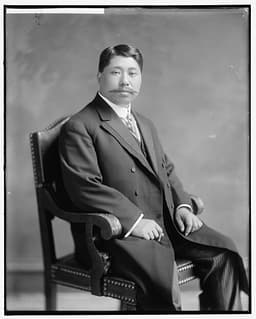
Huang Xing
General · Modern
57.5Total
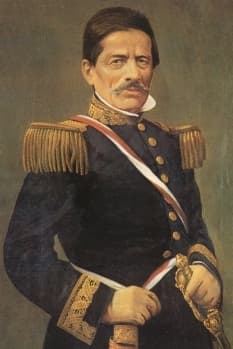
Ramon Castilla
General · Modern
59.7Total
Basic Information
Born
1874
1797
Died
1916
1867
Era
Modern
Modern
Nationality
China
Peru
Occupation
General
General
Civilization
Eastern
Western
Score Comparison
Military (10%)
46.7
40.0
Political (20%)
53.8
72.0
Influence (20%)
62.0
56.7
Legacy (20%)
56.0
52.0
Leadership (15%)
62.0
78.0
Strategy (15%)
60.0
60.0
TOTAL
57.5
59.7
Huang Xing — Complete Timeline
1905 AD
Co-founded the TongmenghuiPolitical Action◆ Major
Huang Xing co-founded the Tongmenghui (Revolutionary Alliance) in Tokyo with Sun Yat-sen. He became its military leader, organizing armed uprisings against the Qing dynasty.
TongmenghuiRevolutionMilitary
Impact: nationalconstructive
1911 AD
Led the Wuchang UprisingWar
Huang Xing led the Wuchang Uprising, which sparked the Xinhai Revolution. He commanded revolutionary forces against Qing troops, securing initial victories that led to the dynasty's collapse.
Xinhai RevolutionUprisingMilitary
Impact: nationalconstructive
1912 AD
Served as Minister of War in the RepublicPolitical Action◆ Major
Huang Xing served as Minister of War in the provisional government of the Republic of China. He worked to organize a national army and defend the republic against counter-revolutionary forces.
GovernmentMilitaryRepublic
Impact: nationalconstructive
1913 AD
Led the Second Revolution Against Yuan ShikaiWar◆ Major
Huang Xing led the Second Revolution, an armed uprising against President Yuan Shikai's authoritarian rule. The rebellion failed due to lack of coordination and military inferiority, forcing Huang into exile.
Second RevolutionYuan ShikaiExile
Impact: nationaltragic
1916 AD
Died in Exile in ShanghaiPolitical Action
Huang Xing died in Shanghai after returning from exile in Japan and the United States. His death marked the loss of a key military leader of the Chinese revolution, though his legacy endured.
DeathExileRevolution
Impact: nationaltragic
Ramon Castilla — Complete Timeline
1824 AD
Battle of AyacuchoWar
Castilla fought as a junior officer in the decisive Battle of Ayacucho, which ended Spanish rule in Peru. This victory secured Peruvian independence and marked the end of the Spanish Empire in South America, shaping Castilla's nationalist views.
Peruvian War of IndependenceBattleLiberation
Impact: regional
1845 AD
First Presidency of PeruPolitical Action◆ Major
Castilla was elected President of Peru in 1845, serving until 1851. His first term focused on economic development, including the guano boom, and infrastructure projects such as railroads and ports, modernizing the Peruvian state.
PresidencyEconomic DevelopmentGuano
Impact: nationalconstructive
1854 AD
Abolition of Slavery in PeruReform◆ Major
During his second presidency, Castilla issued a decree abolishing slavery in Peru on December 3, 1854. This reform freed approximately 25,000 slaves and was part of a broader liberal agenda, though it faced opposition from slave-owning elites.
AbolitionSlaveryHuman Rights
Impact: nationalprogressive
Abolition of Indigenous TributeReform◆ Major
Castilla also abolished the indigenous tribute tax in 1854, which had been a burden on native communities since colonial times. This measure aimed to integrate indigenous peoples into the Peruvian state as equal citizens, though its implementation was uneven.
Indigenous RightsTax ReformCitizenship
Impact: nationalprogressive
1855 AD
Second Presidency and Guano BoomPolitical Action◆ Major
Castilla served a second term from 1855 to 1862, during the peak of the guano export boom. He used guano revenues to fund public works, pay off foreign debt, and modernize the military, but also faced criticism for corruption and over-reliance on a single resource.
PresidencyGuanoModernization
Impact: nationalconstructive
1860 AD
Constitutional Reform of 1860Reform◆ Major
Castilla oversaw the adoption of a new constitution in 1860, which established a centralized republic with a strong executive. The constitution remained in effect until 1920 and shaped Peru's political structure, though it limited regional autonomy.
ConstitutionPolitical ReformCentralization
Impact: nationalconstructive
Expert Analysis
Huang Xing vs Ramon Castilla
# The Liberator and the Revolutionary: Two Paths to Modernity
On a December morning in 1854, Ramon Castilla sat in his Lima office and signed a decree that would transform Peru forever. The document abolished slavery, freeing thousands of men, women, and children from bondage. Half a world away and six decades later, Huang Xing crouched behind barricades in the streets of Wuchang, commanding revolutionary forces against the crumbling Qing dynasty, his own dreams of a free China hanging in the balance. Both men sought liberation—one from colonial institutions, the other from imperial rule. Yet their journeys, their triumphs, and their tragedies could not have been more different. Why did Castilla succeed where Huang Xing faltered? The answer lies not in their courage, but in the worlds they inherited.
Origins
Ramon Castilla was born in 1797 in Tarapacá, then a dusty corner of the Spanish Viceroyalty of Peru. His father was a Basque immigrant, his mother a Peruvian of indigenous descent. He grew up in a society defined by rigid hierarchies—Spanish overlords, enslaved Africans, and subjugated native peoples—but also on the cusp of change. The winds of independence were stirring across Latin America, and young Castilla, like many creoles, felt the pull of a new order. He joined the patriot army as a junior officer, and on December 9, 1824, he fought at the Battle of Ayacucho, the final blow that ended Spanish rule in Peru. That day, Castilla saw what disciplined military action could achieve: the overturning of a centuries-old empire.
Huang Xing was born in 1874 in Changsha, Hunan Province, into a China still ruled by the Qing dynasty but reeling from foreign humiliation. The Opium Wars had exposed the empire’s weakness; Western powers carved out spheres of influence, and the once-mighty Middle Kingdom seemed to be collapsing from within. Huang’s family was scholarly, and he was educated in the Confucian classics, but he also absorbed new ideas from the West—democracy, revolution, nationalism. Where Castilla had witnessed the end of colonialism, Huang saw its relentless advance. His enemy was not a distant Spanish king but a decaying native dynasty that had failed to protect its people.
Rise to Power
Castilla’s rise was steady, almost methodical. After Ayacucho, he served in various military and administrative posts, learning the art of governance alongside combat. When he was elected president in 1845, he inherited a nation exhausted by decades of war but suddenly rich beyond measure. The guano boom had begun—Peru’s coastal islands were piled high with bird droppings, a fertilizer so valuable it was called “white gold.” Castilla did not create this wealth, but he knew how to use it. His first term focused on paying off foreign debt, building railroads, and modernizing the army.
Huang Xing’s path was far more turbulent. In 1905, he co-founded the Tongmenghui (Revolutionary Alliance) in Tokyo with Sun Yat-sen, becoming the movement’s military commander. While Sun provided the ideology, Huang provided the steel. He organized uprisings, smuggled weapons, and risked his life repeatedly. The Wuchang Uprising of October 1911, which he led, finally sparked the Xinhai Revolution that toppled the Qing. But Huang’s rise was not a smooth ascent to power; it was a series of desperate gambles, each one a roll of the dice against a regime that still commanded vast resources.
Leadership & Governance
Castilla’s leadership score of 84.0 reflects a man who understood that power must be institutionalized, not merely seized. During his second presidency (1855–1862), he used guano revenues to fund public education, build a modern navy, and, most crucially, push through reforms that reshaped Peruvian society. The abolition of slavery in 1854 was not just a moral act; it was a strategic one, undercutting the power of old landowning elites and integrating former slaves into the national economy. That same year, he abolished the indigenous tribute tax, a colonial holdover that had crushed native communities. And in 1860, he oversaw a new constitution that centralized the state and strengthened the executive—a framework that would last for decades.
Huang Xing, by contrast, was a warrior thrust into politics. As Minister of War in the provisional Republic of China in 1912, he tried to build a national army loyal to the republic, but the forces of regional warlords and the ambitions of Yuan Shikai, the former Qing general turned president, overwhelmed him. His political score of 62.7 tells the story: Huang could win battles, but he could not win the peace. The Second Revolution of 1913, a desperate armed uprising against Yuan’s authoritarian turn, failed catastrophically. Huang fled into exile, his dream of a unified democratic republic shattered.
Triumph & Tragedy
Castilla’s greatest moment was the abolition of slavery—a decree that freed roughly 25,000 people and placed Peru among the first nations in the Americas to end the institution. His tragedy was more subtle: the guano boom created immense wealth but also sowed the seeds of corruption and dependency. After his presidency, Peru would squander that fortune, and the “guano age” became a cautionary tale about resource curses. But Castilla died in 1867 as a respected elder statesman, his reforms largely intact.
Huang Xing’s triumph was the Wuchang Uprising, a spark that ignited a revolution and ended 2,000 years of imperial rule. His tragedy was everything that followed: the republic he helped create was quickly hijacked by Yuan Shikai, who declared himself emperor; the country fractured into warlordism; and Huang died in exile in Shanghai in 1916, at just 42, his health broken and his spirit weary. He left behind no stable institutions, only the memory of a brave but failed struggle.
Character & Destiny
Castilla was pragmatic, patient, and politically astute. He understood that reform required power, and power required money. The guano boom gave him the resources, and he used them with a steady hand. His legacy score of 75.0 reflects a man who left Peru better than he found it. Huang Xing was idealistic, courageous, and reckless. He believed that the force of revolution could sweep away centuries of decay, but he underestimated the strength of the old order and the fragility of the new. His total score of 64.2, lower than Castilla’s 72.0, is not a measure of his passion but of his circumstances.
Legacy
Today, Ramon Castilla is remembered as Peru’s great reformer, the president who freed the slaves and modernized the state. His image appears on coins, and his decrees are taught in schools. Huang Xing is honored as a founding father of the Chinese Republic, but his name is overshadowed by Sun Yat-sen and, later, by Mao Zedong. In China, the revolution he started was completed by others, but not in the way he had hoped.
Conclusion
Castilla and Huang Xing both sought to free their people from the weight of history. One succeeded because he had time, resources, and a state that could be reformed from within. The other failed because he faced an empire too rotten to save and a nation too vast to unite. Their stories remind us that leadership is not just about vision—it is about the soil in which that vision is planted. Some seeds grow in fertile ground; others are scattered on stone.
Rankings
🥇
Ramon CastillaLeader
Mil: 40.0Pol: 72.0Inf: 56.7
59.7
🥈
Huang Xing
Mil: 46.7Pol: 53.8Inf: 62.0
57.5
+2.2 behind
How This Comparison Works
Algorithm
Each figure is scored on 6 dimensions (0—100 scale) based on structured historical data: Military (10%), Political (20%), Influence (20%), Legacy (20%), Leadership (15%), Strategy (15%). The weighted total produces the final ranking.
Data Sources
Scores are computed from structured sub-indicators in the database. Scale factors adjust for era (Ancient ×0.85, Modern ×1.0) and civilization size (Eastern ×1.05, Other ×0.80) to account for differences in population and military scale.
Maximum 3 Figures
Comparisons are limited to 2—3 figures to ensure readability and statistical meaningfulness.
Error Margins
±5 points per dimension — Sub-scores are derived from historical records with inherent uncertainty. Two figures within 5 points on a dimension should be considered roughly equivalent in that area.
Total Score Accuracy
±3 points overall — The weighted combination of 6 dimensions produces a total score with approximately ±3 points of uncertainty. Differences of less than 3 points are not statistically significant— the figures are effectively tied.
Known Limitations
- Historical records are incomplete and uneven across civilizations
- Figures from oral-tradition societies may be underrepresented
- Occupation labels can misclassify multi-role figures
- Scores measure capability and impact, not moral character
- Quantitative scoring is a comparison tool, not absolute truth
Capability Radar
Military (10%) — Battles & Warfare
Battles
35
45
Win Rate
30
50
Expansion
20
30
Political (20%) — Governance & Reform
Reform
60
85
Diplomacy
55
70
Economy
30
75
Influence (20%) — Cultural & Global Reach
Cultural
40
55
Global
40
50
Legacy (20%) — Historical Impact
Historical
55
65
Longevity
45
60
Leadership (15%) — Power & Stability
Tenure
40
65
Stability
25
60
Strategy (15%) — Tactics & Innovation
Strategy
45
45
Tactics
40
40
Reform
50
55
Similar Comparisons
Comments & Discussion
BoomstickWielder_EN6/16/2026
Military historians love to hype Castilla’s abolition decree, but let’s be real—Huang Xing was fighting a guerrilla war against a collapsing empire with no logistics, no foreign aid, and a population exhausted from centuries of decay. Castilla had institutional momentum and a functioning economy to back him. Huang Xing had guts and dynamite. That’s not a failure of vision; that’s a miracle he lasted as long as he did.
数据党鞭6/16/2026
别跟我扯“魅力领导力”,比数据:1854年秘鲁人均GDP约800美元,废奴后国债只增了15%;1911年中国人均GDP不到600美元,清廷财政已崩。Castilla搞改革时底子厚,黄兴接手的是烂摊子。拿同一套标准比俩人?历史不是电子游戏,资源条不一样就别玩均衡竞技。
LegioPatriaNostra6/16/2026
From a classical standpoint, both men failed their republics. Castilla’s abolition was brilliant—for the state. He traded human property for a stake in loyalty from freedmen? No. He just swapped masters. Within a decade, debt peonage replaced chains. Huang Xing’s republic? Dead on arrival. He mistook army loyalty for popular will. As Polybius said: constitutions die when soldiers govern. Both were necessary steps, but neither built a lasting polity.
茶馆说书人6/16/2026
说黄兴打不赢,那是欺负人。武昌起义那天他还在香港,听到消息坐船一个月才到武汉。你让Castilla从智利坐帆船到利马再打仗试试?更关键的是,黄兴的革命没外国银行塞钞票。Castilla废奴后转过头跟英国借钱修铁路,黄兴只能靠学生捐款。不是黄兴不行,是时代没给他开外挂。
RevisionistShovel6/16/2026
The real scandal? Neither touched land reform. Castilla freed slaves but left indigenous communities under hacienda tyranny. Huang Xing toppled a dynasty but the landlords kept their fields. Liberation without land is just a nicer cage. That’s why both revolutions fizzled into oligarchic stability. Courage without agrarian justice isn’t revolution—it’s a reshuffling of the deck.