Loading...
Huang Xing vs Plutarco Elias Calles
Plutarco Elias Calles leads by 1.0 pts · 2 figures compared
…
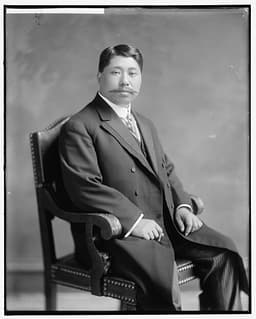
Huang Xing
General · Modern
57.5Total
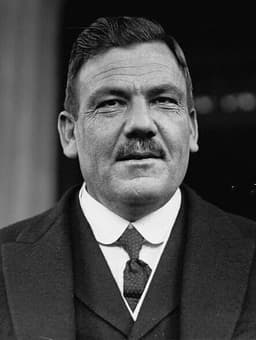
Plutarco Elias Calles
General · Modern
58.5Total
Basic Information
Born
1874
1877
Died
1916
1945
Era
Modern
Modern
Nationality
China
Mexico
Occupation
General
General
Civilization
Eastern
Western
Score Comparison
Military (10%)
46.7
40.0
Political (20%)
53.8
70.3
Influence (20%)
62.0
68.0
Legacy (20%)
56.0
40.0
Leadership (15%)
62.0
78.0
Strategy (15%)
60.0
52.5
TOTAL
57.5
58.5
Huang Xing — Complete Timeline
1905 AD
Co-founded the TongmenghuiPolitical Action◆ Major
Huang Xing co-founded the Tongmenghui (Revolutionary Alliance) in Tokyo with Sun Yat-sen. He became its military leader, organizing armed uprisings against the Qing dynasty.
TongmenghuiRevolutionMilitary
Impact: nationalconstructive
1911 AD
Led the Wuchang UprisingWar
Huang Xing led the Wuchang Uprising, which sparked the Xinhai Revolution. He commanded revolutionary forces against Qing troops, securing initial victories that led to the dynasty's collapse.
Xinhai RevolutionUprisingMilitary
Impact: nationalconstructive
1912 AD
Served as Minister of War in the RepublicPolitical Action◆ Major
Huang Xing served as Minister of War in the provisional government of the Republic of China. He worked to organize a national army and defend the republic against counter-revolutionary forces.
GovernmentMilitaryRepublic
Impact: nationalconstructive
1913 AD
Led the Second Revolution Against Yuan ShikaiWar◆ Major
Huang Xing led the Second Revolution, an armed uprising against President Yuan Shikai's authoritarian rule. The rebellion failed due to lack of coordination and military inferiority, forcing Huang into exile.
Second RevolutionYuan ShikaiExile
Impact: nationaltragic
1916 AD
Died in Exile in ShanghaiPolitical Action
Huang Xing died in Shanghai after returning from exile in Japan and the United States. His death marked the loss of a key military leader of the Chinese revolution, though his legacy endured.
DeathExileRevolution
Impact: nationaltragic
Plutarco Elias Calles — Complete Timeline
1915 AD
Governorship of SonoraPolitical Action
Calles served as Governor of Sonora from 1915 to 1919, implementing radical reforms including land redistribution, anti-clerical laws, and labor rights. His governorship established him as a key figure in the Sonoran dynasty and a proponent of revolutionary change.
GovernorshipSonoraReforms
Impact: regionalconstructive
1924 AD
Presidency of MexicoPolitical Action◆ Major
Calles was elected President of Mexico in 1924, serving until 1928. His administration continued revolutionary reforms, including land reform, labor rights, and secularization, but also faced opposition from the Catholic Church and conservative groups.
PresidencyMexican RevolutionReforms
Impact: nationalconstructive
1926 AD
Cristero WarWar◆ Major
Calles enforced anti-clerical laws, including the Calles Law, which restricted the Catholic Church's role in society. This sparked the Cristero War (1926-1929), a violent rebellion by Catholic peasants against the state, resulting in tens of thousands of deaths.
Cristero WarAnti-clericalismReligious Conflict
Impact: nationaldestructive
1928 AD
MaximatoPolitical Action◆ Major
After his presidency, Calles remained the de facto ruler of Mexico during the Maximato (1928-1934), controlling puppet presidents. He continued to influence policy, but his power waned as President L
MaximatoPolitical ControlCárdenas
Impact: national
1929 AD
Founding of the National Revolutionary Party (PNR)Political Action
Calles founded the National Revolutionary Party (PNR) in 1929, which later became the Institutional Revolutionary Party (PRI). This party dominated Mexican politics for over 70 years, institutionalizing the revolution's legacy and centralizing power.
Political PartyPRIInstitutionalization
Impact: nationalconstructive
Expert Analysis
Huang Xing vs Plutarco Elias Calles
# The Strongman and the Soldier: Two Paths to Revolution
In the summer of 1926, Plutarco Elías Calles stood in the National Palace in Mexico City, signing into law a decree that would ban Catholic religious orders, close church-run schools, and require all priests to register with the state. Across the Pacific, a decade earlier, Huang Xing lay dying in a Shanghai hospital bed, his lungs ravaged by disease and his spirit broken by exile. One man was consolidating power that would shape Mexico for generations; the other was watching his revolutionary dream slip away. Both had fought to build modern nations from the ashes of old orders. Why did one succeed where the other failed?
Origins
Calles was born in 1877 in Guaymas, Sonora, a dusty port town on the Gulf of California. His father was a failed alcoholic, his mother a schoolteacher who died when he was young. He grew up poor, working as a bartender and a teacher before the Mexican Revolution swept him into politics. The Porfiriato—the long dictatorship of Porfirio Díaz—had left Mexico a land of vast haciendas and deep inequality, and Calles absorbed the revolutionary ethos of land reform and secularism like a man parched for justice.
Huang Xing was born three years earlier in 1874 in Changsha, Hunan, in the heart of a China crumbling under the Qing Dynasty. His family was prosperous—his father a scholar-official—and Huang received a classical Confucian education. But the Opium Wars and the humiliation of foreign concessions had shattered China's confidence. Young Huang abandoned the civil service exams for a military academy, then traveled to Japan, where he met Sun Yat-sen and embraced the dream of a republic. His path was not from poverty but from disillusionment with a dying empire.
Rise to Power
Calles rose through the chaos of the Mexican Revolution with brutal pragmatism. He became governor of Sonora in 1915, and there he learned the art of power: he redistributed land to peasants, crushed his opponents, and built a network of loyalists. When he ran for president in 1924, he campaigned as the heir of the revolution, promising to continue the work of land reform and national consolidation. His rise was methodical—a ladder built from alliances, patronage, and the barrel of a gun.
Huang Xing’s rise was more romantic and more fragile. In 1905, he co-founded the Tongmenghui in Tokyo, the revolutionary alliance that would overthrow the Qing. He was the military man, the one who organized the bombings and the uprisings. When the Wuchang Uprising finally erupted in October 1911, Huang rushed to the front lines to lead the revolutionary forces, his courage inspiring men who had never seen a republic. But his power was borrowed—from Sun Yat-sen’s charisma, from the discontent of the provinces, from the weakness of the Qing. It was never his alone.
Leadership & Governance
Calles governed Mexico with an iron fist wrapped in a revolutionary flag. As president from 1924 to 1928, he pushed through land redistribution, built schools, and modernized the economy. But his signature achievement—and his most divisive—was the Calles Law of 1926, which sought to break the Catholic Church’s political and social power. The result was the Cristero War, a bloody three-year rebellion in which tens of thousands died. Calles did not flinch. He saw the Church as a rival state, and he crushed it with the same ruthlessness he showed his political enemies.
After his presidency, Calles invented the Maximato—a system in which he remained the jefe máximo, the supreme chief, controlling puppet presidents from behind the scenes. In 1929, he founded the National Revolutionary Party (PNR), which would become the Institutional Revolutionary Party (PRI), a political machine that ruled Mexico for seven decades. Calles understood that power was not just about winning battles; it was about building institutions that outlasted him.
Huang Xing never had such luxury. As Minister of War in the provisional government of 1912, he tried to build a national army, but the republic was already fracturing. Warlords held the provinces, and President Yuan Shikai was plotting to restore the monarchy. When Huang led the Second Revolution against Yuan in 1913, he failed. His forces were scattered, his allies betrayed him, and he fled into exile. Huang was a soldier, not a political architect. He could inspire men to die for a cause, but he could not build the systems to sustain it.
Triumph & Tragedy
Calles’s greatest triumph was the founding of the PNR, a party that would bring stability to a country torn by decades of civil war. His greatest tragedy was the Cristero War, which turned Mexico into a battlefield between church and state. He won that war, but at a terrible cost—and the scars of religious violence would haunt Mexico for generations.
Huang Xing’s triumph was the Wuchang Uprising itself, the spark that finally toppled the Qing Dynasty after 268 years. He was the hammer that broke the old order. But his tragedy was that he could not build a new one. The Second Revolution failed, and he died in exile in 1916, at just 42 years old, a revolutionary without a revolution left to lead. Sun Yat-sen would go on to be hailed as the father of modern China; Huang Xing became a footnote, remembered only by historians.
Character & Destiny
Calles was cold, calculating, and relentless. He once said, “I have no friends, only interests.” He saw politics as a game of power, and he played it with the discipline of a chess master. His personality—distrustful, authoritarian, but visionary—shaped a Mexico that was stable but not free, modern but not democratic.
Huang Xing was warm, passionate, and selfless. He gave his money to the revolution, his health to the cause, and his loyalty to Sun Yat-sen. But his very virtues were his undoing. He trusted too much, fought too bravely, and never learned the art of political survival. His destiny was to be the martyr, not the ruler.
Legacy
Calles left behind the PRI, a party that would rule Mexico until 2000, and a secular state that remains one of Latin America’s most firmly anti-clerical. He is remembered as the architect of modern Mexico—but also as a dictator who crushed dissent and ignited a religious war.
Huang Xing left behind the memory of a man who fought for a republic he never saw. In China, he is honored as one of the founding fathers, but his name is overshadowed by Sun Yat-sen and later by Mao Zedong. His legacy is that of a soldier who gave everything for a dream that others would finish.
Conclusion
Two revolutionaries, two different fates. Calles built a machine that outlasted him; Huang Xing lit a fire that others had to tend. One was a politician who wore a general’s uniform; the other was a general who tried to play politics. In the end, the difference was not in courage or conviction—both men had plenty of both. It was in the cold, hard business of power: how to seize it, how to keep it, and how to pass it on. Huang Xing died wondering what might have been. Calles died in 1945, aged 68, knowing that Mexico would never be the same—because he had made it so.
Rankings
🥇
Plutarco Elias CallesLeader
Mil: 40.0Pol: 70.3Inf: 68.0
58.5
🥈
Huang Xing
Mil: 46.7Pol: 53.8Inf: 62.0
57.5
+1.0 behind
How This Comparison Works
Algorithm
Each figure is scored on 6 dimensions (0—100 scale) based on structured historical data: Military (10%), Political (20%), Influence (20%), Legacy (20%), Leadership (15%), Strategy (15%). The weighted total produces the final ranking.
Data Sources
Scores are computed from structured sub-indicators in the database. Scale factors adjust for era (Ancient ×0.85, Modern ×1.0) and civilization size (Eastern ×1.05, Other ×0.80) to account for differences in population and military scale.
Maximum 3 Figures
Comparisons are limited to 2—3 figures to ensure readability and statistical meaningfulness.
Error Margins
±5 points per dimension — Sub-scores are derived from historical records with inherent uncertainty. Two figures within 5 points on a dimension should be considered roughly equivalent in that area.
Total Score Accuracy
±3 points overall — The weighted combination of 6 dimensions produces a total score with approximately ±3 points of uncertainty. Differences of less than 3 points are not statistically significant— the figures are effectively tied.
Known Limitations
- Historical records are incomplete and uneven across civilizations
- Figures from oral-tradition societies may be underrepresented
- Occupation labels can misclassify multi-role figures
- Scores measure capability and impact, not moral character
- Quantitative scoring is a comparison tool, not absolute truth
Capability Radar
Military (10%) — Battles & Warfare
Battles
35
45
Win Rate
30
50
Expansion
20
30
Political (20%) — Governance & Reform
Reform
60
85
Diplomacy
55
65
Economy
30
60
Influence (20%) — Cultural & Global Reach
Cultural
40
70
Global
40
60
Legacy (20%) — Historical Impact
Historical
55
75
Longevity
45
70
Leadership (15%) — Power & Stability
Tenure
40
70
Stability
25
55
Strategy (15%) — Tactics & Innovation
Strategy
45
55
Tactics
40
40
Reform
50
60
Similar Comparisons
Comments & Discussion
数据拆解师6/16/2026
比个人魅力没意义。黄兴领导了武昌起义——直接推翻了清廷——而卡列斯不过是借革命之名巩固官僚体系。论军事贡献,黄兴在阳夏保卫战以劣势兵力拖住北洋军,为南方各省独立争取了时间;卡列斯呢?镇压 cristero 起义时死了十万人。一个用行动改写了历史,一个靠后患无穷的铁腕统治留名。
政治讽刺家6/16/2026
别美化卡列斯了。他1926年颁布的《改革法》表面是政教分离,实际是用国家暴力碾压信仰自由——黄兴在1913年反对袁世凯独裁时才叫真革命。卡列斯后来被自己创立的制度流放,黄兴至少死得堂堂正正。一个成了后来腐败一党制的教父,一个是中国宪政失败的悲剧英雄。谁更失败?看你站在哪边。
Historian3946/16/2026
Calles reminds me of Augustus—ruthless, institutional, reshaping society through law. Huang Xing is like Pompey: a great commander undone by political naivety. Calles didn’t just defeat the Church; he created a secular civic religion that bound Mexico together. Huang couldn’t even persuade his own party to adopt a clear constitution. One built a temple to state power; the other died in exile, his legacy scattered like ashes.
Historian4986/16/2026
Calles won because he understood power isn’t just about taking it—it’s about holding it through institutions. Huang Xing was the better soldier (he actually led the Wuchang Uprising firsthand), but he let Sun Yat-sen hog the spotlight and then died broke in a foreign hospital. Calles created the PRI machine that ran Mexico for 70 years. Huang couldn’t even keep his own revolutionary coalition together. That’s the difference between a builder and a martyr.
Chronicler23726/16/2026
Here’s the real twist: Calles was the better institutionalist, but Huang was the purer revolutionary. Calles banned the Church and crushed rebels—textbook strongman stuff. Huang never sought supreme power; he stepped aside for Sun Yat-sen twice. That humility cost him Mexico would’ve eaten Huang alive. Calles’s secularization was brutal but lasting; Huang’s republic fell to warlords. One built a stable (if ugly) state; the other died dreaming of one.