Loading...
Huang Xing vs Olusegun Obasanjo
Olusegun Obasanjo leads by 2.7 pts · 2 figures compared
…
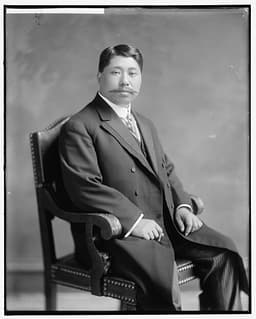
Huang Xing
General · Modern
57.5Total
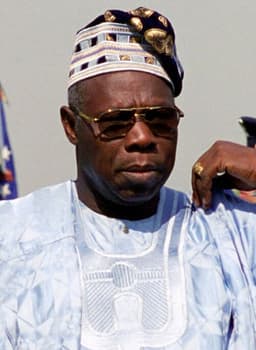
Olusegun Obasanjo
General · Modern
60.2Total
Basic Information
Born
1874
1937
Died
1916
—
Era
Modern
Modern
Nationality
China
Nigeria
Occupation
General
General
Civilization
Eastern
Other
Score Comparison
Military (10%)
46.7
45.0
Political (20%)
53.8
72.0
Influence (20%)
62.0
55.0
Legacy (20%)
56.0
54.0
Leadership (15%)
62.0
78.0
Strategy (15%)
60.0
60.0
TOTAL
57.5
60.2
Huang Xing — Complete Timeline
1905 AD
Co-founded the TongmenghuiPolitical Action◆ Major
Huang Xing co-founded the Tongmenghui (Revolutionary Alliance) in Tokyo with Sun Yat-sen. He became its military leader, organizing armed uprisings against the Qing dynasty.
TongmenghuiRevolutionMilitary
Impact: nationalconstructive
1911 AD
Led the Wuchang UprisingWar
Huang Xing led the Wuchang Uprising, which sparked the Xinhai Revolution. He commanded revolutionary forces against Qing troops, securing initial victories that led to the dynasty's collapse.
Xinhai RevolutionUprisingMilitary
Impact: nationalconstructive
1912 AD
Served as Minister of War in the RepublicPolitical Action◆ Major
Huang Xing served as Minister of War in the provisional government of the Republic of China. He worked to organize a national army and defend the republic against counter-revolutionary forces.
GovernmentMilitaryRepublic
Impact: nationalconstructive
1913 AD
Led the Second Revolution Against Yuan ShikaiWar◆ Major
Huang Xing led the Second Revolution, an armed uprising against President Yuan Shikai's authoritarian rule. The rebellion failed due to lack of coordination and military inferiority, forcing Huang into exile.
Second RevolutionYuan ShikaiExile
Impact: nationaltragic
1916 AD
Died in Exile in ShanghaiPolitical Action
Huang Xing died in Shanghai after returning from exile in Japan and the United States. His death marked the loss of a key military leader of the Chinese revolution, though his legacy endured.
DeathExileRevolution
Impact: nationaltragic
Olusegun Obasanjo — Complete Timeline
1976 AD
Military coup that brought Obasanjo to powerPolitical Action
Following the assassination of General Murtala Mohammed in a failed coup, Obasanjo, as Chief of Staff, Supreme Headquarters, succeeded him as head of state. He oversaw the continuation of the transition to civilian rule.
CoupSuccessionMilitary Rule
Impact: national
1979 AD
Handover of power to civilian governmentPolitical Action
Obasanjo voluntarily handed over power to the elected civilian government of Shehu Shagari, marking the first peaceful transfer of power from military to civilian rule in Nigeria. This act established a precedent for democratic transition.
DemocracyTransitionCivilian Rule
Impact: nationalconstructive
1999 AD
Election as President of NigeriaPolitical Action
Obasanjo won the 1999 Nigerian presidential election as the candidate of the People's Democratic Party (PDP). His victory ended 16 years of military rule and began the Fourth Nigerian Republic.
ElectionDemocracyFourth Republic
Impact: nationalprogressive
2005 AD
Debt relief from Paris ClubPolitical Action◆ Major
Obasanjo's government negotiated a debt relief agreement with the Paris Club, resulting in the cancellation of $18 billion of Nigeria's external debt. This freed up resources for domestic spending and was a major economic achievement.
Debt ReliefEconomyNegotiation
Impact: nationalconstructive
2006 AD
Third term bid failurePolitical Action◆ Major
Obasanjo attempted to amend the Nigerian constitution to allow him to run for a third term. The bid was rejected by the National Assembly, marking a significant political defeat and reinforcing term limits.
Third TermConstitutionDefeat
Impact: national
Expert Analysis
Huang Xing vs Olusegun Obasanjo
# The General Who Let Go, and the General Who Held On
In February 1976, a military jeep screeched through the streets of Lagos, carrying a stunned Chief of Staff named Olusegun Obasanjo. Hours earlier, his superior, General Murtala Mohammed, had been gunned down in a failed coup. Now, at thirty-eight, Obasanjo found himself head of state—not because he had seized power, but because he was the last man standing. Half a world away and seventy years earlier, a young Chinese revolutionary named Huang Xing was crouched behind a barricade in Wuchang, rifle in hand, leading a ragged band of students and soldiers against the Qing Dynasty. Both men were generals. Both would help birth new nations. But their paths—and their endings—diverged like the Niger River and the Yangtze.
Origins
Obasanjo was born in 1937 in the village of Ibogun-Olaogun, in southwestern Nigeria, into the Egba branch of the Yoruba people. His father was a farmer; his mother, a trader. The colonial world was crumbling around him, and young Obasanjo absorbed the discipline of the British military academy at Sandhurst, where he learned that order, hierarchy, and loyalty were the pillars of power. He rose through the ranks of the Nigerian army during the Biafran War, a brutal conflict that taught him the cost of chaos.
Huang Xing, born in 1874 in Changsha, Hunan Province, came from a different soil. His family were scholars, and his early education was steeped in Confucian classics. But by his twenties, China was a dying dragon—humiliated by foreign powers, its imperial system rotting from within. Huang abandoned the civil service exams for a military academy in Japan, where he met Sun Yat-sen in 1905. Together, they co-founded the Tongmenghui, the revolutionary alliance that would topple the Qing. Huang was the thunder to Sun’s lightning—the man who would fight while Sun dreamed.
Rise to Power
Obasanjo’s rise was accidental. In 1976, he did not plan to lead. He was the loyal deputy, the administrator who kept the machinery running. When Murtala Mohammed was assassinated, the Supreme Military Council turned to Obasanjo because he was the safest pair of hands. His first act was to crush the coup plotters, but his second was to announce a return to civilian rule within three years. It was a promise no one believed—until he kept it.
Huang’s rise was anything but accidental. He was a firebrand, a man who led from the front. In 1911, when the Wuchang Uprising exploded, Huang rushed from Shanghai to take command. The revolutionaries were outnumbered and outgunned, but Huang’s courage inspired a wave of defections across the country. Within months, the Qing Dynasty fell. Huang became Minister of War in the new Republic of China, a position he used to try to build a national army from scratch. But he was a warrior, not a politician, and the republic was already fracturing.
Leadership & Governance
Obasanjo governed like a man who had seen the abyss and wanted to build a guardrail. As military ruler from 1976 to 1979, he focused on economic stabilization and infrastructure—building roads, schools, and a new capital at Abuja. His masterstroke came in 1979, when he voluntarily handed power to the elected civilian government of Shehu Shagari. It was the first peaceful transfer of power in Nigerian history, a moment that earned him global admiration. Decades later, as elected president from 1999 to 2007, he negotiated the cancellation of $18 billion in debt from the Paris Club in 2005, and his government stabilized a banking system on the verge of collapse. But he was also a pragmatist who tolerated corruption, and his failed attempt to amend the constitution for a third term in 2006 revealed a streak of ambition that tarnished his democratic credentials.
Huang governed like a man who was always fighting the last battle. As Minister of War, he tried to impose order on a chaotic army, but the new republic was already being undermined by President Yuan Shikai, who wanted to restore the monarchy. Huang’s response was to take up arms again. In 1913, he led the Second Revolution against Yuan—a doomed uprising that collapsed within months. Huang fled to Japan, then to the United States, a revolutionary without a revolution. He died in exile in Shanghai in 1916, at just forty-two, his body worn out by tuberculosis and his spirit broken by failure.
Triumph & Tragedy
Obasanjo’s greatest triumph was the 1979 handover—a moment that proved Africa could produce leaders who surrendered power. His greatest tragedy was the third-term bid, which revealed that even a democrat could be seduced by permanence. The failure of that bid was, paradoxically, his redemption: he stepped down in 2007, preserving the system he had helped build.
Huang’s greatest triumph was the Wuchang Uprising, which shattered an empire. His greatest tragedy was that he could not hold together what he had broken. The republic he helped create slid into warlordism, and his death marked the loss of a key figure who might have balanced Sun Yat-sen’s idealism with military realism. Instead, the stage was left for Chiang Kai-shek and Mao Zedong.
Character & Destiny
Obasanjo was a survivor, a man who understood that power is a river, not a fortress. He knew when to advance and when to retreat. His personality was pragmatic, patient, and deeply aware of his own limitations. He once said, “Leadership is not about being liked; it is about doing what is right.” That belief allowed him to let go of power in 1979, even when he could have held on.
Huang was a martyr, a man who believed that the right cause could overcome any obstacle. He was brave, impulsive, and romantic—a general who led charges, not committees. He once wrote, “A man’s life should be like a candle in the wind, burning brightly even as it fades.” That belief drove him to fight against impossible odds, but it also consumed him. He could not adapt to politics because politics required compromise, and for Huang, the revolution was a sacred war.
Legacy
Obasanjo is remembered as a founding father of modern Nigeria, a flawed but essential figure who bridged the gap between military rule and democracy. His legacy is mixed: he stabilized the economy but failed to curb corruption; he championed democracy but tried to subvert it. Yet his 1979 handover remains a beacon, a proof that African generals could choose peace.
Huang Xing is remembered as the “Father of the Chinese Revolution” alongside Sun Yat-sen, but his name is less known. His military contributions were overshadowed by Sun’s political vision, and his early death left him a footnote to a history he helped write. In China today, he is honored as a patriot, but his legacy is a warning: revolutions need both dreamers and fighters, but fighters rarely survive the peace.
Conclusion
Two generals, two nations, two very different endings. Obasanjo lived to see his country survive, stumble, and survive again. Huang Xing died before his country could be born. One learned to let go; the other could not hold on. Their stories remind us that history is not just about victory or defeat—it is about timing. Obasanjo’s patience saved him; Huang’s passion consumed him. In the end, the general who surrendered power built a more lasting legacy than the general who fought to the last.
Rankings
🥇
Olusegun ObasanjoLeader
Mil: 45.0Pol: 72.0Inf: 55.0
60.2
🥈
Huang Xing
Mil: 46.7Pol: 53.8Inf: 62.0
57.5
+2.7 behind
How This Comparison Works
Algorithm
Each figure is scored on 6 dimensions (0—100 scale) based on structured historical data: Military (10%), Political (20%), Influence (20%), Legacy (20%), Leadership (15%), Strategy (15%). The weighted total produces the final ranking.
Data Sources
Scores are computed from structured sub-indicators in the database. Scale factors adjust for era (Ancient ×0.85, Modern ×1.0) and civilization size (Eastern ×1.05, Other ×0.80) to account for differences in population and military scale.
Maximum 3 Figures
Comparisons are limited to 2—3 figures to ensure readability and statistical meaningfulness.
Error Margins
±5 points per dimension — Sub-scores are derived from historical records with inherent uncertainty. Two figures within 5 points on a dimension should be considered roughly equivalent in that area.
Total Score Accuracy
±3 points overall — The weighted combination of 6 dimensions produces a total score with approximately ±3 points of uncertainty. Differences of less than 3 points are not statistically significant— the figures are effectively tied.
Known Limitations
- Historical records are incomplete and uneven across civilizations
- Figures from oral-tradition societies may be underrepresented
- Occupation labels can misclassify multi-role figures
- Scores measure capability and impact, not moral character
- Quantitative scoring is a comparison tool, not absolute truth
Capability Radar
Military (10%) — Battles & Warfare
Battles
35
25
Win Rate
30
30
Expansion
20
20
Political (20%) — Governance & Reform
Reform
60
65
Diplomacy
55
75
Economy
30
55
Influence (20%) — Cultural & Global Reach
Cultural
40
45
Global
40
60
Legacy (20%) — Historical Impact
Historical
55
55
Longevity
45
50
Leadership (15%) — Power & Stability
Tenure
40
70
Stability
25
60
Strategy (15%) — Tactics & Innovation
Strategy
45
40
Tactics
40
35
Reform
50
50
Similar Comparisons
Comments & Discussion
数据拆弹手6/16/2026
Obasanjo执政21年,Huang Xing只活了42岁。别拿时长说事:Huang输在起跑线上,但他在二次革命中孤注一掷,比Obasanjo那种安全接班、稳妥过渡的剧本刺激多了。Nigeria从军政府到民主的转化值得点赞,但Huang的激进路线才真催生了民国——哪怕它是短命的。数据上,Obasanjo稳定了经济;历史上,Huang点燃了火种,这是不同维度的胜利。
反骨史官6/16/2026
别把Obasanjo捧成英雄。他继承Murtaḷa的遗志没错,但后来二十年统治里,镇压Ogoni人、关押Saro-Wiwa,这不是什么民主偶像。Huang Xing至少从没背叛过革命理想—他辞去陆军总长,为的是让袁世凯滚蛋,不是抢椅子。Obasanjo是成王败寇的典范,Huang是悲剧的纯粹者。African strongman和Chinese martyr,你选谁?我站后者。
Historian5266/16/2026
Huang Xing was the real fire of the 1911 Revolution—Sun Yat-sen gets all the credit, but Huang was the one bleeding on the barricades at Wuchang. Obasanjo inherited power from a dead man; Huang earned it through years of failed uprisings, exile, and sheer grit. If you want a general who fought with his own hands, not a bureaucrat who stumbled into office, Huang is your man. The comparison is unfair: one was a warrior, the other a caretaker.
Historian9476/16/2026
Obasanjo studied at Sandhurst, mastered British order, and held Nigeria together after a coup. Huang Xing studied Confucius, learned guerrilla tactics, and led the Wuchang Uprising with a rifle. Both were generals, but Huang fought dynasties; Obasanjo fought bureaucrats. I’d trust Huang in a foxhole—he had the fire of a scholar turned rebel. Obasanjo was a manager in uniform. The comparison reveals two types of leadership: one forged in battle, the other in boardrooms.
Chronicler77896/16/2026
Huang Xing led the Wuchang Uprising with provisional bombs and student volunteers; Obasanjo took over a country with a functioning military and oil money. The gap in resources is staggering. Huang’s 1911 campaign was a desperate gamble against an empire; Obasanjo’s 1976 ascension was a constitutional formality. One was a revolution; the other was a succession. If you’re comparing generals, judge them by their odds, not their outcomes. Huang fought with nothing and nearly won everything.