Loading...
Huang Xing vs Nicolas Soult
Nicolas Soult leads by 5.2 pts · 2 figures compared
…
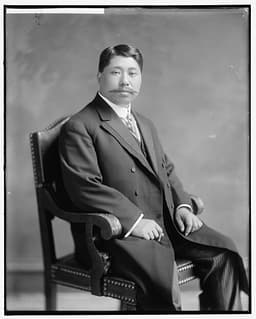
Huang Xing
General · Modern
57.5Total
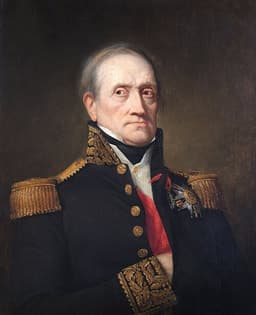
Nicolas Soult
General · Modern
62.7Total
Basic Information
Born
1874
1769
Died
1916
1851
Era
Modern
Modern
Nationality
China
France
Occupation
General
General
Civilization
Eastern
Western
Score Comparison
Military (10%)
46.7
74.7
Political (20%)
53.8
55.0
Influence (20%)
62.0
61.0
Legacy (20%)
56.0
54.0
Leadership (15%)
62.0
78.0
Strategy (15%)
60.0
65.4
TOTAL
57.5
62.7
Huang Xing — Complete Timeline
1905 AD
Co-founded the TongmenghuiPolitical Action◆ Major
Huang Xing co-founded the Tongmenghui (Revolutionary Alliance) in Tokyo with Sun Yat-sen. He became its military leader, organizing armed uprisings against the Qing dynasty.
TongmenghuiRevolutionMilitary
Impact: nationalconstructive
1911 AD
Led the Wuchang UprisingWar
Huang Xing led the Wuchang Uprising, which sparked the Xinhai Revolution. He commanded revolutionary forces against Qing troops, securing initial victories that led to the dynasty's collapse.
Xinhai RevolutionUprisingMilitary
Impact: nationalconstructive
1912 AD
Served as Minister of War in the RepublicPolitical Action◆ Major
Huang Xing served as Minister of War in the provisional government of the Republic of China. He worked to organize a national army and defend the republic against counter-revolutionary forces.
GovernmentMilitaryRepublic
Impact: nationalconstructive
1913 AD
Led the Second Revolution Against Yuan ShikaiWar◆ Major
Huang Xing led the Second Revolution, an armed uprising against President Yuan Shikai's authoritarian rule. The rebellion failed due to lack of coordination and military inferiority, forcing Huang into exile.
Second RevolutionYuan ShikaiExile
Impact: nationaltragic
1916 AD
Died in Exile in ShanghaiPolitical Action
Huang Xing died in Shanghai after returning from exile in Japan and the United States. His death marked the loss of a key military leader of the Chinese revolution, though his legacy endured.
DeathExileRevolution
Impact: nationaltragic
Nicolas Soult — Complete Timeline
1805 AD
Battle of AusterlitzWar◆ Major
Soult commanded the IV Corps at Austerlitz. He led the assault on the Pratzen Heights, breaking the Allied center and securing the decisive French victory.
Napoleonic WarsBattleCorps Command
Impact: global
1806 AD
Battle of Jena-AuerstedtWar◆ Major
Soult commanded the IV Corps at Jena. His forces pursued the retreating Prussian army, capturing thousands of prisoners and contributing to the collapse of the Prussian state.
Napoleonic WarsBattlePursuit
Impact: regional
1811 AD
Battle of AlbueraWar◆ Major
Soult commanded the French army at Albuera in Spain. His forces fought a bloody battle against the Anglo-Spanish army, resulting in a tactical stalemate but strategic French withdrawal.
Peninsular WarBattleStalemate
Impact: regional
1814 AD
Battle of ToulouseWar◆ Major
Soult commanded the French army at Toulouse against Wellington. The battle occurred after Napoleon's abdication, and Soult surrendered the city, ending the Peninsular War.
Peninsular WarBattleDefeat
Impact: regional
1830 AD
Minister of WarPolitical Action◆ Major
Soult served as Minister of War under King Louis-Philippe. He reorganized the French army, introduced conscription reforms, and prepared for colonial campaigns in Algeria.
MinistryReformsJuly Monarchy
Impact: nationalconstructive
1832 AD
Prime Minister of FrancePolitical Action◆ Major
Soult served as Prime Minister of France under Louis-Philippe. His government focused on maintaining order, suppressing republican uprisings, and consolidating the July Monarchy.
Prime MinisterJuly MonarchyGovernment
Impact: national
Expert Analysis
Huang Xing vs Nicolas Soult
# The Marshal and the Revolutionary
In the autumn of 1911, as Nicolas Soult’s bones had lain in Père Lachaise Cemetery for six decades, a Chinese general named Huang Xing led a ragged band of revolutionaries through the streets of Wuchang, firing at imperial troops who had ruled China for nearly three centuries. Soult had once commanded a corps of 20,000 men at Austerlitz, the most brilliant victory of Napoleon’s career. Huang Xing’s forces numbered barely 2,000, many armed with hunting rifles. Yet one of these men would die in exile, his revolution incomplete, while the other would rise from battlefield commander to prime minister of a restored monarchy. What separates a marshal who serves kings from a revolutionary who dies for a republic? The answer lies not in talent alone, but in the currents of history that swept them forward.
Origins
Nicolas Soult was born in 1769 in the small town of Saint-Amans-la-Bastide, in southern France. His father was a notary, a man of modest legal standing who died when Nicolas was young. The French Revolution, erupting when Soult was twenty, shattered the old order’s barriers. A boy of his birth might have spent his life in provincial obscurity under the Bourbon kings. Instead, the Revolution’s demand for officers opened every rank to talent. Soult enlisted in 1785, and by 1799 he was a general. The France that shaped him was a nation at war, hungry for glory, and willing to reward competence without asking about ancestry.
Huang Xing was born in 1874 in Changsha, Hunan Province, into a family of scholar-gentry. The Qing Dynasty still ruled, but its foundations were crumbling. Huang passed the imperial civil service examinations—the traditional path to power—but the China he saw was humiliated by foreign powers, its government paralyzed by corruption and rebellion. Where Soult’s France was ascending, Huang’s China was disintegrating. The difference in their eras was not merely chronological; it was existential. Soult inherited a revolution that had already cleared the ground for new men to rise. Huang faced a revolution he had to build from scratch.
Rise to Power
Soult’s ascent was meteoric but orthodox for his time. He distinguished himself in the Revolutionary Wars, catching the eye of Napoleon Bonaparte, who made him a Marshal of the Empire in 1804. At Austerlitz in 1805, Soult commanded the IV Corps, which delivered the decisive blow. He led the assault on the Pratzen Heights, breaking the Allied center and securing Napoleon’s greatest triumph. The battle made Soult’s reputation: a commander of methodical aggression, who could be trusted with the emperor’s most dangerous assignments.
Huang Xing’s path was far harder. He went to Japan in 1902, not to study military tactics in a formal academy but to find fellow Chinese exiles plotting the overthrow of their government. In Tokyo in 1905, he co-founded the Tongmenghui—the Revolutionary Alliance—with Sun Yat-sen. While Sun provided the ideology, Huang provided the muscle. He organized uprisings that failed again and again: in 1907, in 1908, in 1910. Each failure cost lives, money, and hope. When the Wuchang Uprising finally succeeded in October 1911, Huang was not even in the city; he arrived days later to take command of a revolution that had started without him. His rise was not the steady climb of a military professional but the desperate gamble of a man who had nothing left to lose.
Leadership & Governance
Soult’s leadership style was that of a consummate professional. At Jena in 1806, his pursuit of the retreating Prussian army captured thousands of prisoners. At Albuera in 1811, he fought one of the bloodiest battles of the Peninsular War, a tactical draw that cost both sides heavily. Soult was not a genius like Napoleon or a charismatic leader like Murat; he was a reliable instrument of war. His political wisdom, however, proved more durable than his military fame. After Napoleon’s fall, Soult served the restored Bourbon king, then Louis-Philippe, becoming Minister of War in 1830 and Prime Minister in 1832. He reorganized the French army, introduced conscription reforms, and suppressed rebellions with the same methodical efficiency he had once applied to breaking enemy lines.
Huang Xing’s governance was that of a man building a state while fighting for its survival. As Minister of War in the provisional Republic of China in 1912, he tried to organize a national army from scratch—units loyal to provincial warlords, secret societies, and bandits. It was nearly impossible. When President Yuan Shikai began dismantling the republic, Huang led the Second Revolution in 1913, an armed uprising that failed within months. His leadership was defined not by administrative success but by the courage to fight losing battles. He was a general who never won a major victory, yet his defeats kept the revolutionary flame alive.
Triumph & Tragedy
Soult’s greatest triumph came not on a battlefield but in a palace. In 1832, at age sixty-three, he became Prime Minister of France, a position he held three times. The boy from Saint-Amans had reached the pinnacle of political power in the most powerful nation in Europe. His tragedy was that he lived long enough to see his military reputation fade. The Battle of Toulouse in 1814, fought after Napoleon’s abdication, was a pointless engagement that cost hundreds of lives for no strategic purpose. Soult fought it because he could not accept that the war was over.
Huang Xing’s triumph was the Wuchang Uprising itself. He did not start it, but he commanded it, and it toppled a dynasty that had ruled for 268 years. His tragedy was that the republic he helped create was stolen almost immediately. He died in exile in Shanghai in 1916, at age forty-two, a broken man who had seen his life’s work betrayed. His last words, according to some accounts, were: “Do not let the revolution die.”
Character & Destiny
Soult was pragmatic to the point of cynicism. He served Napoleon, then the Bourbons, then Louis-Philippe, each time adjusting his principles to fit the new regime. His contemporaries called him “the fox” for his cunning. Huang Xing was the opposite: a man of fierce integrity who could not compromise, even when compromise might have saved him. He refused to work with Yuan Shikai, refused to accept foreign support that came with strings attached, refused to abandon the republican ideal even when it was clearly lost.
These different characters were not merely personal; they were products of their worlds. Soult lived in an age when a military career could be separated from politics, when a man could serve any master as long as he served well. Huang lived in an age when politics and survival were inseparable, when the choice between loyalty and pragmatism meant the difference between life and death. Soult’s flexibility made him successful; Huang’s rigidity made him a martyr.
Legacy
Soult is remembered today, if at all, as one of Napoleon’s marshals—competent but not brilliant, successful but not legendary. His political career is largely forgotten. His legacy score of 67.6 reflects a man who was important in his time but left no lasting mark on the world.
Huang Xing’s legacy is far more complex. His score of 66.6 is similar, but his influence on Chinese history is profound. He is honored as a founding father of the Republic of China, a man who gave his life for a dream that would not be realized until after his death. The Chinese Communist Party also claims him as a precursor, a revolutionary who fought against feudalism and imperialism. His failure made him a symbol; his death made him immortal.
Conclusion
Standing at the end of their lives, Soult and Huang Xing present a stark contrast. One died in bed, a respected elder statesman, his honors secure, his compromises forgotten. The other died in exile, a failed revolutionary, his dreams unfulfilled, his body worn out by years of struggle. Yet which man truly failed? Soult served power; Huang Xing served an idea. Soult adapted to every regime; Huang Xing resisted every tyranny. The marshal left behind a career; the revolutionary left behind a cause.
History judges them differently. Soult is a footnote; Huang Xing is a monument. But both men were shaped by forces larger than themselves: the tide of revolution in France, the agony of decline in China. Their lives remind us that greatness is not measured by victory alone, but by what one is willing to lose in pursuit of what one believes.
Rankings
🥇
Nicolas SoultLeader
Mil: 74.7Pol: 55.0Inf: 61.0
62.7
🥈
Huang Xing
Mil: 46.7Pol: 53.8Inf: 62.0
57.5
+5.2 behind
How This Comparison Works
Algorithm
Each figure is scored on 6 dimensions (0—100 scale) based on structured historical data: Military (10%), Political (20%), Influence (20%), Legacy (20%), Leadership (15%), Strategy (15%). The weighted total produces the final ranking.
Data Sources
Scores are computed from structured sub-indicators in the database. Scale factors adjust for era (Ancient ×0.85, Modern ×1.0) and civilization size (Eastern ×1.05, Other ×0.80) to account for differences in population and military scale.
Maximum 3 Figures
Comparisons are limited to 2—3 figures to ensure readability and statistical meaningfulness.
Error Margins
±5 points per dimension — Sub-scores are derived from historical records with inherent uncertainty. Two figures within 5 points on a dimension should be considered roughly equivalent in that area.
Total Score Accuracy
±3 points overall — The weighted combination of 6 dimensions produces a total score with approximately ±3 points of uncertainty. Differences of less than 3 points are not statistically significant— the figures are effectively tied.
Known Limitations
- Historical records are incomplete and uneven across civilizations
- Figures from oral-tradition societies may be underrepresented
- Occupation labels can misclassify multi-role figures
- Scores measure capability and impact, not moral character
- Quantitative scoring is a comparison tool, not absolute truth
Capability Radar
Military (10%) — Battles & Warfare
Battles
35
75
Win Rate
30
70
Expansion
20
65
Political (20%) — Governance & Reform
Reform
60
55
Diplomacy
55
65
Economy
30
50
Influence (20%) — Cultural & Global Reach
Cultural
40
45
Global
40
50
Legacy (20%) — Historical Impact
Historical
55
55
Longevity
45
50
Leadership (15%) — Power & Stability
Tenure
40
70
Stability
25
55
Strategy (15%) — Tactics & Innovation
Strategy
45
72
Tactics
40
78
Reform
50
60
Similar Comparisons
Comments & Discussion
数据侦探6/16/2026
得泼盆冷水:有些人把黄兴吹成“民国战神”,但看看数据——1911年武昌起义时,他指挥的军队只有2000人,其中一半是民兵,枪支弹药都不够。而苏尔特在奥斯特里茨战役中调度2万精锐,战绩一清二楚。黄兴后来在二次革命中更是屡战屡败,兵力从未超过1万。别拿热血当军事成就。数据不会撒谎:黄兴的军事生涯,败仗占了七成。
考据狂魔6/16/2026
少谈情怀,多翻档案。黄兴1913年“二次革命”时,居然把主力放在南京,结果袁军从南北夹击,三个月就垮了。这调度水平,连黄埔军校的初级教官都不如。反观苏尔特,1805年奥斯特里茨,他故意装作撤退,诱使俄军下山,然后猛攻其侧翼——典型的“兵不厌诈”。黄兴有这份战略头脑吗?他的北伐计划书我看过,漏洞百出。别拿死谏当战术。
Historian3606/16/2026
Both men were brilliant in their prime, but where they ended up tells everything. Soult, after fighting for Napoleon, bent the knee to Louis XVIII and became Prime Minister—a careerist who traded ideals for titles. Huang Xing, even in defeat, refused to betray the republic. He fled to Japan rather than serve Yuan Shikai. That's the difference between a marshal and a revolutionary. Soult died a Duke; Huang died a wanderer. I know who I'd rather read about in history books.
Historian2106/16/2026
A classic clash between revolutionary ardor and Napoleonic professionalism. What fascinates me is how both men were "ghosts of their time." Soult served every French regime from Louis XVI to Louis-Philippe, a political survivor who navigated chaos. Huang Xing, by contrast, was ideologically rigid—he refused any compromise with Yuan Shikai, leading to his exile. But here's the irony: Huang's republic eventually prevailed, while Soult's restored monarchy crumbled within 20 years. History judges re
Historian3386/16/2026
As a military historian, I have to give the edge to Soult here. Yes, Huang Xing was brave at Wuchang, but commanding 2,000 men with hunting rifles is not the same as maneuvering a 20,000-man corps at Austerlitz. Soult's decisive flank attack broke the Russian center—that's real battlefield genius. Huang Xing never won a battle that changed a war's outcome. The Revolution of 1911 succeeded despite his military failures, not because of them. Also, Soult became a Marshal—Huang Xing died in exile, o