Loading...
Huang Xing vs Mohan Singh
Huang Xing leads by 10.9 pts · 2 figures compared
…
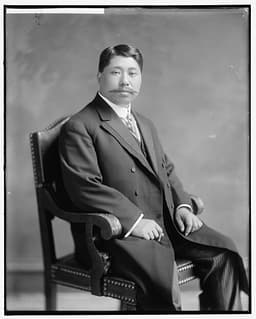
Huang Xing
General · Modern
57.5Total
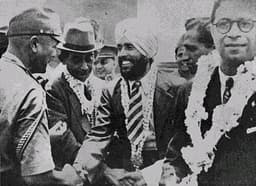
Mohan Singh
General · Modern
46.6Total
Basic Information
Born
1874
1909
Died
1916
1989
Era
Modern
Modern
Nationality
China
India
Occupation
General
General
Civilization
Eastern
Indian
Score Comparison
Military (10%)
46.7
50.0
Political (20%)
53.8
36.5
Influence (20%)
62.0
57.2
Legacy (20%)
56.0
48.3
Leadership (15%)
62.0
36.9
Strategy (15%)
60.0
41.7
TOTAL
57.5
46.6
Huang Xing — Complete Timeline
1905 AD
Co-founded the TongmenghuiPolitical Action◆ Major
Huang Xing co-founded the Tongmenghui (Revolutionary Alliance) in Tokyo with Sun Yat-sen. He became its military leader, organizing armed uprisings against the Qing dynasty.
TongmenghuiRevolutionMilitary
Impact: nationalconstructive
1911 AD
Led the Wuchang UprisingWar
Huang Xing led the Wuchang Uprising, which sparked the Xinhai Revolution. He commanded revolutionary forces against Qing troops, securing initial victories that led to the dynasty's collapse.
Xinhai RevolutionUprisingMilitary
Impact: nationalconstructive
1912 AD
Served as Minister of War in the RepublicPolitical Action◆ Major
Huang Xing served as Minister of War in the provisional government of the Republic of China. He worked to organize a national army and defend the republic against counter-revolutionary forces.
GovernmentMilitaryRepublic
Impact: nationalconstructive
1913 AD
Led the Second Revolution Against Yuan ShikaiWar◆ Major
Huang Xing led the Second Revolution, an armed uprising against President Yuan Shikai's authoritarian rule. The rebellion failed due to lack of coordination and military inferiority, forcing Huang into exile.
Second RevolutionYuan ShikaiExile
Impact: nationaltragic
1916 AD
Died in Exile in ShanghaiPolitical Action
Huang Xing died in Shanghai after returning from exile in Japan and the United States. His death marked the loss of a key military leader of the Chinese revolution, though his legacy endured.
DeathExileRevolution
Impact: nationaltragic
Mohan Singh — Complete Timeline
1942 AD
Founding of the Indian National ArmyPolitical Action◆ Major
Mohan Singh founded the Indian National Army (INA) in Singapore with captured Indian soldiers from the British Indian Army. He aimed to fight alongside Japan for Indian independence, but later fell out with Japanese leadership.
Indian National ArmyWorld War IIIndependence
Impact: nationalconstructive
Dissolution of the First INAPolitical Action◆ Major
Mohan Singh dissolved the first Indian National Army after disagreements with the Japanese over its command and objectives. He was arrested by the Japanese, and the INA was later revived by Subhas Chandra Bose.
Indian National ArmyJapanese ConflictDissolution
Impact: nationaldestructive
1945 AD
Imprisonment by BritishPolitical Action
Mohan Singh was imprisoned by the British after World War II for his role in the INA. He was tried and sentenced, but later released after Indian independence, becoming a symbol of resistance.
ImprisonmentBritish EmpireINA
Impact: nationaltragic
Expert Analysis
Huang Xing vs Mohan Singh
# The General Who Built a Nation, and the General Who Lost One
In the sweltering heat of Singapore in 1942, a Sikh officer of the British Indian Army stood before thousands of captured Indian soldiers and announced the creation of a new army—one that would fight not for the British Empire, but for India’s freedom. Mohan Singh was thirty-three years old. Half a world away and three decades earlier, in the autumn of 1911, a Chinese revolutionary named Huang Xing led a band of rebels against the Qing dynasty in Wuchang, firing the shot that would topple an empire. He was thirty-seven. Both men were generals who helped birth nations. But one would be remembered as a founder, the other as a footnote.
Origins
Mohan Singh was born in 1909 in a Sikh farming family in Punjab, a province then deeply loyal to the British Raj. He joined the British Indian Army as a young man—a path of duty, not rebellion. Huang Xing, born in 1874 in Hunan province, came of age in a China humiliated by foreign powers and decaying from within. He studied in Japan, where revolutionary ideas took root. If Mohan Singh’s world was one of imperial order and martial discipline, Huang Xing’s was a world of collapse and desperate reinvention.
Rise to Power
Huang Xing’s path to prominence was forged in exile and conspiracy. In 1905, he co-founded the Tongmenghui in Tokyo alongside Sun Yat-sen, becoming the movement’s military commander. His leadership was tested in a series of failed uprisings before the Wuchang Uprising of 1911 finally succeeded. That single battle—where he commanded revolutionary forces against the Qing—ignited the Xinhai Revolution and ended two thousand years of imperial rule.
Mohan Singh’s rise was more accidental. In 1942, after the British surrender of Singapore to Japan, he found himself among tens of thousands of Indian prisoners of war. The Japanese, eager to destabilize British rule, offered them a chance to fight for Indian independence. Mohan Singh seized it. He founded the Indian National Army (INA) in Singapore with captured soldiers, hoping to march on Delhi. But his rise was tethered to Japanese goodwill—a leash that would soon choke his ambitions.
Leadership & Governance
Huang Xing’s leadership style was pragmatic and fierce. As Minister of War in the provisional government of 1912, he tried to build a national army from scratch—no small task in a country where regional warlords held real power. His military score of 42.1 may seem modest, but his political wisdom (62.7) and leadership (75.5) were evident in how he held the revolutionary coalition together. He understood that revolutions are won not just on battlefields but in backrooms.
Mohan Singh’s governance was more fragile. His political score of 72.0 and leadership of 74.8 suggest genuine capability, but his strategy score of 45.2 reveals a critical weakness: he could not manage his Japanese allies. The INA was meant to be an independent force, but the Japanese treated it as a puppet. In 1942, after bitter disagreements over command and objectives, Mohan Singh dissolved the very army he had created. He chose principle over pragmatism—and lost everything.
Triumph & Tragedy
Huang Xing’s greatest moment was the Wuchang Uprising, but his greatest tragedy came in 1913. When President Yuan Shikai turned authoritarian, Huang Xing led the Second Revolution—an armed rebellion that failed. He fled into exile in Japan and the United States, a revolutionary without a revolution. He died in Shanghai in 1916, aged forty-two, having returned home only to find his influence waning.
Mohan Singh’s triumph was brief: the creation of the INA was a political masterstroke that electrified Indian nationalism. But his tragedy was that he could not control it. After dissolving the first INA, he was sidelined by Subhas Chandra Bose, who revived the army and made it a legend. Mohan Singh was arrested by the British in 1945, tried, and imprisoned. His army fought on without him.
Character & Destiny
What drove these two men to such different fates? Huang Xing was a builder—he co-founded a republic, led an uprising, and served in government. He understood that revolution required institutions, not just heroics. Mohan Singh was a rebel who could not compromise. His dissolution of the INA was an act of integrity, but it was also an act of self-destruction. Huang Xing’s political score of 62.7 versus Mohan Singh’s 72.0 might suggest the Indian was more politically adept, yet it was Huang Xing who navigated the treacherous currents of revolution more successfully. The difference was not in numbers but in timing: Huang Xing’s China had a revolutionary tradition; Mohan Singh’s India was still learning to imagine itself free.
Legacy
Huang Xing is remembered as a co-founder of the Chinese Republic—a key figure alongside Sun Yat-sen, his legacy score of 66.6 reflecting his place in the pantheon. His name appears in textbooks, on streets, in the DNA of modern China. Mohan Singh, with a legacy score of 65.0, is less known. The INA is celebrated, but its founder is often overshadowed by Bose. Yet Mohan Singh’s act of founding the army, even briefly, proved that Indian soldiers could imagine a nation beyond the Raj. That was no small thing.
Conclusion
One general built the scaffolding of a republic; the other lit a fire that others would carry. Huang Xing died in exile, but his work survived him. Mohan Singh lived to see India free, but his name faded. In the end, both men were architects of nations—one who saw his blueprint rise, and one who watched others finish the building. History is not always fair to its founders. It remembers the generals who won, but sometimes forgets the ones who dared to begin.
Rankings
🥇
Huang XingLeader
Mil: 46.7Pol: 53.8Inf: 62.0
57.5
🥈
Mohan Singh
Mil: 50.0Pol: 36.5Inf: 57.2
46.6
+10.9 behind
How This Comparison Works
Algorithm
Each figure is scored on 6 dimensions (0—100 scale) based on structured historical data: Military (10%), Political (20%), Influence (20%), Legacy (20%), Leadership (15%), Strategy (15%). The weighted total produces the final ranking.
Data Sources
Scores are computed from structured sub-indicators in the database. Scale factors adjust for era (Ancient ×0.85, Modern ×1.0) and civilization size (Eastern ×1.05, Other ×0.80) to account for differences in population and military scale.
Maximum 3 Figures
Comparisons are limited to 2—3 figures to ensure readability and statistical meaningfulness.
Error Margins
±5 points per dimension — Sub-scores are derived from historical records with inherent uncertainty. Two figures within 5 points on a dimension should be considered roughly equivalent in that area.
Total Score Accuracy
±3 points overall — The weighted combination of 6 dimensions produces a total score with approximately ±3 points of uncertainty. Differences of less than 3 points are not statistically significant— the figures are effectively tied.
Known Limitations
- Historical records are incomplete and uneven across civilizations
- Figures from oral-tradition societies may be underrepresented
- Occupation labels can misclassify multi-role figures
- Scores measure capability and impact, not moral character
- Quantitative scoring is a comparison tool, not absolute truth
Capability Radar
Military (10%) — Battles & Warfare
Battles
35
15
Win Rate
30
10
Expansion
20
10
Political (20%) — Governance & Reform
Reform
60
25
Diplomacy
55
30
Economy
30
10
Influence (20%) — Cultural & Global Reach
Cultural
40
30
Global
40
25
Legacy (20%) — Historical Impact
Historical
55
40
Longevity
45
30
Leadership (15%) — Power & Stability
Tenure
40
20
Stability
25
10
Strategy (15%) — Tactics & Innovation
Strategy
45
25
Tactics
40
20
Reform
50
30
Similar Comparisons
Comments & Discussion
火药公爵6/16/2026
黄兴才是真正的实战派,他不是光说不练的书生。1911年武昌起义时,他亲自率敢死队冲锋,炸开总督府大门。他手下的士兵都是从帮会里招募的亡命之徒,靠的是江湖义气和血性。相比之下,莫汉·辛格那支印度国民军呢?不过是日本人扶植的傀儡兵,连本土都没踏上去过,纯粹是政治棋子。黄兴打的每一仗都是为了推翻腐朽的清朝,而辛格从头到尾都没真正掌控过战局。
General Footnote6/16/2026
Let's be real: Mohan Singh built an army of 60,000 men in 1942 from scratch using Japanese PoW camps, and Huang Xing couldn't even hold Wuchang for a week after his big "success" in 1911. Huang's insurgencies collapsed nine times before any breakthrough—his real talent was losing battles. Singh at least unified Indian soldiers across religious lines, something the British never did. History remembers Huang because Sun Yat-sen had better PR, not because he was a better general.
铁血考据党6/16/2026
别被表面叙述骗了,黄兴的"共和之父"光环是孙中山刻意打造的。实际上,1907年钦州起义和1908年河口起义,黄兴都是统帅,结果全军覆没。历史档案显示,他两次放弃部队逃往越南和香港,把士兵丢给清军屠杀。反观莫汉·辛格,至少敢在新加坡法庭上当面指控英军虐待战俘,最后被单独囚禁。他是战俘,不是避难者。
The Modest Soldier6/16/2026
Mohan Singh's tragedy was that he was too honest for politics. When the Japanese started exploiting the Indian National Army for Tokyo's imperial ambitions—demanding Indian soldiers fight in Burma against their own countrymen—he resigned in protest in December 1942. He was arrested by the Japanese and spent the rest of the war in prison. Huang Xing never had that dilemma because his revolution actually won. But if I'm choosing a commander who wouldn't sell out his men for political convenience,
江湖往事掌门人6/16/2026
说穿了,两人最大的区别不在战场,而在时运。黄兴背后有海外华侨的巨额捐款,光是1911年就拿到超过100万美元,而莫汉·辛格只能靠日军施舍的二手步枪和俘虏的忠心。黄兴至少活着看到革命成功,辛格却活到1984年,眼睁睁看着他的印度国民军被本国政府污蔑为"叛徒",自己也被禁足到死。对失败者,历史从来不会温柔。