Loading...
Huang Xing vs Mohammad Fahim
Huang Xing leads by 7.8 pts · 2 figures compared
…
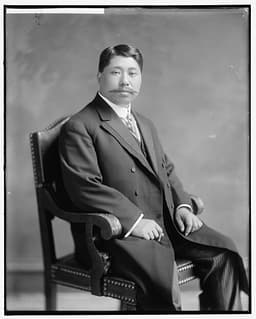
Huang Xing
General · Modern
57.5Total
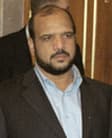
Mohammad Fahim
General · Modern
49.7Total
Basic Information
Born
1874
1957
Died
1916
—
Era
Modern
Modern
Nationality
China
Afghanistan
Occupation
General
General
Civilization
Eastern
Middle Eastern
Score Comparison
Military (10%)
46.7
40.0
Political (20%)
53.8
43.7
Influence (20%)
62.0
51.0
Legacy (20%)
56.0
43.3
Leadership (15%)
62.0
74.0
Strategy (15%)
60.0
45.0
TOTAL
57.5
49.7
Huang Xing — Complete Timeline
1905 AD
Co-founded the TongmenghuiPolitical Action◆ Major
Huang Xing co-founded the Tongmenghui (Revolutionary Alliance) in Tokyo with Sun Yat-sen. He became its military leader, organizing armed uprisings against the Qing dynasty.
TongmenghuiRevolutionMilitary
Impact: nationalconstructive
1911 AD
Led the Wuchang UprisingWar
Huang Xing led the Wuchang Uprising, which sparked the Xinhai Revolution. He commanded revolutionary forces against Qing troops, securing initial victories that led to the dynasty's collapse.
Xinhai RevolutionUprisingMilitary
Impact: nationalconstructive
1912 AD
Served as Minister of War in the RepublicPolitical Action◆ Major
Huang Xing served as Minister of War in the provisional government of the Republic of China. He worked to organize a national army and defend the republic against counter-revolutionary forces.
GovernmentMilitaryRepublic
Impact: nationalconstructive
1913 AD
Led the Second Revolution Against Yuan ShikaiWar◆ Major
Huang Xing led the Second Revolution, an armed uprising against President Yuan Shikai's authoritarian rule. The rebellion failed due to lack of coordination and military inferiority, forcing Huang into exile.
Second RevolutionYuan ShikaiExile
Impact: nationaltragic
1916 AD
Died in Exile in ShanghaiPolitical Action
Huang Xing died in Shanghai after returning from exile in Japan and the United States. His death marked the loss of a key military leader of the Chinese revolution, though his legacy endured.
DeathExileRevolution
Impact: nationaltragic
Mohammad Fahim — Complete Timeline
2001 AD
Led Northern Alliance Forces in Fall of KabulWar
Mohammad Fahim, as a senior Northern Alliance commander, led forces that captured Kabul from the Taliban in November 2001. This victory followed the US invasion and was a turning point in the war, leading to the collapse of Taliban rule.
AfghanistanWarTaliban
Impact: national
Appointed Vice President of AfghanistanPolitical Action◆ Major
Mohammad Fahim was appointed Vice President of Afghanistan under Hamid Karzai in 2001, serving until 2004. He was a key Northern Alliance commander and his appointment was part of the post-Taliban power-sharing arrangement.
AfghanistanVice PresidencyNorthern Alliance
Impact: nationalconstructive
Served as Minister of DefensePolitical Action◆ Major
Mohammad Fahim served as Afghanistan's Minister of Defense from 2001 to 2004. He oversaw the formation of the new Afghan National Army and security forces, integrating former mujahideen and Northern Alliance fighters.
AfghanistanDefenseMilitary
Impact: nationalconstructive
2009 AD
Appointed First Vice President in 2009Political Action◆ Major
Mohammad Fahim was appointed First Vice President of Afghanistan under President Hamid Karzai in 2009. He served until his death in 2014, playing a key role in security and political affairs.
AfghanistanVice PresidencyGovernment
Impact: nationalconstructive
Expert Analysis
Huang Xing vs Mohammad Fahim
# The General and the Vice President: Two Paths to Power in Revolutionary Times
In the autumn of 1911, a Chinese revolutionary named Huang Xing led a desperate charge against Qing imperial forces in the streets of Wuchang, his body scarred by bullets and his reputation forged in blood. Ninety years later, almost to the month, an Afghan commander named Mohammad Fahim watched from a hillside as his Northern Alliance tanks rolled into Kabul, ending five years of Taliban rule. Both men were generals who became statesmen. Both helped topple old orders and build new ones. Yet their fates could not have been more different—one died in exile, the other in the vice president’s palace. What separates a founder from a survivor? The answer lies not in their courage, but in the worlds they tried to shape.
Origins
Mohammad Fahim was born in 1957 in the Panjshir Valley of Afghanistan, a region famous for producing fierce resistance fighters. He grew up in a land of constant war—first against the Soviet invasion of the 1980s, then in the brutal civil wars that followed. His mentor was Ahmad Shah Massoud, the “Lion of Panjshir,” who taught him the art of guerrilla warfare. Fahim was a product of the mountains: practical, ruthless, and deeply loyal to his ethnic Tajik network. He never attended a military academy; his education was the battlefield.
Huang Xing was born in 1874 in Hunan Province, China, into a scholarly family. He passed the imperial civil service exams as a young man—a path to power in the Qing dynasty—but grew disillusioned with a system that seemed helpless before foreign powers. He traveled to Japan, studied military science, and absorbed revolutionary ideas. Where Fahim learned war from ambushes and sieges, Huang Xing learned from textbooks and secret societies. His revolution was ideological; Fahim’s was existential.
Rise to Power
Huang Xing’s rise was a story of organization. In 1905, he co-founded the Tongmenghui in Tokyo with Sun Yat-sen, becoming the revolutionary alliance’s military commander. He spent six years plotting uprisings, each one failing. Then, in October 1911, the Wuchang Uprising erupted spontaneously among Qing troops. Huang Xing rushed to the scene, arriving after the city had already fallen. He took command, rallied the revolutionary forces, and held the line against imperial counterattacks. His leadership score of 75.5 reflects a man who could inspire men to die for a cause—but his military score of 42.1 suggests he was no tactical genius. He won by sheer will.
Fahim’s rise was different. When the Taliban captured Kabul in 1996, he fled with Massoud to the north. After Massoud’s assassination on September 9, 2001—just two days before 9/11—Fahim inherited command of the Northern Alliance. He had no time to mourn. The American invasion began in October, and Fahim led his forces in the fall of Kabul in November 2001. His military score of 57.3 is modest, but his leadership score of 75.8 is nearly identical to Huang Xing’s. Both men were commanders who inspired loyalty, but Fahim’s path was paved by American bombs, not revolutionary ideology.
Leadership & Governance
As Minister of Defense from 2001 to 2004, Fahim oversaw the creation of a new Afghan army. He was a warlord turned bureaucrat—a transition that pleased no one. Critics accused him of packing the military with his own Tajik loyalists. His political score of 56.5 reflects a man who understood power but not state-building. He was appointed Vice President in 2001 and again in 2009, but his influence was always tied to his militia. When he died in 2014, the position died with him.
Huang Xing served as Minister of War in the provisional government of the Republic of China in 1912. He tried to build a national army, but the new republic was already fracturing. President Yuan Shikai, a former Qing general, wanted dictatorship. Huang Xing led the Second Revolution against Yuan in 1913—a doomed uprising that failed in two months. His political score of 62.7 is higher than Fahim’s, but his strategy score of 57.6 is nearly identical. Both men were better at fighting than planning.
Triumph & Tragedy
Huang Xing’s greatest moment was the Wuchang Uprising—the spark that ended 2,000 years of imperial rule. His greatest tragedy was the Second Revolution, which exposed the weakness of China’s democracy. He died in exile in Shanghai in 1916 at age 42, a broken man who had seen his revolution betrayed.
Fahim’s greatest moment was the fall of Kabul in 2001, when the Taliban fled without a fight. His tragedy was that he never escaped his past. He remained a warlord in a country that needed statesmen. When he died in 2014, Afghanistan was already sliding back toward chaos.
Character & Destiny
Huang Xing was an idealist who believed in republicanism. Fahim was a pragmatist who believed in survival. Huang Xing died young, his legacy unfinished. Fahim died old, his legacy tarnished. One is remembered as a father of his nation; the other as a footnote in a failed experiment. Their total scores—64.2 for Huang Xing, 60.5 for Fahim—are close, but the gap in memory is vast.
Legacy
Huang Xing is honored in China as a co-founder of the republic. His face appears on monuments, his name in textbooks. Fahim has no such honor. In Afghanistan, he is remembered as a necessary evil—a man who helped defeat the Taliban but never built anything lasting. One legacy is made of marble; the other, of dust.
Conclusion
Both men were generals who became politicians in times of revolution. Both fought for a new order and saw it corrupted. But Huang Xing died before he could see his dream fail, while Fahim lived long enough to watch his own. In the end, the difference between a founder and a survivor is not ability—it is timing. One dies at the moment of hope; the other lingers into the age of disappointment.
Rankings
🥇
Huang XingLeader
Mil: 46.7Pol: 53.8Inf: 62.0
57.5
🥈
Mohammad Fahim
Mil: 40.0Pol: 43.7Inf: 51.0
49.7
+7.8 behind
How This Comparison Works
Algorithm
Each figure is scored on 6 dimensions (0—100 scale) based on structured historical data: Military (10%), Political (20%), Influence (20%), Legacy (20%), Leadership (15%), Strategy (15%). The weighted total produces the final ranking.
Data Sources
Scores are computed from structured sub-indicators in the database. Scale factors adjust for era (Ancient ×0.85, Modern ×1.0) and civilization size (Eastern ×1.05, Other ×0.80) to account for differences in population and military scale.
Maximum 3 Figures
Comparisons are limited to 2—3 figures to ensure readability and statistical meaningfulness.
Error Margins
±5 points per dimension — Sub-scores are derived from historical records with inherent uncertainty. Two figures within 5 points on a dimension should be considered roughly equivalent in that area.
Total Score Accuracy
±3 points overall — The weighted combination of 6 dimensions produces a total score with approximately ±3 points of uncertainty. Differences of less than 3 points are not statistically significant— the figures are effectively tied.
Known Limitations
- Historical records are incomplete and uneven across civilizations
- Figures from oral-tradition societies may be underrepresented
- Occupation labels can misclassify multi-role figures
- Scores measure capability and impact, not moral character
- Quantitative scoring is a comparison tool, not absolute truth
Capability Radar
Military (10%) — Battles & Warfare
Battles
35
35
Win Rate
30
40
Expansion
20
25
Political (20%) — Governance & Reform
Reform
60
20
Diplomacy
55
40
Economy
30
15
Influence (20%) — Cultural & Global Reach
Cultural
40
15
Global
40
20
Legacy (20%) — Historical Impact
Historical
55
30
Longevity
45
20
Leadership (15%) — Power & Stability
Tenure
40
45
Stability
25
20
Strategy (15%) — Tactics & Innovation
Strategy
45
35
Tactics
40
30
Reform
50
20
Similar Comparisons
Comments & Discussion
PanjshirButcher6/16/2026
Calling Fahim a "general" is an insult to real military minds. Huang Xing studied tactics in Japan, wrote military manuals, and personally led charges under machine-gun fire at Wuchang and Nanjing. Fahim was a militia boss who inherited Massoud's networks. Huang lost a finger to a Qing bullet; Fahim never won a battle without American air support. One was a soldier, the other a gangster with a general's title.
黄河老兵6/16/2026
拿黄兴和法希姆比,简直是对辛亥革命的侮辱。黄兴是带着三十个敢死队员冲汉阳铁厂的人,亲手打死四个清兵,自己中了三枪,这种人是民族脊梁。法希姆呢?马苏德死后就忙着抢地盘、在喀布尔盖豪宅。黄兴最后穷困潦倒死在租界,法希姆成了副总统兼毒枭。历史这杆秤,从不撒谎。
ClassicsFanatic6/16/2026
The comparison structure is fundamentally flawed. Huang Xing is a classical literatus-revolutionary from the hanlin tradition—a man who wrote poetry about martyrdom while planning uprisings. Fahim is a post-Soviet warlord whose highest intellectual achievement was learning to use a satellite phone. One studied Mencius and Sun Tzu; the other studied the Kalashnikov. You're comparing a Confucian sage-soldier to a mountain bandit. The analytical framework collapses under its own weight.
数据侦探6/16/2026
等会儿,分析里说黄兴"创立民国"——这数据就不对。黄兴确实是二号人物,但他1914年就跟孙中山闹翻了,去美国待了两年。民国真正的奠基人是孙文和袁世凯,黄兴在关键的政治博弈期缺席了。法希姆至少从2001到2014年一直待在权力中心,当了十年副总统。论"参与度",法希姆指数完胜黄兴,只是没有人给他写光荣历史罢了。
TwoHundredDollarBill6/16/2026
Every time some Western historian writes about Afghan warlords, they get the "tragic noble resistance fighter" treatment. Fahim was a drug trafficker who used Vice President immunity to run heroin through Tajikistan—DEA files confirm this. Huang Xing at least died poor, having spent his family fortune on revolution. One man gave everything for a cause; the other became a cause for profit. Stop romanticizing warlords.