Loading...
Huang Xing vs Marouf al-Bakhit
Huang Xing leads by 15.9 pts · 2 figures compared
…
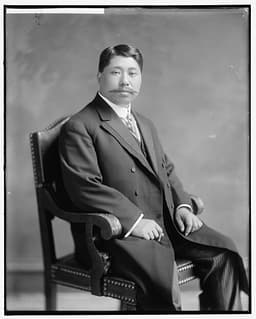
Huang Xing
General · Modern
57.5Total
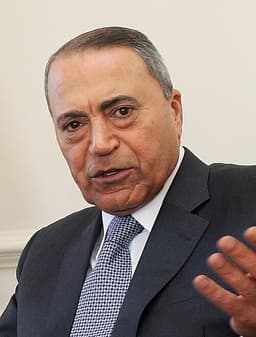
Marouf al-Bakhit
General · Modern
41.6Total
Basic Information
Born
1874
1947
Died
1916
—
Era
Modern
Modern
Nationality
China
Jordan
Occupation
General
General
Civilization
Eastern
Middle Eastern
Score Comparison
Military (10%)
46.7
10.2
Political (20%)
53.8
61.3
Influence (20%)
62.0
48.6
Legacy (20%)
56.0
38.3
Leadership (15%)
62.0
40.0
Strategy (15%)
60.0
36.8
TOTAL
57.5
41.6
Huang Xing — Complete Timeline
1905 AD
Co-founded the TongmenghuiPolitical Action◆ Major
Huang Xing co-founded the Tongmenghui (Revolutionary Alliance) in Tokyo with Sun Yat-sen. He became its military leader, organizing armed uprisings against the Qing dynasty.
TongmenghuiRevolutionMilitary
Impact: nationalconstructive
1911 AD
Led the Wuchang UprisingWar
Huang Xing led the Wuchang Uprising, which sparked the Xinhai Revolution. He commanded revolutionary forces against Qing troops, securing initial victories that led to the dynasty's collapse.
Xinhai RevolutionUprisingMilitary
Impact: nationalconstructive
1912 AD
Served as Minister of War in the RepublicPolitical Action◆ Major
Huang Xing served as Minister of War in the provisional government of the Republic of China. He worked to organize a national army and defend the republic against counter-revolutionary forces.
GovernmentMilitaryRepublic
Impact: nationalconstructive
1913 AD
Led the Second Revolution Against Yuan ShikaiWar◆ Major
Huang Xing led the Second Revolution, an armed uprising against President Yuan Shikai's authoritarian rule. The rebellion failed due to lack of coordination and military inferiority, forcing Huang into exile.
Second RevolutionYuan ShikaiExile
Impact: nationaltragic
1916 AD
Died in Exile in ShanghaiPolitical Action
Huang Xing died in Shanghai after returning from exile in Japan and the United States. His death marked the loss of a key military leader of the Chinese revolution, though his legacy endured.
DeathExileRevolution
Impact: nationaltragic
Marouf al-Bakhit — Complete Timeline
2005 AD
Appointed Prime Minister of JordanPolitical Action◆ Major
King Abdullah II appointed Marouf al-Bakhit as Prime Minister of Jordan in November 2005, following the 2005 Amman bombings. Al-Bakhit, a former intelligence chief, was tasked with restoring security and stability.
JordanPrime MinisterAppointment
Impact: national
2007 AD
Resigned as Prime MinisterPolitical Action
Marouf al-Bakhit resigned as Prime Minister of Jordan in November 2007 after parliamentary elections. His resignation followed criticism of economic policies and political reforms.
JordanPrime MinisterResignation
Impact: national
2011 AD
Appointed Prime Minister for Second TermPolitical Action◆ Major
King Abdullah II appointed Marouf al-Bakhit as Prime Minister again in February 2011, during the Arab Spring protests. Al-Bakhit was tasked with implementing political reforms to address public demands.
JordanArab SpringPrime Minister
Impact: national
Resigned as Prime Minister for Second TermPolitical Action
Marouf al-Bakhit resigned as Prime Minister in October 2011, after failing to satisfy protesters' demands for faster political reforms. His resignation marked the end of his second term.
JordanArab SpringResignation
Impact: national
Expert Analysis
Huang Xing vs Marouf al-Bakhit
# The General as Statesman: Two Paths of Power in Turbulent Times
In the autumn of 1911, as cannon fire echoed across the Yangtze River at Wuchang, a Chinese general named Huang Xing stood before his revolutionary troops, knowing that victory or defeat would decide the fate of a dynasty. Half a world away and a century later, in the winter of 2005, another general, Marouf al-Bakhit of Jordan, accepted a prime minister's appointment from his king, stepping not onto a battlefield but into the labyrinth of palace politics. Both men were soldiers who became statesmen. Yet their stories could not have diverged more sharply—one died in exile, his dreams of a republic incomplete; the other served, resigned, and served again, a loyal servant of a throne that never wavered. What made the difference? The answer lies not in their characters alone, but in the eras that shaped them and the cages of circumstance that held them.
Origins
Huang Xing was born in 1874, the twilight of the Qing Dynasty, a time when China seemed to be crumbling from within and being carved up from without. He grew up in Hunan province, a region known for producing fierce revolutionaries, and received a classical Confucian education before being sent to Japan for military training. There, he absorbed the radical ideas of the Meiji Restoration—modernization, nationalism, and the conviction that only force could break the chains of imperial decay. His generation believed that the old world had to be burned down before a new one could rise.
Marouf al-Bakhit was born in 1947, in a very different kind of twilight—the aftermath of the British Mandate, the birth of Jordan, and the long shadow of the Arab-Israeli conflict. He came of age in a kingdom that was young, fragile, and dependent on the wisdom of its Hashemite monarchy. He studied political science in Jordan and later earned a doctorate in strategic studies from the United Kingdom. His military career was not about revolution but about order: he rose through the ranks of the General Intelligence Department, eventually becoming its director. He was a builder of institutions, not a destroyer of them.
Rise to Power
Huang Xing’s path to power was forged in the crucible of conspiracy. In 1905, he co-founded the Tongmenghui in Tokyo alongside Sun Yat-sen, becoming the movement’s military commander. While Sun was the visionary, Huang was the man of action—organizing uprisings, smuggling weapons, and risking execution. The Wuchang Uprising of 1911 was his masterpiece: a rebellion that began almost by accident but that he turned into a full-scale revolution. When the Qing fell, Huang was hailed as a hero, the "George Washington of China" in some eyes, and served as Minister of War in the new Republic.
Al-Bakhit’s rise was quieter, more deliberate. His key moment came not with gunfire but with a royal decree. In November 2005, after the Amman bombings—a wave of al-Qaeda attacks that killed 60 people—King Abdullah II turned to his intelligence chief to restore stability. Al-Bakhit became Prime Minister with a mandate to crack down on extremism and reassure a shaken public. His military background was his credential: he was seen as a man who could protect the state without threatening it.
Leadership & Governance
Here the two generals diverged most sharply. Huang Xing was a revolutionary leader, not a peacetime administrator. His military score of 42.1 reflects his battlefield role, but his political score of 62.7 shows a man who understood that war was only the beginning. As Minister of War, he tried to build a national army loyal to the republic, not to warlords. Yet his vision was constantly undermined by the very forces he had helped unleash: regional commanders, political rivals, and the ambitions of Yuan Shikai, the former Qing general who seized the presidency.
Al-Bakhit governed in a different key. His leadership score of 77.9 suggests a capable manager, but his strategy score of 48.1 hints at a man who followed orders rather than set direction. His first term (2005–2007) focused on security and economic reform, but he resigned after parliamentary elections, as the king expected. His second term, in 2011, came during the Arab Spring, when protests demanding political freedom swept the region. Al-Bakhit was appointed to manage the crisis, but he offered only cautious, incremental change—too little for the protesters, too much for the old guard. He resigned again in October 2011, a caretaker in a storm he could not calm.
Triumph & Tragedy
Huang Xing’s greatest triumph was the Wuchang Uprising itself—a moment when his courage and tactical skill brought down an empire. But his tragedy followed swiftly. In 1913, he led the Second Revolution against Yuan Shikai, who had dissolved parliament and declared himself emperor in all but name. The rebellion failed. Huang fled to Japan, then to the United States, a revolutionary without a revolution. He died in Shanghai in 1916, at just 42, broken by exile and disappointment. His legacy score of 66.6 reflects a man who helped found a republic but could not save it.
Al-Bakhit’s triumph was quieter: he kept Jordan stable during two of the most dangerous moments in its modern history. His tragedy was that stability came at the cost of vision. He left no lasting reforms, no movement, no party. His influence score of 64.0 is the mark of a functionary, not a founder.
Character & Destiny
Huang Xing was a man of fire and conviction. He believed that history was made by those willing to die for an idea. His leadership score of 75.5 reflects a magnetic figure who inspired loyalty, but his strategy score of 57.6 shows a man who sometimes charged before he planned. Al-Bakhit was a man of ice and calculation. He served the throne, not an ideology. His loyalty was his strength and his limitation. One man tried to change the world and failed; the other tried to preserve it and succeeded, in his own modest way.
Legacy
Huang Xing is remembered in China as a founding father, though Sun Yat-sen casts the longer shadow. His name appears in textbooks, his face on stamps, his story taught to schoolchildren. Al-Bakhit is barely remembered outside Jordan. He was a general who became a prime minister twice, but his name will not echo through the centuries. He was a servant of his time, not a shaper of it.
Conclusion
Perhaps the deepest difference between these two generals is that Huang Xing lived in an age of revolution, when the old world was dying and a new one was being born—however painfully. Al-Bakhit lived in an age of consolidation, when the task was not to break the mold but to keep it from cracking. Both men did what their eras demanded. Huang Xing burned bright and burned out. Al-Bakhit burned steady and low. In the end, history remembers the fire, not the embers. But both are necessary, in their way, for the world to keep turning.
Rankings
🥇
Huang XingLeader
Mil: 46.7Pol: 53.8Inf: 62.0
57.5
🥈
Marouf al-Bakhit
Mil: 10.2Pol: 61.3Inf: 48.6
41.6
+15.9 behind
How This Comparison Works
Algorithm
Each figure is scored on 6 dimensions (0—100 scale) based on structured historical data: Military (10%), Political (20%), Influence (20%), Legacy (20%), Leadership (15%), Strategy (15%). The weighted total produces the final ranking.
Data Sources
Scores are computed from structured sub-indicators in the database. Scale factors adjust for era (Ancient ×0.85, Modern ×1.0) and civilization size (Eastern ×1.05, Other ×0.80) to account for differences in population and military scale.
Maximum 3 Figures
Comparisons are limited to 2—3 figures to ensure readability and statistical meaningfulness.
Error Margins
±5 points per dimension — Sub-scores are derived from historical records with inherent uncertainty. Two figures within 5 points on a dimension should be considered roughly equivalent in that area.
Total Score Accuracy
±3 points overall — The weighted combination of 6 dimensions produces a total score with approximately ±3 points of uncertainty. Differences of less than 3 points are not statistically significant— the figures are effectively tied.
Known Limitations
- Historical records are incomplete and uneven across civilizations
- Figures from oral-tradition societies may be underrepresented
- Occupation labels can misclassify multi-role figures
- Scores measure capability and impact, not moral character
- Quantitative scoring is a comparison tool, not absolute truth
Capability Radar
Military (10%) — Battles & Warfare
Battles
35
5
Win Rate
30
5
Expansion
20
5
Political (20%) — Governance & Reform
Reform
60
30
Diplomacy
55
40
Economy
30
30
Influence (20%) — Cultural & Global Reach
Cultural
40
10
Global
40
10
Legacy (20%) — Historical Impact
Historical
55
10
Longevity
45
10
Leadership (15%) — Power & Stability
Tenure
40
40
Stability
25
35
Strategy (15%) — Tactics & Innovation
Strategy
45
10
Tactics
40
10
Reform
50
10
Similar Comparisons
Comments & Discussion
青史铁笔6/16/2026
说黄兴是"失败的革命家"太片面了。武昌起义要不是他亲临前线督战,新军早就溃散了!他输给的不是能力不足,而是袁世凯手里握着北洋六镇的现代化军队和外国贷款。反观巴希特,他不过是国王的提线木偶,2006年议会选举后照样被一脚踢开。拿两个时代完全不同的军人对比,本身就是关公战秦琼。
DataDon6/16/2026
Let's look at the numbers. Huang Xing commanded roughly 50,000 troops at his peak against the Qing, with zero foreign backing except some Japanese volunteers. Al-Bakhit commanded a 100,000-strong military guaranteed by $500 million annual US aid. Huang raised about 1 million silver taels through scattered donations; al-Bakhit's government budget was $4 billion. Huang lasted 3 years in real power before fleeing; al-Bakhit had two separate terms totaling 4 years. China's 1911 revolution cost 100,0
咖啡与刺刀6/16/2026
最讽刺的是两人的"政治智慧"差距。黄兴在1912年主动让位给袁世凯,幻想议会民主能拯救中国——结果呢?袁世凯直接解散国会、刺杀宋教仁。而巴希特呢?2005年一上任就配合国王打改革牌,2011年更是聪明地把油价补贴砍掉后再给贫民发粮食券。一个相信理想,一个相信现实。你说谁更懂权力?
Historian1416/16/2026
Huang Xing wasn't some tragic hero—he was a terrible general who lost almost every battle he fought. The Second Revolution in 1913? A complete disaster because he refused to coordinate with other revolutionary factions. Compare that to al-Bakhit, who never lost a single military engagement because he actually understood that politics isn't about heroic charges but about reading the room. Huang died bitter and broke; al-Bakhit died a respected elder statesman.