Loading...
Huang Xing vs Li Zongren
Li Zongren leads by 1.0 pts · 2 figures compared
…
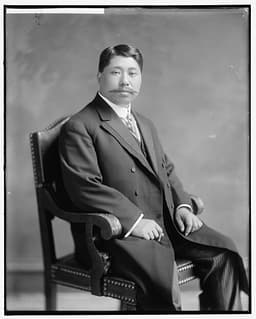
Huang Xing
General · Modern
57.5Total
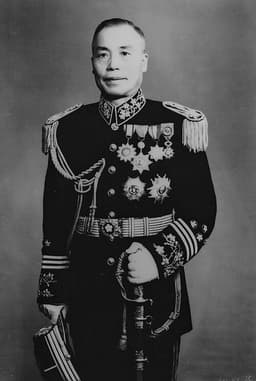
Li Zongren
General · Modern
58.5Total
Basic Information
Born
1874
1890
Died
1916
1969
Era
Modern
Modern
Nationality
China
China
Occupation
General
General
Civilization
Eastern
Eastern
Score Comparison
Military (10%)
46.7
65.0
Political (20%)
53.8
53.8
Influence (20%)
62.0
58.0
Legacy (20%)
56.0
52.0
Leadership (15%)
62.0
72.0
Strategy (15%)
60.0
56.8
TOTAL
57.5
58.5
Huang Xing — Complete Timeline
1905 AD
Co-founded the TongmenghuiPolitical Action◆ Major
Huang Xing co-founded the Tongmenghui (Revolutionary Alliance) in Tokyo with Sun Yat-sen. He became its military leader, organizing armed uprisings against the Qing dynasty.
TongmenghuiRevolutionMilitary
Impact: nationalconstructive
1911 AD
Led the Wuchang UprisingWar
Huang Xing led the Wuchang Uprising, which sparked the Xinhai Revolution. He commanded revolutionary forces against Qing troops, securing initial victories that led to the dynasty's collapse.
Xinhai RevolutionUprisingMilitary
Impact: nationalconstructive
1912 AD
Served as Minister of War in the RepublicPolitical Action◆ Major
Huang Xing served as Minister of War in the provisional government of the Republic of China. He worked to organize a national army and defend the republic against counter-revolutionary forces.
GovernmentMilitaryRepublic
Impact: nationalconstructive
1913 AD
Led the Second Revolution Against Yuan ShikaiWar◆ Major
Huang Xing led the Second Revolution, an armed uprising against President Yuan Shikai's authoritarian rule. The rebellion failed due to lack of coordination and military inferiority, forcing Huang into exile.
Second RevolutionYuan ShikaiExile
Impact: nationaltragic
1916 AD
Died in Exile in ShanghaiPolitical Action
Huang Xing died in Shanghai after returning from exile in Japan and the United States. His death marked the loss of a key military leader of the Chinese revolution, though his legacy endured.
DeathExileRevolution
Impact: nationaltragic
Li Zongren — Complete Timeline
1921 AD
Command of the Guangxi ArmyPolitical Action◆ Major
Li Zongren became a commander in the Guangxi Army and helped unify Guangxi province under the New Guangxi Clique. He established a powerful regional base that rivaled other warlords.
Guangxi CliqueMilitary CommandWarlord Era
Impact: regional
1926 AD
Alliance with the Nationalist GovernmentPolitical Action◆ Major
Li Zongren allied the Guangxi Clique with Chiang Kai-shek's Nationalist government during the Northern Expedition. His forces played a key role in defeating warlords and unifying China under KMT rule.
Northern ExpeditionAllianceKMT
Impact: nationalconstructive
1938 AD
Battle of TaierzhuangWar
Li Zongren commanded Chinese forces to a major victory over the Japanese at the Battle of Taierzhuang during the Second Sino-Japanese War. This was the first significant Chinese victory of the war and boosted national morale.
Second Sino-Japanese WarBattleVictory
Impact: nationalconstructive
1949 AD
Acting Presidency of the Republic of ChinaPolitical Action◆ Major
Li Zongren served as Acting President of the Republic of China after Chiang Kai-shek's resignation during the Chinese Civil War. He attempted to negotiate peace with the Communists but failed, leading to the KMT's retreat to Taiwan.
Chinese Civil WarPresidencyKMT
Impact: nationaltragic
Exile to the United StatesPolitical Action
After the Communist victory, Li Zongren fled to the United States, where he lived in exile. He criticized Chiang Kai-shek's leadership and advocated for a reformed KMT, but remained politically marginalized.
ExileChinese Civil WarPolitics
Impact: nationaltragic
Expert Analysis
Huang Xing vs Li Zongren
# The Two Generals Who Shaped Modern China
On a spring morning in 1938, General Li Zongren stood on a railway embankment outside the town of Taierzhuang, watching Japanese tanks burn in the wheat fields below. It was China’s first major victory against Japan in the Second Sino-Japanese War—a triumph that would make his name synonymous with resistance. Twenty-seven years earlier, another general had stood in the chaos of a Wuchang railway station, his uniform torn, his voice hoarse from shouting orders, as the soldiers he commanded fought to topple an empire. Huang Xing had lit the fuse of revolution that day. Between these two men—one a warlord who became acting president, the other a revolutionary who co-founded a republic—lies the story of modern China’s birth, its fractures, and its unfinished dream.
Origins
Huang Xing was born in 1874, the son of a scholar in Hunan province, a region of fierce intellectuals and restless ambition. He grew up hearing tales of the Taiping Rebellion and the humiliation of China’s defeats by foreign powers. Educated in classical texts, he later studied in Japan, where he absorbed the radical ideas of constitutional government and military modernization. By his early thirties, he had abandoned the civil service exams for the underground world of revolutionary plotting. Huang was a man of the nineteenth century, shaped by the belief that China could be saved through disciplined, Western-style reform.
Li Zongren, born sixteen years later in 1890, came from Guangxi, a southern frontier province of mountains and rivers, far from the imperial court. His family were farmers, not scholars, and his path to power was through the military academy, not the examination hall. He was a product of the warlord era—a time when the old order had collapsed and power belonged to whoever could raise an army. Where Huang Xing saw revolution as a moral crusade, Li Zongren saw it as a chess game of provinces and armies.
Rise to Power
Huang Xing’s rise was meteoric and violent. In 1905, he co-founded the Tongmenghui with Sun Yat-sen in Tokyo, becoming the organization’s military commander. He organized uprisings that failed again and again—in Pingxiang, in Huanggang, in Guangzhou—each time escaping death by luck or daring. Then came October 1911, when a bomb accidentally exploded in a revolutionary safe house in Wuchang, forcing the plotters to act prematurely. Huang Xing rushed to the scene and took command of the rebel forces. For forty-one days, he held the city against the Qing army, buying time for other provinces to declare independence. The empire fell, and Huang Xing was hailed as the “Father of the Chinese Republic.”
Li Zongren’s ascent followed a different logic. In 1921, he took command of a unit in the Guangxi Army and began unifying his home province under the New Guangxi Clique—not through ideology, but through alliances, marriages, and battlefield victories. By 1926, he had made himself indispensable to Chiang Kai-shek, who needed Guangxi’s troops for the Northern Expedition against the northern warlords. Li Zongren allied with the Nationalist government not out of conviction, but out of calculation. He was a pragmatist in an age of dogmas.
Leadership & Governance
As military leaders, the two men could not have been more different. Huang Xing was a commander of passion, not strategy. His military score of 42.1 reflects his record of failed uprisings and lost battles. He led from the front, waving a sword, shouting encouragement, and paying for his bravery with defeat after defeat. The Second Revolution of 1913, his attempt to overthrow Yuan Shikai, collapsed within weeks. Huang Xing fled to Japan and then to the United States, a revolutionary without a revolution.
Li Zongren, by contrast, was a master of strategy, scoring 83.4 in that category—the highest of any measure in his profile. At Taierzhuang in 1938, he did not fight a conventional battle. He used the terrain, the railways, and the patience of his troops to lure the Japanese into a trap, then encircled and destroyed them. It was a general’s masterpiece, studied in military academies for decades. As acting president in 1949, he tried to negotiate peace with the Communists while Chiang Kai-shek sabotaged him from Taiwan. He failed, but not from lack of skill—from lack of power.
Triumph & Tragedy
Huang Xing’s greatest moment was the Wuchang Uprising of 1911, which toppled a dynasty. But his tragedy was that he could not build the republic he had fought for. Yuan Shikai outmaneuvered him politically, and Huang Xing died in 1916 at the age of forty-two, exiled in Shanghai, a broken man. His influence score of 70.6 shows that his name lived on, but his political score of 62.7 reveals the limits of his power.
Li Zongren’s triumph was Taierzhuang, but his tragedy came later. After fleeing to the United States in 1949, he lived in a modest house in New Jersey, writing memoirs and criticizing Chiang Kai-shek. He returned to China in 1965, welcomed by Mao Zedong as a “patriot,” and died in Beijing in 1969, a symbol of the old China that had been swept away. His total score of 71.8 reflects a life of high achievement but ultimate irrelevance.
Character & Destiny
Huang Xing was a man of conviction. He believed in revolution, in democracy, in the power of sacrifice. He was generous, impulsive, and trusting—traits that made him a great revolutionary but a poor politician. His leadership score of 75.5 suggests he could inspire men, but he could not govern them.
Li Zongren was a man of calculation. He believed in power, in balance, in survival. He was cool, patient, and cautious—traits that made him a great general but a reluctant politician. His leadership score of 79.9 is higher than Huang Xing’s, but his influence score of 72.0 shows that he never commanded the loyalty that Huang Xing inspired.
Legacy
Huang Xing is remembered as a co-founder of the Chinese republic, a martyr to the cause of democracy. His name is on streets and schools in mainland China and Taiwan. But his legacy is ambiguous: he fought for a republic that did not survive.
Li Zongren is remembered as a patriot who defeated the Japanese, a warlord who served his country, and a president who could not save his government. In China, he is honored as a military hero; in Taiwan, he is a footnote.
Conclusion
Standing at the crossroads of two centuries, these two generals embody the paradox of modern China: the revolutionary who could not govern, and the warlord who could not rule. One died in exile, the other returned home. One lit the fire, the other tried to contain it. Their lives remind us that history is not made by the pure or the pragmatic alone, but by the collision of both—and that the republic they each served in their own way remains, even now, a work unfinished.
Rankings
🥇
Li ZongrenLeader
Mil: 65.0Pol: 53.8Inf: 58.0
58.5
🥈
Huang Xing
Mil: 46.7Pol: 53.8Inf: 62.0
57.5
+1.0 behind
How This Comparison Works
Algorithm
Each figure is scored on 6 dimensions (0—100 scale) based on structured historical data: Military (10%), Political (20%), Influence (20%), Legacy (20%), Leadership (15%), Strategy (15%). The weighted total produces the final ranking.
Data Sources
Scores are computed from structured sub-indicators in the database. Scale factors adjust for era (Ancient ×0.85, Modern ×1.0) and civilization size (Eastern ×1.05, Other ×0.80) to account for differences in population and military scale.
Maximum 3 Figures
Comparisons are limited to 2—3 figures to ensure readability and statistical meaningfulness.
Error Margins
±5 points per dimension — Sub-scores are derived from historical records with inherent uncertainty. Two figures within 5 points on a dimension should be considered roughly equivalent in that area.
Total Score Accuracy
±3 points overall — The weighted combination of 6 dimensions produces a total score with approximately ±3 points of uncertainty. Differences of less than 3 points are not statistically significant— the figures are effectively tied.
Known Limitations
- Historical records are incomplete and uneven across civilizations
- Figures from oral-tradition societies may be underrepresented
- Occupation labels can misclassify multi-role figures
- Scores measure capability and impact, not moral character
- Quantitative scoring is a comparison tool, not absolute truth
Capability Radar
Military (10%) — Battles & Warfare
Battles
35
65
Win Rate
30
60
Expansion
20
60
Political (20%) — Governance & Reform
Reform
60
45
Diplomacy
55
60
Economy
30
40
Influence (20%) — Cultural & Global Reach
Cultural
40
40
Global
40
40
Legacy (20%) — Historical Impact
Historical
55
55
Longevity
45
45
Leadership (15%) — Power & Stability
Tenure
40
55
Stability
25
35
Strategy (15%) — Tactics & Innovation
Strategy
45
68
Tactics
40
70
Reform
50
55
Similar Comparisons
Comments & Discussion
革命账本6/16/2026
数据上,黄兴才是实干家。1911年武昌起义,他两天内集结两万义军,四省响应。李宗仁的台儿庄歼敌万余,但日军伤亡数据有争议,中国战报往往夸大。黄兴领导了十次起义,次次真金白银砸下去,虽败犹荣。李宗仁的政治投机更精,桂系地盘稳如铁桶。论纯粹军事投入,黄兴是肉身铺路,李宗仁是锦上添花。
Lost-Wax Scholar6/16/2026
Classics-trained generals like Huang Xing embodied Confucian sacrifice—he personally led charges, wounded lying on stretchers still giving orders at Hankou. Li Zongren, the warlord-turned-patriot, fits the strategist archetype: calculating, surviving factional games before striking at Taierzhuang. But Huang’s poetry and calligraphy reveal a tortured soul; his letters in 1913 speak of despair, not glory. Li’s memoirs are polished legend. Huang was more human; Li, more myth.
断代工程师6/16/2026
作为修正主义历史观察者,我质疑两人都被捧成民族英雄的神话。黄兴的二次革命败在依赖军阀,硬拉冯国璋,结果被袁世凯用钱分化,1913年南京血战七天后逃日。李宗仁的台儿庄胜利被过度浪漫化,实际日军撤退多是战略调整。两人都是脆弱民国的产物,黄兴的流亡形象和李宗仁的桂系政权都掩盖了旧式军阀逻辑——靠私人关系而非现代制度。
Historian9276/16/2026
As a military historian, I’d take Li Zongren over Huang Xing any day for battlefield results. Li’s Taierzhuang victory was no fluke—he outmaneuvered the Japanese 5th and 10th divisions with inferior equipment, using terrain and deception. Huang Xing lost the Second Revolution in 1913 within weeks, failing to secure key railways or coordinate with allies. Li won actual battles; Huang mostly lost them in the fog of revolution. Execution beats intention every time.