Loading...
Huang Xing vs Justo Rufino Barrios
Justo Rufino Barrios leads by 1.1 pts · 2 figures compared
…
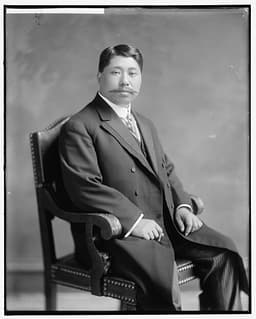
Huang Xing
General · Modern
57.5Total
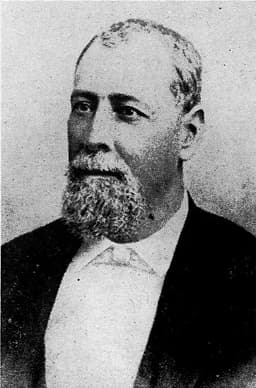
Justo Rufino Barrios
General · Modern
58.6Total
Basic Information
Born
1874
1835
Died
1916
1885
Era
Modern
Modern
Nationality
China
Guatemala
Occupation
General
General
Civilization
Eastern
Western
Score Comparison
Military (10%)
46.7
52.5
Political (20%)
53.8
72.0
Influence (20%)
62.0
60.0
Legacy (20%)
56.0
49.2
Leadership (15%)
62.0
65.0
Strategy (15%)
60.0
55.0
TOTAL
57.5
58.6
Huang Xing — Complete Timeline
1905 AD
Co-founded the TongmenghuiPolitical Action◆ Major
Huang Xing co-founded the Tongmenghui (Revolutionary Alliance) in Tokyo with Sun Yat-sen. He became its military leader, organizing armed uprisings against the Qing dynasty.
TongmenghuiRevolutionMilitary
Impact: nationalconstructive
1911 AD
Led the Wuchang UprisingWar
Huang Xing led the Wuchang Uprising, which sparked the Xinhai Revolution. He commanded revolutionary forces against Qing troops, securing initial victories that led to the dynasty's collapse.
Xinhai RevolutionUprisingMilitary
Impact: nationalconstructive
1912 AD
Served as Minister of War in the RepublicPolitical Action◆ Major
Huang Xing served as Minister of War in the provisional government of the Republic of China. He worked to organize a national army and defend the republic against counter-revolutionary forces.
GovernmentMilitaryRepublic
Impact: nationalconstructive
1913 AD
Led the Second Revolution Against Yuan ShikaiWar◆ Major
Huang Xing led the Second Revolution, an armed uprising against President Yuan Shikai's authoritarian rule. The rebellion failed due to lack of coordination and military inferiority, forcing Huang into exile.
Second RevolutionYuan ShikaiExile
Impact: nationaltragic
1916 AD
Died in Exile in ShanghaiPolitical Action
Huang Xing died in Shanghai after returning from exile in Japan and the United States. His death marked the loss of a key military leader of the Chinese revolution, though his legacy endured.
DeathExileRevolution
Impact: nationaltragic
Justo Rufino Barrios — Complete Timeline
1871 AD
Enacted the Liberal Reforms of 1871Reform
Justo Rufino Barrios, after coming to power, implemented sweeping liberal reforms. These included the separation of church and state, confiscation of church lands, establishment of secular education, and promotion of coffee cultivation for export.
GuatemalaLiberal ReformSecularization
Impact: nationalprogressive
1873 AD
Modernized Guatemala's InfrastructureReform◆ Major
Barrios oversaw the construction of roads, telegraph lines, and railways, particularly to support coffee exports. He also promoted immigration and foreign investment, transforming Guatemala's economy.
GuatemalaInfrastructureEconomic Development
Impact: nationalconstructive
1885 AD
Killed at the Battle of ChalchuapaWar
Barrios was killed in battle at Chalchuapa, El Salvador, while leading an invasion to forcibly reunify Central America. His death ended the unification attempt and preserved the sovereignty of the individual Central American states.
Central AmericaBattleDeath
Impact: regionaltragic
Declared the Unification of Central AmericaPolitical Action◆ Major
Barrios unilaterally declared the reunification of the Central American republics by force. He issued a decree proclaiming himself supreme military commander of a unified Central America, leading to war with neighboring states.
Central AmericaUnificationWar
Impact: regionaldestructive
Expert Analysis
Huang Xing vs Justo Rufino Barrios
# The General Who Dreamed of Union, and the General Who Built a Republic
On a dusty battlefield in El Salvador in 1885, a Guatemalan president on horseback led a charge that would end his life and his dream of a unified Central America. Half a world away and three decades later, a Chinese revolutionary lay dying in a Shanghai hospital, his body worn by exile and defeat, but his cause—a republic—already alive in the hearts of millions. Justo Rufino Barrios and Huang Xing never met, never knew each other’s names. Yet both were generals who believed that blood and will could reshape nations. One died fighting for a union that never came. The other died knowing the republic he helped build would outlast him. Why did their paths diverge so sharply?
Origins
Barrios was born in 1835 into a world of coffee plantations and conservative Catholic power in Guatemala. He grew up watching the old colonial order crumble under the weight of its own rigidity. By his twenties, he had absorbed the radical liberalism sweeping Latin America—a creed that demanded the separation of church and state, the privatization of communal lands, and the modernization of backward economies. For Barrios, reform was not a philosophy; it was a war.
Huang Xing was born in 1874 in Hunan, China, into a scholar-gentry family that had seen the Qing Dynasty’s decline firsthand. The Opium Wars, the Taiping Rebellion, and the humiliation of foreign concessions had shattered the old certainties. Huang studied in Japan, where he encountered revolutionary ideas that fused nationalism with republicanism. Unlike Barrios, who inherited a tradition of caudillo strongmen, Huang inherited a tradition of literati reform—and a deep suspicion of military dictatorship.
Rise to Power
Barrios seized power in 1871 through a liberal uprising, riding into Guatemala City at the head of an army of coffee planters and intellectuals. He was thirty-six years old, with a reputation for ruthlessness and a vision of Central America as a single, modern state. His path was straightforward: win the war, take the presidency, and impose reform from above. There was no parliament to persuade, no party to build—only the will of the general.
Huang Xing’s rise was far more circuitous. In 1905, he co-founded the Tongmenghui (Revolutionary Alliance) in Tokyo with Sun Yat-sen. While Sun was the visionary, Huang was the organizer—the man who raised money, trained fighters, and plotted uprisings. His first attempts failed: a 1908 revolt in Yunnan collapsed, and a 1910 Guangzhou uprising ended in massacre. But in October 1911, the Wuchang Uprising succeeded almost by accident, and Huang rushed to lead the revolutionary forces. He became the military backbone of the Xinhai Revolution, but he never sought the presidency himself. Power, for Huang, was a tool, not a prize.
Leadership & Governance
As president of Guatemala from 1873, Barrios governed with the energy of a steam engine. He built roads, telegraph lines, and railways—especially the line from Guatemala City to the Atlantic, which made coffee exports boom. He expelled the Jesuits, confiscated church lands, and established secular education. His reforms were swift, brutal, and effective. But they were also imposed by decree. Barrios tolerated no opposition, and his land policies enriched coffee barons while dispossessing indigenous communities. His governance was a paradox: modernizing the economy while entrenching inequality.
Huang Xing, as Minister of War in the provisional Republic of China in 1912, faced a different challenge. He had to build a national army from scratch, out of warlord militias and revolutionary volunteers, while Sun Yat-sen’s government struggled against the military strongman Yuan Shikai. Huang understood that a republic needed institutions, not just heroes. He tried to professionalize the military, but Yuan had the money and the foreign backing. Huang’s governance was a lesson in limits: he could inspire loyalty, but he could not command a state.
Triumph & Tragedy
Barrios’s greatest moment came in 1873, when he began transforming Guatemala from a feudal backwater into a modern state. His infrastructure projects, his educational reforms, his relentless drive—these were real achievements that outlasted him. But his tragedy was his final act. In 1885, he unilaterally declared the reunification of Central America by force, invaded El Salvador, and died at the Battle of Chalchuapa—shot from his horse, his dream of a single republic shattered by the very nationalism he had tried to overcome.
Huang Xing’s triumph was the Wuchang Uprising of 1911, which toppled an empire. He commanded revolutionary forces with skill and courage, and his name became synonymous with the republic. But his tragedy came in 1913, when he led the Second Revolution against Yuan Shikai’s authoritarian rule. The rebellion failed, and Huang fled into exile—first to Japan, then to the United States. He returned to Shanghai in 1916, only to die of illness at forty-two, a revolutionary without a revolution.
Character & Destiny
Barrios was a man of iron will and narrow vision. He believed that force could solve political problems, and he was right—for a time. But his character made him unable to compromise, unable to build alliances, unable to see that Central America’s divisions were not just political but cultural and economic. His destiny was to be a reformer who became a conqueror, and a conqueror who became a corpse.
Huang Xing was a man of deep loyalty and strategic patience. He deferred to Sun Yat-sen, even when he disagreed, because he believed in the cause more than his own glory. But his character made him a second-in-command, not a founder. He could lead armies, but he could not lead a nation. His destiny was to be the architect of a republic he could not govern.
Legacy
Barrios is remembered in Guatemala as a modernizer and a nationalist, but his dream of Central American unity died with him. His reforms shaped the country’s economy for a century, but his authoritarian methods left a legacy of military rule. Today, he stands in bronze in Guatemala City, a general frozen in time.
Huang Xing is remembered in China as one of the founders of the republic—a title that puts him alongside Sun Yat-sen. His military leadership made the Xinhai Revolution possible, and his selflessness set an example for later revolutionaries. But he died before the republic he helped create descended into warlord chaos, and so his legacy remains pure, untainted by failure.
Conclusion
Barrios and Huang Xing both believed that a general could change the world. One tried to unite a broken region by force and died in the attempt. The other tried to build a republic on the ruins of an empire and died before he could see it fall. Their differences were not just personal but historical: Barrios lived in an era when strongmen could still reshape nations with cavalry charges, while Huang lived in an era when revolutions needed parties, institutions, and patience. In the end, Barrios’s dream died with him on a battlefield, while Huang’s dream survived him in the hearts of a people who would one day rise again. The general who fought for union left a statue. The general who fought for a republic left a memory. Sometimes, that is the greater legacy.
Rankings
🥇
Justo Rufino BarriosLeader
Mil: 52.5Pol: 72.0Inf: 60.0
58.6
🥈
Huang Xing
Mil: 46.7Pol: 53.8Inf: 62.0
57.5
+1.1 behind
How This Comparison Works
Algorithm
Each figure is scored on 6 dimensions (0—100 scale) based on structured historical data: Military (10%), Political (20%), Influence (20%), Legacy (20%), Leadership (15%), Strategy (15%). The weighted total produces the final ranking.
Data Sources
Scores are computed from structured sub-indicators in the database. Scale factors adjust for era (Ancient ×0.85, Modern ×1.0) and civilization size (Eastern ×1.05, Other ×0.80) to account for differences in population and military scale.
Maximum 3 Figures
Comparisons are limited to 2—3 figures to ensure readability and statistical meaningfulness.
Error Margins
±5 points per dimension — Sub-scores are derived from historical records with inherent uncertainty. Two figures within 5 points on a dimension should be considered roughly equivalent in that area.
Total Score Accuracy
±3 points overall — The weighted combination of 6 dimensions produces a total score with approximately ±3 points of uncertainty. Differences of less than 3 points are not statistically significant— the figures are effectively tied.
Known Limitations
- Historical records are incomplete and uneven across civilizations
- Figures from oral-tradition societies may be underrepresented
- Occupation labels can misclassify multi-role figures
- Scores measure capability and impact, not moral character
- Quantitative scoring is a comparison tool, not absolute truth
Capability Radar
Military (10%) — Battles & Warfare
Battles
35
45
Win Rate
30
55
Expansion
20
55
Political (20%) — Governance & Reform
Reform
60
70
Diplomacy
55
45
Economy
30
55
Influence (20%) — Cultural & Global Reach
Cultural
40
40
Global
40
30
Legacy (20%) — Historical Impact
Historical
55
50
Longevity
45
35
Leadership (15%) — Power & Stability
Tenure
40
50
Stability
25
30
Strategy (15%) — Tactics & Innovation
Strategy
45
50
Tactics
40
40
Reform
50
60
Similar Comparisons
Comments & Discussion
CannonSmokeHistorian6/16/2026
Barrios was a landlord with a bayonet, not a revolutionary. Huang Xing gave up his gentry status to fight for a republic—Barrios shot indigenous Guatemalans to seize their land for coffee barons. One liberated a nation from monarchy; the other replaced colonial masters with local oligarchs. That's the difference between a true revolutionary and a feudal strongman with liberal window dressing.