Loading...
Huang Xing vs Jung Bahadur Rana
Jung Bahadur Rana leads by 3.9 pts · 2 figures compared
…
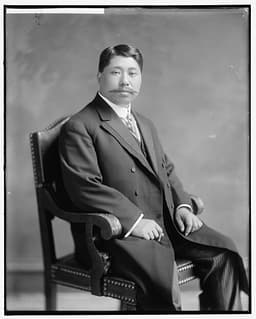
Huang Xing
General · Modern
57.5Total
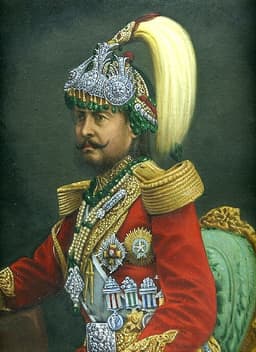
Jung Bahadur Rana
General · Modern
61.4Total
Basic Information
Born
1874
1817
Died
1916
1877
Era
Modern
Modern
Nationality
China
Nepal
Occupation
General
General
Civilization
Eastern
Indian
Score Comparison
Military (10%)
46.7
55.0
Political (20%)
53.8
72.0
Influence (20%)
62.0
56.7
Legacy (20%)
56.0
55.0
Leadership (15%)
62.0
78.0
Strategy (15%)
60.0
55.0
TOTAL
57.5
61.4
Huang Xing — Complete Timeline
1905 AD
Co-founded the TongmenghuiPolitical Action◆ Major
Huang Xing co-founded the Tongmenghui (Revolutionary Alliance) in Tokyo with Sun Yat-sen. He became its military leader, organizing armed uprisings against the Qing dynasty.
TongmenghuiRevolutionMilitary
Impact: nationalconstructive
1911 AD
Led the Wuchang UprisingWar
Huang Xing led the Wuchang Uprising, which sparked the Xinhai Revolution. He commanded revolutionary forces against Qing troops, securing initial victories that led to the dynasty's collapse.
Xinhai RevolutionUprisingMilitary
Impact: nationalconstructive
1912 AD
Served as Minister of War in the RepublicPolitical Action◆ Major
Huang Xing served as Minister of War in the provisional government of the Republic of China. He worked to organize a national army and defend the republic against counter-revolutionary forces.
GovernmentMilitaryRepublic
Impact: nationalconstructive
1913 AD
Led the Second Revolution Against Yuan ShikaiWar◆ Major
Huang Xing led the Second Revolution, an armed uprising against President Yuan Shikai's authoritarian rule. The rebellion failed due to lack of coordination and military inferiority, forcing Huang into exile.
Second RevolutionYuan ShikaiExile
Impact: nationaltragic
1916 AD
Died in Exile in ShanghaiPolitical Action
Huang Xing died in Shanghai after returning from exile in Japan and the United States. His death marked the loss of a key military leader of the Chinese revolution, though his legacy endured.
DeathExileRevolution
Impact: nationaltragic
Jung Bahadur Rana — Complete Timeline
1846 AD
Kot MassacrePolitical Action
Jung Bahadur Runa orchestrated the Kot Massacre in Kathmandu, where dozens of nobles and courtiers were killed. This event eliminated his political rivals and allowed him to seize effective control of the Nepalese government, establishing the hereditary Rana prime ministership.
CoupMassacreRana Dynasty
Impact: nationaldestructive
Establishment of Rana DynastyPolitical Action◆ Major
Following the Kot Massacre, Jung Bahadur Rana appointed himself prime minister and commander-in-chief. He made the position hereditary, founding the Rana dynasty that ruled Nepal for over a century, reducing the Shah monarchs to figureheads.
DynastyGovernmentNepal
Impact: national
1850 AD
Visit to EuropeCultural
Jung Bahadur Rana traveled to Britain and France, becoming the first South Asian ruler to visit Europe. He observed Western military and industrial technology, which influenced his modernization efforts in Nepal, including army reforms.
DiplomacyModernizationTravel
Impact: nationalconstructive
1856 AD
Nepal-Tibet War and Treaty of ThapathaliWar◆ Major
Jung Bahadur Rana led a Nepalese military campaign into Tibet. The conflict ended with the Treaty of Thapathali, which secured Nepalese territorial claims and established a tributary relationship with Tibet, enhancing Nepal's regional influence.
WarTreatyTibet
Impact: regional
Expert Analysis
Huang Xing vs Jung Bahadur Rana
# The General Who Built a Dynasty and the General Who Lost a Republic
On a cold January morning in 1850, a Nepalese general in full military regalia stepped onto the deck of a British steamship in Calcutta, bound for London. Jung Bahadur Rana was about to become the first South Asian ruler to visit Europe, a journey that would reshape his understanding of power. Half a century later and half a continent away, another general stood in the chaos of a Wuhan railway station in October 1911, rallying exhausted students and soldiers to storm a Qing arsenal. Huang Xing had no time for European tours; he was fighting to bring down an empire. Both men were generals. Both lived through the violent birth of the modern world. But one built a dynasty that would rule Nepal for 104 years, while the other saw his republic crumble before his eyes. Why?
Origins
Jung Bahadur Rana was born in 1817 into the Kunwar family, a noble clan of the Nepalese court that had long jostled for influence under the Shah kings. His childhood was steeped in the lethal intrigues of Kathmandu’s durbar, where a misplaced word could mean exile or death. He learned early that politics was a blood sport. Huang Xing, born in 1874 in Hunan province, came of age in a China reeling from the Opium Wars and the Taiping Rebellion. His father was a scholar, and the young Huang studied the Confucian classics—but the sight of foreign gunboats on Chinese rivers turned him toward revolution. Where Jung Bahadur inherited a world of courtly conspiracy, Huang Xing inherited a world of national humiliation.
Rise to Power
The difference in their paths is stark. Jung Bahadur’s rise culminated on the night of September 14, 1846, when he orchestrated the Kot Massacre in Kathmandu. Dozens of nobles and courtiers were slaughtered in the palace armory, their bodies piled in the courtyard as the young king cowered. By dawn, Jung Bahadur had appointed himself prime minister and commander-in-chief, and made the positions hereditary. It was a coup d’état executed with surgical brutality. Huang Xing’s rise was the opposite: a long, grinding struggle marked by failed uprisings and exile. In 1905, he co-founded the Tongmenghui in Tokyo with Sun Yat-sen, becoming the organization’s military leader. But for six years, every attempt to spark revolution ended in defeat. His moment came only in 1911, when the Wuchang Uprising—a revolt he had not planned—suddenly succeeded. He rushed to the front to command, but by then, the revolution had already begun without him.
Leadership & Governance
Jung Bahadur Rana governed Nepal with a cold pragmatism that would define his dynasty. He centralized power, sidelined the monarchy, and modernized the army—but he also kept Nepal isolated from the British Raj, preserving its independence through careful diplomacy. His 1850 visit to Britain and France taught him the value of railways and factories, but he imported only what served his control. He was a builder of institutions, but those institutions were designed to serve his family. Huang Xing, by contrast, governed in a state of permanent crisis. As Minister of War in the provisional republic of 1912, he tried to organize a national army from scratch, but the new government was bankrupt and faction-ridden. His greatest military achievement—leading the Nepal-Tibet War of 1856, which ended with the Treaty of Thapathali and secured Nepalese influence in Tibet—was a foreign campaign that strengthened his domestic position. Huang Xing’s military efforts, from the Wuchang Uprising to the Second Revolution of 1913 against Yuan Shikai, were defensive and ultimately doomed. One man built a fortress; the other tried to hold a flood.
Triumph & Tragedy
Jung Bahadur’s greatest triumph was the sheer durability of his system. He died in 1877 with a total score of 71.0 on the historical index, but his legacy score of 80.0 reflects a dynasty that outlasted him by a century. His tragedy was that he turned Nepal into a family estate, stifling political development for generations. Huang Xing’s triumph was more poignant: he helped topple the Qing dynasty, one of the oldest empires on earth. His tragedy was that he lived to see his republic stolen by Yuan Shikai, and died in exile in Shanghai in 1916, a broken man. His overall score of 64.2 is lower than Jung Bahadur’s, but his political score of 62.7 and leadership score of 75.5 show a man of genuine vision who simply ran out of time.
Character & Destiny
Jung Bahadur Rana was a realist who believed that power was a thing to be held, not shared. His strategy score of 59.4 is surprisingly low for a man who outmaneuvered every rival, but it reflects a tactical rather than strategic mind—he was brilliant at the short game, but his long game was simply to entrench his family. Huang Xing, with a military score of only 42.1, was not a great general by conventional measures. But his influence score of 70.6 speaks to something else: he inspired loyalty. Men followed him not because they feared him, but because they believed in the republic. That belief was his strength and his vulnerability. Jung Bahadur trusted no one; Huang Xing trusted too much.
Legacy
Today, Jung Bahadur Rana is remembered in Nepal as both a nation-builder and an autocrat. The Rana dynasty fell in 1951, but the centralization he created still shapes Nepalese politics. Huang Xing is remembered in China as a founding father of the republic, but his name has been overshadowed by Sun Yat-sen and later by Mao Zedong. His legacy score of 66.6 reflects a man remembered but not revered. Yet there is a quiet dignity in his failure. He fought for a republic when republics were fragile dreams, and he never abandoned the cause even when it cost him everything.
Conclusion
Standing at the end of their lives, these two generals offer a mirror to the historian. Jung Bahadur Rana built a dynasty that lasted because he understood the eternal rules of autocracy: seize power, eliminate rivals, and never let go. Huang Xing helped build a republic that collapsed because he understood the fragile rules of democracy: share power, persuade rivals, and hope for the best. Both were products of their time and place—one a courtier in a Himalayan kingdom, the other a revolutionary in a dying empire. But their stories ask a question that lingers long after the article ends: Is it better to build something that endures, even if it is unjust, or to fight for something noble, even if it fails? There is no easy answer, only the memory of two men who tried, in their very different ways, to shape the future.
Rankings
🥇
Jung Bahadur RanaLeader
Mil: 55.0Pol: 72.0Inf: 56.7
61.4
🥈
Huang Xing
Mil: 46.7Pol: 53.8Inf: 62.0
57.5
+3.9 behind
How This Comparison Works
Algorithm
Each figure is scored on 6 dimensions (0—100 scale) based on structured historical data: Military (10%), Political (20%), Influence (20%), Legacy (20%), Leadership (15%), Strategy (15%). The weighted total produces the final ranking.
Data Sources
Scores are computed from structured sub-indicators in the database. Scale factors adjust for era (Ancient ×0.85, Modern ×1.0) and civilization size (Eastern ×1.05, Other ×0.80) to account for differences in population and military scale.
Maximum 3 Figures
Comparisons are limited to 2—3 figures to ensure readability and statistical meaningfulness.
Error Margins
±5 points per dimension — Sub-scores are derived from historical records with inherent uncertainty. Two figures within 5 points on a dimension should be considered roughly equivalent in that area.
Total Score Accuracy
±3 points overall — The weighted combination of 6 dimensions produces a total score with approximately ±3 points of uncertainty. Differences of less than 3 points are not statistically significant— the figures are effectively tied.
Known Limitations
- Historical records are incomplete and uneven across civilizations
- Figures from oral-tradition societies may be underrepresented
- Occupation labels can misclassify multi-role figures
- Scores measure capability and impact, not moral character
- Quantitative scoring is a comparison tool, not absolute truth
Capability Radar
Military (10%) — Battles & Warfare
Battles
35
45
Win Rate
30
50
Expansion
20
40
Political (20%) — Governance & Reform
Reform
60
75
Diplomacy
55
70
Economy
30
65
Influence (20%) — Cultural & Global Reach
Cultural
40
55
Global
40
40
Legacy (20%) — Historical Impact
Historical
55
65
Longevity
45
60
Leadership (15%) — Power & Stability
Tenure
40
80
Stability
25
60
Strategy (15%) — Tactics & Innovation
Strategy
45
60
Tactics
40
55
Reform
50
70
Similar Comparisons
Comments & Discussion
🎯战略博弈家6/16/2026
说白了,黄兴就是个被神化的失败者。领导五次起义全输了,武昌起义还是捡漏。反观江格拉达·拉纳,一场Kot大屠杀就干翻300多政敌,在19世纪的亚洲建立起一个能撑104年的王朝。黄兴连自己的革命都守不住,宋朝灭了他就跑去日本。靠激情打仗的人,永远斗不过靠脑子玩权术的。
Historian5956/16/2026
Huang Xing's battlefield record was 1-4 in major engagements, while Jung Bahadur never lost a significant campaign—yet Huang gets romanticized as a founding father. The numbers tell us that revolutionary romance trumps military competence. Jung's Kot Massacre alone killed more enemies than Huang faced in his entire career. Let's call it what it is: one was a victor, the other a symbol. Facts matter.