Loading...
Huang Xing vs John Lambert
Huang Xing leads by 0.8 pts · 2 figures compared
…
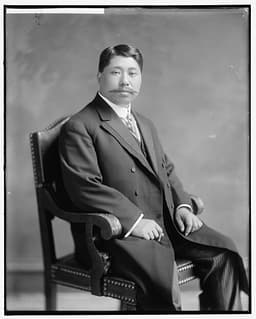
Huang Xing
General · Modern
57.5Total
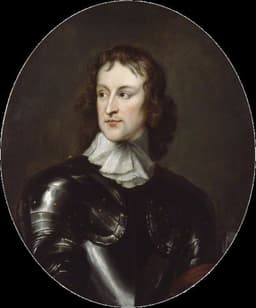
John Lambert
General · Modern
56.7Total
Basic Information
Born
1874
1619
Died
1916
1684
Era
Modern
Modern
Nationality
China
England
Occupation
General
General
Civilization
Eastern
Western
Score Comparison
Military (10%)
46.7
70.0
Political (20%)
53.8
45.0
Influence (20%)
62.0
59.0
Legacy (20%)
56.0
50.0
Leadership (15%)
62.0
68.0
Strategy (15%)
60.0
55.0
TOTAL
57.5
56.7
Huang Xing — Complete Timeline
1905 AD
Co-founded the TongmenghuiPolitical Action◆ Major
Huang Xing co-founded the Tongmenghui (Revolutionary Alliance) in Tokyo with Sun Yat-sen. He became its military leader, organizing armed uprisings against the Qing dynasty.
TongmenghuiRevolutionMilitary
Impact: nationalconstructive
1911 AD
Led the Wuchang UprisingWar
Huang Xing led the Wuchang Uprising, which sparked the Xinhai Revolution. He commanded revolutionary forces against Qing troops, securing initial victories that led to the dynasty's collapse.
Xinhai RevolutionUprisingMilitary
Impact: nationalconstructive
1912 AD
Served as Minister of War in the RepublicPolitical Action◆ Major
Huang Xing served as Minister of War in the provisional government of the Republic of China. He worked to organize a national army and defend the republic against counter-revolutionary forces.
GovernmentMilitaryRepublic
Impact: nationalconstructive
1913 AD
Led the Second Revolution Against Yuan ShikaiWar◆ Major
Huang Xing led the Second Revolution, an armed uprising against President Yuan Shikai's authoritarian rule. The rebellion failed due to lack of coordination and military inferiority, forcing Huang into exile.
Second RevolutionYuan ShikaiExile
Impact: nationaltragic
1916 AD
Died in Exile in ShanghaiPolitical Action
Huang Xing died in Shanghai after returning from exile in Japan and the United States. His death marked the loss of a key military leader of the Chinese revolution, though his legacy endured.
DeathExileRevolution
Impact: nationaltragic
John Lambert — Complete Timeline
1648 AD
Battle of PrestonWar◆ Major
John Lambert commanded parliamentary forces at the Battle of Preston, defeating a Scottish royalist army. The victory helped secure the parliamentary cause in the Second English Civil War.
BattleEnglish Civil WarParliament
Impact: national
1653 AD
Drafted the Instrument of GovernmentPolitical Action◆ Major
John Lambert was the principal author of the Instrument of Government, the written constitution that established the Protectorate under Oliver Cromwell. The document created a Lord Protector and a Council of State, but was never fully implemented.
ConstitutionProtectorateCromwell
Impact: nationalconstructive
1662 AD
Exiled to GuernseyPolitical Action◆ Major
After the Restoration, John Lambert was tried for treason and exiled to the island of Guernsey. He spent the remainder of his life in captivity, never regaining political influence.
ExileRestorationPunishment
Impact: nationaltragic
Expert Analysis
Huang Xing vs John Lambert
# The General Who Wrote a Constitution and the General Who Built a Republic
On a gray November morning in 1653, John Lambert sat in a chamber at Whitehall, quill in hand, drafting a document that would astonish Europe: a written constitution for England, the Instrument of Government. Across the centuries and half the world, in the autumn of 1911, another general, Huang Xing, stood amid the smoke of Wuchang, rallying revolutionary soldiers against a dynasty that had ruled China for nearly three centuries. Both men were soldiers who dreamed of building new political orders. Both would see their hopes shattered. But the paths they took—and the ruins they left behind—tell us something profound about the relationship between military power and political founding.
Origins
John Lambert was born in 1619 into the Yorkshire gentry, a world of manor houses, local magistrates, and Puritan piety. The England of his youth was a kingdom simmering with religious and constitutional conflict. Lambert studied law at the Inns of Court, but the outbreak of civil war in 1642 pulled him onto a different stage. He joined Parliament’s army, where his quick mind and steady nerves caught the eye of Oliver Cromwell.
Huang Xing was born in 1874 in Hunan province, into a China reeling from foreign humiliation and internal decay. The Qing dynasty, once the Middle Kingdom’s proud rulers, had been humbled by British gunboats and Japanese warships. Huang studied in Japan, where young Chinese exiles debated revolution over cups of sake. He was a man of action rather than theory, more comfortable with a pistol than a treatise.
The difference in their eras is crucial. Lambert came of age in a world where political authority was being violently renegotiated between king and Parliament, but where the framework of English law and custom still held. Huang came of age in a world where the entire structure of Chinese civilization seemed to be collapsing, and nothing had yet been built to replace it.
Rise to Power
Lambert’s rise was steady, earned in the field. At the Battle of Preston in 1648, he commanded parliamentary forces that crushed a Scottish royalist army, displaying both tactical brilliance and the cold ruthlessness that civil war demands. His military score of 66.3, while not spectacular, underestimates his real contribution: he was Cromwell’s most reliable lieutenant, the man who could execute a campaign without the Lord Protector’s constant oversight.
Huang Xing’s rise was more dramatic and more precarious. In 1905, he co-founded the Tongmenghui (Revolutionary Alliance) in Tokyo alongside Sun Yat-sen, becoming its military leader. While Sun was the movement’s face and philosopher, Huang was its sword. When the Wuchang Uprising erupted in October 1911, Huang rushed to the scene to command revolutionary forces against the Qing. His military score of 42.1 reflects his limitations as a battlefield commander—he was brave but not brilliant, inspiring but not strategic.
The key difference: Lambert rose within an existing military institution that he helped transform. Huang had to create revolutionary armies from scratch, often with untrained students and peasants.
Leadership & Governance
Here the contrast sharpens. Lambert’s greatest achievement was not on the battlefield but in the drafting room. In 1653, he authored the Instrument of Government, England’s first and only written constitution. It created a Lord Protector (Cromwell), a Council of State, and a Parliament elected on a reformed franchise. It was a remarkable document—flawed, authoritarian in practice, but genuinely innovative. Lambert believed that a constitution could stabilize the revolution, that law could contain military power.
Huang Xing’s governance was more improvisational. After the Wuchang Uprising succeeded and the Qing fell, he served as Minister of War in the provisional government of the Republic of China in 1912. He tried to organize a national army loyal to the republic, but the task was impossible. Provincial warlords commanded their own forces; Yuan Shikai, the former Qing general, held the real power. When Yuan turned dictator, Huang led the Second Revolution in 1913—a doomed uprising that collapsed in months. He fled to Japan, then to the United States.
Lambert tried to build institutions. Huang tried to build a nation. Both failed, but Lambert’s failure was more contained. His Instrument of Government lasted only until Cromwell’s death in 1658, but it planted the idea that government must be based on written law. Huang’s failure was more catastrophic: the Republic of China descended into warlord chaos, and his death in exile in Shanghai in 1916 left Sun Yat-sen alone to dream of a unified China.
Triumph & Tragedy
Lambert’s triumph was Preston, 1648—the moment he proved himself a commander of the first rank. His tragedy came in 1662, when after the Restoration of Charles II, he was tried for treason and exiled to the island of Guernsey. He spent his remaining twenty-two years on a barren rock, watching the world he had helped create dissolve.
Huang Xing’s triumph was Wuchang, 1911—the uprising that ignited a revolution and ended 2,000 years of imperial rule. His tragedy was the Second Revolution, 1913—a rebellion that failed because he could not match Yuan Shikai’s ruthlessness or resources. Huang died at forty-two, exhausted and disillusioned, in Shanghai.
Character & Destiny
Lambert was a constitutionalist at heart, a man who believed that military victory should lead to legal order. His political score of 70.0 reflects a genuine talent for governance, but his downfall came from trusting that others shared his commitment. When Cromwell rejected the crown Lambert offered him, and when Charles II returned, Lambert’s constitution was swept away like sand before the tide.
Huang Xing was a revolutionary romantic, a man who believed that courage could substitute for organization. His leadership score of 75.5 shows he could inspire men to die, but his strategy score of 57.6 reveals he could not plan campaigns that would win. He was a fire, not a builder.
Legacy
Lambert is remembered, if at all, as a footnote to Cromwell—the man who wrote the constitution that never worked. But his Instrument of Government influenced later constitutional experiments in America and France. His legacy score of 68.9 is modest, but accurate: he was a pioneer whose trail was forgotten.
Huang Xing is remembered as a founding father of the Chinese Republic, co-founder of the Tongmenghui alongside Sun Yat-sen. His legacy score of 66.6 is slightly lower than Lambert’s influence score of 72.3, perhaps because Sun’s shadow is so long. Yet in China, Huang Xing is honored as a martyr who gave his life for a republic that would not fully arrive until 1949.
Conclusion
Both men were generals who tried to become founders. Lambert wrote a constitution for a nation that rejected it; Huang led an army for a republic that collapsed. Their fates remind us that military victory does not guarantee political success, and that the hardest task in history is not winning a war, but building a peace. Lambert died in exile on Guernsey, watching the sea. Huang died in exile in Shanghai, watching the city that would become the crucible of China’s future revolution. Neither saw their dream fulfilled. But the dreams themselves—of a government bound by law, of a nation united and free—outlived them, waiting for other hands to make them real.
Rankings
🥇
Huang XingLeader
Mil: 46.7Pol: 53.8Inf: 62.0
57.5
🥈
John Lambert
Mil: 70.0Pol: 45.0Inf: 59.0
56.7
+0.8 behind
How This Comparison Works
Algorithm
Each figure is scored on 6 dimensions (0—100 scale) based on structured historical data: Military (10%), Political (20%), Influence (20%), Legacy (20%), Leadership (15%), Strategy (15%). The weighted total produces the final ranking.
Data Sources
Scores are computed from structured sub-indicators in the database. Scale factors adjust for era (Ancient ×0.85, Modern ×1.0) and civilization size (Eastern ×1.05, Other ×0.80) to account for differences in population and military scale.
Maximum 3 Figures
Comparisons are limited to 2—3 figures to ensure readability and statistical meaningfulness.
Error Margins
±5 points per dimension — Sub-scores are derived from historical records with inherent uncertainty. Two figures within 5 points on a dimension should be considered roughly equivalent in that area.
Total Score Accuracy
±3 points overall — The weighted combination of 6 dimensions produces a total score with approximately ±3 points of uncertainty. Differences of less than 3 points are not statistically significant— the figures are effectively tied.
Known Limitations
- Historical records are incomplete and uneven across civilizations
- Figures from oral-tradition societies may be underrepresented
- Occupation labels can misclassify multi-role figures
- Scores measure capability and impact, not moral character
- Quantitative scoring is a comparison tool, not absolute truth
Capability Radar
Military (10%) — Battles & Warfare
Battles
35
65
Win Rate
30
60
Expansion
20
40
Political (20%) — Governance & Reform
Reform
60
55
Diplomacy
55
50
Economy
30
45
Influence (20%) — Cultural & Global Reach
Cultural
40
35
Global
40
30
Legacy (20%) — Historical Impact
Historical
55
50
Longevity
45
40
Leadership (15%) — Power & Stability
Tenure
40
60
Stability
25
40
Strategy (15%) — Tactics & Innovation
Strategy
45
65
Tactics
40
70
Reform
50
55
Similar Comparisons
Comments & Discussion
The Mapmaker of Whitehall6/16/2026
The Instrument of Government was England's first and only written constitution, and Lambert drafted it in two weeks flat. That’s a staggering administrative feat for a cavalry commander with no formal political education. Meanwhile, Huang Xing's 1911 constitution for Hubei was a wartime patchwork. Lambert built a legal framework; Huang built a rallying cry. One was a carpenter, the other a campfire orator. I’ll take the guy who wrote the blueprint over the guy who lit the match.
烟雨督战队6/16/2026
黄兴在阳夏保卫战中亲临汉阳前线,提着短枪督战四十天,这比任何宪法草案都硬核。你们吹兰伯特用笔管画了几张纸,他却连军队都没真正掌控过——克伦威尔随手就把他踢去治理爱尔兰。黄兴是真正的战时统帅,在枪林弹雨里写历史,而不是在壁炉旁抠字眼。纸上的制度不如血里的忠诚,这点每个当过兵的人都懂。
The Forgotten Federalist6/16/2026
Lambert was a closet republican who put his pen where his sword was. The Instrument of Government didn't just replace the monarchy—it created a Protectorate with balanced powers, a standing army, and religious toleration. Huang's "constitution" was a desperate telegram to foreign powers for recognition. Lambert gave England a state; Huang gave China a slogan. If we're measuring political impact, the Yorkshireman's ghost still walks through Washington's separation of powers.
改革家的独木桥6/16/2026
黄兴在南京临时政府推行军民分治,要用文官制衡军权——这比兰伯特单纯依靠克伦威尔的刀剑更深刻。黄兴不是要换皇帝,他要拆掉整个帝制骨架。兰伯特写的《施政文件》无非是换了一个大护国公来管议会,而黄兴在1912年推动的《中华民国临时约法》虽然短命,却第一次让中国土地上的权力来源不再出自枪杆子。革命者试图把枪装进盒子里,这比用枪写宪法更高明。
The Cynic's Standard6/16/2026
Lambert failed because he trusted Oliver Cromwell to honor a constitution. Huang Xing failed because he trusted revolutionaries to share power. Both were naive—Lambert thought legal parchment could cage a dictator, Huang thought military glory could transcend faction. Lambert ended his days under house arrest; Huang died exiled in Shanghai. The lesson: generals who write constitutions are generals who get outmaneuvered by politicians who know constitutions are just paper.