Loading...
Huang Xing vs Hyder Ali
Hyder Ali leads by 11.9 pts · 2 figures compared
…
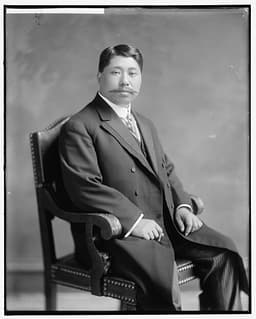
Huang Xing
General · Modern
57.5Total
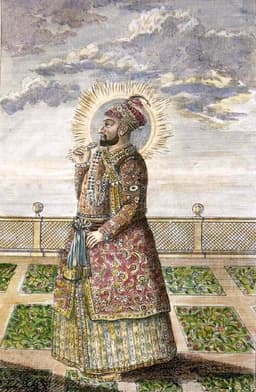
Hyder Ali
General · Modern
69.4Total
Basic Information
Born
1874
1720
Died
1916
1782
Era
Modern
Modern
Nationality
China
India
Occupation
General
General
Civilization
Eastern
Indian
Score Comparison
Military (10%)
46.7
80.0
Political (20%)
53.8
65.7
Influence (20%)
62.0
82.0
Legacy (20%)
56.0
56.0
Leadership (15%)
62.0
68.0
Strategy (15%)
60.0
68.0
TOTAL
57.5
69.4
Huang Xing — Complete Timeline
1905 AD
Co-founded the TongmenghuiPolitical Action◆ Major
Huang Xing co-founded the Tongmenghui (Revolutionary Alliance) in Tokyo with Sun Yat-sen. He became its military leader, organizing armed uprisings against the Qing dynasty.
TongmenghuiRevolutionMilitary
Impact: nationalconstructive
1911 AD
Led the Wuchang UprisingWar
Huang Xing led the Wuchang Uprising, which sparked the Xinhai Revolution. He commanded revolutionary forces against Qing troops, securing initial victories that led to the dynasty's collapse.
Xinhai RevolutionUprisingMilitary
Impact: nationalconstructive
1912 AD
Served as Minister of War in the RepublicPolitical Action◆ Major
Huang Xing served as Minister of War in the provisional government of the Republic of China. He worked to organize a national army and defend the republic against counter-revolutionary forces.
GovernmentMilitaryRepublic
Impact: nationalconstructive
1913 AD
Led the Second Revolution Against Yuan ShikaiWar◆ Major
Huang Xing led the Second Revolution, an armed uprising against President Yuan Shikai's authoritarian rule. The rebellion failed due to lack of coordination and military inferiority, forcing Huang into exile.
Second RevolutionYuan ShikaiExile
Impact: nationaltragic
1916 AD
Died in Exile in ShanghaiPolitical Action
Huang Xing died in Shanghai after returning from exile in Japan and the United States. His death marked the loss of a key military leader of the Chinese revolution, though his legacy endured.
DeathExileRevolution
Impact: nationaltragic
Hyder Ali — Complete Timeline
1757 AD
Battle of PlasseyWar◆ Major
Hyder Ali, as a commander under the Wodeyar dynasty, participated in the Battle of Plassey indirectly by supporting the French against the British. However, his major role came later. This battle marked the beginning of British dominance in Bengal, which Hyder Ali would later challenge in the Carnatic Wars.
Carnatic WarsBritish East India CompanyMysore
Impact: regional
1761 AD
Capture of the throne of MysorePolitical Action◆ Major
Hyder Ali, a military commander, overthrew the Wodeyar ruler Krishnaraja Wodeyar II and established himself as the de facto ruler of Mysore. He imprisoned the maharaja and assumed full control, transforming Mysore into a powerful state through military reforms and expansion.
CoupMysore KingdomWodeyar Dynasty
Impact: regionaldestructive
1767 AD
First Anglo-Mysore WarWar◆ Major
Hyder Ali led Mysore against the British East India Company in the First Anglo-Mysore War. He formed alliances with the Nizam of Hyderabad and the Marathas. The war ended with the Treaty of Madras in 1769, which restored conquered territories and established a defensive alliance between Mysore and the British.
Anglo-Mysore WarsTreaty of MadrasBritish India
Impact: regional
1780 AD
Second Anglo-Mysore WarWar◆ Major
Hyder Ali launched the Second Anglo-Mysore War, attacking British territories in the Carnatic. He captured Arcot and defeated British forces at Pollilur. The war continued after his death in 1782, with his son Tipu Sultan taking command. The conflict ended with the Treaty of Mangalore in 1784.
Anglo-Mysore WarsBattle of PollilurTipu Sultan
Impact: regional
Expert Analysis
Huang Xing vs Hyder Ali
# The General and the Revolutionary: Hyder Ali and Huang Xing
The scene could not be more different. In 1780, a wiry, battle-scarred Indian sultan watched from horseback as his rocket brigades sent plumes of fire into British lines outside Arcot. In 1911, a Chinese revolutionary commander, exhausted and coughing blood, rallied student soldiers through the streets of Wuchang, knowing that one wrong step would mean the end of a dream. Both were generals. Both fought empires. But their worlds, their methods, and their fates were separated by more than a century and a continent. Hyder Ali of Mysore and Huang Xing of China each rose from obscurity to challenge the dominant powers of their age—one with sword and rocket, the other with pamphlets and uprisings. Their stories reveal how the same ambition, born in different times, can lead to radically different outcomes.
Origins
Hyder Ali was born in 1720 into a modest military family in the Deccan plateau of southern India. His father was a commander in the army of the Wodeyar dynasty, the nominal rulers of Mysore. The boy grew up in a world of shifting alliances, Maratha raids, and the slow encroachment of European trading companies. He learned war on the battlefield, not in a classroom. By contrast, Huang Xing entered the world in 1874, in a Hunan village, at the twilight of the Qing dynasty. He studied classical texts but also read Western works on revolution and republicanism. Where Hyder Ali absorbed the tactics of Mughal cavalry and French-trained infantry, Huang Xing devoured the writings of Rousseau and the stories of George Washington. One was shaped by the dust of the battlefield; the other by the ink of the printing press.
Rise to Power
Hyder Ali’s ascent was a slow, brutal climb. He served as a commander under the Wodeyar kings, distinguishing himself in campaigns against the Marathas and the Nizam of Hyderabad. In 1757, while Robert Clive was winning the Battle of Plassey for the British in Bengal, Hyder Ali was fighting his own battles in the south, learning the weaknesses of European-style formations. By 1761, he had accumulated enough military power to overthrow the Wodeyar ruler Krishnaraja Wodeyar II and seize the throne of Mysore. He did not declare himself king—he kept the old dynasty as puppets—but he became the de facto ruler. Huang Xing’s rise was different. He did not seize power; he built a movement. In 1905, in Tokyo, he co-founded the Tongmenghui, the Revolutionary Alliance, with Sun Yat-sen. While Sun provided the ideology, Huang provided the muscle. He organized secret cells, smuggled weapons, and planned uprisings. His path was not one of conquest but of conspiracy.
Leadership & Governance
As ruler of Mysore, Hyder Ali governed with a pragmatist’s hand. He modernized his army, employing French officers to train his troops and introducing rocket artillery—a weapon that would later inspire British experiments. His political wisdom, scored at 66.2, was sufficient to hold together a kingdom threatened by the Marathas, the Nizam, and the British East India Company. He taxed efficiently, tolerated religious diversity, and promoted merit over birth. But he remained a military man at heart. Huang Xing, by contrast, was less a ruler than a builder. His leadership score of 75.5 reflects his ability to inspire loyalty among young intellectuals and soldiers. As Minister of War in the provisional Republic of China in 1912, he tried to organize a national army out of regional warlord forces—a near-impossible task. His political score of 62.7 is slightly lower than Hyder Ali’s, but for different reasons: Hyder Ali ruled a kingdom; Huang Xing tried to build a nation from fragments.
Triumph & Tragedy
Hyder Ali’s greatest moment came during the First Anglo-Mysore War (1767–1769). He outmaneuvered the British, formed alliances with the Nizam and the Marathas, and forced the East India Company to sign a humiliating treaty on the steps of Madras. It was the first time a native power had forced the British to sue for peace in India. His tragedy came later, in the Second Anglo-Mysore War (1780–1782). He captured Arcot and inflicted heavy losses, but the British regrouped. Hyder Ali died of cancer in 1782, his dream of driving the British from India unfinished. Huang Xing’s triumph was the Wuchang Uprising of 1911. Though he did not start it—the revolution erupted spontaneously while he was in Hong Kong—he rushed to the scene and led the revolutionary forces against the Qing. The uprising sparked the Xinhai Revolution, ending two thousand years of imperial rule. His tragedy followed swiftly. In 1913, he led the Second Revolution against Yuan Shikai, the new president who had turned dictator. The rebellion failed. Huang Xing fled into exile in Japan and the United States, a broken man. He returned to Shanghai in 1916, only to die that same year at the age of forty-two.
Character & Destiny
Hyder Ali was a survivor. He trusted no one completely, shifted alliances without sentiment, and ruled with an iron fist when necessary. His son Tipu Sultan once said of him, “My father fought like a lion but negotiated like a fox.” That fox-like cunning kept Mysore independent for two decades against the most powerful empire on earth. Huang Xing was different. He was a man of conviction, not calculation. He believed in republicanism, in democracy, in the power of the people. But that faith, which made him a great revolutionary, made him a poor politician in the chaos of post-imperial China. He could inspire men to fight but not to govern. Hyder Ali’s destiny was shaped by the eighteenth-century world of kings and companies; Huang Xing’s by the twentieth-century world of nations and ideologies.
Legacy
Hyder Ali is remembered as the father of Mysorean military innovation and the man who first broke the British aura of invincibility in India. His legacy score of 68.1 reflects a reputation that endures in southern India, though he is less known globally. His son Tipu Sultan has overshadowed him in popular memory. Huang Xing’s legacy is more complex. In China, he is honored as a co-founder of the Republic, but his name is often eclipsed by Sun Yat-sen. His influence score of 70.6 is higher than Hyder Ali’s 66.6, because he helped birth a nation that would reshape the world. Yet his total score of 64.2 versus Hyder Ali’s 69.6 suggests that the sultan, who fought a losing war against colonialism, left a slightly more formidable mark in the scales of history.
Conclusion
What separates these two generals is not talent but time. Hyder Ali fought the British when they were still a trading company, vulnerable and overstretched. Huang Xing fought the Qing when it was already rotting from within. Both won battles; both lost wars. But Hyder Ali’s failure was final—his kingdom fell to the British in 1799, seventeen years after his death. Huang Xing’s failure was temporary—the Republic he helped build, though flawed, survived. In the end, the revolutionary with the lower military score may have changed more lives than the sultan with the higher one. History, it seems, rewards not just the strength of the sword but the timing of the hand that wields it.
Rankings
🥇
Hyder AliLeader
Mil: 80.0Pol: 65.7Inf: 82.0
69.4
🥈
Huang Xing
Mil: 46.7Pol: 53.8Inf: 62.0
57.5
+11.9 behind
How This Comparison Works
Algorithm
Each figure is scored on 6 dimensions (0—100 scale) based on structured historical data: Military (10%), Political (20%), Influence (20%), Legacy (20%), Leadership (15%), Strategy (15%). The weighted total produces the final ranking.
Data Sources
Scores are computed from structured sub-indicators in the database. Scale factors adjust for era (Ancient ×0.85, Modern ×1.0) and civilization size (Eastern ×1.05, Other ×0.80) to account for differences in population and military scale.
Maximum 3 Figures
Comparisons are limited to 2—3 figures to ensure readability and statistical meaningfulness.
Error Margins
±5 points per dimension — Sub-scores are derived from historical records with inherent uncertainty. Two figures within 5 points on a dimension should be considered roughly equivalent in that area.
Total Score Accuracy
±3 points overall — The weighted combination of 6 dimensions produces a total score with approximately ±3 points of uncertainty. Differences of less than 3 points are not statistically significant— the figures are effectively tied.
Known Limitations
- Historical records are incomplete and uneven across civilizations
- Figures from oral-tradition societies may be underrepresented
- Occupation labels can misclassify multi-role figures
- Scores measure capability and impact, not moral character
- Quantitative scoring is a comparison tool, not absolute truth
Capability Radar
Military (10%) — Battles & Warfare
Battles
35
78
Win Rate
30
72
Expansion
20
70
Political (20%) — Governance & Reform
Reform
60
70
Diplomacy
55
68
Economy
30
60
Influence (20%) — Cultural & Global Reach
Cultural
40
50
Global
40
50
Legacy (20%) — Historical Impact
Historical
55
55
Longevity
45
45
Leadership (15%) — Power & Stability
Tenure
40
65
Stability
25
55
Strategy (15%) — Tactics & Innovation
Strategy
45
80
Tactics
40
85
Reform
50
75
Similar Comparisons
Comments & Discussion
IronSteed17806/16/2026
Hyder Ali was the real military innovator here, not Huang Xing. While Huang was good at organizing revolts with borrowed ideas from the West, Hyder actually fielded rocket brigades that terrified the British—over 5,000 rocket men at his peak. Huang never commanded anything close to that technological edge. One man forged a new weapon system; the other just used outdated rifles. Give me the Sultan of Mysore any day.
数据拆弹手6/16/2026
就别拿黄兴跟海德尔·阿里比了好吧?黄兴在武昌起义里带的队伍,说白了就是一群学生和民兵,武器差到连步枪都不够用。而海德尔·阿里在1780年波利勒战役里,用火箭部队打崩了英军一个整旅。一个靠热血,一个靠战术体系——这压根不是一个量级的比较。历史数据不会撒谎:黄兴连一场像样的野战胜利都没有。
ArcotScholar6/16/2026
The comparison misses the critical point: Hyder Ali was a product of the Mughal military ecosystem, mastering both cavalry raids and siegecraft against European drill. Huang Xing's tactical genius was in urban insurrection—street barricades and propaganda. Different games entirely. Hyder fought for a dynastic state; Huang for a republican vision. I'd take Hyder as a commander, but Huang's revolutionary tenacity in 1911's Wuchang Uprising was equally impressive in its own context.
乱世史官6/16/2026
成王败寇而已。海德尔·阿里看似更成功,但他的儿子提普苏丹最终被英国人剁了头。黄兴虽然后来被袁世凯压制,但他播下的革命种子在十几年后彻底开花结果。一个军事家输掉了整个王国,一个革命家为未来的新中国铺了路。从历史长河看,黄兴的“败”恰恰是更深的“胜”。别光盯着战功表,看看政治遗产吧。