Loading...
Ho Chi Minh vs Theobald Wolfe Tone
Ho Chi Minh leads by 15.1 pts · 2 figures compared
…
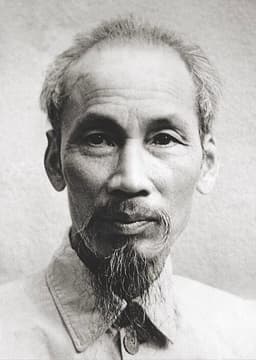
Ho Chi Minh
Revolutionary · Modern
62.9Total
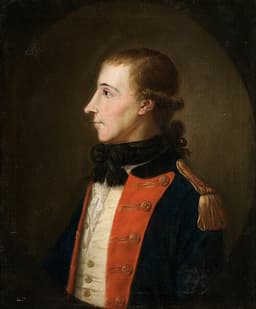
Theobald Wolfe Tone
Revolutionary · Modern
47.8Total
Basic Information
Born
1890
1763
Died
1969
1798
Era
Modern
Modern
Nationality
Vietnam
Ireland
Occupation
Revolutionary
Revolutionary
Civilization
Eastern
Western
Score Comparison
Military (10%)
55.0
39.9
Political (20%)
72.0
27.9
Influence (20%)
62.0
57.2
Legacy (20%)
58.0
49.2
Leadership (15%)
72.0
57.1
Strategy (15%)
58.0
45.0
TOTAL
62.9
47.8
Ho Chi Minh — Complete Timeline
1941 AD
Establishment of the Viet MinhPolitical Action◆ Major
Ho Chi Minh founded the Viet Minh (League for the Independence of Vietnam) in southern China. This coalition of nationalist and communist groups became the primary force for Vietnamese independence, fighting both Japanese occupation and French colonialism.
Viet MinhIndependence MovementWorld War II
Impact: nationalconstructive
1945 AD
Declaration of Independence of VietnamPolitical Action
Ho Chi Minh proclaimed the Democratic Republic of Vietnam in Hanoi's Ba Dinh Square, citing the US Declaration of Independence. This established the Viet Minh government and began the struggle for independence from French colonial rule.
IndependenceVietnamDecolonization
Impact: nationalconstructive
1954 AD
Battle of Dien Bien PhuWar
Ho Chi Minh's Viet Minh forces, under General Giap, defeated the French garrison at Dien Bien Phu. This victory ended French colonial rule in Indochina and led to the Geneva Accords dividing Vietnam at the 17th parallel.
Vietnam WarDecolonizationFrench Indochina
Impact: regional
Geneva AccordsPolitical Action◆ Major
Ho Chi Minh's delegation signed the Geneva Accords, temporarily dividing Vietnam at the 17th parallel. The agreement promised nationwide elections in 1956, which were never held, leading to the permanent division of Vietnam.
Geneva ConferenceDivision of VietnamDiplomacy
Impact: regional
1959 AD
Start of the Vietnam WarWar
Ho Chi Minh's government in North Vietnam authorized armed struggle against the US-backed South Vietnamese regime. This escalated into the Vietnam War, a prolonged conflict that resulted in millions of deaths and US withdrawal in 1973.
Vietnam WarCold WarCommunism
Impact: globaldestructive
Theobald Wolfe Tone — Complete Timeline
1791 AD
Founding of the United IrishmenPolitical Action◆ Major
Tone co-founded the Society of United Irishmen in Belfast, a revolutionary organization seeking parliamentary reform and Catholic emancipation. The society later became a secret republican movement aiming for Irish independence.
Irish RepublicanismFoundingReform
Impact: nationalprogressive
Publication of 'An Argument on Behalf of the Catholics of Ireland'Cultural
Tone published a pamphlet arguing for the inclusion of Catholics in Irish political life. It helped bridge the gap between Protestant radicals and the Catholic majority, broadening the base of the United Irishmen.
PamphletCatholic EmancipationPolitical Thought
Impact: nationalprogressive
1796 AD
Expédition d'IrlandeWar◆ Major
Tone accompanied a French fleet of 43 ships carrying 15,000 troops to invade Ireland. The expedition was scattered by storms off Bantry Bay and failed to land, a major setback for the republican cause.
French InvasionNavalFailure
Impact: nationaltragic
Mission to FrancePolitical Action◆ Major
Tone traveled to France to secure French military support for an Irish rebellion. He persuaded the French Directory to launch an invasion of Ireland, leading to the dispatch of a large expeditionary force.
DiplomacyFrench RevolutionInvasion
Impact: national
1798 AD
Battle of Tory IslandWar◆ Major
Tone was captured aboard a French ship at the Battle of Tory Island, part of a second French invasion attempt. The French squadron was defeated by the Royal Navy, ending French hopes of aiding the Irish Rebellion.
1798 RebellionNaval BattleCapture
Impact: nationaltragic
Trial and SuicidePolitical Action◆ Major
Tone was tried for treason in Dublin and sentenced to death by hanging. Before execution, he cut his own throat to deny the British the spectacle of his hanging, dying from the wound a week later.
TrialSuicideMartyrdom
Impact: nationaltragic
Expert Analysis
Theobald Wolfe Tone vs Ho Chi Minh
### The Revolutionary's Long Game: Ho Chi Minh and Theobald Wolfe Tone
On a grey November morning in 1798, a man lay bleeding in a Dublin prison cell, his throat cut by his own hand. Theobald Wolfe Tone, the father of Irish republicanism, had chosen to deny the British the spectacle of his hanging. Across the world and a century and a half later, another revolutionary, Ho Chi Minh, stood in Hanoi's Ba Dinh Square, reading a declaration of independence that echoed the American and French revolutions. One died before his dream could take root; the other lived to see his nation rise from the ashes of colonial war. What separates a martyr from a founder? The answer lies not in the purity of their ideals, but in the brutal arithmetic of history—timing, strategy, and the patience to endure.
### Origins
Wolfe Tone was born in 1763 into a Protestant middle-class family in Dublin. He was a product of the Enlightenment, educated at Trinity College, where the ideas of Rousseau and Voltaire stirred his imagination. His Ireland was a Protestant Ascendancy, a world where Catholics were denied the vote, land, and education. Tone’s genius was to see that the fight for Irish freedom could not be sectarian. In 1791, he published *An Argument on Behalf of the Catholics of Ireland*, a pamphlet that shocked his own class by demanding full civil rights for Catholics. He was not a man of the people by birth, but he learned to speak for them.
Ho Chi Minh, born Nguyen Sinh Cung in 1890 in a small village in French-occupied Vietnam, came from a different world entirely. His father was a Confucian scholar who refused to work for the French, and young Ho grew up watching his countrymen starve under colonial taxes. He left Vietnam as a cabin boy on a French steamer, and for the next thirty years, he wandered the globe—from London to New York to Paris—washing dishes, painting houses, and watching revolutions. He read Marx and Lenin, but he also studied the American Declaration of Independence. His education was not in a lecture hall but in the slums of Harlem and the kitchens of the Ritz. Tone had ideas; Ho had experience.
### Rise to Power
Tone’s rise was swift and dramatic. In 1791, he co-founded the Society of United Irishmen, a group that sought parliamentary reform and, soon, outright revolution. He was a brilliant propagandist, but his real skill was diplomacy. In 1796, he sailed to France and persuaded the Directory to launch a massive invasion of Ireland. The *Expédition d’Irlande*—43 ships carrying 15,000 troops—was the largest such attempt in history. But the weather betrayed him. Storms scattered the fleet, and the invasion collapsed without a shot. Tone’s fate was sealed by a gale.
Ho Chi Minh’s rise was slower, more methodical. He founded the Viet Minh in 1941, not in a burst of revolutionary fervor, but as a careful coalition of nationalists and communists. He spent years in southern China, building alliances with warlords and the Chinese Communist Party. When Japan occupied Vietnam during World War II, he saw his opportunity. He worked with the American Office of Strategic Services, supplying intelligence and rescuing downed pilots. By 1945, when Japan surrendered, Ho was ready. He marched into Hanoi and declared independence, quoting Thomas Jefferson. He had learned that revolutions are not made by storms, but by tides.
### Leadership & Governance
Tone was a man of words, not armies. He was captured at the Battle of Tory Island in 1798, not leading troops but aboard a French ship, arguing strategy with admirals. His leadership score of 30.0 reflects a man who inspired devotion but could not command a battlefield. His political score of 39.5 shows a thinker who understood the problem—sectarianism—but could not build the lasting coalition to solve it. His United Irishmen were crushed within a year.
Ho Chi Minh was the opposite. His leadership score of 84.8 is the highest of any metric, and it was earned not by charisma alone, but by patience. He understood that Vietnam’s war would be long. He let General Vo Nguyen Giap command at Dien Bien Phu in 1954, where the French were surrounded and starved into surrender. He signed the Geneva Accords that same year, accepting a temporary division of Vietnam because he knew the north would be his base. He authorized the Vietnam War in 1959, not in a fit of ambition, but as a calculated step. Ho was not a general; he was a gardener, planting seeds that would take decades to bloom.
### Triumph & Tragedy
Tone’s greatest triumph was his death. By cutting his own throat, he denied the British the propaganda of a public hanging. His trial speech, in which he declared that he had “subverted the government of Ireland for the independence of my country,” became a sacred text for Irish republicans. But his tragedy was that he died before he could see if his ideas would work. He left behind a legend, not a nation.
Ho Chi Minh’s triumph was Dien Bien Phu, the battle that ended French colonial rule in Indochina. But his tragedy was the war that followed. He died in 1969, six years before North Vietnamese tanks rolled into Saigon. He never saw the unified Vietnam he had dreamed of. His last years were spent in a bamboo stilt house in Hanoi, receiving reports of American bombing, knowing that his country was being destroyed to be born. Tone died in a cell; Ho died in a house, but both left the hardest work to others.
### Character & Destiny
Tone was impulsive, romantic, and utterly convinced of the righteousness of his cause. He wrote in his diary that he would “rather die than live in infamy.” That conviction made him a martyr, but it also made him a poor strategist. He trusted that the French would deliver, that the Irish would rise, that the weather would cooperate. He was wrong on all counts.
Ho Chi Minh was pragmatic to the point of ruthlessness. He was called “Uncle Ho” by his people, but he purged rivals without hesitation. He knew that revolutions eat their children, and he was willing to be patient. He once said, “You can kill ten of my men for every one I kill of yours, but even at those odds, you will lose and I will win.” That was not bravado; it was arithmetic. Tone fought a war of passion; Ho fought a war of attrition.
### Legacy
Tone’s legacy is the dream of a united Ireland. Every Irish republican from the Easter Rising to the Good Friday Agreement has claimed his mantle. His influence score of 73.2 is high for a man who never held power. He is remembered as a martyr, a poet of revolution who died before his time.
Ho Chi Minh’s legacy is Vietnam itself. His influence score of 70.6 and legacy score of 72.2 reflect a nation that named its capital city after him—Ho Chi Minh City. But his legacy is also complicated. He was a communist who used nationalist rhetoric, a revolutionary who accepted Soviet and Chinese aid, a man who fought for freedom but built a one-party state. In Vietnam, he is revered as a father; in the West, he is remembered as an enemy. Both are true.
### Conclusion
Standing in the Dublin prison where Tone died, or in the Ba Dinh Square where Ho declared independence, one feels the weight of what might have been. Tone had the vision but not the time; Ho had the time but not the peace. Their lives are a study in contrast—the romantic versus the realist, the martyr versus the founder. But both understood the same truth: that revolutions are not made by men alone, but by the long, slow work of history. Tone gave Ireland a dream; Ho gave Vietnam a nation. Which is more valuable? That is a question for the living, not the dead.
Rankings
🥇
Ho Chi MinhLeader
Mil: 55.0Pol: 72.0Inf: 62.0
62.9
🥈
Theobald Wolfe Tone
Mil: 39.9Pol: 27.9Inf: 57.2
47.8
+15.1 behind
How This Comparison Works
Algorithm
Each figure is scored on 6 dimensions (0—100 scale) based on structured historical data: Military (10%), Political (20%), Influence (20%), Legacy (20%), Leadership (15%), Strategy (15%). The weighted total produces the final ranking.
Data Sources
Scores are computed from structured sub-indicators in the database. Scale factors adjust for era (Ancient ×0.85, Modern ×1.0) and civilization size (Eastern ×1.05, Other ×0.80) to account for differences in population and military scale.
Maximum 3 Figures
Comparisons are limited to 2—3 figures to ensure readability and statistical meaningfulness.
Error Margins
±5 points per dimension — Sub-scores are derived from historical records with inherent uncertainty. Two figures within 5 points on a dimension should be considered roughly equivalent in that area.
Total Score Accuracy
±3 points overall — The weighted combination of 6 dimensions produces a total score with approximately ±3 points of uncertainty. Differences of less than 3 points are not statistically significant— the figures are effectively tied.
Known Limitations
- Historical records are incomplete and uneven across civilizations
- Figures from oral-tradition societies may be underrepresented
- Occupation labels can misclassify multi-role figures
- Scores measure capability and impact, not moral character
- Quantitative scoring is a comparison tool, not absolute truth
Capability Radar
Military (10%) — Battles & Warfare
Battles
65
5
Win Rate
60
5
Expansion
55
5
Political (20%) — Governance & Reform
Reform
85
30
Diplomacy
90
25
Economy
40
5
Influence (20%) — Cultural & Global Reach
Cultural
75
45
Global
75
40
Legacy (20%) — Historical Impact
Historical
85
50
Longevity
70
55
Leadership (15%) — Power & Stability
Tenure
70
10
Stability
50
5
Strategy (15%) — Tactics & Innovation
Strategy
80
15
Tactics
70
10
Reform
75
20
Similar Comparisons
Comments & Discussion
HANGMAN'S GAMBIT6/16/2026
Comparing Tone to Ho is like comparing a firework to a slow-burning fuse. Tone's suicide was a dramatic, almost Romantic gesture—straight out of a revolutionary opera. Ho, by contrast, spent decades in exile, washing dishes in London and retouching photos in Paris, learning that patience beats passion. Tone gave Ireland a martyr; Ho gave Vietnam a strategy. One wanted to die for his cause; the other wanted to win it. That's the difference between a poet and a general.
EMPIRE'S BODYCOUNT6/16/2026
Let's talk numbers, not ideals. Tone's United Irishmen rebellion of 1798: about 30,000 dead in a few months. Ho's First Indochina War: over 400,000 dead across nearly a decade. But here's the rub—Tone's failure was immediate and total, his movement crushed within a year. Ho's success, however, took twenty-five years of relentless warfare, from guerrilla skirmishes to Dien Bien Phu. Which revolutionary are you betting on? The one who dies in week one or the one who outlasts four French prime mini
后殖民枪炮6/16/2026
拿托尼跟胡志明比,简直是拿苹果比榴莲。托尼是个精英知识分子,他在都柏林三一学院读伏尔泰,想靠启蒙观念点燃爱尔兰。胡志明呢?他1890年出生在乂安省一个贫困儒生家庭,早年当过厨子、雪茄工、照片修图师,足迹踏遍三大洲。一个靠笔杆子呼吁天主教权益,一个靠走遍工人阶级积累革命资本。托尼以为写好小册子就能改变世界,胡志明知道你得先活下来,再慢慢织网。
历史翻案的匕首6/16/2026
别跟我提什么"革命之父"的神话。托尼那篇《为爱尔兰天主教徒辩护》不过是中产阶级对殖民权威的撒娇。他从来没真正挨过饿,没在贫民窟睡过觉。胡志明在伦敦当过司炉工,在纽约见过种族隔离,在莫斯科学过阶级斗争。托尼的共和主义是书斋里的理想,胡志明的民族解放是骨头缝里的本能。一个死于自己的刀,一个活到看见法国国旗降下——残酷的结局本身就在评判谁更扎根于现实。
时间之秤上的灰6/16/2026
历史是最大的讽刺。托尼1798年自杀,爱尔兰直到1921年才勉强获得自由,还分裂成两个国家。胡志明1945年宣布独立,转年就打了九年的抗法战争,然后是二十年的越南战争,人生最后二十年全耗在炮火里。两人都是宗师级的失败者吗?不,托尼的失败是彻底的、即时的;胡志明的失败是暂时的、战术性的。他196