Loading...
Ho Chi Minh vs Sun Yat-sen
Ho Chi Minh leads by 10.4 pts · 2 figures compared
…
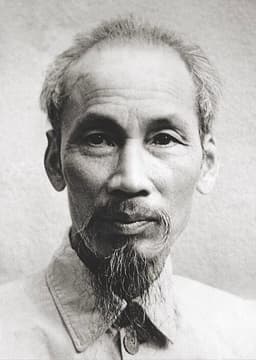
Ho Chi Minh
Revolutionary · Modern
62.9Total
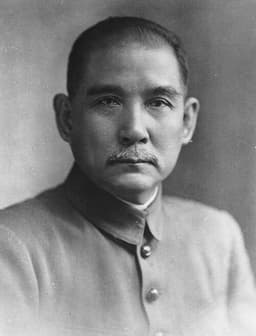
Sun Yat-sen
Revolutionary · Modern
52.5Total
Basic Information
Born
1890
1866
Died
1969
1925
Era
Modern
Modern
Nationality
Vietnam
China
Occupation
Revolutionary
Revolutionary
Civilization
Eastern
Eastern
Score Comparison
Military (10%)
55.0
45.0
Political (20%)
72.0
68.0
Influence (20%)
62.0
61.0
Legacy (20%)
58.0
58.0
Leadership (15%)
72.0
33.5
Strategy (15%)
58.0
30.3
TOTAL
62.9
52.5
Ho Chi Minh — Complete Timeline
1941 AD
Establishment of the Viet MinhPolitical Action◆ Major
Ho Chi Minh founded the Viet Minh (League for the Independence of Vietnam) in southern China. This coalition of nationalist and communist groups became the primary force for Vietnamese independence, fighting both Japanese occupation and French colonialism.
Viet MinhIndependence MovementWorld War II
Impact: nationalconstructive
1945 AD
Declaration of Independence of VietnamPolitical Action
Ho Chi Minh proclaimed the Democratic Republic of Vietnam in Hanoi's Ba Dinh Square, citing the US Declaration of Independence. This established the Viet Minh government and began the struggle for independence from French colonial rule.
IndependenceVietnamDecolonization
Impact: nationalconstructive
1954 AD
Battle of Dien Bien PhuWar
Ho Chi Minh's Viet Minh forces, under General Giap, defeated the French garrison at Dien Bien Phu. This victory ended French colonial rule in Indochina and led to the Geneva Accords dividing Vietnam at the 17th parallel.
Vietnam WarDecolonizationFrench Indochina
Impact: regional
Geneva AccordsPolitical Action◆ Major
Ho Chi Minh's delegation signed the Geneva Accords, temporarily dividing Vietnam at the 17th parallel. The agreement promised nationwide elections in 1956, which were never held, leading to the permanent division of Vietnam.
Geneva ConferenceDivision of VietnamDiplomacy
Impact: regional
1959 AD
Start of the Vietnam WarWar
Ho Chi Minh's government in North Vietnam authorized armed struggle against the US-backed South Vietnamese regime. This escalated into the Vietnam War, a prolonged conflict that resulted in millions of deaths and US withdrawal in 1973.
Vietnam WarCold WarCommunism
Impact: globaldestructive
Sun Yat-sen — Complete Timeline
1894 AD
Founded the Revive China SocietyPolitical Action◆ Major
Sun Yat-sen founded the Revive China Society (Xingzhonghui) in Honolulu, the first modern revolutionary organization among overseas Chinese. The society aimed to overthrow the Qing dynasty and establish a republic, marking the beginning of organized revolutionary activity.
RevolutionOverseas ChineseRepublic
Impact: nationalconstructive
1911 AD
Led the Xinhai RevolutionPolitical Action
Sun Yat-sen's revolutionary activities culminated in the Wuchang Uprising of October 1911, which sparked the Xinhai Revolution. The uprising spread across China, leading to the abdication of the Qing emperor in 1912 and the end of 2,000 years of imperial rule.
RevolutionQing DynastyRepublic
Impact: globalconstructive
1912 AD
Proclaimed the Republic of ChinaPolitical Action
On January 1, 1912, Sun Yat-sen was inaugurated as the provisional president of the Republic of China in Nanjing. He proclaimed the establishment of the first republic in Asia, based on his Three Principles of the People: nationalism, democracy, and livelihood.
RepublicPresidencyThree Principles
Impact: globalconstructive
Resigned Presidency in Favor of Yuan ShikaiPolitical Action◆ Major
To secure the abdication of the Qing emperor and avoid civil war, Sun Yat-sen resigned the provisional presidency in February 1912 in favor of Yuan Shikai. This decision, while pragmatic, allowed Yuan to consolidate power and later attempt to restore the monarchy.
Power TransferYuan ShikaiCompromise
Impact: national
1919 AD
Reorganized the KuomintangPolitical Action◆ Major
Sun Yat-sen reorganized the Chinese Revolutionary Party into the Kuomintang (KMT) in 1919, with a more centralized structure. He later accepted Soviet aid and CCP members into the party under the policy of 'alliance with Russia and the Communists,' reshaping the revolutionary movement.
KuomintangSoviet AllianceCCP
Impact: nationalconstructive
Expert Analysis
Sun Yat-sen vs Ho Chi Minh
### The Revolutionary Idealist and the Revolutionary Realist
In the winter of 1912, Sun Yat-sen stood in Nanjing to proclaim the Republic of China, a moment that shattered two millennia of imperial rule. Half a century later, in the autumn of 1945, Ho Chi Minh stood in Hanoi’s Ba Dinh Square, reading a declaration that echoed Thomas Jefferson, to announce Vietnam’s independence from French colonialism. Both men were revolutionaries who had spent decades in exile, writing manifestos and dreaming of a new Asia. Yet one saw his grand vision crumble into warlord chaos, while the other forged a nation from the crucible of war. What drove these two fates down such different paths?
### Origins: The Wanderer and the Seeker
Sun Yat-sen was born in 1866 in a small village in Guangdong, southern China, to a poor farming family. His early exposure to Western education in Hawaii and Hong Kong shaped a man who looked outward for solutions. He became a doctor, but his real diagnosis was for a sick empire: China needed not just reform, but revolution. His world was the global Chinese diaspora—Honolulu, London, Tokyo—where he raised funds and plotted uprisings. He was a man of ideas, not armies, and his Three Principles of the People—nationalism, democracy, and livelihood—were abstract, almost philosophical.
Ho Chi Minh, born in 1890 in Nghe An province, central Vietnam, came from a scholarly Confucian family that resisted French rule. He left home as a young man, working as a cook and a laborer in Europe, America, and Africa. Where Sun studied Western political theory, Ho absorbed the gritty reality of colonialism. He joined the French Communist Party in 1920, not out of dogma, but because he saw Lenin’s anti-imperialism as a practical weapon. Sun was a reformer who wanted to adapt Western models; Ho was a pragmatist who would use any tool—communism, nationalism, guerrilla war—to achieve one goal: independence.
### Rise to Power: The Fragile Republic and the Patient Guerrilla
Sun’s path to power was a series of spectacular failures punctuated by one brief triumph. In 1894, he founded the Revive China Society in Honolulu, a tiny revolutionary cell. For seventeen years, he organized ten failed uprisings, often from abroad, relying on overseas Chinese donations and secret societies. Then, in October 1911, the Wuchang Uprising caught fire spontaneously. Sun was in Denver, Colorado, when he heard the news. He rushed back to China, and on January 1, 1912, was inaugurated as provisional president of the Republic of China. But his power was an illusion. The real military strength lay with Yuan Shikai, a Qing general. To avoid civil war, Sun resigned the presidency in February 1912, just forty-four days after taking office. He had ended an empire, but could not build a state.
Ho Chi Minh’s rise was slower, more methodical. In 1941, he returned to Vietnam after thirty years abroad and founded the Viet Minh, a coalition of nationalists and communists. He did not rush to declare victory; instead, he built a shadow government in the northern mountains, training guerrillas. When Japan surrendered in August 1945, he seized the moment. On September 2, he declared independence in Hanoi. But unlike Sun, Ho did not hand power to a stronger rival. He understood that power must be held, not just claimed. When the French returned, he retreated to the jungle, waging a war of attrition that would last nine years.
### Leadership & Governance: The Prophet and the Father
Sun Yat-sen was a visionary, not an administrator. His leadership score of 73.5 reflects his ability to inspire, but his political score of 80.0 masks a tragic flaw: he could not govern. After resigning the presidency, he spent his remaining years in exile, reorganizing the Kuomintang in 1919, trying to build a party that could unify China. He allied with the Soviet Union and the Chinese Communist Party, but he was always the philosopher-king, never the king. His military score of 45.4 is telling—he never commanded an army. His strategy was to borrow power from warlords, then watch them betray him.
Ho Chi Minh was the opposite. His political score of 67.8 is lower, but his leadership score of 84.8 is higher, because he led from the front. He slept in jungle camps, wrote poetry, and spoke to peasants in their own language. He was “Uncle Ho,” a father figure who shared his people’s suffering. At the Battle of Dien Bien Phu in 1954, he let his brilliant general Vo Nguyen Giap execute the plan, but Ho set the strategy: patience, sacrifice, and total war. He understood that in a revolutionary war, politics and military action are inseparable. Sun gave speeches; Ho gave orders.
### Triumph & Tragedy: The Dream Betrayed and the Nation Forged
Sun’s greatest moment was the Xinhai Revolution of 1911, but his greatest tragedy was that he could not finish it. He died in 1925, a disappointed man, watching China collapse into warlordism. His legacy was a set of principles that both the Kuomintang and the Chinese Communist Party would claim, but he never saw them realized. His total score of 70.6 is a measure of his influence, not his achievement.
Ho Chi Minh’s triumph was Dien Bien Phu in 1954, which ended French colonialism in Indochina. But his tragedy came later: the Geneva Accords divided Vietnam, and Ho never saw it unified. He died in 1969, six years before the fall of Saigon. He authorized the start of the Vietnam War in 1959, knowing it would cost millions of lives. His military score of 55.0 is modest, but his strategy of protracted war was devastatingly effective. He left a country split in half, yet his vision of a unified Vietnam was so powerful that his successors carried it through.
### Character & Destiny: The Idealist’s Fragility and the Realist’s Steel
Sun Yat-sen was a man of faith. He believed that if he planted the seed of revolution, others would water it. This optimism made him a great propagandist but a poor tactician. He trusted Yuan Shikai, and Yuan betrayed him. He trusted warlords, and they abandoned him. His character was generous, almost naive, and his destiny was to be the father of a country he could not rule.
Ho Chi Minh was a man of iron. He lived in exile for thirty years, learning patience. He saw that revolution is a marathon, not a sprint. He was ruthless when needed—he purged rivals within the Viet Minh—but he also knew when to compromise. His character was forged in hardship, and his destiny was to outlast his enemies. He was not a great general, but he was a great leader of a people’s war.
### Legacy: The Father and the Uncle
Today, Sun Yat-sen is revered in both China and Taiwan as a founding father, but his legacy is contested. In mainland China, he is praised as a “great revolutionary forerunner,” but his democratic ideals are selectively remembered. In Taiwan, his Three Principles are still the official ideology. His influence score of 77.6 reflects this ambiguous immortality: a man who changed history but could not control it.
Ho Chi Minh’s legacy is more concrete. In Vietnam, he is the national father, his embalmed body displayed in a mausoleum in Hanoi. His name is on streets, schools, and currency. His leadership score of 84.8 is a testament to his ability to unite a divided nation. Yet his legacy is also complicated: the war he started devastated his country, and the communist state he built is now embracing capitalism. But unlike Sun, Ho Chi Minh saw his revolution through. He did not just proclaim independence; he fought for it, and his people remember that.
### Conclusion: The Two Paths of Revolution
Standing at the crossroads of modern Asian history, Sun Yat-sen and Ho Chi Minh represent two faces of revolution. Sun was the architect who drew the blueprint but could not build the house. Ho was the builder who worked with whatever materials were at hand—guerrillas, jungles, and patience—and erected a nation. Sun’s tragedy was that he was too early, too idealistic, too trusting. Ho’s triumph was that he was exactly on time, utterly pragmatic, and armored by experience. One died dreaming of a republic that would not come; the other died knowing that his war would be finished by others. In the end, the difference between them is the difference between a prophet and a leader—one sees the future, the other walks into it.
Rankings
🥇
Ho Chi MinhLeader
Mil: 55.0Pol: 72.0Inf: 62.0
62.9
🥈
Sun Yat-sen
Mil: 45.0Pol: 68.0Inf: 61.0
52.5
+10.4 behind
How This Comparison Works
Algorithm
Each figure is scored on 6 dimensions (0—100 scale) based on structured historical data: Military (10%), Political (20%), Influence (20%), Legacy (20%), Leadership (15%), Strategy (15%). The weighted total produces the final ranking.
Data Sources
Scores are computed from structured sub-indicators in the database. Scale factors adjust for era (Ancient ×0.85, Modern ×1.0) and civilization size (Eastern ×1.05, Other ×0.80) to account for differences in population and military scale.
Maximum 3 Figures
Comparisons are limited to 2—3 figures to ensure readability and statistical meaningfulness.
Error Margins
±5 points per dimension — Sub-scores are derived from historical records with inherent uncertainty. Two figures within 5 points on a dimension should be considered roughly equivalent in that area.
Total Score Accuracy
±3 points overall — The weighted combination of 6 dimensions produces a total score with approximately ±3 points of uncertainty. Differences of less than 3 points are not statistically significant— the figures are effectively tied.
Known Limitations
- Historical records are incomplete and uneven across civilizations
- Figures from oral-tradition societies may be underrepresented
- Occupation labels can misclassify multi-role figures
- Scores measure capability and impact, not moral character
- Quantitative scoring is a comparison tool, not absolute truth
Capability Radar
Military (10%) — Battles & Warfare
Battles
65
15
Win Rate
60
10
Expansion
55
5
Political (20%) — Governance & Reform
Reform
85
85
Diplomacy
90
60
Economy
40
20
Influence (20%) — Cultural & Global Reach
Cultural
75
70
Global
75
65
Legacy (20%) — Historical Impact
Historical
85
80
Longevity
70
75
Leadership (15%) — Power & Stability
Tenure
70
30
Stability
50
15
Strategy (15%) — Tactics & Innovation
Strategy
80
20
Tactics
70
10
Reform
75
40
Similar Comparisons
Comments & Discussion
Historian9266/16/2026
Sun Yat-sen's reliance on foreign backers and secret societies was a fatal flaw—he never built a real army or disciplined party structure. Ho Chi Minh mastered guerrilla warfare and grassroots mobilization, turning the Viet Minh into a fighting force that defeated both France and Japan. Sun's top-down idealism failed because he didn't understand that revolution requires ground-level organization, not just eloquent speeches. Ho read Lenin while Sun read Jefferson—one died in exile, the other buil