Loading...
Ho Chi Minh vs Vladimir Lenin
Vladimir Lenin leads by 8.3 pts · 2 figures compared
…
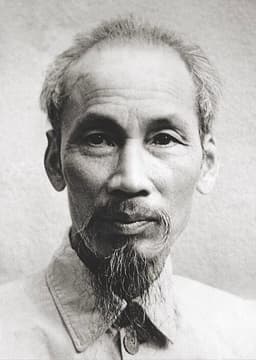
Ho Chi Minh
Revolutionary · Modern
62.9Total
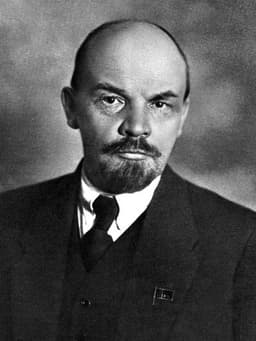
Vladimir Lenin
Revolutionary · Modern
71.2Total
Basic Information
Born
1890
1870
Died
1969
1924
Era
Modern
Modern
Nationality
Vietnam
Russia
Occupation
Revolutionary
Revolutionary
Civilization
Eastern
Western
Score Comparison
Military (10%)
55.0
30.0
Political (20%)
72.0
78.0
Influence (20%)
62.0
82.0
Legacy (20%)
58.0
72.0
Leadership (15%)
72.0
80.0
Strategy (15%)
58.0
60.0
TOTAL
62.9
71.2
Ho Chi Minh — Complete Timeline
1941 AD
Establishment of the Viet MinhPolitical Action◆ Major
Ho Chi Minh founded the Viet Minh (League for the Independence of Vietnam) in southern China. This coalition of nationalist and communist groups became the primary force for Vietnamese independence, fighting both Japanese occupation and French colonialism.
Viet MinhIndependence MovementWorld War II
Impact: nationalconstructive
1945 AD
Declaration of Independence of VietnamPolitical Action
Ho Chi Minh proclaimed the Democratic Republic of Vietnam in Hanoi's Ba Dinh Square, citing the US Declaration of Independence. This established the Viet Minh government and began the struggle for independence from French colonial rule.
IndependenceVietnamDecolonization
Impact: nationalconstructive
1954 AD
Battle of Dien Bien PhuWar
Ho Chi Minh's Viet Minh forces, under General Giap, defeated the French garrison at Dien Bien Phu. This victory ended French colonial rule in Indochina and led to the Geneva Accords dividing Vietnam at the 17th parallel.
Vietnam WarDecolonizationFrench Indochina
Impact: regional
Geneva AccordsPolitical Action◆ Major
Ho Chi Minh's delegation signed the Geneva Accords, temporarily dividing Vietnam at the 17th parallel. The agreement promised nationwide elections in 1956, which were never held, leading to the permanent division of Vietnam.
Geneva ConferenceDivision of VietnamDiplomacy
Impact: regional
1959 AD
Start of the Vietnam WarWar
Ho Chi Minh's government in North Vietnam authorized armed struggle against the US-backed South Vietnamese regime. This escalated into the Vietnam War, a prolonged conflict that resulted in millions of deaths and US withdrawal in 1973.
Vietnam WarCold WarCommunism
Impact: globaldestructive
Vladimir Lenin — Complete Timeline
1903 AD
Founding of the Bolshevik PartyPolitical Action
At the Second Congress of the Russian Social Democratic Labour Party in London, Lenin led a split that created the Bolshevik faction. The Bolsheviks advocated for a disciplined vanguard party of professional revolutionaries, a key element of Lenin's political strategy.
Political PartyRevolutionIdeology
Impact: global
1917 AD
April ThesesPolitical Action◆ Major
Lenin returned to Russia from exile and published the April Theses, calling for the overthrow of the Provisional Government, transfer of power to the soviets, and an end to World War I. This document set the Bolshevik agenda for the coming revolution.
RevolutionIdeologyPolitical Strategy
Impact: national
October RevolutionPolitical Action
Lenin led the Bolshevik seizure of power in Petrograd, capturing key government buildings and the Winter Palace. The revolution overthrew the Provisional Government and established the world's first socialist state, the Russian Soviet Federative Socialist Republic.
RevolutionCoupCommunism
Impact: global
1918 AD
Treaty of Brest-LitovskPolitical Action◆ Major
Lenin signed a separate peace treaty with the Central Powers, ceding vast territories including Ukraine, Belarus, and the Baltic states. The treaty ended Russia's involvement in World War I but caused significant territorial losses and internal opposition.
TreatyWorld War ITerritorial Loss
Impact: globaldestructive
1921 AD
New Economic Policy (NEP)Reform◆ Major
Lenin introduced the NEP, allowing limited private enterprise and market mechanisms to revive the war-torn Soviet economy. The policy replaced War Communism, permitting small-scale capitalism while the state retained control of major industries.
Economic ReformPolicyRecovery
Impact: nationalconstructive
1922 AD
Establishment of the Soviet UnionPolitical Action
Lenin oversaw the creation of the Union of Soviet Socialist Republics (USSR), a federation of Soviet republics. The new state consolidated Bolshevik control over much of the former Russian Empire and became a model for communist states worldwide.
State FormationCommunismFederation
Impact: global
Expert Analysis
Vladimir Lenin vs Ho Chi Minh
### The Revolutionary’s Dilemma: Lenin and Ho Chi Minh
In the winter of 1917, a balding man in a rumpled suit stepped off a sealed train at Petrograd’s Finland Station. He had been in exile for years, and the world was at war. Across the globe, decades later, a frail, wisp-bearded figure in a simple khaki outfit would stand before a microphone in Hanoi, reading a declaration of independence while American bombers still hummed in distant memory. One man, Vladimir Lenin, would die in his bed as the undisputed founder of a superpower. The other, Ho Chi Minh, would live long enough to see his country torn apart by war, and die before its final victory. Both were revolutionaries, both were Marxists, but their paths diverged as sharply as the continents they inhabited. Why did one succeed in building a durable empire, while the other became a symbol of a struggle that remained unfinished?
### Origins
Lenin was born into the Russian intelligentsia in 1870, the son of a school inspector. His brother’s execution for plotting to assassinate the Tsar seared a rage into him that would never cool. He grew up in a world of repression, censorship, and a peasantry that seemed to him a shapeless mass waiting for a master. His Marxism was a cold, analytical weapon: he believed that a disciplined vanguard party must seize power on behalf of the proletariat, because the workers, left to themselves, could only achieve trade-union consciousness. Russia, he argued, was the weak link in the capitalist chain.
Ho Chi Minh emerged from a different soil. Born Nguyen Sinh Cung in 1890 in a village in French Indochina, his father was a Confucian scholar who resisted French rule. Ho left Vietnam as a young man, working as a cook, a photographer, and a sailor, wandering through America, Britain, and France. He saw the West not as a theoretical enemy, but as a concrete oppressor. In Paris, he tried to petition Woodrow Wilson for Vietnamese self-determination at the Versailles Peace Conference—and was ignored. That humiliation turned him from a nationalist into a communist, but his Marxism was always tempered by a deep, visceral love for his land and its people. Where Lenin saw a class, Ho saw a nation.
### Rise to Power
Lenin’s rise was a masterclass in political opportunism. In 1903, he forced a split at the London congress of the Russian Social Democratic Labour Party, creating the Bolshevik faction—a name that meant “majority” even when they were a minority. For years he wrote, plotted, and waited. The First World War provided his opening. In 1917, as the Tsar fell and the Provisional Government stumbled, Lenin returned to Russia and issued the April Theses: no support for the government, all power to the soviets. By October, he had orchestrated a near-bloodless coup in Petrograd, seizing the Winter Palace while the world watched. His path to power was a surgical strike, executed in a single city in a single night.
Ho Chi Minh’s path was a marathon. In 1941, he founded the Viet Minh in southern China, a coalition of communists and nationalists. He spent years in the jungles, fighting the Japanese occupation, then the returning French. His turning point came not in a palace, but in a valley: Dien Bien Phu in 1954, where his general, Vo Nguyen Giap, crushed the French garrison after a 56-day siege. That victory forced the Geneva Accords, which temporarily divided Vietnam at the 17th parallel. Ho had achieved what Lenin had not: he had fought a decade-long war against a colonial power and won. But the division was a poison pill. The United States stepped in to support the South, and Ho’s victory was incomplete.
### Leadership & Governance
Lenin ruled with the ruthlessness of an engineer. He believed that revolution required dictatorship, and he built one. He dissolved the Constituent Assembly, banned opposition parties, and created the Cheka, the secret police, to suppress dissent. During the Russian Civil War, he authorized the Red Terror, executing thousands of perceived enemies. But he was also pragmatic. When War Communism—forced grain requisitioning—led to famine and rebellion, he pivoted to the New Economic Policy in 1921, allowing small-scale private enterprise and market mechanisms. It was a tactical retreat, not a betrayal of principle. He was a man who could sacrifice his own ideology to save his power.
Ho Chi Minh governed differently. He was a nationalist first, a communist second. In 1945, his Declaration of Independence for the Democratic Republic of Vietnam quoted the American Declaration, a gesture of hope that the United States would support him. He was a unifying figure, often called “Uncle Ho,” who lived simply and smiled gently. His rule was not soft—he purged rivals and enforced collectivization—but his leadership was charismatic and personal. He did not build a cult of personality around himself; he built one around the nation. He understood that in Vietnam, the revolution had to be a peasant struggle, not a proletarian uprising. Lenin commanded from a desk; Ho led from the trail.
### Triumph & Tragedy
Lenin’s greatest triumph was the creation of the Soviet Union in 1922, a state that would survive for seven decades and challenge the United States for global supremacy. His greatest tragedy was that he did not live to see it. In 1922, he suffered a series of strokes that left him paralyzed and unable to speak. He died in 1924, at the age of 53, leaving behind a system that would be twisted by Stalin into a terror machine. Lenin’s last letters warned against Stalin’s brutality, but they were suppressed. He died a prisoner of his own creation.
Ho Chi Minh’s triumph was his survival. He outlived the French, outlasted the Geneva Accords, and watched his forces begin the war against the United States. In 1959, he authorized armed struggle against the South, setting the stage for the Vietnam War. His tragedy was that he did not live to see its end. He died in 1969, at the age of 79, as American bombs rained on Hanoi. He knew that victory was near—the Tet Offensive had shaken America’s will—but he could not taste it. He died a symbol, not a victor.
### Character & Destiny
Lenin was a man of iron will and cold intellect. He believed that history was a science, and that he was its instrument. He had no patience for sentiment, no tolerance for doubt. His personality shaped a revolution that was top-down, bureaucratic, and brutal. He created a state that was a machine, and he was its engineer.
Ho Chi Minh was a man of patience and endurance. He had been a wanderer, a student, a fugitive. He understood that revolution was not a single event, but a long, slow erosion of the enemy’s will. His personality shaped a revolution that was bottom-up, popular, and resilient. He created a movement that was a family, and he was its father.
### Legacy
Lenin’s legacy is a paradox. He inspired revolutions across the world, from China to Cuba, but his methods were used to justify Stalin’s purges and the Gulag. His name is synonymous with the Soviet experiment, which collapsed in 1991, leaving behind a Russia still haunted by its past.
Ho Chi Minh’s legacy is more singular. He is the father of modern Vietnam, a unified country that today is a communist state with a market economy—a living echo of Lenin’s NEP. His image adorns every city, his name is given to streets and squares. He is remembered not as a tyrant, but as a liberator. The difference is that Lenin built a state that crushed its people; Ho built a state that liberated its nation.
### Conclusion
In the end, the difference between Lenin and Ho Chi Minh is the difference between a prophet and a patriot. Lenin believed in an idea so fiercely that he was willing to destroy the world to realize it. Ho Chi Minh believed in his country so deeply that he was willing to adapt any idea to save it. One created a superpower that died; the other created a nation that lives. The revolutionary’s dilemma is that history does not reward purity—it rewards results. And the results, in the end, are written not in manifestos, but in the hearts of the people who remember them.
Rankings
🥇
Vladimir LeninLeader
Mil: 30.0Pol: 78.0Inf: 82.0
71.2
🥈
Ho Chi Minh
Mil: 55.0Pol: 72.0Inf: 62.0
62.9
+8.3 behind
How This Comparison Works
Algorithm
Each figure is scored on 6 dimensions (0—100 scale) based on structured historical data: Military (10%), Political (20%), Influence (20%), Legacy (20%), Leadership (15%), Strategy (15%). The weighted total produces the final ranking.
Data Sources
Scores are computed from structured sub-indicators in the database. Scale factors adjust for era (Ancient ×0.85, Modern ×1.0) and civilization size (Eastern ×1.05, Other ×0.80) to account for differences in population and military scale.
Maximum 3 Figures
Comparisons are limited to 2—3 figures to ensure readability and statistical meaningfulness.
Error Margins
±5 points per dimension — Sub-scores are derived from historical records with inherent uncertainty. Two figures within 5 points on a dimension should be considered roughly equivalent in that area.
Total Score Accuracy
±3 points overall — The weighted combination of 6 dimensions produces a total score with approximately ±3 points of uncertainty. Differences of less than 3 points are not statistically significant— the figures are effectively tied.
Known Limitations
- Historical records are incomplete and uneven across civilizations
- Figures from oral-tradition societies may be underrepresented
- Occupation labels can misclassify multi-role figures
- Scores measure capability and impact, not moral character
- Quantitative scoring is a comparison tool, not absolute truth
Capability Radar
Military (10%) — Battles & Warfare
Battles
65
20
Win Rate
60
35
Expansion
55
70
Political (20%) — Governance & Reform
Reform
85
95
Diplomacy
90
75
Economy
40
60
Influence (20%) — Cultural & Global Reach
Cultural
75
80
Global
75
90
Legacy (20%) — Historical Impact
Historical
85
95
Longevity
70
85
Leadership (15%) — Power & Stability
Tenure
70
55
Stability
50
40
Strategy (15%) — Tactics & Innovation
Strategy
80
55
Tactics
70
30
Reform
75
85
Similar Comparisons
Comments & Discussion
No comments yet. Be the first to share your thoughts!