Loading...
Abd el-Krim vs Sun Yat-sen
Abd el-Krim leads by 9.3 pts · 2 figures compared
…
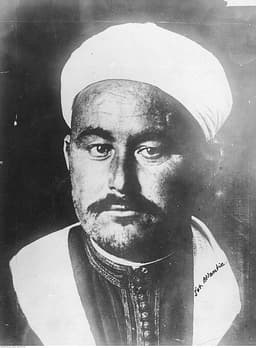
Abd el-Krim
Revolutionary · Modern
61.8Total
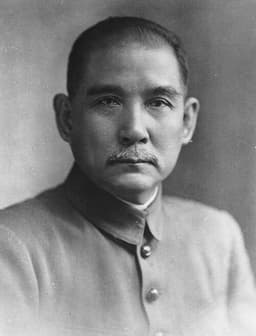
Sun Yat-sen
Revolutionary · Modern
52.5Total
Basic Information
Born
1882
1866
Died
1963
1925
Era
Modern
Modern
Nationality
Morocco
China
Occupation
Revolutionary
Revolutionary
Civilization
Middle Eastern
Eastern
Score Comparison
Military (10%)
75.0
45.0
Political (20%)
72.0
68.0
Influence (20%)
59.0
61.0
Legacy (20%)
50.0
58.0
Leadership (15%)
72.0
33.5
Strategy (15%)
55.0
30.3
TOTAL
61.8
52.5
Abd el-Krim — Complete Timeline
1921 AD
Battle of AnnualWar
Abd el-Krim's Riffian forces decisively defeated a Spanish army at Annual in Spanish Morocco. The Spanish suffered thousands of casualties and lost vast amounts of equipment. This victory established Abd el-Krim as a major military leader and led to the proclamation of the Rif Republic.
Rif WarSpanish ColonialismBattle
Impact: regional
1923 AD
Proclamation of the Rif RepublicPolitical Action◆ Major
Abd el-Krim formally proclaimed the independent Rif Republic in northern Morocco. He established a government and administrative system, challenging Spanish and French colonial rule. The republic was not internationally recognized but functioned as a de facto state.
Rif RepublicIndependenceAnti-Colonialism
Impact: regionalconstructive
1925 AD
Rif War against FranceWar◆ Major
Abd el-Krim's forces attacked French positions in Morocco, expanding the conflict beyond Spanish territory. The French responded with a massive military campaign, using superior firepower and chemical weapons. This led to the eventual defeat of the Rif Republic.
Rif WarFrench ColonialismChemical Weapons
Impact: regional
1926 AD
Surrender and Exile to RéunionWar◆ Major
After a prolonged campaign, Abd el-Krim surrendered to French forces. He was exiled to the island of R
Rif WarExileDefeat
Impact: regionaltragic
1947 AD
Release and Move to EgyptPolitical Action
Abd el-Krim was released by the French and allowed to move to Egypt. He settled in Cairo, where he continued to advocate for North African independence and became a symbolic figure for anti-colonial movements.
ExileAnti-ColonialismSymbol
Impact: regionalconstructive
Sun Yat-sen — Complete Timeline
1894 AD
Founded the Revive China SocietyPolitical Action◆ Major
Sun Yat-sen founded the Revive China Society (Xingzhonghui) in Honolulu, the first modern revolutionary organization among overseas Chinese. The society aimed to overthrow the Qing dynasty and establish a republic, marking the beginning of organized revolutionary activity.
RevolutionOverseas ChineseRepublic
Impact: nationalconstructive
1911 AD
Led the Xinhai RevolutionPolitical Action
Sun Yat-sen's revolutionary activities culminated in the Wuchang Uprising of October 1911, which sparked the Xinhai Revolution. The uprising spread across China, leading to the abdication of the Qing emperor in 1912 and the end of 2,000 years of imperial rule.
RevolutionQing DynastyRepublic
Impact: globalconstructive
1912 AD
Proclaimed the Republic of ChinaPolitical Action
On January 1, 1912, Sun Yat-sen was inaugurated as the provisional president of the Republic of China in Nanjing. He proclaimed the establishment of the first republic in Asia, based on his Three Principles of the People: nationalism, democracy, and livelihood.
RepublicPresidencyThree Principles
Impact: globalconstructive
Resigned Presidency in Favor of Yuan ShikaiPolitical Action◆ Major
To secure the abdication of the Qing emperor and avoid civil war, Sun Yat-sen resigned the provisional presidency in February 1912 in favor of Yuan Shikai. This decision, while pragmatic, allowed Yuan to consolidate power and later attempt to restore the monarchy.
Power TransferYuan ShikaiCompromise
Impact: national
1919 AD
Reorganized the KuomintangPolitical Action◆ Major
Sun Yat-sen reorganized the Chinese Revolutionary Party into the Kuomintang (KMT) in 1919, with a more centralized structure. He later accepted Soviet aid and CCP members into the party under the policy of 'alliance with Russia and the Communists,' reshaping the revolutionary movement.
KuomintangSoviet AllianceCCP
Impact: nationalconstructive
Expert Analysis
Sun Yat-sen vs Abd el-Krim
# The Revolutionary’s Crossroads: Sun Yat-sen and Abd el-Krim
On a January morning in 1912, Sun Yat-sen stood before a crowd in Nanjing, his hand raised as he took the oath as provisional president of a new republic. China, after two thousand years of imperial rule, was reborn. Twelve years later, on the other side of the world, Abd el-Krim watched from a mountain fortress in the Rif as Spanish flags were hauled down across northern Morocco, replaced by the crimson banner of an independent republic. Both men had toppled old empires. Both had dreamt of new nations. But the winds of history would carry them to very different destinies.
Origins
Sun Yat-sen was born in 1866 in a village near Guangzhou, into a peasant family with modest means. His early years were shaped by the decaying Qing dynasty, a crumbling colossus humiliated by foreign powers. He was sent to Hawaii at thirteen, where he received a Western education, then studied medicine in Hong Kong. This exposure to democracy and science planted a seed: China needed not reform, but revolution. Sun’s world was one of vast civilization in decline, where the question was not whether change would come, but who would wield it.
Abd el-Krim, born in 1882 in Ajdir, Morocco, grew up in a different kind of twilight. The sultanate was weak, and European encroachment was a slow bleed. His father was a qadi, a religious judge, and young Muhammad ibn Abd el-Krim al-Khattabi studied both Islamic law and Spanish language, later working as a translator for the Spanish administration. Where Sun saw a unified nation in need of rebirth, Abd el-Krim saw a fragmented tribal landscape in need of unity against a foreign invader. His education gave him a foot in two worlds—the traditional Rif and the modern European—but his heart never left the mountains.
Rise to Power
Sun Yat-sen’s path was one of exile and persistence. In 1894, he founded the Revive China Society in Honolulu, the first modern revolutionary organization among overseas Chinese. For seventeen years, he traveled the world—Japan, Europe, America—raising funds, building networks, and inspiring followers. His rise was not through military conquest but through ideas. The Xinhai Revolution of 1911 was not his direct command; it was a spark he had spent decades preparing. When the Wuchang Uprising erupted in October, Sun was in Denver, Colorado. He returned to China as the revolution’s spiritual father.
Abd el-Krim’s rise was forged in battle. After World War I, the Spanish attempted to extend control over the Rif mountains. Abd el-Krim, initially a local leader, transformed into a military strategist. In 1921, at the Battle of Annual, his forces annihilated a Spanish army of over 20,000 men. It was one of the most devastating defeats a European power had suffered at the hands of an indigenous force in the colonial era. Overnight, Abd el-Krim became the master of the Rif. In 1923, he proclaimed the Rif Republic, establishing a government with ministers, courts, and a tax system.
Leadership & Governance
Sun Yat-sen was a visionary, not a general. His military score of 45.4 reflects a man who never commanded armies; his power came from political persuasion. His Three Principles of the People—nationalism, democracy, and livelihood—became the ideological foundation of modern China. But as a ruler, he struggled. In 1912, to secure the Qing emperor’s abdication and avoid civil war, Sun resigned the presidency in favor of Yuan Shikai, a former imperial general. It was a pragmatic betrayal of his own revolution. He spent the rest of his life trying to reclaim control, reorganizing the Kuomintang in 1919 and seeking alliances with warlords and the Soviet Union.
Abd el-Krim, by contrast, was a battlefield commander of rare skill. His military score of 57.2 and leadership score of 86.5 tell the story of a man who led from the front. He unified fractious tribes through a blend of religious authority and iron discipline. He established a modern administration, built roads, and set up a postal service. But his governance was always shadowed by war. The Rif Republic existed primarily to fight—first Spain, then France. In 1925, he attacked French positions, triggering a massive Franco-Spanish counteroffensive. His state was a fortress, not a nation.
Triumph & Tragedy
Sun Yat-sen’s greatest moment was the proclamation of the Republic of China on January 1, 1912. For a fleeting moment, he embodied the hope of four hundred million people. His greatest tragedy came almost immediately: he could not hold the power he had won. He died in 1925, a disappointed man, watching China fragment into warlord chaos. He never saw the nation he had imagined.
Abd el-Krim’s triumph was Annual, a victory that humbled an empire and inspired anti-colonial movements across Africa and Asia. His tragedy was the siege that followed. In 1926, after months of French and Spanish forces using poison gas and overwhelming firepower, he surrendered. He was exiled to Réunion, a remote island in the Indian Ocean, where he would spend twenty-one years in isolation. He was released in 1947 and moved to Egypt, but he never returned to the Rif.
Character & Destiny
Sun Yat-sen was a man of ideas in an age of action. He was charismatic, idealistic, and endlessly persistent, but he lacked the ruthlessness to hold power. He once said, “To understand the world, you must first understand your own country.” His tragedy was that he understood China’s soul but could not command its armies.
Abd el-Krim was a man of action in an age of empires. He was proud, uncompromising, and brilliant in war. He said, “We are not fighting for territory, but for the right to live as free men.” His tragedy was that he understood his enemy’s technology but not its scale. He fought a colonial war alone, and the world was not yet ready for his kind of freedom.
Legacy
Sun Yat-sen’s legacy is monumental. He is revered in both the People’s Republic of China and Taiwan, a rare figure of consensus. His Three Principles remain the ideological bedrock of two Chinas. His influence score of 77.6 and legacy score of 72.2 reflect a man whose ideas outlived his failures.
Abd el-Krim’s legacy is quieter but no less profound. He is a hero in Morocco and a symbol of anti-colonial resistance across the Arab world. His influence score of 73.9 and leadership score of 86.5 speak to a man who, for a few years, proved that the colonized could defeat the colonizer. But his republic died with his surrender. He left no enduring state, only a memory of defiance.
Conclusion
Sun Yat-sen and Abd el-Krim were revolutionaries of the same era but opposite fates. One built a dream that others would realize; the other built a fortress that others would abandon. Sun’s ideas reshaped a civilization; Abd el-Krim’s courage reshaped a people’s pride. They remind us that revolution is not a single act but a conversation between vision and violence, between the pen and the sword. In the end, both men gave their lives to a cause larger than themselves—and both died knowing they had not finished the work.
Rankings
🥇
Abd el-KrimLeader
Mil: 75.0Pol: 72.0Inf: 59.0
61.8
🥈
Sun Yat-sen
Mil: 45.0Pol: 68.0Inf: 61.0
52.5
+9.3 behind
How This Comparison Works
Algorithm
Each figure is scored on 6 dimensions (0—100 scale) based on structured historical data: Military (10%), Political (20%), Influence (20%), Legacy (20%), Leadership (15%), Strategy (15%). The weighted total produces the final ranking.
Data Sources
Scores are computed from structured sub-indicators in the database. Scale factors adjust for era (Ancient ×0.85, Modern ×1.0) and civilization size (Eastern ×1.05, Other ×0.80) to account for differences in population and military scale.
Maximum 3 Figures
Comparisons are limited to 2—3 figures to ensure readability and statistical meaningfulness.
Error Margins
±5 points per dimension — Sub-scores are derived from historical records with inherent uncertainty. Two figures within 5 points on a dimension should be considered roughly equivalent in that area.
Total Score Accuracy
±3 points overall — The weighted combination of 6 dimensions produces a total score with approximately ±3 points of uncertainty. Differences of less than 3 points are not statistically significant— the figures are effectively tied.
Known Limitations
- Historical records are incomplete and uneven across civilizations
- Figures from oral-tradition societies may be underrepresented
- Occupation labels can misclassify multi-role figures
- Scores measure capability and impact, not moral character
- Quantitative scoring is a comparison tool, not absolute truth
Capability Radar
Military (10%) — Battles & Warfare
Battles
75
15
Win Rate
70
10
Expansion
60
5
Political (20%) — Governance & Reform
Reform
70
85
Diplomacy
65
60
Economy
50
20
Influence (20%) — Cultural & Global Reach
Cultural
60
70
Global
55
65
Legacy (20%) — Historical Impact
Historical
70
80
Longevity
55
75
Leadership (15%) — Power & Stability
Tenure
55
30
Stability
45
15
Strategy (15%) — Tactics & Innovation
Strategy
80
20
Tactics
85
10
Reform
65
40
Similar Comparisons
Comments & Discussion
RifRevolution6/16/2026
Sun Yat-sen represents the intellectual revolutionary who tried to transplant Western democracy wholesale into Chinese soil. His Three Principles were elegant on paper, but he ultimately couldn't unite a fractured nation. Abd el-Krim understood tribal dynamics and grassroots mobilization far better. While Sun relied on foreign backers from Japan to the Soviet Union, el-Krim actually built an independent state that administered justice, collected taxes, and fielded an army. The Rif Republic laste
黄埔老兵6/16/2026
拿孙中山和凯里姆比,根本就是关公战秦琼。孙中山背后有百万华侨捐款,有列强支持,结果辛亥革命后十几年还是军阀混战。凯里姆带着两千条破枪,靠山地游击战把西班牙打得跪地求和,还建立了北非第一个现代共和国。哪个更了不起?看看地图就知道了。可惜啊,凯里姆最后被法国和西班牙联合绞杀,这就像他们永远不敢让第三世界真正站起来一样。
CoastalStrategist6/16/2026
Both men studied Western systems and rejected them. Sun borrowed the American republic model but layered it with Chinese bureaucratic traditions. El-Krim studied Spanish law then used it against Spain in negotiations. Where they truly diverge is in their endgames. Sun became a wandering fund-seeker, perpetually in exile. El-Krim actually governed - he built roads, established a diplomatic corps, and modernized education in the Rif. One wrote books and gave speeches; the other built a state while
史料纠察员6/16/2026
你们都在吹凯里姆,我查过原始档案。里夫共和国1923年成立,1926年就投降了,存在时间还不如袁世凯称帝长。孙中山虽然没建成稳定政权,但国民党最后统一了中国,还打赢了抗日战争。凯里姆的游击队再猛,最后不还是被法西联军包了饺子?更别说他后来被迫接受流亡,到死都没能回摩洛哥。所谓独立建国,不过是一厢情愿的神话罢了。
FezFiles6/16/2026
What gets overlooked is how both men failed at the hardest part: succession. Sun's death left a power vacuum that Chiang Kai-shek filled through military force, not democratic process. El-Krim's surrender in 1926 left the Rif movement leaderless, and Morocco's independence later came through diplomacy, not revolution. Both founders became martyrs to causes larger than themselves. But here's the real difference: el-Krim actually won battles. At Annual in 1921, his forces killed over 8,000 Spanish