Loading...
Shamil Basayev vs Sun Yat-sen
Sun Yat-sen leads by 9.4 pts · 2 figures compared
…
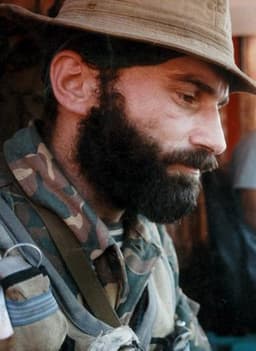
Shamil Basayev
Revolutionary · Modern
43.1Total
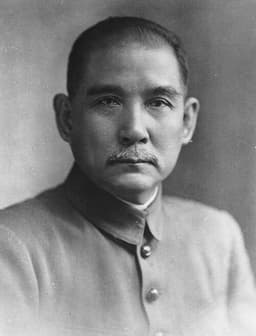
Sun Yat-sen
Revolutionary · Modern
52.5Total
Basic Information
Born
1965
1866
Died
—
1925
Era
Modern
Modern
Nationality
Chechnya
China
Occupation
Revolutionary
Revolutionary
Civilization
Western
Eastern
Score Comparison
Military (10%)
40.0
45.0
Political (20%)
35.0
68.0
Influence (20%)
45.5
61.0
Legacy (20%)
35.0
58.0
Leadership (15%)
57.1
33.5
Strategy (15%)
51.7
30.3
TOTAL
43.1
52.5
Shamil Basayev — Complete Timeline
1995 AD
Budyonnovsk Hospital Hostage CrisisWar◆ Major
Basayev led a raid on the Russian town of Budyonnovsk, taking over 1,000 hostages in a hospital. The crisis ended with a negotiated settlement that allowed him to return to Chechnya. This attack demonstrated Chechen reach into Russia.
Hostage CrisisTerrorismChechnya
Impact: nationaldestructive
1999 AD
Invasion of DagestanWar
Basayev led Chechen and Islamist fighters into Dagestan to support local rebels. This invasion triggered the Second Chechen War as Russia responded with a full-scale military campaign. The invasion failed to gain local support.
DagestanChechnyaInvasion
Impact: regionaldestructive
2002 AD
Moscow Theater Hostage CrisisWar◆ Major
Basayev orchestrated the Moscow theater hostage crisis, where Chechen militants took 850 people hostage. Russian forces ended the siege with gas, killing 130 hostages. The attack increased international condemnation of Chechen rebels.
Hostage CrisisTerrorismMoscow
Impact: nationaldestructive
2004 AD
Beslan School SiegeWar◆ Major
Basayev planned the Beslan school siege, where militants took over 1,100 people hostage. The siege ended in a bloody assault, resulting in 334 deaths, mostly children. This attack was widely condemned globally.
Hostage CrisisTerrorismBeslan
Impact: globaltragic
2006 AD
Killed by Russian ExplosivesWar◆ Major
Basayev was killed in Ingushetia when a truck loaded with explosives detonated. Russian intelligence claimed responsibility. His death removed the most prominent Chechen rebel commander.
AssassinationChechnyaRussia
Impact: regional
Sun Yat-sen — Complete Timeline
1894 AD
Founded the Revive China SocietyPolitical Action◆ Major
Sun Yat-sen founded the Revive China Society (Xingzhonghui) in Honolulu, the first modern revolutionary organization among overseas Chinese. The society aimed to overthrow the Qing dynasty and establish a republic, marking the beginning of organized revolutionary activity.
RevolutionOverseas ChineseRepublic
Impact: nationalconstructive
1911 AD
Led the Xinhai RevolutionPolitical Action
Sun Yat-sen's revolutionary activities culminated in the Wuchang Uprising of October 1911, which sparked the Xinhai Revolution. The uprising spread across China, leading to the abdication of the Qing emperor in 1912 and the end of 2,000 years of imperial rule.
RevolutionQing DynastyRepublic
Impact: globalconstructive
1912 AD
Proclaimed the Republic of ChinaPolitical Action
On January 1, 1912, Sun Yat-sen was inaugurated as the provisional president of the Republic of China in Nanjing. He proclaimed the establishment of the first republic in Asia, based on his Three Principles of the People: nationalism, democracy, and livelihood.
RepublicPresidencyThree Principles
Impact: globalconstructive
Resigned Presidency in Favor of Yuan ShikaiPolitical Action◆ Major
To secure the abdication of the Qing emperor and avoid civil war, Sun Yat-sen resigned the provisional presidency in February 1912 in favor of Yuan Shikai. This decision, while pragmatic, allowed Yuan to consolidate power and later attempt to restore the monarchy.
Power TransferYuan ShikaiCompromise
Impact: national
1919 AD
Reorganized the KuomintangPolitical Action◆ Major
Sun Yat-sen reorganized the Chinese Revolutionary Party into the Kuomintang (KMT) in 1919, with a more centralized structure. He later accepted Soviet aid and CCP members into the party under the policy of 'alliance with Russia and the Communists,' reshaping the revolutionary movement.
KuomintangSoviet AllianceCCP
Impact: nationalconstructive
Expert Analysis
Sun Yat-sen vs Shamil Basayev
# The Revolutionary’s Two Faces
In the spring of 1912, Sun Yat-sen stood before a crowd in Nanjing, a soft-spoken physician in a Western suit, declaring the birth of a republic after two thousand years of imperial rule. Ninety years later and half a world away, Shamil Basayev watched from a Chechen hillside as his fighters stormed a Russian school, their rifles aimed at children’s heads. Both men called themselves revolutionaries. Both sought to tear down an old order. But where Sun dreamed of building a nation, Basayev dreamed only of burning one down. Why did one become a founding father and the other a terrorist? The answer lies not in their causes, but in their characters—and in the worlds that shaped them.
Origins
Sun Yat-sen was born in 1866 to a poor farming family in Guangdong province, a region long exposed to foreign influence through its coastal trade. As a teenager, he traveled to Honolulu to live with his elder brother, an experience that opened his eyes to Western education, democratic ideas, and the humiliations China suffered under the Qing dynasty. He later studied medicine in Hong Kong, where he absorbed not just anatomy but political philosophy. Sun’s China was a civilization in collapse—corrupt, weak, and carved up by foreign powers. His revolution was born from the conviction that China could be reborn.
Shamil Basayev, born in 1965, grew up in the mountains of Chechnya, a small republic in the Caucasus that Russia had conquered in the nineteenth century. His childhood was marked by the Soviet system’s brutal suppression of Chechen identity—mass deportations, cultural erasure, and economic neglect. When the Soviet Union collapsed in 1991, Chechnya declared independence. Basayev, then a young man with a background in computer science and a passion for soccer, found himself in a land without a state, surrounded by a Russian superpower that refused to let go. His revolution was born not from hope, but from desperation.
Rise to Power
Sun’s ascent was slow, intellectual, and marked by failure. In 1894, he founded the Revive China Society in Honolulu, the first modern revolutionary organization among overseas Chinese. For seventeen years, he plotted, fundraised, and fled—exiled to Japan, Europe, and America, always one step ahead of Qing agents. His breakthrough came in 1911, not through his own military action, but when a mutiny in Wuchang sparked the Xinhai Revolution. Sun, returning from abroad, was elected provisional president of the new Republic of China in January 1912. He had not fired a single shot.
Basayev’s rise was violent and swift. In 1995, during the First Chechen War, he led a raid on the Russian town of Budyonnovsk, taking over 1,000 hostages in a hospital. The crisis ended with a negotiated withdrawal, but it made Basayev a hero to Chechens and a monster to Russians. He had discovered a terrible truth: when you cannot defeat an army, you can terrorize a society. In 1999, he invaded neighboring Dagestan with Islamist fighters, an act that triggered the Second Chechen War and turned him from a nationalist commander into a jihadist leader. By 2002, he was orchestrating the Moscow theater hostage crisis, where 850 people were taken captive. The siege ended in a bloody Russian assault that killed over 130 hostages. Basayev was now the world’s most wanted terrorist.
Leadership & Governance
Sun Yat-sen was a political visionary but a poor administrator. As provisional president, he lasted only two months. To secure the Qing emperor’s abdication and avoid civil war, he resigned in February 1912 in favor of the powerful general Yuan Shikai—a decision that haunted him. Yuan soon betrayed the republic and declared himself emperor. Sun spent the rest of his life trying to rebuild a revolutionary movement, reorganizing the Kuomintang in 1919 with a more centralized structure. His true genius was ideological: the Three Principles of the People—nationalism, democracy, and livelihood—became the founding creed of modern China, inspiring both the Nationalists and the Communists who followed.
Basayev never governed anything. He was a guerrilla commander, not a statesman. His leadership was defined by tactical audacity and strategic emptiness. The 2004 Beslan school siege, which he planned, saw over 1,100 hostages taken, mostly children. The siege ended in chaos and carnage, with more than 330 dead, half of them children. Basayev offered no political program, no vision for Chechnya beyond independence under Islamic law. His strategy was destruction for its own sake, a war of attrition that could never be won.
Triumph & Tragedy
Sun’s greatest triumph was the Xinhai Revolution itself—the end of two millennia of imperial rule. But his tragedy was that he never saw his dream realized. He died in 1925 of liver cancer, a disappointed man, his republic torn apart by warlords and foreign invasion. He left behind a movement, but not a nation.
Basayev’s greatest triumph was his survival—for over a decade, he evaded the full might of the Russian military. His tragedy was that he became the very thing he fought against. He died in 2006, killed by Russian explosives in Ingushetia, a truck bomb detonating as he planned another attack. He left behind only ruins and grief.
Character & Destiny
Sun Yat-sen was a man of ideas. He believed in education, in gradual reform, in the power of persuasion. He was often called the “Father of the Nation” because he gave birth to a vision, not a state. His scores—Political 80.0, Influence 77.6, Legacy 72.2—reflect a man who changed the world through words and will, not through force.
Basayev was a man of action. He believed only in violence. His scores—Political 38.8, Legacy 47.7, Leadership 34.5—reflect a commander who could inspire followers but could not build a future. He was named after Imam Shamil, the 19th-century Chechen resistance leader, but he inherited only the name, not the wisdom.
Legacy
Sun Yat-sen is remembered across the Taiwan Strait—as the founding father of the Republic of China in Taipei and as a “great revolutionary forerunner” in Beijing. His portrait still hangs in Tiananmen Square. His ideas, though often betrayed, shaped the political DNA of modern China.
Basayev is remembered only as a terrorist. In Chechnya, some whisper his name with a mix of pride and shame. In Russia, he is a symbol of evil. He left no ideology, no party, no state. He left only a question: Can a revolution born in blood ever become anything else?
Conclusion
Sun Yat-sen and Shamil Basayev both fought for peoples they believed were oppressed. Both failed in their lifetimes. But one gave his people a dream, and the other gave them only a nightmare. The difference was not in their enemies, but in themselves. Sun had a vision of what could be built; Basayev had only a vision of what could be destroyed. In the end, revolutions are judged not by the old order they tear down, but by the new order they leave behind.
Rankings
🥇
Sun Yat-senLeader
Mil: 45.0Pol: 68.0Inf: 61.0
52.5
🥈
Shamil Basayev
Mil: 40.0Pol: 35.0Inf: 45.5
43.1
+9.4 behind
How This Comparison Works
Algorithm
Each figure is scored on 6 dimensions (0—100 scale) based on structured historical data: Military (10%), Political (20%), Influence (20%), Legacy (20%), Leadership (15%), Strategy (15%). The weighted total produces the final ranking.
Data Sources
Scores are computed from structured sub-indicators in the database. Scale factors adjust for era (Ancient ×0.85, Modern ×1.0) and civilization size (Eastern ×1.05, Other ×0.80) to account for differences in population and military scale.
Maximum 3 Figures
Comparisons are limited to 2—3 figures to ensure readability and statistical meaningfulness.
Error Margins
±5 points per dimension — Sub-scores are derived from historical records with inherent uncertainty. Two figures within 5 points on a dimension should be considered roughly equivalent in that area.
Total Score Accuracy
±3 points overall — The weighted combination of 6 dimensions produces a total score with approximately ±3 points of uncertainty. Differences of less than 3 points are not statistically significant— the figures are effectively tied.
Known Limitations
- Historical records are incomplete and uneven across civilizations
- Figures from oral-tradition societies may be underrepresented
- Occupation labels can misclassify multi-role figures
- Scores measure capability and impact, not moral character
- Quantitative scoring is a comparison tool, not absolute truth
Capability Radar
Military (10%) — Battles & Warfare
Battles
45
15
Win Rate
40
10
Expansion
15
5
Political (20%) — Governance & Reform
Reform
5
85
Diplomacy
10
60
Economy
5
20
Influence (20%) — Cultural & Global Reach
Cultural
20
70
Global
20
65
Legacy (20%) — Historical Impact
Historical
25
80
Longevity
15
75
Leadership (15%) — Power & Stability
Tenure
10
30
Stability
5
15
Strategy (15%) — Tactics & Innovation
Strategy
35
20
Tactics
55
10
Reform
20
40
Similar Comparisons
Comments & Discussion
SunSlayer6/16/2026
Comparing these two is like comparing a surgeon to a serial killer. Sun Yat-sen studied medicine in Hong Kong, treated the sick, and genuinely tried to build a democratic republic despite his flaws. Basayev blew up apartment buildings and took hostage schoolchildren in Beslan. One wanted to cure China's ills; the other just wanted to bleed Russia dry. Revolutionary rhetoric doesn't erase body counts.
民族之镜6/16/2026
孙文至少读了几百本西方典籍,在檀香山见识过议会制度,回乡后还写了《建国方略》。巴萨耶夫呢?他的"革命"就是带着圣战分子冲进学校,用儿童的血肉当政治筹码。一个是理想的病人,一个是恐袭的刽子手,把两人放一起比较就是在侮辱历史。
RedTideReckoner6/16/2026
Let's be honest—Sun Yat-sen's legacy is romanticized because the Kuomintang and CCP both need a unifying myth. The man spent most of his life in exile, begging for foreign money, and his "republic" was a joke until Chiang Kai-shek took over. Meanwhile, Basayev's extremism emerged directly from Russia's brutal war in Chechnya. Context matters, even if Basayev's methods were indefensible. Sun got lucky with history's PR team.
对比控6/16/2026
问题不在"革命家"定义,而在于你怎么划分"解放战士"和"恐怖分子"的边界。孙文支持过利用秘密会社暗杀满清官员,巴萨耶夫搞学校劫持——手段不同,但都认为为了政治目标可以牺牲无辜生命。区别只在孙文赢了舆论战,成了教科书里的圣人。历史从来是胜利者书写,而胜利者往往不介意给失败者贴上"恐怖"标签。