Loading...
Sun Yat-sen vs Vladimir Lenin
Vladimir Lenin leads by 18.7 pts · 2 figures compared
…
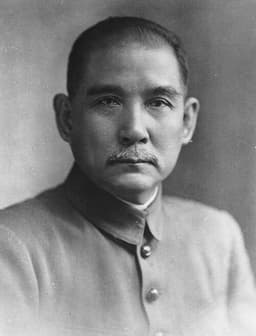
Sun Yat-sen
Revolutionary · Modern
52.5Total
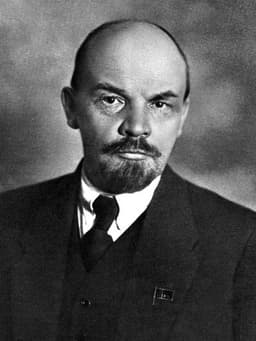
Vladimir Lenin
Revolutionary · Modern
71.2Total
Basic Information
Born
1866
1870
Died
1925
1924
Era
Modern
Modern
Nationality
China
Russia
Occupation
Revolutionary
Revolutionary
Civilization
Eastern
Western
Score Comparison
Military (10%)
45.0
30.0
Political (20%)
68.0
78.0
Influence (20%)
61.0
82.0
Legacy (20%)
58.0
72.0
Leadership (15%)
33.5
80.0
Strategy (15%)
30.3
60.0
TOTAL
52.5
71.2
Sun Yat-sen — Complete Timeline
1894 AD
Founded the Revive China SocietyPolitical Action◆ Major
Sun Yat-sen founded the Revive China Society (Xingzhonghui) in Honolulu, the first modern revolutionary organization among overseas Chinese. The society aimed to overthrow the Qing dynasty and establish a republic, marking the beginning of organized revolutionary activity.
RevolutionOverseas ChineseRepublic
Impact: nationalconstructive
1911 AD
Led the Xinhai RevolutionPolitical Action
Sun Yat-sen's revolutionary activities culminated in the Wuchang Uprising of October 1911, which sparked the Xinhai Revolution. The uprising spread across China, leading to the abdication of the Qing emperor in 1912 and the end of 2,000 years of imperial rule.
RevolutionQing DynastyRepublic
Impact: globalconstructive
1912 AD
Proclaimed the Republic of ChinaPolitical Action
On January 1, 1912, Sun Yat-sen was inaugurated as the provisional president of the Republic of China in Nanjing. He proclaimed the establishment of the first republic in Asia, based on his Three Principles of the People: nationalism, democracy, and livelihood.
RepublicPresidencyThree Principles
Impact: globalconstructive
Resigned Presidency in Favor of Yuan ShikaiPolitical Action◆ Major
To secure the abdication of the Qing emperor and avoid civil war, Sun Yat-sen resigned the provisional presidency in February 1912 in favor of Yuan Shikai. This decision, while pragmatic, allowed Yuan to consolidate power and later attempt to restore the monarchy.
Power TransferYuan ShikaiCompromise
Impact: national
1919 AD
Reorganized the KuomintangPolitical Action◆ Major
Sun Yat-sen reorganized the Chinese Revolutionary Party into the Kuomintang (KMT) in 1919, with a more centralized structure. He later accepted Soviet aid and CCP members into the party under the policy of 'alliance with Russia and the Communists,' reshaping the revolutionary movement.
KuomintangSoviet AllianceCCP
Impact: nationalconstructive
Vladimir Lenin — Complete Timeline
1903 AD
Founding of the Bolshevik PartyPolitical Action
At the Second Congress of the Russian Social Democratic Labour Party in London, Lenin led a split that created the Bolshevik faction. The Bolsheviks advocated for a disciplined vanguard party of professional revolutionaries, a key element of Lenin's political strategy.
Political PartyRevolutionIdeology
Impact: global
1917 AD
April ThesesPolitical Action◆ Major
Lenin returned to Russia from exile and published the April Theses, calling for the overthrow of the Provisional Government, transfer of power to the soviets, and an end to World War I. This document set the Bolshevik agenda for the coming revolution.
RevolutionIdeologyPolitical Strategy
Impact: national
October RevolutionPolitical Action
Lenin led the Bolshevik seizure of power in Petrograd, capturing key government buildings and the Winter Palace. The revolution overthrew the Provisional Government and established the world's first socialist state, the Russian Soviet Federative Socialist Republic.
RevolutionCoupCommunism
Impact: global
1918 AD
Treaty of Brest-LitovskPolitical Action◆ Major
Lenin signed a separate peace treaty with the Central Powers, ceding vast territories including Ukraine, Belarus, and the Baltic states. The treaty ended Russia's involvement in World War I but caused significant territorial losses and internal opposition.
TreatyWorld War ITerritorial Loss
Impact: globaldestructive
1921 AD
New Economic Policy (NEP)Reform◆ Major
Lenin introduced the NEP, allowing limited private enterprise and market mechanisms to revive the war-torn Soviet economy. The policy replaced War Communism, permitting small-scale capitalism while the state retained control of major industries.
Economic ReformPolicyRecovery
Impact: nationalconstructive
1922 AD
Establishment of the Soviet UnionPolitical Action
Lenin oversaw the creation of the Union of Soviet Socialist Republics (USSR), a federation of Soviet republics. The new state consolidated Bolshevik control over much of the former Russian Empire and became a model for communist states worldwide.
State FormationCommunismFederation
Impact: global
Expert Analysis
Vladimir Lenin vs Sun Yat-sen
# The Revolutionary's Dilemma: Lenin and Sun Yat-sen
On a damp April night in 1917, Vladimir Lenin stepped off a sealed train at Petrograd's Finland Station, a man who had spent years in exile now returning to a Russia convulsed by war and revolution. Half a world away, just six years earlier, Sun Yat-sen had stood on the deck of a ship bound for China, having heard the distant thunder of the Wuchang Uprising—the signal that his decades of plotting might finally bear fruit. Both men sought to tear down old orders and build new nations. Yet one succeeded in seizing power and creating a state that would endure for seven decades, while the other spent his life in exile and disappointment, dying before his dream of a unified China could be realized. What drove these two revolutionary titans to such different fates?
Origins
Lenin was born into privilege in the provincial city of Simbirsk, the son of a school inspector who rose to the rank of actual state councillor. His elder brother Alexander's execution in 1887 for plotting to assassinate Tsar Alexander III seared into young Vladimir a cold fury against the autocracy. He studied law at Kazan University, but his true education came from reading Marx in the underground circles of revolutionary Petersburg. Sun Yat-sen's origins were humbler—born to a peasant family in Guangdong province, he received a traditional Chinese education before traveling to Hawaii at thirteen, where he encountered Western ideas at an Anglican school. He later studied medicine in Hong Kong, but his true calling was politics. Where Lenin's worldview was forged in the crucible of Russian autocracy and Marxist theory, Sun's was shaped by the humiliation of China's defeat in the Sino-Japanese War of 1894-95 and the conviction that only a modern republic could save his ancient civilization.
Rise to Power
Lenin's path was methodical and ruthless. In 1903, at the Second Congress of the Russian Social Democratic Labour Party in London, he engineered a split that created the Bolshevik faction—the "majority" who would accept nothing less than a tightly disciplined party of professional revolutionaries. For fourteen years he wrote, plotted, and waited, while World War I bled Russia white. When the February Revolution of 1917 toppled the tsar, Lenin saw his moment. In his April Theses, he demanded the overthrow of the Provisional Government, and by October, he had orchestrated the most famous coup in history: the seizure of Petrograd's Winter Palace with scarcely more than a few thousand Red Guards.
Sun's rise was far more tortuous. He founded the Revive China Society in 1894, but his early attempts at uprising failed. He spent years as a fugitive, traveling the world to raise funds and support among overseas Chinese. When the Wuchang Uprising finally succeeded in October 1911, Sun was in Denver, Colorado. He rushed back to be elected provisional president of the Republic of China in January 1912, but within weeks he resigned in favor of the warlord Yuan Shikai, hoping to preserve unity. It was a fatal miscalculation. Yuan soon declared himself emperor, and Sun spent the rest of his life fighting warlords and trying to rebuild his revolutionary movement.
Leadership & Governance
As a ruler, Lenin was a political genius and a military mediocrity. He scored only 30 in military prowess, but his political score of 80 reflected his mastery of the art of power. He signed the Treaty of Brest-Litovsk in 1918, ceding vast territories to Germany to buy time for his revolution—a decision that enraged many but saved his regime. He crushed all opposition with Cheka terror, yet showed flexibility in 1921 by introducing the New Economic Policy, allowing limited private enterprise to revive a shattered economy. He created the Soviet Union in 1922, a federation that would become a superpower.
Sun never truly governed. His military score of 45.4 was higher than Lenin's, but his political score of 80 equaled it. He spent his post-1912 years trying to organize the Kuomintang into a disciplined party, reorganizing it in 1919 with a Leninist-inspired structure. His Three Principles of the People—nationalism, democracy, and livelihood—became the ideological foundation of modern China. But he was always the theorist, never the ruler, always the exile, never the master of his own army.
Triumph & Tragedy
Lenin's triumph was the October Revolution itself—a breathtakingly audacious seizure of power that changed world history. His tragedy came slowly: the civil war that followed killed millions, the promised utopia never arrived, and he died in 1924 after a series of strokes, leaving a succession crisis that would culminate in Stalin's terror.
Sun's triumph was the Xinhai Revolution, which ended two thousand years of imperial rule. His tragedy was that he never saw the republic he dreamed of. He died in 1925 of liver cancer, still in exile in Beijing, having failed to unite China under his vision. "The revolution is not yet successful," he said on his deathbed. "Comrades must still work hard."
Character & Destiny
Lenin was cold, calculating, and utterly convinced of his historical correctness. He once said, "There are no morals in politics; there is only expedience." This ruthlessness allowed him to do what needed to be done, but it also planted the seeds of the totalitarian state that followed. Sun was more idealistic, more willing to compromise, more trusting of others—qualities that made him beloved but ineffective. "To understand is to know what to do," he wrote, but understanding alone could not build an army or hold power.
Legacy
Lenin's legacy is a paradox. He created the Soviet Union, which became a nuclear superpower, but also a system that collapsed under its own contradictions. His mausoleum in Red Square still draws pilgrims, but his ideology is discredited. His total influence score of 80 matches his political score, but his legacy score of 70 reflects the ambiguous nature of his achievement.
Sun Yat-sen's legacy is more secure. Both the Communist Party in Beijing and the Nationalists in Taiwan claim him as their founding father. His Three Principles remain the official ideology of the Republic of China, and his face looks out from every Chinese banknote. His influence score of 77.6 and legacy score of 72.2 are slightly lower than Lenin's, but his reputation is untarnished by the bloodshed that followed Lenin's revolution.
Conclusion
Lenin and Sun Yat-sen were both revolutionaries who sought to remake their nations. Lenin succeeded in seizing power; Sun succeeded in inspiring a nation. One created a state that terrified the world; the other created a dream that still endures. Their different fates remind us that history rewards not just vision but timing, not just ideals but ruthlessness. Lenin built a machine that crushed everything in its path; Sun planted seeds that would take decades to grow. In the end, perhaps the question is not who was greater, but what we mean by success. For Lenin, it was power. For Sun, it was a vision that outlived him. Both got what they wanted, and both paid the price.
Rankings
🥇
Vladimir LeninLeader
Mil: 30.0Pol: 78.0Inf: 82.0
71.2
🥈
Sun Yat-sen
Mil: 45.0Pol: 68.0Inf: 61.0
52.5
+18.7 behind
How This Comparison Works
Algorithm
Each figure is scored on 6 dimensions (0—100 scale) based on structured historical data: Military (10%), Political (20%), Influence (20%), Legacy (20%), Leadership (15%), Strategy (15%). The weighted total produces the final ranking.
Data Sources
Scores are computed from structured sub-indicators in the database. Scale factors adjust for era (Ancient ×0.85, Modern ×1.0) and civilization size (Eastern ×1.05, Other ×0.80) to account for differences in population and military scale.
Maximum 3 Figures
Comparisons are limited to 2—3 figures to ensure readability and statistical meaningfulness.
Error Margins
±5 points per dimension — Sub-scores are derived from historical records with inherent uncertainty. Two figures within 5 points on a dimension should be considered roughly equivalent in that area.
Total Score Accuracy
±3 points overall — The weighted combination of 6 dimensions produces a total score with approximately ±3 points of uncertainty. Differences of less than 3 points are not statistically significant— the figures are effectively tied.
Known Limitations
- Historical records are incomplete and uneven across civilizations
- Figures from oral-tradition societies may be underrepresented
- Occupation labels can misclassify multi-role figures
- Scores measure capability and impact, not moral character
- Quantitative scoring is a comparison tool, not absolute truth
Capability Radar
Military (10%) — Battles & Warfare
Battles
15
20
Win Rate
10
35
Expansion
5
70
Political (20%) — Governance & Reform
Reform
85
95
Diplomacy
60
75
Economy
20
60
Influence (20%) — Cultural & Global Reach
Cultural
70
80
Global
65
90
Legacy (20%) — Historical Impact
Historical
80
95
Longevity
75
85
Leadership (15%) — Power & Stability
Tenure
30
55
Stability
15
40
Strategy (15%) — Tactics & Innovation
Strategy
20
55
Tactics
10
30
Reform
40
85
Similar Comparisons
Comments & Discussion
晚清民国的见证者6/16/2026
从中国历史视角看,孙中山并非失败者,而是播种机。列宁有俄国工人阶级和布尔什维克纪律严明的铁军,而孙先生面对的是一盘散沙的旧中国——军阀割据、列强瓜分、民众文盲率90%以上。他提出的"三民主义"精准击中痛点:民族独立、民权平等、民生改善。虽然他没活到北伐成功,但蒋介石北伐时打的就是"三民主义"旗帜。列宁建了政权,孙先生定义了方向。
古典文献控6/16/2026
《孟子》有云:"天时不如地利,地利不如人和。"列宁占尽"人和"—俄国工人阶级集中暴力,沙皇政权早因一战焦头烂额。孙中山却生不逢时:中华民国初建时,国内有袁世凯这样的强人军阀,国外有列强共管海关税收。更重要的是,列宁敢于解散制宪会议、采用无产阶级专政;孙先生却始终受制于理想主义,试图与各派妥协。列宁走的是"霸道"速成,孙中山走的是"王道"未竟。历史选择了前者,但后者留下了理想。
Historian6686/16/2026
Let's talk numbers: Lenin's Bolsheviks controlled Petrograd and Moscow in weeks, then won a three-year civil war against White forces backed by 14 foreign armies. Sun's so-called "Republic" never controlled more than 10% of Chinese territory at any point—by 1920, warlords ruled over 80% of the country. Even the 1911 revolution only toppled the Qing; it didn't unify China. Lenin seized the state apparatus; Sun couldn't even hold a single province. That's not moral judgment—that's statistical real
Historian5946/16/2026
Objectively, both were products of their time, but Lenin's revolution was a top-down seizure of power by a disciplined vanguard party, while Sun's was a bottom-up nationalist awakening. Lenin outlived his revolution to build a state; Sun died, quite literally, of cancer—the stress of endless fundraising and exile. Yet here's the irony: Sun's Three Principles of the People inspired every Chinese revolution afterward, including Mao's. Lenin created a system; Sun
Chronicler60886/16/2026
As a military historian, I'd argue Lenin's ruthless pragmatism won the day. He understood revolutionary violence as a science: the October 1917 coup in Petrograd took just 6,000 Red Guards and sailors, seizing the Winter Palace with near-bloodless precision. Sun, by contrast, romanticized uprisings—his 1911 Wuchang revolt succeeded largely because New Army units mutinied autonomously. Lenin had a plan; Sun had a dream. That's why the USSR built a nuclear superpower while Sun's Republic crumbled