Loading...
Miguel Hidalgo vs Sun Yat-sen
Sun Yat-sen leads by 5.5 pts · 2 figures compared
…
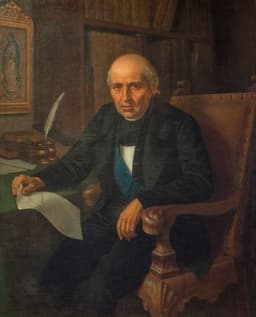
Miguel Hidalgo
Revolutionary · Modern
47.0Total
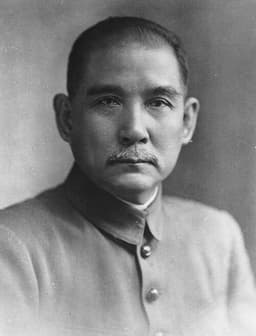
Sun Yat-sen
Revolutionary · Modern
52.5Total
Basic Information
Born
1753
1866
Died
1811
1925
Era
Modern
Modern
Nationality
Mexico
China
Occupation
Revolutionary
Revolutionary
Civilization
Western
Eastern
Score Comparison
Military (10%)
50.0
45.0
Political (20%)
36.5
68.0
Influence (20%)
55.0
61.0
Legacy (20%)
52.0
58.0
Leadership (15%)
39.0
33.5
Strategy (15%)
39.6
30.3
TOTAL
47.0
52.5
Miguel Hidalgo — Complete Timeline
1810 AD
Captured Guanajuato and massacred SpaniardsWar◆ Major
Hidalgo's army of 80,000 captured the city of Guanajuato on September 28, 1810. After taking the Alh
BattleMassacreViolence
Impact: regionaldestructive
Issued the Grito de DoloresPolitical Action
On September 16, 1810, Father Miguel Hidalgo rang the church bell in Dolores and called for rebellion against Spanish colonial rule. His speech, known as the Grito de Dolores, urged Mexicans to rise up against the Spanish and marked the beginning of the Mexican War of Independence.
IndependenceRebellionGrito de Dolores
Impact: nationalconstructive
1811 AD
Defeated at the Battle of Calderón BridgeWar◆ Major
Hidalgo's poorly trained army was decisively defeated by a smaller Spanish royalist force at the Battle of Calder
DefeatSpanish RoyalistsTurning Point
Impact: regionaltragic
Executed by Spanish authoritiesPolitical Action◆ Major
Hidalgo was captured in Acatita de Baj
ExecutionMartyrdomIndependence Movement
Impact: nationaltragic
Sun Yat-sen — Complete Timeline
1894 AD
Founded the Revive China SocietyPolitical Action◆ Major
Sun Yat-sen founded the Revive China Society (Xingzhonghui) in Honolulu, the first modern revolutionary organization among overseas Chinese. The society aimed to overthrow the Qing dynasty and establish a republic, marking the beginning of organized revolutionary activity.
RevolutionOverseas ChineseRepublic
Impact: nationalconstructive
1911 AD
Led the Xinhai RevolutionPolitical Action
Sun Yat-sen's revolutionary activities culminated in the Wuchang Uprising of October 1911, which sparked the Xinhai Revolution. The uprising spread across China, leading to the abdication of the Qing emperor in 1912 and the end of 2,000 years of imperial rule.
RevolutionQing DynastyRepublic
Impact: globalconstructive
1912 AD
Proclaimed the Republic of ChinaPolitical Action
On January 1, 1912, Sun Yat-sen was inaugurated as the provisional president of the Republic of China in Nanjing. He proclaimed the establishment of the first republic in Asia, based on his Three Principles of the People: nationalism, democracy, and livelihood.
RepublicPresidencyThree Principles
Impact: globalconstructive
Resigned Presidency in Favor of Yuan ShikaiPolitical Action◆ Major
To secure the abdication of the Qing emperor and avoid civil war, Sun Yat-sen resigned the provisional presidency in February 1912 in favor of Yuan Shikai. This decision, while pragmatic, allowed Yuan to consolidate power and later attempt to restore the monarchy.
Power TransferYuan ShikaiCompromise
Impact: national
1919 AD
Reorganized the KuomintangPolitical Action◆ Major
Sun Yat-sen reorganized the Chinese Revolutionary Party into the Kuomintang (KMT) in 1919, with a more centralized structure. He later accepted Soviet aid and CCP members into the party under the policy of 'alliance with Russia and the Communists,' reshaping the revolutionary movement.
KuomintangSoviet AllianceCCP
Impact: nationalconstructive
Expert Analysis
Sun Yat-sen vs Miguel Hidalgo
# The Revolutionary Priest and the Doctor Who Remade Nations
On a September morning in 1810, a sixty-year-old priest rang the church bell in the small Mexican town of Dolores and summoned his congregation to war. On an October evening in 1911, a forty-five-year-old doctor in exile learned that a barracks uprising in Wuchang had finally ignited the revolution he had spent seventeen years preparing. Miguel Hidalgo and Sun Yat-sen never met, never read each other's words, yet their lives trace parallel arcs across continents—both men who rose against empires, both who saw their dreams realized only in fragments, both who died before their nations were truly born.
Origins
Hidalgo came into the world in 1753, a *criollo*—a Spaniard born in the colonies—on a hacienda in Guanajuato. He was educated in the Catholic seminary, steeped in the Enlightenment ideas that had already toppled thrones in France and America. By the time he became a parish priest in Dolores, he had read Voltaire and Rousseau, had learned indigenous languages, and had grown to resent the rigid caste system that placed peninsula-born Spaniards above everyone else.
Sun Yat-sen was born in 1866 in a farming village in Guangdong province, a world away from Hidalgo's Mexico but equally subject to imperial decay. Where Hidalgo was shaped by the seminary, Sun was shaped by the sea. He left for Hawaii at thirteen, studied medicine in Hong Kong, and absorbed Western ideas of democracy and republicanism as naturally as he breathed. The Qing dynasty was crumbling, humiliated by foreign powers, and Sun saw that the old order had to go.
The difference in their origins is crucial. Hidalgo was a man of the Church and the land, rooted in colonial society. Sun was a man of the diaspora and the clinic, always looking outward. One would lead an army of the poor; the other would build a party of exiles.
Rise to Power
Hidalgo's rise was sudden and volcanic. In 1810, the conspiracy for independence was discovered, and his fellow plotters were arrested. With no time left, Hidalgo acted. The *Grito de Dolores* on September 16 was not a carefully planned declaration—it was a desperate cry. "Long live Our Lady of Guadalupe! Death to bad government!" He called for an end to Spanish rule, and the response was overwhelming. Within weeks, an army of 80,000 peasants, miners, and indigenous people followed him.
Sun's path was the opposite—slow, patient, and repeatedly defeated. He founded the Revive China Society in Honolulu in 1894, when he was twenty-eight. For the next seventeen years, he organized uprisings that failed, raised funds that evaporated, and lived in exile in Japan, Europe, and America. He was kidnapped by Qing agents in London in 1896 and nearly executed. His movement seemed hopeless until the Wuchang Uprising of October 1911 finally succeeded, not because of his direct command, but because the empire had simply rotted away.
Hidalgo's rise was a flash flood. Sun's was a slow tide.
Leadership & Governance
Hidalgo was a charismatic preacher, not a general or an administrator. His army captured Guanajuato on September 28, 1810, but the victory was marred by a massacre of Spanish civilians in the Alhóndiga de Granaditas—a bloodbath that horrified moderates and rallied royalist resistance. He abolished slavery and returned land to indigenous communities, but he could not control his forces or sustain supply lines. At the Battle of Calderón Bridge on January 17, 1811, his 80,000 poorly armed followers were routed by 6,000 disciplined Spanish troops. He was captured two months later, defrocked by the Inquisition, and executed on July 30, 1811.
Sun Yat-sen was no military commander either—his Military score of 45.4 reflects this—but he understood politics. His Three Principles of the People—nationalism, democracy, and livelihood—provided an ideological framework that outlasted any single battle. He became provisional president of the Republic of China on January 1, 1912, but resigned in February to Yuan Shikai, hoping to avoid civil war. It was a fatal miscalculation. Yuan soon declared himself emperor, and Sun spent the rest of his life trying to reclaim the revolution he had handed away.
Triumph & Tragedy
Hidalgo's triumph was the *Grito* itself—the moment he gave voice to centuries of oppression. His tragedy was that he could not govern what he had unleashed. He was a catalyst, not a builder.
Sun's triumph was the Xinhai Revolution itself, which ended 2,000 years of imperial rule. His tragedy was that he never truly ruled. He reorganized the Kuomintang in 1919, built a party that would eventually unify China, but he died in 1925 of gallbladder cancer, never seeing the republic he had founded actually govern the land.
Character & Destiny
Hidalgo was impulsive, passionate, and ultimately naive. He believed that the righteousness of his cause would overcome Spanish guns. He was a priest who became a warrior, but he could not transform his followers from a mob into an army.
Sun Yat-sen was resilient, pragmatic, and endlessly adaptable. He survived seventeen years of failure because he never stopped learning. He courted Japanese allies, American donors, and Soviet advisors. He was willing to compromise, to retreat, to start again. But this flexibility also meant he sometimes compromised too much—as when he resigned the presidency.
One man died a martyr, his head displayed in a cage for ten years. The other died in a Beijing hospital, his body preserved in a mausoleum that still stands.
Legacy
Hidalgo is remembered as the Father of Mexican Independence. Every September 16, the President of Mexico reenacts the *Grito* from the National Palace balcony. His face appears on the 1,000-peso note. But the independence he started was completed by others—by Morelos, by Iturbide—and the nation he dreamed of remains a work in progress.
Sun Yat-sen is revered as the founding father of modern China by both the People's Republic and the Republic of Taiwan—a rare figure of unity. His Political score of 80.0 and Legacy of 72.2 reflect his enduring symbolic power. His Three Principles are still taught. His portrait hangs in Tiananmen Square. But the China he envisioned—democratic, prosperous, sovereign—has been interpreted in radically different ways by the two regimes that claim his mantle.
Conclusion
Hidalgo and Sun both heard the same call: that the old empire must fall. But Hidalgo heard it as a cry from the pulpit, and Sun heard it as a whisper from the world beyond the sea. One led a mob that could not win; the other built a party that could not stop fighting. Both died before they could see what they had made. Perhaps that is the fate of all founders: to plant seeds they will never harvest. The bell of Dolores still rings, and the revolution Sun began is still unfinished. Their nations are still becoming.
Rankings
🥇
Sun Yat-senLeader
Mil: 45.0Pol: 68.0Inf: 61.0
52.5
🥈
Miguel Hidalgo
Mil: 50.0Pol: 36.5Inf: 55.0
47.0
+5.5 behind
How This Comparison Works
Algorithm
Each figure is scored on 6 dimensions (0—100 scale) based on structured historical data: Military (10%), Political (20%), Influence (20%), Legacy (20%), Leadership (15%), Strategy (15%). The weighted total produces the final ranking.
Data Sources
Scores are computed from structured sub-indicators in the database. Scale factors adjust for era (Ancient ×0.85, Modern ×1.0) and civilization size (Eastern ×1.05, Other ×0.80) to account for differences in population and military scale.
Maximum 3 Figures
Comparisons are limited to 2—3 figures to ensure readability and statistical meaningfulness.
Error Margins
±5 points per dimension — Sub-scores are derived from historical records with inherent uncertainty. Two figures within 5 points on a dimension should be considered roughly equivalent in that area.
Total Score Accuracy
±3 points overall — The weighted combination of 6 dimensions produces a total score with approximately ±3 points of uncertainty. Differences of less than 3 points are not statistically significant— the figures are effectively tied.
Known Limitations
- Historical records are incomplete and uneven across civilizations
- Figures from oral-tradition societies may be underrepresented
- Occupation labels can misclassify multi-role figures
- Scores measure capability and impact, not moral character
- Quantitative scoring is a comparison tool, not absolute truth
Capability Radar
Military (10%) — Battles & Warfare
Battles
30
15
Win Rate
25
10
Expansion
20
5
Political (20%) — Governance & Reform
Reform
60
85
Diplomacy
30
60
Economy
20
20
Influence (20%) — Cultural & Global Reach
Cultural
70
70
Global
60
65
Legacy (20%) — Historical Impact
Historical
75
80
Longevity
70
75
Leadership (15%) — Power & Stability
Tenure
15
30
Stability
10
15
Strategy (15%) — Tactics & Innovation
Strategy
25
20
Tactics
20
10
Reform
10
40
Similar Comparisons
Comments & Discussion
激进史学砖家6/16/2026
把孙中山跟伊达尔戈相提并论根本是胡扯。前者学过西医,在夏威夷待过,见过现代国家的架构,知道什么叫宪政;后者就是个乡村神父,喊完"独立万岁"连正规军都没带过,不到一年就被枪毙了。孙中山虽然也没活到建国,但他至少留下的三民主义成了旗帜;伊达尔戈留下的只有一口破钟和一堆烂摊子。搞革命不是比谁喊得响。
第二次武装起义专家6/16/2026
说两人"平行"的人肯定没翻过档案:伊达尔戈起义时连基本的火药管理都不懂,第一场正规战就败在蒙特莫雷洛斯;孙中山呢,光镇南关一役就知道先控制弹药库再打。关键是,伊达尔戈到死没明白自己要建什么国,糊里糊涂想搞墨西哥版拿破仑;孙中山连《建国方略》都写好了,连铁路怎么铺都想清楚了。一个是赌徒,一个是工程师。
Classics Scholar6/16/2026
Both men were undone by the very educational systems that elevated them. Hidalgo's Enlightenment reading gave him the courage to rebel but also the naiveté to believe that a crowd of angry parishioners could defeat Spanish regulars. Sun's Western medical training gave him modern organizational skills but also a persistent blind spot: he never quite understood the deep Confucian substrate of Chinese politics. Their greatest strength—cultural hybridity—was also their shared fatal weakness. They we
数据打假老司机6/16/2026
别跟我扯什么"平行轨迹",我们拿数字说话:伊达尔戈1810年起兵,到1811年就掉了脑袋,前后不到7个月,控制面积不到墨西哥领土的5%;孙中山从1894年兴中会成立算起,到1925年去世,整整31年,发动了至少10次武装起义,期间同盟会、国民党全是正经组织。伊达尔戈手底下最多凑了8万人,装备靠抢;孙中山募到过外国贷款,拉过日本政客,连苏联顾问都借来了。这不是相似,这是专业的降维打击。
EvidenceEngineer6/16/2026
Hidalgo just rang a bell, Sun built a revolution. That comparison is laughable on its face. Sun spent seventeen years organizing, writing, and raising funds abroad while Hidalgo essentially improvised a rebellion in one afternoon after getting spooked by exposure. The Dolores Grito was powerful theater, sure, but it was also a desperate move by a middle-aged priest who had no military plan. Sun built an institutional framework that outlasted him. One was a flash of lightning, the other a slow-bu