Loading...
Jose Rizal vs Sun Yat-sen
Sun Yat-sen leads by 5.8 pts · 2 figures compared
…
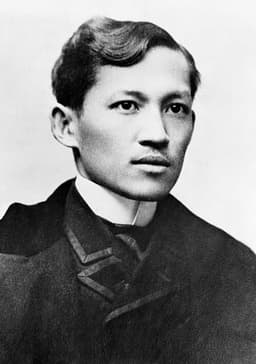
Jose Rizal
Revolutionary · Modern
46.7Total
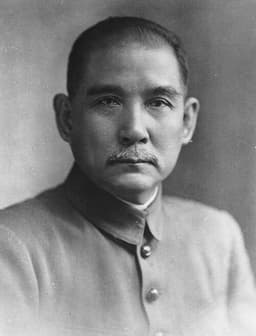
Sun Yat-sen
Revolutionary · Modern
52.5Total
Basic Information
Born
1861
1866
Died
1896
1925
Era
Modern
Modern
Nationality
Philippines
China
Occupation
Revolutionary
Revolutionary
Civilization
Eastern
Eastern
Score Comparison
Military (10%)
11.9
45.0
Political (20%)
33.6
68.0
Influence (20%)
62.0
61.0
Legacy (20%)
58.0
58.0
Leadership (15%)
40.4
33.5
Strategy (15%)
44.5
30.3
TOTAL
46.7
52.5
Jose Rizal — Complete Timeline
1887 AD
Publication of Noli Me TangereCultural
Rizal published his first novel, Noli Me Tangere, in Berlin. The book exposed the corruption and abuses of Spanish colonial rule and the Catholic Church in the Philippines, sparking nationalist sentiment among Filipinos.
LiteratureNationalismColonial Critique
Impact: nationalprogressive
1891 AD
Publication of El FilibusterismoCultural◆ Major
Rizal published his second novel, El Filibusterismo, in Ghent, Belgium. A darker sequel to Noli Me Tangere, it advocated for revolution and further criticized Spanish oppression, intensifying calls for reform and independence.
LiteratureRevolutionColonial Critique
Impact: nationalprogressive
1892 AD
Exile to DapitanPolitical Action◆ Major
Rizal was exiled by Spanish authorities to Dapitan in Mindanao for his alleged involvement in revolutionary activities. During his four-year exile, he practiced medicine, taught, and conducted scientific research, but remained under surveillance.
ExileSpanish ColonialismDapitan
Impact: nationaltragic
1896 AD
Execution of José RizalPolitical Action
Rizal was executed by firing squad in Manila on charges of sedition and rebellion, following a trial by Spanish military court. His martyrdom galvanized the Philippine Revolution, making him a national hero and symbol of resistance.
ExecutionMartyrdomPhilippine Revolution
Impact: nationaltragic
Sun Yat-sen — Complete Timeline
1894 AD
Founded the Revive China SocietyPolitical Action◆ Major
Sun Yat-sen founded the Revive China Society (Xingzhonghui) in Honolulu, the first modern revolutionary organization among overseas Chinese. The society aimed to overthrow the Qing dynasty and establish a republic, marking the beginning of organized revolutionary activity.
RevolutionOverseas ChineseRepublic
Impact: nationalconstructive
1911 AD
Led the Xinhai RevolutionPolitical Action
Sun Yat-sen's revolutionary activities culminated in the Wuchang Uprising of October 1911, which sparked the Xinhai Revolution. The uprising spread across China, leading to the abdication of the Qing emperor in 1912 and the end of 2,000 years of imperial rule.
RevolutionQing DynastyRepublic
Impact: globalconstructive
1912 AD
Proclaimed the Republic of ChinaPolitical Action
On January 1, 1912, Sun Yat-sen was inaugurated as the provisional president of the Republic of China in Nanjing. He proclaimed the establishment of the first republic in Asia, based on his Three Principles of the People: nationalism, democracy, and livelihood.
RepublicPresidencyThree Principles
Impact: globalconstructive
Resigned Presidency in Favor of Yuan ShikaiPolitical Action◆ Major
To secure the abdication of the Qing emperor and avoid civil war, Sun Yat-sen resigned the provisional presidency in February 1912 in favor of Yuan Shikai. This decision, while pragmatic, allowed Yuan to consolidate power and later attempt to restore the monarchy.
Power TransferYuan ShikaiCompromise
Impact: national
1919 AD
Reorganized the KuomintangPolitical Action◆ Major
Sun Yat-sen reorganized the Chinese Revolutionary Party into the Kuomintang (KMT) in 1919, with a more centralized structure. He later accepted Soviet aid and CCP members into the party under the policy of 'alliance with Russia and the Communists,' reshaping the revolutionary movement.
KuomintangSoviet AllianceCCP
Impact: nationalconstructive
Expert Analysis
Sun Yat-sen vs Jose Rizal
# The Pen and the Sword: How Two Visionaries Forged Asian Revolutions
On a December morning in 1896, a 35-year-old doctor faced a firing squad in Manila’s Luneta Park, his back turned to the Spanish soldiers who would end his life. Less than three decades later, in March 1925, a 58-year-old revolutionary died in a Beijing hospital, surrounded by the chaos of a nation still struggling to be born. José Rizal and Sun Yat-sen never met, yet their lives form a single, tragic arc—two men who dreamed of freeing their peoples from centuries of colonial and imperial rule, who wrote and organized and sacrificed, and who ultimately shaped the destiny of Asia in ways they could never have imagined. Why did one become a martyr whose death sparked a revolution, while the other lived to see his revolution succeed—only to watch it slip through his fingers?
Origins
Rizal was born in 1861 to a wealthy mestizo family in Calamba, a town south of Manila. The Philippines had been a Spanish colony for over three centuries, and Rizal grew up in a world where Filipinos were second-class citizens in their own land. He studied at the Ateneo Municipal de Manila and later at the University of Santo Tomas, but his thirst for knowledge took him to Europe—to Madrid, Paris, Heidelberg, and Berlin. There, he absorbed the ideas of the Enlightenment, the French Revolution, and the liberal nationalism sweeping the continent. He became a polymath: an ophthalmologist, a novelist, a poet, a sculptor, a linguist who spoke over a dozen languages.
Sun Yat-sen, born five years later in 1866, came from a different world. He was born in Cuiheng, a village in Guangdong province, to a poor farming family. China under the Qing Dynasty was not a colony, but it was a crumbling empire, humiliated by foreign powers in the Opium Wars and forced to accept unequal treaties. Sun’s early education was in Chinese classics, but his older brother sent him to Honolulu at age 13, where he attended an Anglican school and learned English and Western science. He later studied medicine in Hong Kong, graduating in 1892. Like Rizal, he was shaped by the collision of East and West—but while Rizal’s Europe was a place of intellectual ferment, Sun’s Pacific was a world of commerce and revolution.
Rise to Power
Rizal’s path to history was through the written word. In 1887, he published *Noli Me Tangere* in Berlin, a novel that laid bare the corruption of Spanish friars and colonial officials. It was a sensation—smuggled into the Philippines, read in secret, and banned by the authorities. In 1891, he followed it with *El Filibusterismo*, a darker, more radical sequel that seemed to advocate revolution. Rizal did not call for armed uprising; he believed in education, in gradual reform, in the power of reason. But his books did what no pamphlet or speech could: they gave Filipinos a shared language of grievance and a vision of their own nation.
Sun Yat-sen’s rise was more political and more conspiratorial. In 1894, he founded the Revive China Society in Honolulu, the first modern revolutionary organization among overseas Chinese. He began plotting to overthrow the Qing Dynasty. In 1895, he attempted his first uprising in Guangzhou—it failed, and he fled into exile. For the next sixteen years, Sun traveled the world: to Japan, Europe, the United States, and Southeast Asia, raising money, building networks, and inspiring Chinese expatriates. He was a professional revolutionary, always on the move, always one step ahead of Qing agents.
Leadership & Governance
Here the two men diverge most sharply. Rizal was never a political leader in the practical sense. He was a writer, an intellectual, a moral voice. When the Katipunan, the secret revolutionary society led by Andrés Bonifacio, launched the Philippine Revolution in August 1896, Rizal was in Cuba, serving as a doctor for the Spanish army. He had no role in the uprising. The Spanish authorities arrested him anyway, tried him for sedition, and executed him. His death made him a martyr—but he never governed, never commanded an army, never held power.
Sun Yat-sen was the opposite. He led the Xinhai Revolution that toppled the Qing Dynasty in 1911, and on January 1, 1912, he was inaugurated as the provisional president of the Republic of China in Nanjing. But his presidency lasted only weeks. To secure the abdication of the last emperor and avoid civil war, Sun resigned in favor of Yuan Shikai, a powerful general. It was a decision that haunted him. Yuan soon declared himself emperor, plunging China into warlord chaos. Sun spent the rest of his life trying to rebuild a revolutionary movement, reorganizing the Kuomintang in 1919 and forging an alliance with the Soviet Union and the fledgling Chinese Communist Party.
Triumph & Tragedy
Rizal’s greatest triumph was also his tragedy. His execution on December 30, 1896, was meant to silence him. Instead, it ignited the Philippine Revolution. His martyrdom gave the Filipino people a symbol, a name, a cause. But Rizal himself did not live to see independence—the Philippines passed from Spanish to American control in 1898, and true sovereignty would not come until 1946.
Sun Yat-sen’s tragedy was more complex. He lived to see his revolution succeed—the empire fell, the republic was proclaimed—but he could not hold it together. He was a visionary, not a tactician; an inspirer, not an organizer. He spent his final years in Guangzhou, trying to build a base, but his health failed him. When he died of liver cancer in 1925, China was still fractured, ruled by warlords and foreign powers. His last words, according to legend, were: "Peace, struggle, save China."
Character & Destiny
Rizal was a man of letters, a rationalist who believed in the power of ideas to change the world. He wrote, "He who does not know how to look back at where he came from will never get to his destination." He was cautious, even reluctant, about armed revolution—he once said, "I am not a revolutionary, I am a reformer." But his death made him one.
Sun Yat-sen was a man of action, a dreamer who believed in the power of will. He said, "To build a country, you must first build the people." He was endlessly optimistic, endlessly persistent, even in the face of repeated failure. He once wrote, "The revolution is not yet successful; comrades must continue to work hard." His character was his destiny: he could inspire devotion, but he could not command discipline.
Legacy
Rizal’s legacy is cultural and spiritual. He is the national hero of the Philippines, his face on the one-peso coin, his novels required reading in every school. His martyrdom gave Filipinos a story of sacrifice and redemption. He is remembered not as a politician but as a prophet.
Sun Yat-sen’s legacy is political and institutional. He is the founding father of the Republic of China (Taiwan) and is revered in mainland China as a forerunner of the Communist revolution. His Three Principles of the People—nationalism, democracy, and livelihood—became the ideological foundation for both the Kuomintang and, in adapted form, the Chinese Communist Party. He is remembered not as a martyr but as a founder.
Conclusion
Two men, two paths, two revolutions. Rizal wrote the book that called a nation into being; Sun built the party that tried to govern one. Rizal’s death was his victory; Sun’s life was his struggle. In the end, both were failures by the measure of their own dreams—Rizal died before independence, Sun before unity. But their failures were more fruitful than most men’s successes. They showed that in Asia, as in Europe, the pen could be mightier than the sword—but that sometimes, the sword must be taken up anyway. Their stories remind us that revolutions are not made by heroes alone, but by the millions who read their words and march behind their flags.
Rankings
🥇
Sun Yat-senLeader
Mil: 45.0Pol: 68.0Inf: 61.0
52.5
🥈
Jose Rizal
Mil: 11.9Pol: 33.6Inf: 62.0
46.7
+5.8 behind
How This Comparison Works
Algorithm
Each figure is scored on 6 dimensions (0—100 scale) based on structured historical data: Military (10%), Political (20%), Influence (20%), Legacy (20%), Leadership (15%), Strategy (15%). The weighted total produces the final ranking.
Data Sources
Scores are computed from structured sub-indicators in the database. Scale factors adjust for era (Ancient ×0.85, Modern ×1.0) and civilization size (Eastern ×1.05, Other ×0.80) to account for differences in population and military scale.
Maximum 3 Figures
Comparisons are limited to 2—3 figures to ensure readability and statistical meaningfulness.
Error Margins
±5 points per dimension — Sub-scores are derived from historical records with inherent uncertainty. Two figures within 5 points on a dimension should be considered roughly equivalent in that area.
Total Score Accuracy
±3 points overall — The weighted combination of 6 dimensions produces a total score with approximately ±3 points of uncertainty. Differences of less than 3 points are not statistically significant— the figures are effectively tied.
Known Limitations
- Historical records are incomplete and uneven across civilizations
- Figures from oral-tradition societies may be underrepresented
- Occupation labels can misclassify multi-role figures
- Scores measure capability and impact, not moral character
- Quantitative scoring is a comparison tool, not absolute truth
Capability Radar
Military (10%) — Battles & Warfare
Battles
14
15
Win Rate
21
10
Expansion
22
5
Political (20%) — Governance & Reform
Reform
15
85
Diplomacy
20
60
Economy
5
20
Influence (20%) — Cultural & Global Reach
Cultural
75
70
Global
65
65
Legacy (20%) — Historical Impact
Historical
80
80
Longevity
75
75
Leadership (15%) — Power & Stability
Tenure
0
30
Stability
5
15
Strategy (15%) — Tactics & Innovation
Strategy
27
20
Tactics
28
10
Reform
28
40
Similar Comparisons
Comments & Discussion
SunBoltSage6/16/2026
Rizal was the true catalytic genius, his novels "Noli Me Tangere" and "El Filibusterismo" cut deeper than any sword Sun ever wielded. Without Rizal's intellectual detonation in 1896, the Philippine Revolution would have fizzled as a peasant squabble, not a nation's birth pangs. Sun, by contrast, was a perpetual exile borrowing ideas from Europe and Japan, his "Three Principles" a patchwork nostalgia. Rizal died a martyr's clean death; Sun survived to see his revolution hijacked by warlords. Fact
火药笔侠6/16/2026
拿武器比拿笔实在?错了。孙中山屡败屡战,发动了十次武装起义,最终推翻清朝,这是铁血事实。而黎萨尔只会写小说抗议,临死前还背对行刑队,像个懦夫。菲律宾革命在他死后七年就被美国殖民化,他那点文字没能换来一天自由。从结果看,孙中山的实干家精神远超黎萨尔的书斋理想。数据:1911年辛亥革命后,中华民国成立;1901年菲律宾却被美国吞并。
Rizal's Ghost6/16/2026
You academic types miss the philosophical substrate. Rizal preached nonviolent reform through La Liga Filipina—a precursor to modern civil resistance—while Sun stumbled from secret societies to foreign loans, never stabilized a coherent ideology. Rizal's execution was a strategic masterpiece of martyrdom; Sun's death left a vacuum filled by Chiang Kai-shek's tyranny. Specific: Rizal's 1890 essay "The Philippines a Century Hence" predicted American colonization with eerie accuracy. Sun's "Three P
帝国掘墓人6/16/2026
真要较真,两人都是失败者,只是失败的方式不同。黎萨尔是文化精英的失败,他妄想用启蒙对话感化殖民者,结果西班牙人赏他一颗子弹。孙中山是军事冒险家的失败,他靠黑帮和外国捐款起家,革命成功后连总统都坐不稳,袁世凯一逼就让位。民族主义把他们捧成偶像,但事实是:黎萨尔死了,菲律宾被美国接管;孙中山死了,中国陷入军阀混战。谁也没真正解放人民。我选谁?都不选。
PenDrillCommander6/16/2026
Let's cut the romanticism. Sun was an organizational genius who built the Kuomintang into a disciplined revolutionary machine, whereas Rizal's Liga Filipina dissolved within months of his arrest. Sun understood power politics—he studied Western models from Lincoln to Lenin, pragmatically swapping alliances with Japanese militarists and Soviet advisors. Rizal dabbled in ophthalmology and poetry like a dilettante professor. The