Loading...
Ho Chi Minh vs Jose Rizal
Ho Chi Minh leads by 16.2 pts · 2 figures compared
…
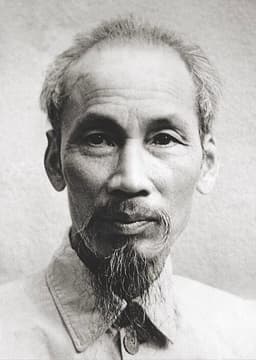
Ho Chi Minh
Revolutionary · Modern
62.9Total
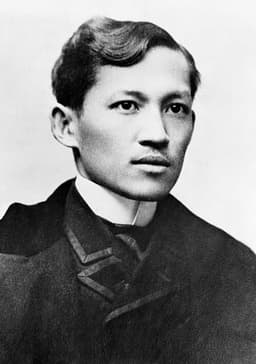
Jose Rizal
Revolutionary · Modern
46.7Total
Basic Information
Born
1890
1861
Died
1969
1896
Era
Modern
Modern
Nationality
Vietnam
Philippines
Occupation
Revolutionary
Revolutionary
Civilization
Eastern
Eastern
Score Comparison
Military (10%)
55.0
11.9
Political (20%)
72.0
33.6
Influence (20%)
62.0
62.0
Legacy (20%)
58.0
58.0
Leadership (15%)
72.0
40.4
Strategy (15%)
58.0
44.5
TOTAL
62.9
46.7
Ho Chi Minh — Complete Timeline
1941 AD
Establishment of the Viet MinhPolitical Action◆ Major
Ho Chi Minh founded the Viet Minh (League for the Independence of Vietnam) in southern China. This coalition of nationalist and communist groups became the primary force for Vietnamese independence, fighting both Japanese occupation and French colonialism.
Viet MinhIndependence MovementWorld War II
Impact: nationalconstructive
1945 AD
Declaration of Independence of VietnamPolitical Action
Ho Chi Minh proclaimed the Democratic Republic of Vietnam in Hanoi's Ba Dinh Square, citing the US Declaration of Independence. This established the Viet Minh government and began the struggle for independence from French colonial rule.
IndependenceVietnamDecolonization
Impact: nationalconstructive
1954 AD
Battle of Dien Bien PhuWar
Ho Chi Minh's Viet Minh forces, under General Giap, defeated the French garrison at Dien Bien Phu. This victory ended French colonial rule in Indochina and led to the Geneva Accords dividing Vietnam at the 17th parallel.
Vietnam WarDecolonizationFrench Indochina
Impact: regional
Geneva AccordsPolitical Action◆ Major
Ho Chi Minh's delegation signed the Geneva Accords, temporarily dividing Vietnam at the 17th parallel. The agreement promised nationwide elections in 1956, which were never held, leading to the permanent division of Vietnam.
Geneva ConferenceDivision of VietnamDiplomacy
Impact: regional
1959 AD
Start of the Vietnam WarWar
Ho Chi Minh's government in North Vietnam authorized armed struggle against the US-backed South Vietnamese regime. This escalated into the Vietnam War, a prolonged conflict that resulted in millions of deaths and US withdrawal in 1973.
Vietnam WarCold WarCommunism
Impact: globaldestructive
Jose Rizal — Complete Timeline
1887 AD
Publication of Noli Me TangereCultural
Rizal published his first novel, Noli Me Tangere, in Berlin. The book exposed the corruption and abuses of Spanish colonial rule and the Catholic Church in the Philippines, sparking nationalist sentiment among Filipinos.
LiteratureNationalismColonial Critique
Impact: nationalprogressive
1891 AD
Publication of El FilibusterismoCultural◆ Major
Rizal published his second novel, El Filibusterismo, in Ghent, Belgium. A darker sequel to Noli Me Tangere, it advocated for revolution and further criticized Spanish oppression, intensifying calls for reform and independence.
LiteratureRevolutionColonial Critique
Impact: nationalprogressive
1892 AD
Exile to DapitanPolitical Action◆ Major
Rizal was exiled by Spanish authorities to Dapitan in Mindanao for his alleged involvement in revolutionary activities. During his four-year exile, he practiced medicine, taught, and conducted scientific research, but remained under surveillance.
ExileSpanish ColonialismDapitan
Impact: nationaltragic
1896 AD
Execution of José RizalPolitical Action
Rizal was executed by firing squad in Manila on charges of sedition and rebellion, following a trial by Spanish military court. His martyrdom galvanized the Philippine Revolution, making him a national hero and symbol of resistance.
ExecutionMartyrdomPhilippine Revolution
Impact: nationaltragic
Expert Analysis
Jose Rizal vs Ho Chi Minh
### The Pen and the Sword: Two Paths to Liberation
On a cold December morning in 1896, José Rizal stood in a field outside Manila, a man of letters facing a firing squad. Thirty-three years later, in a cramped Hong Kong room, a young man named Nguyen Sinh Cung—who would become Ho Chi Minh—watched a photograph of Lenin and felt a revolution stir within him. One died with a pen in his pocket; the other lived long enough to see his nation forged in blood. Both sought freedom from colonial rule, yet their journeys could not have been more different. Why did Rizal’s martyrdom inspire a revolution he never led, while Ho Chi Minh’s leadership built a nation he never fully saw at peace? The answer lies not just in their eras, but in the very nature of their weapons: one wielded ideas, the other organization.
### Origins: The Scholar and the Wanderer
José Rizal was born in 1861 into a wealthy Filipino mestizo family, a world of privilege that allowed him to study in Europe. He absorbed the Enlightenment—Voltaire, Rousseau, the French Revolution’s echoes—and returned to the Philippines armed with novels, not rifles. His education made him a cosmopolitan critic of Spanish rule, but it also kept him aloof from the peasant masses. He once wrote, “He who does not know how to look back at where he came from will never get to his destination.” Yet Rizal’s gaze was fixed on the past’s injustices, not the future’s barricades.
Ho Chi Minh, born in 1890 as Nguyen Sinh Cung, came from a different soil. His father was a Confucian scholar who resisted French rule, but the family’s poverty forced Ho to work as a cook, a photographer, a sailor. He left Vietnam at twenty-one, spending decades in France, the United States, Russia, and China. He learned from Marxism, not merely liberalism; he saw revolution as a science, not a sentiment. “Nothing is more precious than independence and liberty,” he would later declare, but for Ho, those words were a blueprint, not a poem.
### Rise to Power: The Stage and the Storm
Rizal’s path to power was intellectual. The publication of *Noli Me Tangere* in 1887, printed in Berlin, was a cultural turning point—a novel that exposed the sexual abuses of friars and the corruption of colonial officials. Its sequel, *El Filibusterismo* in 1891, was darker, more desperate, advocating for reform through force if necessary. But Rizal never joined the revolutionary secret society Katipunan; he believed in education, not insurrection. When Spanish authorities exiled him to Dapitan in 1892, he accepted quietly, building schools and treating the sick. He was a revolutionary of the mind, not the street.
Ho Chi Minh’s rise was forged in exile and war. In 1941, he founded the Viet Minh in southern China, a coalition of nationalists and communists that fought both the Japanese occupation and French colonialism. The turning point came in 1954 at Dien Bien Phu, where General Vo Nguyen Giap’s forces defeated the French garrison—a victory Ho had orchestrated from the shadows. Unlike Rizal, Ho understood that power came from the barrel of a gun, and he built a party, an army, and a network that spanned continents. He did not write novels; he wrote orders.
### Leadership & Governance: The Reformer and the Organizer
Rizal’s leadership was moral, not political. He founded the Liga Filipina, a civic organization, but it dissolved within days. His genius was in diagnosis: his novels painted the sickness of colonialism with such precision that readers saw their own chains. Yet he lacked the tactical mind to break them. His military score is a low 24.6, his strategy 49.6—he was a doctor, not a general. When the revolution erupted in 1896, he was on his way to Cuba as a volunteer doctor, not a commander.
Ho Chi Minh was a different breed. His political score of 67.8 and leadership of 84.8 reflect a man who could unite factions, negotiate with enemies, and inspire loyalty. He declared Vietnam’s independence in 1945, quoting the American Declaration of Independence—a masterstroke that appealed to Western ideals while building a communist state. He signed the 1954 Geneva Accords, accepting a temporary division of Vietnam at the 17th parallel, a pragmatic move that bought time. Where Rizal preached, Ho maneuvered.
### Triumph & Tragedy: The Martyr and the Survivor
Rizal’s greatest moment was also his last. On December 30, 1896, he faced the firing squad in Manila’s Bagumbayan Field. His execution turned him into a martyr; his death catalyzed the Philippine Revolution, which eventually ended Spanish rule. But he never saw it. His tragedy was that his ideas outran his life—he was a prophet without a movement.
Ho Chi Minh’s triumph was survival. He lived to see Dien Bien Phu, the Geneva Accords, and the start of the Vietnam War in 1959. But his tragedy was that he died in 1969, six years before Saigon fell. He never saw the unified Vietnam he had dreamed of. Yet his legacy was not a martyr’s cry but a nation’s endurance. “You can kill ten of my men for every one I kill of yours,” he reportedly told the French, “but even at those odds, you will lose and I will win.”
### Character & Destiny: The Idealist and the Realist
Rizal was a man of the 19th century—a liberal who believed reason could reform empires. He wrote, “The youth is the hope of the fatherland,” but he was also a fatalist, accepting his death as a necessary sacrifice. His character was gentle, intellectual, almost passive. He did not lead armies; he led souls.
Ho Chi Minh was a man of the 20th century—a revolutionary who knew that empires only yield to force. He was ascetic, cunning, and patient. He once said, “It is better to sacrifice everything than to live in slavery.” His character was forged in poverty and exile; he trusted no one fully, but he inspired millions. He was a realist who dreamed, not a dreamer who acted.
### Legacy: The Inspiration and the Institution
Rizal’s legacy is cultural. His novels are required reading in the Philippines; his face is on the one-peso coin. He is remembered as a national hero, a symbol of intellectual resistance. But his influence score of 70.6 is tied to his ideas, not his actions. He inspired a revolution he never led.
Ho Chi Minh’s legacy is political. He is the father of modern Vietnam, his name on streets, his mausoleum in Hanoi. His influence score is also 70.6, but it is tangible—a nation that fought France, the United States, and China. He built a state that endures, for better or worse. His total score of 69.3 dwarfs Rizal’s 51.7, not because he was a better man, but because he was a more effective revolutionary.
### Conclusion: Two Silences
In the end, both men faced silence. Rizal’s was the silence of a firing squad, a single moment that echoed for generations. Ho Chi Minh’s was the silence of a long life, a slow fade into history. One wrote the dream; the other built the machine. The difference between them is the difference between a poem and a constitution—both are necessary, but only one governs. As we look back, we might ask: which is more powerful, the pen or the sword? The answer, perhaps, is that the pen writes the story, but the sword writes the history. And both men, in their own ways, wrote both.
Rankings
🥇
Ho Chi MinhLeader
Mil: 55.0Pol: 72.0Inf: 62.0
62.9
🥈
Jose Rizal
Mil: 11.9Pol: 33.6Inf: 62.0
46.7
+16.2 behind
How This Comparison Works
Algorithm
Each figure is scored on 6 dimensions (0—100 scale) based on structured historical data: Military (10%), Political (20%), Influence (20%), Legacy (20%), Leadership (15%), Strategy (15%). The weighted total produces the final ranking.
Data Sources
Scores are computed from structured sub-indicators in the database. Scale factors adjust for era (Ancient ×0.85, Modern ×1.0) and civilization size (Eastern ×1.05, Other ×0.80) to account for differences in population and military scale.
Maximum 3 Figures
Comparisons are limited to 2—3 figures to ensure readability and statistical meaningfulness.
Error Margins
±5 points per dimension — Sub-scores are derived from historical records with inherent uncertainty. Two figures within 5 points on a dimension should be considered roughly equivalent in that area.
Total Score Accuracy
±3 points overall — The weighted combination of 6 dimensions produces a total score with approximately ±3 points of uncertainty. Differences of less than 3 points are not statistically significant— the figures are effectively tied.
Known Limitations
- Historical records are incomplete and uneven across civilizations
- Figures from oral-tradition societies may be underrepresented
- Occupation labels can misclassify multi-role figures
- Scores measure capability and impact, not moral character
- Quantitative scoring is a comparison tool, not absolute truth
Capability Radar
Military (10%) — Battles & Warfare
Battles
65
14
Win Rate
60
21
Expansion
55
22
Political (20%) — Governance & Reform
Reform
85
15
Diplomacy
90
20
Economy
40
5
Influence (20%) — Cultural & Global Reach
Cultural
75
75
Global
75
65
Legacy (20%) — Historical Impact
Historical
85
80
Longevity
70
75
Leadership (15%) — Power & Stability
Tenure
70
0
Stability
50
5
Strategy (15%) — Tactics & Innovation
Strategy
80
27
Tactics
70
28
Reform
75
28
Similar Comparisons
Comments & Discussion
GhostWriter_19616/16/2026
Rizal died clutching his pen like a romantic poet; Ho lived to build a state machine. That’s the difference between a martyr’s gesture and a revolutionary’s craft. Give me Ho’s pragmatism over Rizal’s literary martyr complex any day. One wrote novels in European cafes, the other organized dockworkers in Hong Kong. Rizal’s El Filibusterismo might inspire, but Ho’s Viet Minh actually defeated the French at Dien Bien Phu. Ideas without organization are just expensive paperweights.
数据侦探小张6/16/2026
把Rizal和胡志明放在一起比,本身就是个数据陷阱。Rizal死于1896年,胡志明真正崛起是1940年代,中间差了半个世纪。殖民体系都变了。更关键的是人口基数:1890年代菲律宾只有700万人,越南却有2000万。反抗策略天然不同。这就好比拿北宋岳飞的战术去跟抗战时期的游击战比——背景都不同,所谓"对比"跟比苹果和飞船谁更适合学英语似的。
ClassicsAndCoffee6/16/2026
Both men mastered foreign languages to articulate their vision—Rizal in Spanish and German, Ho in French and Russian. That’s where the similarities end. Rizal was a classicist steeped in Voltaire, dreaming of liberal reform within the Spanish system. Ho was a Marxist organizer who studied Lenin in Hong Kong, aiming to smash the colonial apparatus completely. Rizal’s novels plead for equality; Ho’s manifestos demand revolution. One refined a tradition, the other destroyed it. I know which path ac
历史翻案佬6/16/2026
别美化Rizal了。他那套"通过写作觉醒民族"的路线,本质上是菲律宾精英阶层的自我感动。他支持的同化政策,说到底是要让菲律宾人成为"欧洲化的亚洲人"。胡志明虽然争议多,但至少明白一件事:殖民者不会因为你写本好书就滚蛋。Rizal被处决时,El Filibusterismo才卖了不到两千本。胡志明在丛林里教文盲识字,把革命带到每条田埂。论实际改变,Rizal只是个优雅的失败者。
Wanderer_Observer6/16/2026
I find it fascinating how both figures weaponized their travels. Rizal’s European education gave him Enlightenment idealism but cut him off from Filipino peasants—his novels were in Spanish, unread by the masses. Ho’s global wandering, from Paris kitchens to Moscow cells, taught him organizational skills that built a grassroots movement. Rizal’s poetry mourns; Ho’s writings instruct. Rizal’s final poem "Mi Ultimo Adios" is about noble sacrifice; Ho’s Prison Diary is a manual for survival. The di