Loading...
Jose Rizal vs Vladimir Lenin
Vladimir Lenin leads by 24.5 pts · 2 figures compared
…
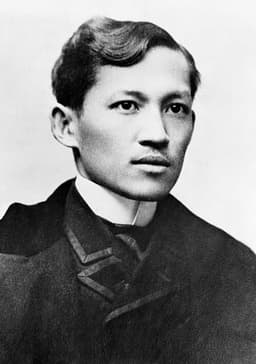
Jose Rizal
Revolutionary · Modern
46.7Total
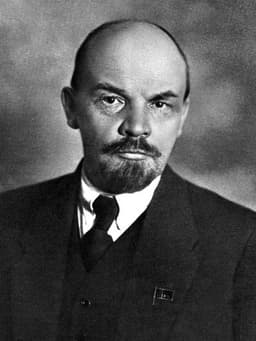
Vladimir Lenin
Revolutionary · Modern
71.2Total
Basic Information
Born
1861
1870
Died
1896
1924
Era
Modern
Modern
Nationality
Philippines
Russia
Occupation
Revolutionary
Revolutionary
Civilization
Eastern
Western
Score Comparison
Military (10%)
11.9
30.0
Political (20%)
33.6
78.0
Influence (20%)
62.0
82.0
Legacy (20%)
58.0
72.0
Leadership (15%)
40.4
80.0
Strategy (15%)
44.5
60.0
TOTAL
46.7
71.2
Jose Rizal — Complete Timeline
1887 AD
Publication of Noli Me TangereCultural
Rizal published his first novel, Noli Me Tangere, in Berlin. The book exposed the corruption and abuses of Spanish colonial rule and the Catholic Church in the Philippines, sparking nationalist sentiment among Filipinos.
LiteratureNationalismColonial Critique
Impact: nationalprogressive
1891 AD
Publication of El FilibusterismoCultural◆ Major
Rizal published his second novel, El Filibusterismo, in Ghent, Belgium. A darker sequel to Noli Me Tangere, it advocated for revolution and further criticized Spanish oppression, intensifying calls for reform and independence.
LiteratureRevolutionColonial Critique
Impact: nationalprogressive
1892 AD
Exile to DapitanPolitical Action◆ Major
Rizal was exiled by Spanish authorities to Dapitan in Mindanao for his alleged involvement in revolutionary activities. During his four-year exile, he practiced medicine, taught, and conducted scientific research, but remained under surveillance.
ExileSpanish ColonialismDapitan
Impact: nationaltragic
1896 AD
Execution of José RizalPolitical Action
Rizal was executed by firing squad in Manila on charges of sedition and rebellion, following a trial by Spanish military court. His martyrdom galvanized the Philippine Revolution, making him a national hero and symbol of resistance.
ExecutionMartyrdomPhilippine Revolution
Impact: nationaltragic
Vladimir Lenin — Complete Timeline
1903 AD
Founding of the Bolshevik PartyPolitical Action
At the Second Congress of the Russian Social Democratic Labour Party in London, Lenin led a split that created the Bolshevik faction. The Bolsheviks advocated for a disciplined vanguard party of professional revolutionaries, a key element of Lenin's political strategy.
Political PartyRevolutionIdeology
Impact: global
1917 AD
April ThesesPolitical Action◆ Major
Lenin returned to Russia from exile and published the April Theses, calling for the overthrow of the Provisional Government, transfer of power to the soviets, and an end to World War I. This document set the Bolshevik agenda for the coming revolution.
RevolutionIdeologyPolitical Strategy
Impact: national
October RevolutionPolitical Action
Lenin led the Bolshevik seizure of power in Petrograd, capturing key government buildings and the Winter Palace. The revolution overthrew the Provisional Government and established the world's first socialist state, the Russian Soviet Federative Socialist Republic.
RevolutionCoupCommunism
Impact: global
1918 AD
Treaty of Brest-LitovskPolitical Action◆ Major
Lenin signed a separate peace treaty with the Central Powers, ceding vast territories including Ukraine, Belarus, and the Baltic states. The treaty ended Russia's involvement in World War I but caused significant territorial losses and internal opposition.
TreatyWorld War ITerritorial Loss
Impact: globaldestructive
1921 AD
New Economic Policy (NEP)Reform◆ Major
Lenin introduced the NEP, allowing limited private enterprise and market mechanisms to revive the war-torn Soviet economy. The policy replaced War Communism, permitting small-scale capitalism while the state retained control of major industries.
Economic ReformPolicyRecovery
Impact: nationalconstructive
1922 AD
Establishment of the Soviet UnionPolitical Action
Lenin oversaw the creation of the Union of Soviet Socialist Republics (USSR), a federation of Soviet republics. The new state consolidated Bolshevik control over much of the former Russian Empire and became a model for communist states worldwide.
State FormationCommunismFederation
Impact: global
Expert Analysis
Vladimir Lenin vs Jose Rizal
# The Pen and the Sword: José Rizal and Vladimir Lenin
On a chilly December morning in 1896, José Rizal stood before a Spanish firing squad in Manila, his last words refusing to condemn his executioners. Twenty-one years later, in the smoky corridors of Petrograd’s Smolny Institute, Vladimir Lenin signed a decree that would abolish private property across Russia. One man died with a poem in his pocket; the other lived to build a state that would bury millions in its name. Both were revolutionaries, but their revolutions could not have been more different—one born of ink and ideas, the other of iron and organization. What drove these two men, separated by continents and cultures, to such divergent paths?
Origins
Rizal came into the world in 1861, a child of the Filipino ilustrado class, educated in Manila and later in Europe. He was a polymath—ophthalmologist, novelist, sculptor, linguist—who believed reason could dismantle empire. His world was one of colonial twilight, where Spanish friars held power and Filipinos were denied basic rights. Rizal absorbed Enlightenment thought, reading Voltaire and Rousseau, convinced that education and moral persuasion could awaken his people.
Lenin, born nine years later in 1870, grew up in a Russia still reeling from serfdom’s abolition. His older brother Alexander was executed for plotting to assassinate the Tsar—a trauma that hardened Lenin’s resolve. Where Rizal saw reform, Lenin saw only the rottenness of the entire system. He devoured Marx, not Voltaire, and concluded that only the complete destruction of the old world could build a new one. Their origins shaped their tools: Rizal reached for a pen, Lenin for a party.
Rise to Power
Rizal’s rise was a slow, deliberate ascent through the written word. In 1887, he published *Noli Me Tangere* in Berlin, a novel that laid bare the sexual abuses of friars and the corruption of colonial officials. Four years later came *El Filibusterismo*, a darker work that hinted at revolution. Rizal never led armies or stormed palaces; he built a nation in the minds of its people. His exile to Dapitan in 1892 removed him from the revolutionary stage, but his novels continued to circulate, smuggled in rice sacks and hidden under floorboards.
Lenin’s path was different. In 1903, at the Second Congress of the Russian Social Democratic Labour Party in London, he engineered a split that created the Bolsheviks—a disciplined, centralized party of professional revolutionaries. This was his masterstroke: not a novel, but an organization. When the Tsar fell in February 1917, Lenin rushed back to Russia in a sealed train, publishing the April Theses that called for immediate socialist revolution. By October, he led a coup that seized power in a matter of hours. Rizal’s revolution was a slow burn; Lenin’s was a lightning strike.
Leadership and Governance
Rizal never governed. He was a moral leader, not a political one. His influence came from his martyrdom—executed at 35 on charges of sedition, though he had renounced violence. His death catalyzed the Philippine Revolution, but he left no blueprint for state-building. His legacy was inspiration, not administration.
Lenin, by contrast, ruled with an iron hand. As head of the Soviet state, he faced civil war, famine, and foreign intervention. In 1918, he signed the Treaty of Brest-Litovsk, ceding vast territories to Germany to buy time—a pragmatic decision that horrified many Bolsheviks but saved his regime. When war communism failed, he pivoted to the New Economic Policy in 1921, allowing limited private enterprise to revive the economy. Lenin was not a dogmatist; he was a tactician who bent theory to reality. His political wisdom lay in knowing when to retreat.
Triumph and Tragedy
Rizal’s greatest moment was his death. On December 30, 1896, he faced the firing squad with dignity, turning to face his executioners—a gesture of defiance that made him a national martyr. His tragedy was that he never saw the revolution he inspired; he died believing his work had failed.
Lenin’s triumph was the creation of the Soviet Union in 1922, a new kind of state that would reshape the twentieth century. But his tragedy was the Red Terror, the suppression of dissent, and the famine that followed civil war. He built a system that would, under Stalin, devour its own children. Lenin’s revolution succeeded, but at a cost he may not have fully foreseen.
Character and Destiny
Rizal was a man of the nineteenth century—rational, humane, and optimistic about human progress. He believed in the power of ideas to transform society without bloodshed. His character was gentle, his methods patient. Destiny made him a martyr.
Lenin was a man of the twentieth century—ruthless, systematic, and convinced that history required violence. He once wrote, “We cannot be sentimental.” His character was cold, his methods efficient. Destiny made him a state-builder. Where Rizal’s personality led to a symbolic victory, Lenin’s led to a tangible, terrible power.
Legacy
Rizal is remembered as the national hero of the Philippines, his face on currency, his novels required reading. His legacy is cultural and moral—a reminder that words can topple empires. Lenin’s legacy is political and contested. He is a figure of veneration in some circles, of condemnation in others. The Soviet Union he founded collapsed in 1991, but his ideas continue to shape leftist movements worldwide. One man’s legacy is a flame; the other’s is a foundation—cracked but still visible.
Conclusion
Standing at the crossroads of history, Rizal and Lenin embody two paths to revolution. Rizal trusted the pen; Lenin trusted the sword. One sought to awaken his people through literature; the other sought to organize them through a party. Both succeeded, but their success took different forms—one in the hearts of a nation, the other in the structure of a state. Their stories remind us that revolutions are not single events but choices, made by men who are as much products of their time as shapers of it. The pen can inspire, but the sword can build—and sometimes, as history shows, the cost of building is far higher.
Rankings
🥇
Vladimir LeninLeader
Mil: 30.0Pol: 78.0Inf: 82.0
71.2
🥈
Jose Rizal
Mil: 11.9Pol: 33.6Inf: 62.0
46.7
+24.5 behind
How This Comparison Works
Algorithm
Each figure is scored on 6 dimensions (0—100 scale) based on structured historical data: Military (10%), Political (20%), Influence (20%), Legacy (20%), Leadership (15%), Strategy (15%). The weighted total produces the final ranking.
Data Sources
Scores are computed from structured sub-indicators in the database. Scale factors adjust for era (Ancient ×0.85, Modern ×1.0) and civilization size (Eastern ×1.05, Other ×0.80) to account for differences in population and military scale.
Maximum 3 Figures
Comparisons are limited to 2—3 figures to ensure readability and statistical meaningfulness.
Error Margins
±5 points per dimension — Sub-scores are derived from historical records with inherent uncertainty. Two figures within 5 points on a dimension should be considered roughly equivalent in that area.
Total Score Accuracy
±3 points overall — The weighted combination of 6 dimensions produces a total score with approximately ±3 points of uncertainty. Differences of less than 3 points are not statistically significant— the figures are effectively tied.
Known Limitations
- Historical records are incomplete and uneven across civilizations
- Figures from oral-tradition societies may be underrepresented
- Occupation labels can misclassify multi-role figures
- Scores measure capability and impact, not moral character
- Quantitative scoring is a comparison tool, not absolute truth
Capability Radar
Military (10%) — Battles & Warfare
Battles
14
20
Win Rate
21
35
Expansion
22
70
Political (20%) — Governance & Reform
Reform
15
95
Diplomacy
20
75
Economy
5
60
Influence (20%) — Cultural & Global Reach
Cultural
75
80
Global
65
90
Legacy (20%) — Historical Impact
Historical
80
95
Longevity
75
85
Leadership (15%) — Power & Stability
Tenure
0
55
Stability
5
40
Strategy (15%) — Tactics & Innovation
Strategy
27
55
Tactics
28
30
Reform
28
85
Similar Comparisons
Comments & Discussion
革命猎犬6/16/2026
拿医生和革命建筑师比,根本是关公战秦琼。黎刹的“不流血的改革”像给肿瘤贴创可贴,最后死在刑场上;列宁清楚在沙俄这架老机器上,不砸碎根本修不好。一个写小说治标,一个动手拆房治本,高下立判。
The Ink Saboteur6/16/2026
Data tells the truth: Rizal's exile in Dapitan saw him treat 100+ eye patients for free—a surgeon's idealism. Lenin? He signed the Red Terror decree with 50,000+ executions in 1918 alone. One healed individuals, the other made "the omelette of history" with millions of eggs. I know who I'd trust with my life. Judges: revolutionary impact ≠ body count.
幻梦清醒师6/16/2026
黎刹像个走错片场的诗人,以为写两本小说就能让殖民者良心发现。他妈的他写《不许犯我》时,菲律宾农民正被西班牙地主剥削到死。列宁虽冷血,但《帝国主义论》至少看透了病根——全球资本链条。对不起,我选那个看懂棋局的人,哪怕他下的狠手。
The Reformist's Hangman6/16/2026
Both geniuses, but one was naive. Rizal's "La Solidaridad" movement literally asked Spain for legislative reforms—like begging a wolf to stop eating sheep. Lenin's April Theses demanded "no support for the Provisional Government." One negotiated, the other seized power. History's graveyard is paved with beautiful petitions; revolutions need commissars, not novelists.