Loading...
Ho Chi Minh vs Miguel Hidalgo
Ho Chi Minh leads by 15.9 pts · 2 figures compared
…
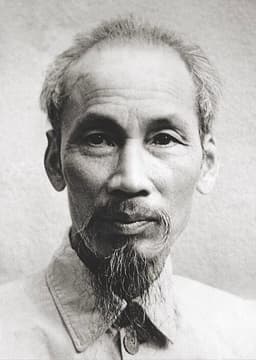
Ho Chi Minh
Revolutionary · Modern
62.9Total
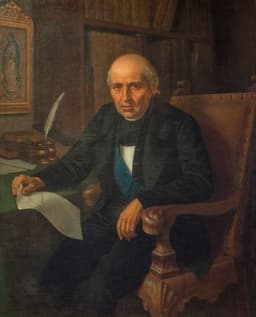
Miguel Hidalgo
Revolutionary · Modern
47.0Total
Basic Information
Born
1890
1753
Died
1969
1811
Era
Modern
Modern
Nationality
Vietnam
Mexico
Occupation
Revolutionary
Revolutionary
Civilization
Eastern
Western
Score Comparison
Military (10%)
55.0
50.0
Political (20%)
72.0
36.5
Influence (20%)
62.0
55.0
Legacy (20%)
58.0
52.0
Leadership (15%)
72.0
39.0
Strategy (15%)
58.0
39.6
TOTAL
62.9
47.0
Ho Chi Minh — Complete Timeline
1941 AD
Establishment of the Viet MinhPolitical Action◆ Major
Ho Chi Minh founded the Viet Minh (League for the Independence of Vietnam) in southern China. This coalition of nationalist and communist groups became the primary force for Vietnamese independence, fighting both Japanese occupation and French colonialism.
Viet MinhIndependence MovementWorld War II
Impact: nationalconstructive
1945 AD
Declaration of Independence of VietnamPolitical Action
Ho Chi Minh proclaimed the Democratic Republic of Vietnam in Hanoi's Ba Dinh Square, citing the US Declaration of Independence. This established the Viet Minh government and began the struggle for independence from French colonial rule.
IndependenceVietnamDecolonization
Impact: nationalconstructive
1954 AD
Battle of Dien Bien PhuWar
Ho Chi Minh's Viet Minh forces, under General Giap, defeated the French garrison at Dien Bien Phu. This victory ended French colonial rule in Indochina and led to the Geneva Accords dividing Vietnam at the 17th parallel.
Vietnam WarDecolonizationFrench Indochina
Impact: regional
Geneva AccordsPolitical Action◆ Major
Ho Chi Minh's delegation signed the Geneva Accords, temporarily dividing Vietnam at the 17th parallel. The agreement promised nationwide elections in 1956, which were never held, leading to the permanent division of Vietnam.
Geneva ConferenceDivision of VietnamDiplomacy
Impact: regional
1959 AD
Start of the Vietnam WarWar
Ho Chi Minh's government in North Vietnam authorized armed struggle against the US-backed South Vietnamese regime. This escalated into the Vietnam War, a prolonged conflict that resulted in millions of deaths and US withdrawal in 1973.
Vietnam WarCold WarCommunism
Impact: globaldestructive
Miguel Hidalgo — Complete Timeline
1810 AD
Captured Guanajuato and massacred SpaniardsWar◆ Major
Hidalgo's army of 80,000 captured the city of Guanajuato on September 28, 1810. After taking the Alh
BattleMassacreViolence
Impact: regionaldestructive
Issued the Grito de DoloresPolitical Action
On September 16, 1810, Father Miguel Hidalgo rang the church bell in Dolores and called for rebellion against Spanish colonial rule. His speech, known as the Grito de Dolores, urged Mexicans to rise up against the Spanish and marked the beginning of the Mexican War of Independence.
IndependenceRebellionGrito de Dolores
Impact: nationalconstructive
1811 AD
Defeated at the Battle of Calderón BridgeWar◆ Major
Hidalgo's poorly trained army was decisively defeated by a smaller Spanish royalist force at the Battle of Calder
DefeatSpanish RoyalistsTurning Point
Impact: regionaltragic
Executed by Spanish authoritiesPolitical Action◆ Major
Hidalgo was captured in Acatita de Baj
ExecutionMartyrdomIndependence Movement
Impact: nationaltragic
Expert Analysis
Miguel Hidalgo vs Ho Chi Minh
# The Revolutionary’s Road: Ho Chi Minh and Miguel Hidalgo
On a September morning in 1810, a white-haired priest rang a church bell in the small town of Dolores, Mexico, and called upon his congregation to rise against three centuries of Spanish rule. On a September morning in 1945, a gaunt, wispy-bearded man in a khaki suit stood before a crowd in Hanoi’s Ba Dinh Square and read a declaration of independence that borrowed from Thomas Jefferson. Both moments were acts of defiance that would reshape nations. Yet one revolutionary led his people to victory and died in his bed, the father of a unified country; the other was captured, defrocked, and executed within a year, his rebellion crushed. What explains the difference between Ho Chi Minh and Miguel Hidalgo—two men who sought the same thing, but whose paths diverged into triumph and tragedy?
Origins
Miguel Hidalgo y Costilla was born in 1753 into a world of rigid colonial hierarchy. The son of a hacienda manager, he was a creole—a person of Spanish descent born in Mexico—which meant he was barred from the highest offices but educated enough to become a priest. He was a man of the Enlightenment, reading Rousseau and Voltaire in secret, and as a parish priest in Dolores, he saw the brutal exploitation of Indigenous peasants and mestizos. His rebellion was a sudden, desperate act born from a conspiracy that was about to be betrayed. He had no army, no foreign allies, and no plan beyond the call to arms.
Ho Chi Minh, born Nguyen Sinh Cung in 1890 in French-occupied Vietnam, came of age in a world of colonial humiliation. His father was a nationalist scholar who lost his job for refusing to learn French. Young Ho traveled the world as a cook, a photographer, a laborer—living in Paris, London, and New York, absorbing socialist ideas while scrubbing dishes. By the time he founded the Viet Minh in 1941, he had spent three decades studying revolutions, building networks, and waiting. “It is better to sacrifice everything than to live in slavery,” he wrote, but he knew that sacrifice required patience.
Rise to Power
Hidalgo’s rise was explosive. On September 16, 1810, his Grito de Dolores—“Long live the Virgin of Guadalupe! Death to bad government!”—galvanized a mob. Within weeks, he commanded 80,000 men armed with machetes, slingshots, and captured muskets. They stormed Guanajuato, where Hidalgo lost control as his followers massacred hundreds of Spanish civilians in the Alhóndiga de Granaditas. He was a moral leader, not a military one; his authority came from his collar, not his strategy. When royalist forces cornered him at Calderón Bridge in January 1811, his undisciplined army broke and fled. He was captured two months later.
Ho Chi Minh’s rise was a slow, patient climb. In 1941, he slipped back into Vietnam after thirty years abroad and founded the Viet Minh in a cave near the Chinese border. He cultivated a network of guerrillas, trained by General Vo Nguyen Giap, and waited for the right moment. That moment came in 1945, when Japan’s surrender left a power vacuum. Ho seized Hanoi, declared independence, and quoted the American Declaration—a masterstroke of political theater. He knew that timing was everything.
Leadership & Governance
Hidalgo was a firebrand, not an administrator. He abolished slavery and returned land to Indigenous communities, but he had no state apparatus, no tax system, no diplomatic corps. His government was a mobile camp of followers. When Spanish forces counterattacked, he had no reserves, no fortifications, no fallback plan. His political wisdom was real—he understood the grievances of the poor—but he could not translate that into lasting institutions.
Ho Chi Minh was a master of both war and politics. He led a government-in-exile during the First Indochina War, and at Dien Bien Phu in 1954, his forces achieved what Hidalgo could not: a decisive military victory that forced France to negotiate. The Geneva Accords temporarily divided Vietnam, but Ho used the pause to build a state in the north. He was ruthless when needed—he purged rivals within the Communist Party—and charismatic when it served. “Nothing is more precious than independence and liberty,” he declared, and he made that slogan a weapon.
Triumph & Tragedy
Hidalgo’s greatest moment was also his downfall. The Grito de Dolores is celebrated as Mexico’s Independence Day, but he never saw freedom. His execution in 1811—by firing squad, after the Inquisition defrocked him—was a tragedy of noble intentions undone by haste. He remains a symbol, not a victor.
Ho Chi Minh’s triumph was the survival of North Vietnam through decades of war. His tragedy was that he died in 1969, six years before Saigon fell and Vietnam was unified. He never saw the country he dreamed of, but he knew it was coming. His will asked for his ashes to be scattered across the nation’s hills and rivers.
Character & Destiny
Hidalgo was a man of impulse. He was a priest who fathered children, a scholar who led a mob, a reformer who could not control his own revolution. His character was shaped by the Enlightenment’s optimism—he believed the people would win through sheer will. He was wrong.
Ho Chi Minh was a man of calculation. He was an ascetic who lived in caves, a nationalist who used communist discipline, a poet who wrote about prison and freedom. His character was forged by exile and failure. He learned from every defeat. “Our resistance will be long and painful,” he admitted, “but we will win because we are right.”
Legacy
Hidalgo’s legacy is the spark. Every September 16, Mexico’s president reenacts the Grito, and the crowd roars. He is the father of independence, but the son who finished the work was José María Morelos, not Hidalgo. His name lives in streets and statues, but his failure taught later revolutionaries the need for organization.
Ho Chi Minh’s legacy is the nation. Saigon is now Ho Chi Minh City. His embalmed body lies in a mausoleum in Hanoi, a pilgrimage site for millions. He is remembered as Uncle Ho, the gentle revolutionary who outlasted two empires. But his victory came at staggering cost: millions of Vietnamese dead, a country scarred by Agent Orange and bomb craters.
Conclusion
Both men faced the same question: How do the weak defeat the strong? Hidalgo answered with a shout, Ho Chi Minh with a whisper that grew into a roar. One died in a hail of bullets, the other in a bed, surrounded by comrades. Yet both understood that revolution is not a single battle but a long war—and that the bell that rings for freedom must be struck again and again, until the sound cannot be ignored.
Rankings
🥇
Ho Chi MinhLeader
Mil: 55.0Pol: 72.0Inf: 62.0
62.9
🥈
Miguel Hidalgo
Mil: 50.0Pol: 36.5Inf: 55.0
47.0
+15.9 behind
How This Comparison Works
Algorithm
Each figure is scored on 6 dimensions (0—100 scale) based on structured historical data: Military (10%), Political (20%), Influence (20%), Legacy (20%), Leadership (15%), Strategy (15%). The weighted total produces the final ranking.
Data Sources
Scores are computed from structured sub-indicators in the database. Scale factors adjust for era (Ancient ×0.85, Modern ×1.0) and civilization size (Eastern ×1.05, Other ×0.80) to account for differences in population and military scale.
Maximum 3 Figures
Comparisons are limited to 2—3 figures to ensure readability and statistical meaningfulness.
Error Margins
±5 points per dimension — Sub-scores are derived from historical records with inherent uncertainty. Two figures within 5 points on a dimension should be considered roughly equivalent in that area.
Total Score Accuracy
±3 points overall — The weighted combination of 6 dimensions produces a total score with approximately ±3 points of uncertainty. Differences of less than 3 points are not statistically significant— the figures are effectively tied.
Known Limitations
- Historical records are incomplete and uneven across civilizations
- Figures from oral-tradition societies may be underrepresented
- Occupation labels can misclassify multi-role figures
- Scores measure capability and impact, not moral character
- Quantitative scoring is a comparison tool, not absolute truth
Capability Radar
Military (10%) — Battles & Warfare
Battles
65
30
Win Rate
60
25
Expansion
55
20
Political (20%) — Governance & Reform
Reform
85
60
Diplomacy
90
30
Economy
40
20
Influence (20%) — Cultural & Global Reach
Cultural
75
70
Global
75
60
Legacy (20%) — Historical Impact
Historical
85
75
Longevity
70
70
Leadership (15%) — Power & Stability
Tenure
70
15
Stability
50
10
Strategy (15%) — Tactics & Innovation
Strategy
80
25
Tactics
70
20
Reform
75
10
Similar Comparisons
Comments & Discussion
古典学究6/16/2026
胡志明是典型的马基雅维利君主——狠、隐忍、目标清晰。伊达尔戈更像堂吉诃德,满脑子启蒙理想却不识时务。胡志明引用杰斐逊,实际却是列宁的嫡系。一个死了还能成神,一个死了差点被遗忘。古典史告诉我们:英雄需要结果,不是过程。
少年胡粉6/16/2026
你们都在冷嘲热讽伊达尔戈,可别忘了:没有他敲响那口钟,墨西哥连独立梦都不会有。胡志明赢了国,伊达尔戈赢了魂。一个死在床上,一个死在枪下,但历史上那些最亮的星,往往是碎掉的那一颗。数据再好看,也写不出这种悲壮。
Historian1376/16/2026
Hidalgo was a brave fool who started a fire without a strategy. Ho Chi Minh was a cold-blooded political animal who spent decades networking with foreign powers, reading Sun Tzu, and waiting for the right moment. One man had a bell and a prayer; the other had a network and a plan. Hidalgo’s rebellion was a tragic tantrum—it was crushed because he thought passion alone could topple an empire.
数据刺猬6/16/2026
别跟我谈激情,谈数据。伊达尔戈领导8万人却打不过6000保皇军,伤亡比1:7,这是指挥灾难。胡志明呢?越南战争美军伤亡超5万,法军更是惨败。一个靠理想送人头,一个靠实权活到胜利——革命不是请客吃饭,是数学。
Chronicler26876/16/2026
From a purely military logistics view, Hidalgo lost the moment he didn't seize Mexico City right after the Granaditas victory. He wasted momentum, let royalist forces regroup, and then got shredded at Calderón Bridge. Ho Chi Minh never made that mistake—he used protracted warfare, avoided decisive battles until Dien Bien Phu. Hidalgo was a revolutionary priest; Ho was a general in disguise.