Loading...
Jose Rizal vs Miguel Hidalgo
Miguel Hidalgo leads by 0.3 pts · 2 figures compared
…
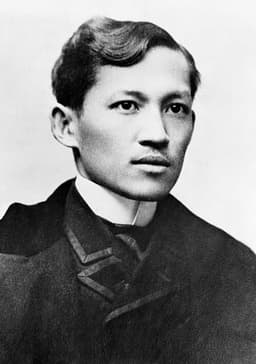
Jose Rizal
Revolutionary · Modern
46.7Total
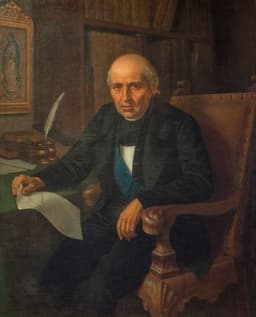
Miguel Hidalgo
Revolutionary · Modern
47.0Total
Basic Information
Born
1861
1753
Died
1896
1811
Era
Modern
Modern
Nationality
Philippines
Mexico
Occupation
Revolutionary
Revolutionary
Civilization
Eastern
Western
Score Comparison
Military (10%)
11.9
50.0
Political (20%)
33.6
36.5
Influence (20%)
62.0
55.0
Legacy (20%)
58.0
52.0
Leadership (15%)
40.4
39.0
Strategy (15%)
44.5
39.6
TOTAL
46.7
47.0
Jose Rizal — Complete Timeline
1887 AD
Publication of Noli Me TangereCultural
Rizal published his first novel, Noli Me Tangere, in Berlin. The book exposed the corruption and abuses of Spanish colonial rule and the Catholic Church in the Philippines, sparking nationalist sentiment among Filipinos.
LiteratureNationalismColonial Critique
Impact: nationalprogressive
1891 AD
Publication of El FilibusterismoCultural◆ Major
Rizal published his second novel, El Filibusterismo, in Ghent, Belgium. A darker sequel to Noli Me Tangere, it advocated for revolution and further criticized Spanish oppression, intensifying calls for reform and independence.
LiteratureRevolutionColonial Critique
Impact: nationalprogressive
1892 AD
Exile to DapitanPolitical Action◆ Major
Rizal was exiled by Spanish authorities to Dapitan in Mindanao for his alleged involvement in revolutionary activities. During his four-year exile, he practiced medicine, taught, and conducted scientific research, but remained under surveillance.
ExileSpanish ColonialismDapitan
Impact: nationaltragic
1896 AD
Execution of José RizalPolitical Action
Rizal was executed by firing squad in Manila on charges of sedition and rebellion, following a trial by Spanish military court. His martyrdom galvanized the Philippine Revolution, making him a national hero and symbol of resistance.
ExecutionMartyrdomPhilippine Revolution
Impact: nationaltragic
Miguel Hidalgo — Complete Timeline
1810 AD
Captured Guanajuato and massacred SpaniardsWar◆ Major
Hidalgo's army of 80,000 captured the city of Guanajuato on September 28, 1810. After taking the Alh
BattleMassacreViolence
Impact: regionaldestructive
Issued the Grito de DoloresPolitical Action
On September 16, 1810, Father Miguel Hidalgo rang the church bell in Dolores and called for rebellion against Spanish colonial rule. His speech, known as the Grito de Dolores, urged Mexicans to rise up against the Spanish and marked the beginning of the Mexican War of Independence.
IndependenceRebellionGrito de Dolores
Impact: nationalconstructive
1811 AD
Defeated at the Battle of Calderón BridgeWar◆ Major
Hidalgo's poorly trained army was decisively defeated by a smaller Spanish royalist force at the Battle of Calder
DefeatSpanish RoyalistsTurning Point
Impact: regionaltragic
Executed by Spanish authoritiesPolitical Action◆ Major
Hidalgo was captured in Acatita de Baj
ExecutionMartyrdomIndependence Movement
Impact: nationaltragic
Expert Analysis
Miguel Hidalgo vs Jose Rizal
# The Pen and the Bell: Rizal, Hidalgo, and the Two Faces of Revolution
On a gray December morning in 1896, José Rizal stood before a firing squad in Manila, his back to the executioners. He had refused a blindfold. Moments before the volley, he turned around to face his killers—an act of defiance that would echo through Philippine history. Fifteen years earlier and half a world away, Miguel Hidalgo had not been so fortunate. Captured in the northern deserts of Mexico, the priest was defrocked by the Inquisition, stripped of his vestments, and executed by firing squad. One man died with his eyes open, the other with his faith broken. Both were revolutionaries. Both were martyrs. Yet the paths they walked could not have been more different—and the revolutions they ignited diverged as sharply as the men themselves.
Origins
José Rizal was born into privilege in 1861, the seventh child of a wealthy Filipino mestizo family in Calamba, Laguna. His world was one of books, tutors, and European ideas. He studied at the Ateneo Municipal de Manila, then traveled to Spain, France, and Germany, absorbing the Enlightenment like a sponge. By twenty-five, he was an ophthalmologist, a poet, a linguist fluent in twenty-two languages, and a sculptor. He was, in every sense, a product of the nineteenth-century liberal tradition—a man who believed that reason, education, and moral persuasion could reform an empire.
Miguel Hidalgo, born in 1753 on a hacienda in Guanajuato, came from a different world. He was a Creole priest—a man of the cloth but also of the soil. Educated at the Colegio de San Nicolás in Valladolid, he became a rector and a scholar, but his true classroom was the parish. He read banned books, spoke to indigenous farmers in their own languages, and taught them how to grow olives and raise bees. Where Rizal was cosmopolitan, Hidalgo was provincial. Where Rizal sought to persuade the powerful, Hidalgo sought to mobilize the powerless.
Rise to Power
Rizal entered history through the written word. His 1887 novel *Noli Me Tangere*, published in Berlin, was a scalding indictment of Spanish colonial corruption—the friars who abused their authority, the officials who enriched themselves, the system that crushed the Filipino soul. It was a cultural turning point, a book that Filipinos passed from hand to hand, read aloud in secret gatherings. Its darker sequel, *El Filibusterismo* (1891), published in Ghent, went further, suggesting that reform might require violence. Yet Rizal himself never took up arms. He believed in the power of ideas to change minds.
Hidalgo, by contrast, rose through action. On the night of September 15, 1810, he rang the bell of his church in Dolores and issued the *Grito de Dolores*—a call to arms against Spanish rule. "Long live independence!" he cried. "Long live Our Lady of Guadalupe! Death to bad government!" Within hours, thousands of indigenous peasants and mestizos flocked to his banner. He was not a writer but a preacher. His revolution began not with a book but with a bell.
Leadership & Governance
As leaders, the two men were opposites. Rizal was an organizer, a founder of the La Liga Filipina, a peaceful reform society. He advocated for representation in the Spanish Cortes, for equality before the law, for the expulsion of the friars. His political wisdom lay in patience and persuasion. His military score of 24.6 reflects a man who never commanded an army—and never wanted to. When the Katipunan, the secret revolutionary society, sought his support, he refused. He believed the time was not ripe.
Hidalgo, with a military score of 42.0, was a general in all but training. His army of 80,000 captured Guanajuato on September 28, 1810, and then committed a massacre of Spanish civilians in the Alhóndiga de Granaditas—a brutal act that horrified many Creoles who might have joined him. He was a charismatic leader but a poor strategist. At the Battle of Calderón Bridge on January 17, 1811, his untrained mob was routed by a smaller, disciplined Spanish force. Hidalgo fled north, was betrayed, captured, and executed.
Triumph & Tragedy
Rizal's greatest triumph was not a battle but a book. *Noli Me Tangere* did what no army could: it awakened a nation. It gave Filipinos a language for their grievances, a story for their suffering. His tragedy was that he died before he could see the revolution he inspired—and that he died opposing it. At his trial, the Spanish authorities accused him of leading the Katipunan, but he had actually denounced it. He was executed for a crime he had not committed, for a movement he had not led.
Hidalgo's triumph was the *Grito de Dolores* itself—a moment of pure, uncalculated courage that ignited a decade-long war for independence. His tragedy was that his own violence alienated the very allies he needed. The massacre at Guanajuato turned the Creole elite against him. He died not as a liberator but as a heretic, defrocked by the church he had served.
Character & Destiny
Rizal's character was shaped by a profound ambivalence. He was a revolutionary who feared revolution, a patriot who distrusted nationalism, a martyr who did not seek martyrdom. His political score of 37.4 reflects a man who was more a critic than a builder, more a philosopher than a politician. He wrote, "I am not a revolutionary. I am a reformer." Yet history made him a revolutionary anyway.
Hidalgo was the opposite. He was a man of action, impulsive and passionate, who believed that the moment demanded everything. His political score of 63.2 reflects a man who understood power—how to seize it, how to wield it, how to lose it. He was a priest who led an army, a scholar who became a general, a man who traded the pulpit for the battlefield. His greatest strength—his willingness to act—was also his greatest flaw.
Legacy
Today, Rizal is remembered as the national hero of the Philippines. His face appears on coins, his books are required reading, his execution date—December 30—is a national holiday. His legacy score of 72.2 reflects a man who, through his death, achieved more than he could have in life. He is the symbol of peaceful resistance, of intellectual courage, of the power of the pen.
Hidalgo's legacy is more complicated. He is the father of Mexican independence, and every September 16, the president of Mexico rings the bell of the National Palace and reenacts the *Grito de Dolores*. His legacy score of 75.0 places him slightly above Rizal, but his memory is mixed. He is celebrated for starting the revolution, but his violence and poor judgment are quietly acknowledged. He is the symbol of popular uprising, of the rage of the oppressed, of the power of the bell.
Conclusion
In the end, Rizal and Hidalgo embody two different visions of revolution. Rizal believed that change must come from within—through education, through persuasion, through the slow work of reason. Hidalgo believed that change must come from without—through action, through force, through the sudden rupture of rebellion. One wrote books that inspired a revolution he never led. One rang a bell that started a revolution he could not control. Both died at the hands of the same empire, for the same cause, in the same way. But the revolutions they left behind were as different as the men themselves—and the question of which path is better remains unanswered to this day.
Rankings
🥇
Miguel HidalgoLeader
Mil: 50.0Pol: 36.5Inf: 55.0
47.0
🥈
Jose Rizal
Mil: 11.9Pol: 33.6Inf: 62.0
46.7
+0.3 behind
How This Comparison Works
Algorithm
Each figure is scored on 6 dimensions (0—100 scale) based on structured historical data: Military (10%), Political (20%), Influence (20%), Legacy (20%), Leadership (15%), Strategy (15%). The weighted total produces the final ranking.
Data Sources
Scores are computed from structured sub-indicators in the database. Scale factors adjust for era (Ancient ×0.85, Modern ×1.0) and civilization size (Eastern ×1.05, Other ×0.80) to account for differences in population and military scale.
Maximum 3 Figures
Comparisons are limited to 2—3 figures to ensure readability and statistical meaningfulness.
Error Margins
±5 points per dimension — Sub-scores are derived from historical records with inherent uncertainty. Two figures within 5 points on a dimension should be considered roughly equivalent in that area.
Total Score Accuracy
±3 points overall — The weighted combination of 6 dimensions produces a total score with approximately ±3 points of uncertainty. Differences of less than 3 points are not statistically significant— the figures are effectively tied.
Known Limitations
- Historical records are incomplete and uneven across civilizations
- Figures from oral-tradition societies may be underrepresented
- Occupation labels can misclassify multi-role figures
- Scores measure capability and impact, not moral character
- Quantitative scoring is a comparison tool, not absolute truth
Capability Radar
Military (10%) — Battles & Warfare
Battles
14
30
Win Rate
21
25
Expansion
22
20
Political (20%) — Governance & Reform
Reform
15
60
Diplomacy
20
30
Economy
5
20
Influence (20%) — Cultural & Global Reach
Cultural
75
70
Global
65
60
Legacy (20%) — Historical Impact
Historical
80
75
Longevity
75
70
Leadership (15%) — Power & Stability
Tenure
0
15
Stability
5
10
Strategy (15%) — Tactics & Innovation
Strategy
27
25
Tactics
28
20
Reform
28
10
Similar Comparisons
Comments & Discussion
Dos-Caras Historian6/16/2026
Hidalgo’s 1810 Grito de Dolores was actually a panicked last-minute call to arms after the Conspiracy of Querétaro was exposed, while Rizal consciously structured his martyrdom through La Liga Filipina. Hidalgo was a chaotic war-priest who failed to discipline his 80,000-strong army; Rizal was a calculated intellectual who rejected armed revolt. Give me Rizal’s Pen any day—Hidalgo’s Bell rang in a bloodbath that got out of hand.
修订派火药桶6/16/2026
说Hidalgo比Rizal更“革命”?别逗了。Rizal写了《不许犯我》和《起义者》,直接骂透西班牙殖民体系,连Morga的菲律宾史都重新翻了一遍;Hidalgo除了喊“独立万岁”和抢粮仓,连个像样的政治纲领都没留下。Rizal的眼科手术刀比Hidalgo的破钟声狠多了,割的是思想的毒瘤,不是乱民的命。
Data Skeptic Shield6/16/2026
The comparison romanticizes both men’s body counts. Hidalgo’s peasant army looted and massacred Spaniards and mestizos indiscriminately—the 1811 massacre at Alhóndiga de Granaditas left over 500 dead, mostly civilians. Rizal’s “peaceful reform” period from 1887-1892 actually coincided with rising peasant revolts in Batangas and Laguna. Correlation isn’t causation, but the stats don’t support a clean “Pen vs Bell” binary. Both were feckless in controlling violence.
古典学者烛台6/16/2026
两个都是被帝国主义碾压的悲剧英雄,但Hidalgio败在没有哲学根基。Rizal引用了柏拉图的理念论和斯宾诺莎的伦理观,在《起义者》里用博士Simoun的疯狂质问“暴力是否必要”;Hidalgo呢?他临死前被宗教裁判所羞辱,连个辩护词都没写出。一个是从希腊火种里炼出文明之火,一个是老式火药桶的点火绳——差距不在勇气,在脑子。
Historian3336/16/2026
Screw the nuance—Hidalgo died defrocked by the Inquisition, stripped of his Catholicism, while Rizal died a self-proclaimed Catholic who kissed a crucifix hours before execution. Hidalgo’s faith was raw clod-crushing peasant fury; Rizal’s was bourgeois compromise. Give me the priest who lost his God for a nation over the poet who played both sides. Hidalgo’s 1811 decree abolishing slavery alone stamps him as the real revolutionary. Rizal’s reforms just polished the colonial cage.