Loading...
Hideki Tojo vs To Lam
Hideki Tojo leads by 3.3 pts · 2 figures compared
…
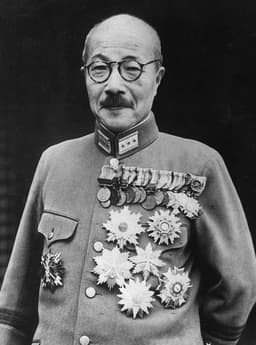
Hideki Tojo
General · Modern
53.9Total
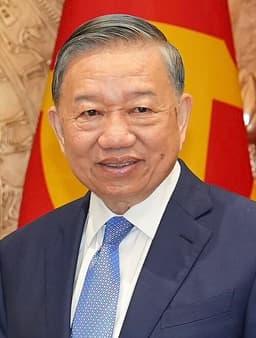
To Lam
General · Modern
50.6Total
Basic Information
Born
1884
1957
Died
1948
—
Era
Modern
Modern
Nationality
Japan
Vietnam
Occupation
General
General
Civilization
Eastern
Eastern
Score Comparison
Military (10%)
70.0
25.9
Political (20%)
48.0
68.0
Influence (20%)
55.0
51.8
Legacy (20%)
50.0
41.7
Leadership (15%)
53.2
72.0
Strategy (15%)
55.0
36.8
TOTAL
53.9
50.6
Hideki Tojo — Complete Timeline
1941 AD
Attack on Pearl HarborWar
As Prime Minister, Hideki Tojo authorized the attack on the US naval base at Pearl Harbor, Hawaii. The surprise attack brought the United States into World War II. Tojo's decision was based on the belief that war with the US was inevitable due to resource embargoes and diplomatic failures.
World War IIPearl HarborUS-Japan War
Impact: globaldestructive
Appointment as Prime MinisterPolitical Action◆ Major
Hideki Tojo was appointed Prime Minister of Japan, replacing Fumimaro Konoe. He retained his position as Army Minister and later took on other portfolios, consolidating power. His appointment marked the ascendancy of the military faction in the Japanese government and the shift towards total war.
Prime MinisterMilitary GovernmentWorld War II
Impact: national
1942 AD
Fall of SingaporeWar◆ Major
Under Tojo's leadership, Japanese forces captured Singapore from the British in a swift campaign. The fall of Singapore was one of the worst British military defeats in history. It demonstrated Japanese military prowess and led to the occupation of a key strategic location in Southeast Asia.
World War IISingaporeJapanese Victory
Impact: global
1948 AD
Execution by the International Military Tribunal for the Far EastPolitical Action◆ Major
Hideki Tojo was found guilty of war crimes by the International Military Tribunal for the Far East and sentenced to death. He was executed by hanging on December 23, 1948. His trial and execution symbolized the Allied effort to hold Japanese leaders accountable for wartime atrocities.
War CrimesExecutionTokyo Trials
Impact: globaltragic
To Lam — Complete Timeline
2016 AD
Appointed Minister of Public SecurityPolitical Action◆ Major
To Lam was appointed Minister of Public Security of Vietnam, overseeing the country's police and internal security forces. He played a key role in maintaining public order and combating crime.
Ministerial AppointmentSecurity Leadership
Impact: national
2024 AD
Elected President of VietnamPolitical Action◆ Major
To Lam was elected President of Vietnam by the National Assembly, succeeding Vo Van Thuong. He transitioned from security chief to head of state, continuing his influence in national politics.
PresidencyGovernment Leadership
Impact: national
Expert Analysis
Hideki Tojo vs To Lam
# The General and the Commissar: Two Paths of Military Power
In the autumn of 1948, Hideki Tojo climbed the thirteen steps of the gallows at Sugamo Prison, his neck fitted with a noose designed by American engineers. Twenty-three years earlier, in a Saigon prison yard, a young Vietnamese revolutionary named Nguyen Ai Quoc—later known as Ho Chi Minh—had watched French colonial guards execute a fellow nationalist and vowed never to be caught alive. Tojo died condemned by the world he had tried to conquer. To Lam, born in 1957 in Hung Yen province, would grow up in a Vietnam that had won that very war, inheriting a state shaped by revolutionary victory. Both men wore military uniforms and rose to supreme political power. But one ended on the scaffold, while the other ascended to the presidency of a nation of 100 million. The difference lies not in ambition, but in the nature of the states they served and the historical currents they rode.
Origins
Hideki Tojo was born in 1884, the son of a samurai-turned-army officer. His father, Hidenori Tojo, had fought for the emperor during the Meiji Restoration, and young Hideki absorbed the austere values of bushido—loyalty, discipline, self-sacrifice—in a family where beating was the preferred pedagogy. He graduated from the Imperial Japanese Army Academy in 1905, just as Japan astonished the world by defeating Tsarist Russia. Tojo’s Japan was a rising empire, hungry for resources, humiliated by Western racism at Versailles, and convinced that military expansion was the nation’s destiny. He never questioned this creed.
To Lam was born in 1957, into a Vietnam emerging from the French Indochina War and immediately plunging into the American one. He joined the Ministry of Public Security in the 1970s, rising through a bureaucracy that had been forged in revolutionary struggle. If Tojo’s world was one of imperial glory, To Lam’s was one of national survival. The Vietnamese Communist Party, not the emperor, commanded ultimate loyalty. And the party’s doctrine was not expansion but defense—of a nation that had fought France, Japan, the United States, and China, often simultaneously. To Lam would learn that in Vietnam, security meant not conquest, but control.
Rise to Power
Tojo’s ascent was meteoric and military. Appointed Prime Minister in October 1941, he retained the Army Ministry and later the Home Ministry, concentrating unprecedented power. He had been a field commander in Manchuria, then chief of the Kwantung Army’s secret police—the Kempeitai—where he learned that terror could enforce obedience. When Emperor Hirohito hesitated over war with the United States, Tojo pushed. “There are times,” he told the Imperial Conference, “when a nation must leap boldly from the temple porch into the darkness.” On December 7, 1941, he authorized the attack on Pearl Harbor. In four months, Japan conquered Hong Kong, Singapore, the Philippines, and the Dutch East Indies. Tojo seemed invincible.
To Lam’s rise was methodical and institutional. Appointed Minister of Public Security in 2016, he oversaw Vietnam’s police, intelligence, and internal security forces—the apparatus that keeps the Communist Party in power. Unlike Tojo, he did not seize power through a military coup or a dramatic gamble. He was elected President of Vietnam in 2024 by the National Assembly, succeeding Vo Van Thuong in a carefully choreographed transition. To Lam’s path was not one of conquest but of bureaucratic consolidation. He controlled the files, the wiretaps, the prisons. In a one-party state, that is a more reliable route to power than battlefield glory.
Leadership & Governance
Tojo governed as a military dictator. He banned political parties, suppressed dissent with the Kempeitai, and centralized the economy for total war. Yet his leadership was brittle. He micromanaged campaigns, ignored intelligence warnings, and refused to delegate. After the Doolittle Raid on Tokyo in 1942, he ordered the massacre of suspected American sympathizers in reprisal. When Japanese forces captured Singapore in February 1942—the greatest humiliation of British imperial history—Tojo personally dictated the terms: all British soldiers would be interned, all Chinese residents suspected of anti-Japanese sentiment would be executed. He ruled by fear, and fear cannot build lasting structures.
To Lam governs through the party, not against it. As public security minister, he launched anti-corruption campaigns that netted hundreds of high-ranking officials, consolidating his power while burnishing a reputation for integrity. His military score of 44.6 reflects that his power derives not from battlefield command but from institutional control. Vietnamese politics is a game of networks, factions, and unspoken alliances. To Lam plays it with the patience of a chess master, not the fury of a gambler. He understands that in a communist state, the security apparatus is the ultimate guarantor of stability—and the ultimate path to the presidency.
Triumph & Tragedy
Tojo’s greatest triumph came early: the fall of Singapore in February 1942, when 80,000 British, Indian, and Australian troops surrendered to a smaller Japanese force. For a moment, the West seemed weak and Japan supreme. But the tragedy followed swiftly. By 1944, Japan’s industrial base was crippled, its navy destroyed at Midway and Leyte Gulf, its cities firebombed. Tojo resigned in July 1944 after the fall of Saipan, which put American B-29s within range of Tokyo. He spent the final year of the war in obscurity, then attempted suicide as American MPs arrived to arrest him. The International Military Tribunal for the Far East convicted him of war crimes, including the murder of prisoners and civilians. He was hanged on December 23, 1948, aged 64.
To Lam’s triumph is quieter but more durable. He has achieved the highest office in Vietnam without a single battle, without a single foreign enemy defeated. His tragedy, if it comes, will not be execution but irrelevance—the slow erosion of power as younger factions emerge, or the collapse of the party system he has devoted his life to preserving. But for now, he sits in the Presidential Palace in Hanoi, a man who rose from the secret police to the summit of state.
Character & Destiny
Tojo was rigid, fanatical, and ultimately self-destructive. He believed in Japan’s divine mission, in the emperor’s infallibility, in victory or death. “I am responsible for the war,” he told his captors, “and I must pay the price.” He did. His character—the samurai’s pride, the bureaucrat’s stubbornness, the zealot’s blindness—led Japan to ruin and himself to the gallows.
To Lam is pragmatic, patient, and cautious. He has never led a charge, never gambled a nation’s fate on a single battle. His character reflects a Vietnam that learned, through a century of war, that survival requires cunning, not heroism. He is the product of a party that has outlasted French colonialism, American intervention, Chinese invasion, and Soviet collapse. To Lam will not be remembered as a great warrior. He may be remembered as a great survivor.
Legacy
Tojo’s legacy is a warning. In Japan, he is a symbol of militarist folly, a ghost at the Yasukuni Shrine that divides the nation from its neighbors. His score of 68.3 in legacy reflects a figure remembered not for what he built, but for what he destroyed—and for what he represented: the catastrophic consequences of military power unchecked by civilian wisdom.
To Lam’s legacy is still being written. His score of 58.4 suggests a figure who consolidates rather than creates. He will be remembered as a security chief who became president, a man who kept the party in power and the nation stable. Whether that stability is a foundation for prosperity or a prison for freedom is a question that history—and the Vietnamese people—will answer.
Conclusion
Tojo and To Lam never met. They never corresponded. They fought in different wars, worshipped different gods, served different masters. Yet they share a common thread: both were generals who became the supreme political authority of their nations. Tojo’s path ended on the gallows because he tried to conquer the world. To Lam’s path ended in the presidency because he learned to control a single country. The difference is not in talent or ambition, but in the wisdom to know what power is for. Tojo believed it was for conquest; To Lam believes it is for survival. History has already judged which of those beliefs is more durable.
Rankings
🥇
Hideki TojoLeader
Mil: 70.0Pol: 48.0Inf: 55.0
53.9
🥈
To Lam
Mil: 25.9Pol: 68.0Inf: 51.8
50.6
+3.3 behind
How This Comparison Works
Algorithm
Each figure is scored on 6 dimensions (0—100 scale) based on structured historical data: Military (10%), Political (20%), Influence (20%), Legacy (20%), Leadership (15%), Strategy (15%). The weighted total produces the final ranking.
Data Sources
Scores are computed from structured sub-indicators in the database. Scale factors adjust for era (Ancient ×0.85, Modern ×1.0) and civilization size (Eastern ×1.05, Other ×0.80) to account for differences in population and military scale.
Maximum 3 Figures
Comparisons are limited to 2—3 figures to ensure readability and statistical meaningfulness.
Error Margins
±5 points per dimension — Sub-scores are derived from historical records with inherent uncertainty. Two figures within 5 points on a dimension should be considered roughly equivalent in that area.
Total Score Accuracy
±3 points overall — The weighted combination of 6 dimensions produces a total score with approximately ±3 points of uncertainty. Differences of less than 3 points are not statistically significant— the figures are effectively tied.
Known Limitations
- Historical records are incomplete and uneven across civilizations
- Figures from oral-tradition societies may be underrepresented
- Occupation labels can misclassify multi-role figures
- Scores measure capability and impact, not moral character
- Quantitative scoring is a comparison tool, not absolute truth
Capability Radar
Military (10%) — Battles & Warfare
Battles
65
10
Win Rate
40
10
Expansion
70
10
Political (20%) — Governance & Reform
Reform
30
40
Diplomacy
35
40
Economy
25
30
Influence (20%) — Cultural & Global Reach
Cultural
30
20
Global
55
20
Legacy (20%) — Historical Impact
Historical
55
20
Longevity
40
20
Leadership (15%) — Power & Stability
Tenure
60
50
Stability
20
40
Strategy (15%) — Tactics & Innovation
Strategy
50
10
Tactics
55
10
Reform
45
10
Similar Comparisons
Comments & Discussion
SwordAndScale6/16/2026
Tojo’s fate proves what happens when military ambition outruns strategic reality. He was a competent divisional commander in Manchuria who got promoted into total failure as Prime Minister. The Battle of Midway alone—where Japan lost four fleet carriers in one day because of overreach—was his war to lose. To Lam never had to command anything comparable. Comparing them is like comparing a kamikaze pilot to a bureaucrat with a general’s badge. Tojo’s tragedy was hubris; Lam’s career is just timing
炮火余烬6/16/2026
说两人都是军人政治家,真是侮辱了军人二字。东条英机好歹亲自指挥过关东军,在侵华战场上沾过血。苏洛呢?他1980年代在军队政治部写报告升上去的,情报工作干得再好,也是幕僚,不是战将。东条最后上了绞架,苏洛却在河内宴会厅里喝红酒。残酷的历史从不平等分配责任。有人为野心买单,有人靠运气升迁。
DataDissent6/16/2026
Strip away the uniform and what’s left? Tojo ordered the Bataan Death March—60,000 prisoners, 10,000 dead. That’s a body count you can measure. To Lam oversaw the Public Security Ministry during crackdowns on dissidents; Amnesty International documented arrests, not mass graves. The scale of violence isn’t comparable. Tojo’s industrial war machine killed millions. Lam’s Vietnam uses targeted surveillance and show trials. Different eras, different tools, different death tolls. Calling them equiva
铁幕裁缝6/16/2026
两位都是国家机器齿轮上的黑漆。东条在日本军国主义末期推动《国家总动员法》,把整个日本拴在战争车上。苏洛在越南公安系统搞政治审查,清除异议分子连审判都省了。区别在哪?东条的体制已经崩了,他的审判是战胜国写的结局。苏洛的体制还在,他的传记可以自己编。历史的执笔权,比勋章重要得多。
OldManFromKyoto6/16/2026
My grandfather served under Tojo in Singapore. He said Tojo was a desk general who micromanaged from Tokyo while the soldiers starved in New Guinea. That said, put To Lam in 1941 Saigon with the Kempeitai, and would he have executed resistance leaders any differently? Tojo built a police state with torture manuals in eight languages. Lam quietly upgrades surveillance software. The uniform changes, but the logic of control stays the same. I can’t call one better.
稻田守望者6/16/2026
东条最后一段路值得想:他死前在狱里写汉诗,写自己“白发三千丈”。苏洛现在正当年,他的汉诗还没人逼着写呢。历史给战败者