Loading...
Hideki Tojo vs Muhammadu Buhari
Hideki Tojo leads by 2.4 pts · 2 figures compared
…
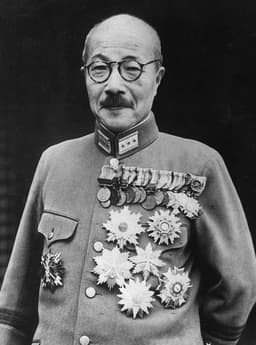
Hideki Tojo
General · Modern
53.9Total
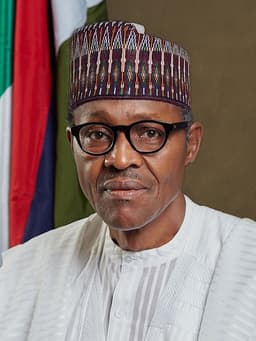
Muhammadu Buhari
General · Modern
51.5Total
Basic Information
Born
1884
1942
Died
1948
—
Era
Modern
Modern
Nationality
Japan
Nigeria
Occupation
General
General
Civilization
Eastern
Other
Score Comparison
Military (10%)
70.0
22.6
Political (20%)
48.0
68.0
Influence (20%)
55.0
53.3
Legacy (20%)
50.0
43.3
Leadership (15%)
53.2
72.0
Strategy (15%)
55.0
41.0
TOTAL
53.9
51.5
Hideki Tojo — Complete Timeline
1941 AD
Attack on Pearl HarborWar
As Prime Minister, Hideki Tojo authorized the attack on the US naval base at Pearl Harbor, Hawaii. The surprise attack brought the United States into World War II. Tojo's decision was based on the belief that war with the US was inevitable due to resource embargoes and diplomatic failures.
World War IIPearl HarborUS-Japan War
Impact: globaldestructive
Appointment as Prime MinisterPolitical Action◆ Major
Hideki Tojo was appointed Prime Minister of Japan, replacing Fumimaro Konoe. He retained his position as Army Minister and later took on other portfolios, consolidating power. His appointment marked the ascendancy of the military faction in the Japanese government and the shift towards total war.
Prime MinisterMilitary GovernmentWorld War II
Impact: national
1942 AD
Fall of SingaporeWar◆ Major
Under Tojo's leadership, Japanese forces captured Singapore from the British in a swift campaign. The fall of Singapore was one of the worst British military defeats in history. It demonstrated Japanese military prowess and led to the occupation of a key strategic location in Southeast Asia.
World War IISingaporeJapanese Victory
Impact: global
1948 AD
Execution by the International Military Tribunal for the Far EastPolitical Action◆ Major
Hideki Tojo was found guilty of war crimes by the International Military Tribunal for the Far East and sentenced to death. He was executed by hanging on December 23, 1948. His trial and execution symbolized the Allied effort to hold Japanese leaders accountable for wartime atrocities.
War CrimesExecutionTokyo Trials
Impact: globaltragic
Muhammadu Buhari — Complete Timeline
1983 AD
1983 Nigerian coup d'étatPolitical Action
Major General Muhammadu Buhari led a military coup that overthrew the civilian government of President Shehu Shagari. Buhari cited corruption and economic mismanagement as justifications, and he became the head of state.
CoupMilitary RuleCorruption
Impact: nationaldestructive
1984 AD
War Against Indiscipline (WAI)Reform◆ Major
Buhari launched the War Against Indiscipline, a campaign to enforce discipline and order in Nigerian society. It included harsh penalties for minor offenses, such as queue-jumping, and was criticized for human rights abuses.
DisciplineSocial PolicyHuman Rights
Impact: nationaldestructive
1985 AD
Overthrow by Ibrahim BabangidaPolitical Action◆ Major
Buhari was overthrown in a palace coup led by his Chief of Army Staff, Ibrahim Babangida. Babangida cited Buhari's authoritarian style and failure to address the economy as reasons for the coup.
CoupOverthrowBabangida
Impact: national
2015 AD
Anti-corruption campaignReform◆ Major
Buhari launched a high-profile anti-corruption campaign, targeting government officials and recovering stolen assets. The campaign was praised internationally but criticized for being selective and politically motivated.
Anti-CorruptionReformGovernance
Impact: nationalconstructive
Election as President of NigeriaPolitical Action
Buhari won the 2015 Nigerian presidential election, defeating incumbent Goodluck Jonathan. This was the first time an opposition candidate had defeated a sitting president in Nigeria's history, marking a democratic milestone.
ElectionDemocracyOpposition Victory
Impact: nationalprogressive
Expert Analysis
Muhammadu Buhari vs Hideki Tojo
# The General’s Dilemma: Two Paths from Uniform to Power
On a December morning in 1941, Hideki Tojo stood before Japan’s Imperial General Headquarters and gave the final authorization for an attack that would change the world. Half a century later and half a world away, Muhammadu Buhari watched Nigerian television as his soldiers seized the radio station in Lagos, ending a civilian government he deemed corrupt. Both men were generals who traded their uniforms for political power. Both believed they could save their nations through discipline and force. Yet their journeys—and their legacies—could not have diverged more sharply.
Origins
Hideki Tojo was born in 1884 into a samurai family, the son of a lieutenant general. Imperial Japan was then racing to modernize, obsessed with military strength and national honor. Tojo absorbed this ethos completely: discipline, hierarchy, and the belief that Japan’s destiny lay in expansion. He attended the Imperial Japanese Army Academy, where he graduated tenth in his class—respectable but not brilliant. What he lacked in genius he made up for in relentless loyalty to the military code.
Muhammadu Buhari, born in 1942 in Daura, northern Nigeria, came from a very different world. His father was a farmer, and his early years were shaped by the rhythms of village life under British colonial rule. When Nigeria gained independence in 1960, Buhari was a young man watching a fragile democracy take root. He joined the army not out of samurai tradition but as a practical path upward in a newly independent nation. His training took him to India, Britain, and the United States, exposing him to different models of governance. Where Tojo saw a divine emperor, Buhari saw a nation struggling to hold together.
Rise to Power
Tojo’s ascent was methodical. He served as a military attaché in Germany, studied the Nazi war machine, and climbed through the ranks of the Kwantung Army in Manchuria. By 1940, he was Army Minister, and when Prime Minister Konoe resigned in 1941 over the impossibility of avoiding war with the United States, Tojo stepped in. He was the obvious choice—the man who embodied the military’s growing dominance over Japanese politics.
Buhari’s rise was quicker and more violent. On December 31, 1983, as Nigerians celebrated the New Year, Major General Buhari led a coup that toppled President Shehu Shagari. The civilian government had been widely seen as corrupt and incompetent. Buhari’s soldiers met little resistance. Within hours, he was the head of state, promising to “save the nation from collapse.” He was 41 years old, younger than Tojo had been, and far less experienced in the subtleties of power.
Leadership & Governance
As prime minister, Tojo ruled with an iron grip. He retained his position as Army Minister, controlled the military police, and centralized authority in his own hands. His strategy for war was aggressive and overconfident: the attack on Pearl Harbor in December 1941 was designed to cripple the U.S. Pacific Fleet, followed by a swift conquest of Southeast Asia. The fall of Singapore in February 1942 was his greatest military triumph—70,000 British troops surrendered to a smaller Japanese force. Tojo was at the height of his power.
But his governance was rigid. He suppressed dissent, jailed political opponents, and demanded total sacrifice from the Japanese people. War resources were stretched thin. By 1944, the tide had turned, and Tojo’s refusal to consider surrender led to catastrophic losses. He was forced to resign in July 1944 as American forces closed in.
Buhari’s rule was also authoritarian but on a smaller stage. He launched the “War Against Indiscipline” in 1984, a campaign that punished lateness, littering, and queue-jumping with public humiliation and forced labor. He jailed journalists, banned strikes, and ordered soldiers to whip citizens who broke the rules. His anti-corruption efforts were genuine—he recovered stolen funds and prosecuted officials—but his methods were brutal. Unlike Tojo, Buhari was not fighting a world war; he was fighting the chaos of a young nation. His discipline brought order but alienated the very people he sought to lead.
Triumph & Tragedy
Tojo’s triumph was the fall of Singapore, a victory that stunned the Western colonial powers and made him a hero in Japan. His tragedy was the war itself—the firebombing of Tokyo, the atomic bombs, and the surrender that followed. He attempted suicide in 1945 but failed. In 1948, the International Military Tribunal for the Far East sentenced him to death. He was hanged, his samurai code broken.
Buhari’s triumph came decades later. After being overthrown in a palace coup in 1985 by his own Chief of Army Staff, Ibrahim Babangida, he retreated into obscurity. But in 2015, he did something remarkable: he won a democratic election, becoming the first opposition candidate to defeat an incumbent president in Nigeria’s history. His tragedy was the disappointment that followed. His anti-corruption campaign, while popular, was slow and uneven. The economy faltered. By the end of his second term, many Nigerians felt he had not delivered the transformation they had hoped for.
Character & Destiny
Tojo was a product of his era—a man who believed that war was inevitable and that Japan’s survival depended on conquest. His personality was rigid, his worldview narrow. He saw no alternative to conflict and could not imagine defeat. That blindness sealed his fate.
Buhari was more pragmatic. He learned from his first stint in power that brute force alone cannot govern a complex society. His return to the presidency in 2015 showed a willingness to work within democratic institutions, even if his instincts remained authoritarian. His character—stubborn, disciplined, but capable of adaptation—allowed him to survive politically in a way Tojo never could.
Legacy
Tojo is remembered as a war criminal, a symbol of militarism and imperial aggression. In Japan, his legacy is deeply contested; some see him as a patriot who did his duty, others as a disaster. His name remains synonymous with the darkest chapter of modern Japanese history.
Buhari’s legacy is more ambiguous. To some Nigerians, he is a reformer who tried to clean up a corrupt system. To others, he is a relic of military rule who failed to modernize the country. His democratic return gave him a second chance that few military rulers receive, but his achievements fell short of his promises.
Conclusion
The difference between these two generals is not simply one of good versus evil. It is a difference of context, timing, and scale. Tojo led a nation into a world war and was destroyed by it. Buhari led a nation through a difficult transition and survived to try again. One died on the gallows; the other died in his bed, still debated by his people. Their stories remind us that the uniform can be a path to power, but it is the choices made after—whether to adapt, to listen, to learn—that determine whether a general becomes a tyrant or a flawed leader. In the end, history judges not by intentions but by outcomes, and the outcomes of these two lives could not be more different.
Rankings
🥇
Hideki TojoLeader
Mil: 70.0Pol: 48.0Inf: 55.0
53.9
🥈
Muhammadu Buhari
Mil: 22.6Pol: 68.0Inf: 53.3
51.5
+2.4 behind
How This Comparison Works
Algorithm
Each figure is scored on 6 dimensions (0—100 scale) based on structured historical data: Military (10%), Political (20%), Influence (20%), Legacy (20%), Leadership (15%), Strategy (15%). The weighted total produces the final ranking.
Data Sources
Scores are computed from structured sub-indicators in the database. Scale factors adjust for era (Ancient ×0.85, Modern ×1.0) and civilization size (Eastern ×1.05, Other ×0.80) to account for differences in population and military scale.
Maximum 3 Figures
Comparisons are limited to 2—3 figures to ensure readability and statistical meaningfulness.
Error Margins
±5 points per dimension — Sub-scores are derived from historical records with inherent uncertainty. Two figures within 5 points on a dimension should be considered roughly equivalent in that area.
Total Score Accuracy
±3 points overall — The weighted combination of 6 dimensions produces a total score with approximately ±3 points of uncertainty. Differences of less than 3 points are not statistically significant— the figures are effectively tied.
Known Limitations
- Historical records are incomplete and uneven across civilizations
- Figures from oral-tradition societies may be underrepresented
- Occupation labels can misclassify multi-role figures
- Scores measure capability and impact, not moral character
- Quantitative scoring is a comparison tool, not absolute truth
Capability Radar
Military (10%) — Battles & Warfare
Battles
65
10
Win Rate
40
10
Expansion
70
5
Political (20%) — Governance & Reform
Reform
30
30
Diplomacy
35
25
Economy
25
20
Influence (20%) — Cultural & Global Reach
Cultural
30
25
Global
55
25
Legacy (20%) — Historical Impact
Historical
55
30
Longevity
40
20
Leadership (15%) — Power & Stability
Tenure
60
45
Stability
20
15
Strategy (15%) — Tactics & Innovation
Strategy
50
15
Tactics
55
15
Reform
45
20
Similar Comparisons
Comments & Discussion
铁血统帅6/16/2026
作为军事史研究者,我想说这两人根本不在一个量级。东条英机是个战略灾难——他痴迷于"决死突击"的武士道精神,却在珍珠港后连基本后勤都没规划好。布哈里至少懂非洲地缘政治:他1983年政变后打击腐败虽严酷,却避免了尼日利亚分裂成比夫拉那样的悲剧。把日军岛国困局和非洲本土治理混为一谈,这分析太偷懒了!
The Data Skeptic6/16/2026
This comparison reeks of cherry-picking. You cite "December 1941" for Tojo and "half a century later" for Buhari, but ignore their different scales of horror. Tojo oversaw 20 million+ deaths across Asia; Buhari's regime killed maybe 500 dissidents. Normalizing these by calling both "generals who traded uniforms for power" is intellectually lazy. Show me a body count ratio or leadership effectiveness index—otherwise it's just semantics dressed as history.
经典学究6/16/2026
从古典政治哲学看,这对比暴露了"权力转化"的深层断裂。东条根植于日本封建武士道,视天皇为神授权威——这本质是神权政治的延续。而布哈里是后殖民时代产物,他的军政府试图用威权纠正腐败,却从未摆脱民主话语的束缚。亚里士多德会说:东条是"僭主"的自毁,布哈里是"监察官"的徒劳。将两者并置,既低估了武士道的文化悲剧,也简化了非洲治理的复杂悖论。
History Buff6/16/2026
As someone who reads WWII and African politics for fun, this misses two key details. Tojo's fatal mistake wasn't being a general but his obsession with "hakko ichiu" (eight corners of the world under one roof)—a spiritual imperialism that backfired at Midway. Buhari, however, never claimed global domination; his 1984 "War Against Indiscipline" was a local mess, not a world war. Apples and oranges, people! The only common thread? Both failed because they mistook harshness for leadership.
修正派炮手6/16/2026
别美化布哈里了!他1983年政变后关押记者、禁止罢工,和东条的军国政策只有程度之差,没有本质之别。东条搞"大东亚共荣圈"是侵略借口,布哈里搞"反贪运动"不也是镇压异己的遮羞布?分析说他们"legacies diverge sharply"——放屁!历史审判时,布哈里在尼日利亚北部造成的族群裂痕,和东条在东亚留下的战争创伤,都是强权政治的遗产。非要分高低,不过是选择遗忘的虚伪罢了。